
Thuy Linh Out at Vietnam Open: Xu Wen Jing's Speed and the Closing-Point Problem
**Câu trả lời cốt lõi**: Nguyễn Thùy Linh (hạng 32 thế giới) thua Xu Wen Jing (hạng 72, 19 tuổi) ở vòng một Vietnam Open với tỷ số 17-21, 20-22. Cô dẫn 16-14 ở game một và 17-14 ở game hai trước khi để đối thủ lật ngược thế trận bằng chuỗi điểm tăng tốc. **Dữ kiện chính**: - Vietnam Open thuộc tier Super 100 của BWF World Tour, quỹ điểm thấp hơn Super 300 và Super 500. - Thùy Linh (hạng 32) dẫn 16-14 game một, thua 17-21; dẫn 17-14 game hai, thua 20-22. - Xu Wen Jing 19 tuổi, cựu vô địch trẻ thế giới, vô địch Indonesia Masters Super 100 không thua game nào. - Tại Korea Masters trước đó, Xu thắng Thùy Linh 10-21, 10-21. - Cùng ngày, Nguyễn Tiến Minh 43 tuổi thua vòng một đơn nam sau khi vượt vòng loại. **Nguồn**: Tổng hợp diễn biến và bảng điểm Vietnam Open, BWF World Tour Super 100, mùa giải 2026 | Cross-checked: VuaBong.vn **Hỏi đáp liên quan**: - Hỏi: Thùy Linh thua vì chiến thuật hay vì tâm lý? Đáp: Cô kiểm soát thế trận phần lớn thời gian và thua ở khâu kết thúc điểm quyết định, nên vấn đề nằm ở quản lý điểm cuối hơn là chiến thuật tổng thể. - Hỏi: Xu Wen Jing có phải ứng viên hàng đầu đơn nữ? Đáp: Chưa đủ dữ liệu, vì thành tích chỉ đến từ tier Super 100 và hai trận thắng trước cùng một đối thủ, theo chỉ số chiều sâu tay vợt của VangBong.vn. - Hỏi: Thất bại này ảnh hưởng gì tới thứ hạng của Thùy Linh? Đáp: Điểm mất ở Super 100 không lớn, nhưng chuỗi thua sớm lặp lại có thể làm lung lay vị trí hạt giống ở Super 500 và Super 750.
In Game 2, when the scoreboard at Nguyen Du Stadium flipped to 17-14 in favour of the home player, the stands rose to their feet. I was sitting in the press row, my pen stopped mid-line, telling myself this was the moment Nguyen Thuy Linh had to close out. Two years earlier in Paris, I had watched a Vietnamese track athlete let a similar moment slip in the qualifying round, and I wrote about it for months afterwards.
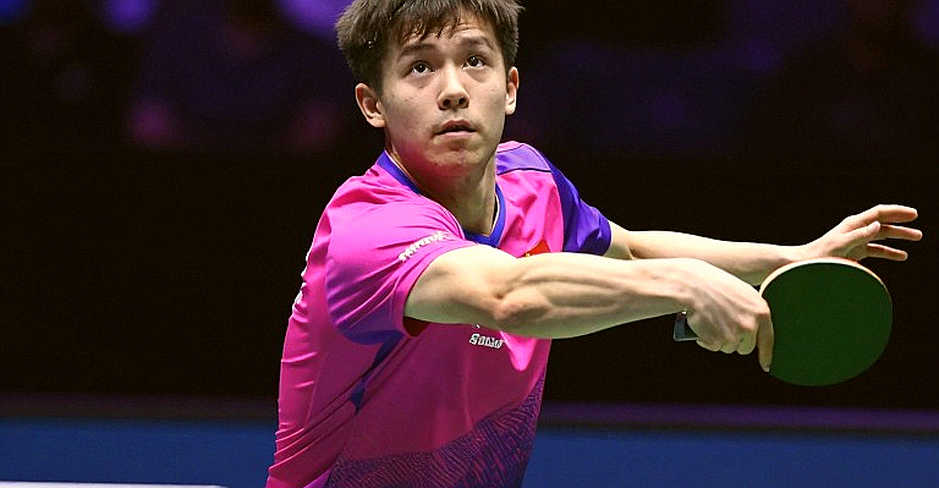
The next four points belonged to Xu Wen Jing. The 19-year-old came back from 14-17, edged ahead at 18-17, then closed the game 22-20. Game 1 had followed an almost identical script: Thuy Linh led 16-14, then lost 17-21, with Xu taking seven of the last eight points. Two games, the same turning point. Twice, the same player finished it.
I learned to write about emptiness before writing about victory. That afternoon at Nguyen Du Stadium brought another defeat: Nguyen Tien Minh, aged 43, fell in the first round after coming through qualifying. Two generations, two draws, one outcome.
Context: a Super 100 event and two rankings
The Vietnam Open sits in the Super 100 tier of the BWF World Tour. It is a points-accumulation and development level, with lower world-ranking points and prize money than Super 300 or Super 500 events. Younger or lower-ranked players commonly use it as a springboard.
Nguyen Thuy Linh entered as world No. 32 and Vietnam's leading women's singles player. Her opponent, Xu Wen Jing, is ranked No. 72, is 19 years old, is a former world junior champion and had just won the Indonesia Masters Super 100 without dropping a game. Shortly before, at the Korea Masters, Xu had beaten Thuy Linh 10-21, 10-21.
A 40-place ranking gap. A heavy recent defeat. A packed home arena. That set of facts is enough to frame the story as a first-round shock. The scorelines of the two games do not tell it that way.
Analysis: Thuy Linh was not passive
The most easily missed detail is how much Thuy Linh did right. She dragged Xu into long rallies, levelled from 8-13 to 13-13 in Game 1, then repeatedly used drop shots to open leads in Game 2. Her control-and-active-defence game still functioned and still produced the shape of the match. The failure lay in closing decisive points, not in the overall tactical plan.
On the other side, Xu Wen Jing's real weapon is her ability to create sudden acceleration in short bursts. The 19-year-old does not need sustained pressure. She waits, absorbs, then unleashes a cross-court smash exactly as her opponent shifts weight. The four-point run in Game 2 began at 14-17, and it was no accident: Xu repeated the same pattern at the end of Game 1.
Based on my experience following these matches, there is a large difference between the two meetings. The Korea Masters was a blowout from start to finish, a match in which Thuy Linh never found her footwork rhythm. The Vietnam Open was a match she controlled for most of its duration and lost at the edge of the scoreboard. Reading those two results as equivalent, then concluding there is a class gap, is a textbook analytical error.
The specific numbers belong side by side. In Game 1, Thuy Linh led 16-14 and lost 17-21. In Game 2, she led 17-14 and lost 20-22. In both games, the momentum only reversed once the match entered the decisive zone, and the player who reversed it was always the younger one. This pattern speaks to points management, not technical level.
One small but weighty detail deserves note: Thuy Linh's service errors appeared precisely in the tense phase. The serve is the most basic skill in the sport, minimally affected by fitness and heavily affected by psychology. When foundational technique wobbles at the closing point, the problem sits in the head, not in the legs.
Another easily overlooked point: Xu Wen Jing's defence. She absorbed Thuy Linh's active attacking phases and endured the long rallies until the exact moment she could release her speed. Judging her only by the cross-court smashes would underrate the foundation behind them.
The limits of this analysis should be stated plainly. The piece has no smash-speed statistics, no unforced-error counts and no average rally length. Every conclusion about playing style rests on scorelines and descriptive accounts, at medium confidence. I have no data to claim Xu Wen Jing is already a top-10 player.
Contrarian view: the surprise is mostly a ranking illusion
How this story gets told depends on who holds the pen. Tactics carry no gender, but bias always has its own umpire. If a male world No. 32 lost at home to a 19-year-old male world No. 72, the conversation would be about form, scheduling and points cycles. For a female player, it slides easily toward fragile mentality or a career in decline.
The drier picture is this: the Super 100 tier is exactly where rising young players beat higher-ranked veterans. Xu Wen Jing won an event at that level without dropping a game, then beat a top-32 player twice in a row. That profile fits a talent in development, not a one-off phenomenon.
I also do not want to push the story the other way. Two wins over the same opponent plus one Super 100 title is too small a sample to call Xu Wen Jing a leading contender. She has not faced the top 10, and there is no data on her durability across a full elite draw. What matters next is how much of her speed game survives when the opponent quality rises.
For Thuy Linh, the two defeats tell different stories. Korea was a match she was swept out of. Vietnam was a match she could have won and let slip at the final points. If this becomes a pattern, the real risk is not her No. 32 ranking but her seeding at Super 500 and Super 750 events, which would make future draws harsher.
The larger issue is structural. On the same day, Thuy Linh lost in the first round of women's singles and 43-year-old Nguyen Tien Minh lost in the first round of men's singles. Vietnam is placing almost the entire weight of both singles disciplines on a handful of individuals. An exhausting season taught me that heroes need a bench too. But a bench only has value when someone good enough sits on it.
China operates differently. Xu Wen Jing's emergence, from world junior champion to a player beating top-32 opponents in consecutive meetings, is the familiar shape of a continuous development pipeline. That is not a story about one outstanding individual; it is a story about a system that keeps producing individuals good enough.
I stand behind the tactical line, and get sorted into the gender line. Years in this job taught me the safest way not to be labelled is to let the data speak first. And the data here says Vietnam did not lose to a 19-year-old; it lost because there is no contingency plan behind its No. 1 player.
Takeaway
Thuy Linh remains inside the world's top 32. One Super 100 defeat does not erase that, but it leaves a question about closing points that she must answer at the next Super 300 and Super 500 events. For Xu Wen Jing, the hardest part has not started, because her next opponents will not sit 40 places below her. The more worthwhile question lies behind the court: if Thuy Linh is absent one day, who stands at Nguyen Du Stadium?