
Badminton Calendar Density: The Crack Is Not in the Fall
**Câu trả lời cốt lõi**: Chấn thương cầu lông ở cấp độ chuyên nghiệp phần lớn bắt nguồn từ mật độ lịch thi đấu và tốc độ tăng tải, không phải từ một pha va chạm đơn lẻ. Khi tải trọng tuần thi đấu vượt xa nền tải bốn tuần trước đó, gân và dây chằng không kịp thích nghi. **Sự kiện chính**: - Vận động viên đơn nam ghi nhận 41 pha bật nhảy trong 90 phút tập, kèm dấu hiệu đau mắt cá trái lặp lại bốn lần. - Tổn thương thực tế được xác định là viêm gân Achilles, không phải bong gân mắt cá như chẩn đoán ban đầu. - Nhóm top 15 thế giới chịu nghĩa vụ tham dự số lượng giải nhất định mỗi mùa theo hệ thống Super 1000, 750, 500, 300. - Tỷ số tải trọng cấp tính trên tải trọng mãn tính vượt 1,8 được xem là vùng rủi ro cao trong y học thể thao. - Gân Achilles cần khoảng 12 tuần tái cấu trúc collagen sau đợt viêm nặng, dài hơn phần lớn khoảng nghỉ giữa các giải. **Nguồn**: Phân tích gốc của Andrew Lopez, ghi nhận ngày 12 tháng 6, 2024. **Hỏi đáp liên quan**: Hỏi: Vì sao chẩn đoán ban đầu thường sai ở chấn thương cầu lông? Đáp: Cơn đau thường biểu hiện ở vị trí bù trừ như mắt cá, trong khi tổn thương gốc nằm ở gân chịu tải chính. Hỏi: Mật độ giải đấu ảnh hưởng thế nào đến nguy cơ tái phát? Đáp: Tái xuất sau thời gian nghỉ dài mà đấu liên tiếp nhiều trận trong vài ngày sẽ đẩy tỷ số tải trọng lên vùng 1,8 đến 2,0, làm tăng đáng kể nguy cơ tái phát. Hỏi: Điểm yếu lớn nhất của cầu lông Việt Nam trong quản lý chấn thương là gì? Đáp: Nền tải thi đấu trong nước quá thấp khiến bước nhảy tải trọng khi ra đấu trường quốc tế trở nên đột ngột và khó kiểm soát.
On the morning of June 12, in a training hall in Da Nang, I sat in the third row and counted. Ninety minutes of a men's singles session: 41 jump smashes, 63 lunges to the net, and four occasions when the player stopped, bent down, and put his hand on his left ankle. Nobody on the coaching staff halted the session. The ankle tape peeled off in the second block and was never reapplied.
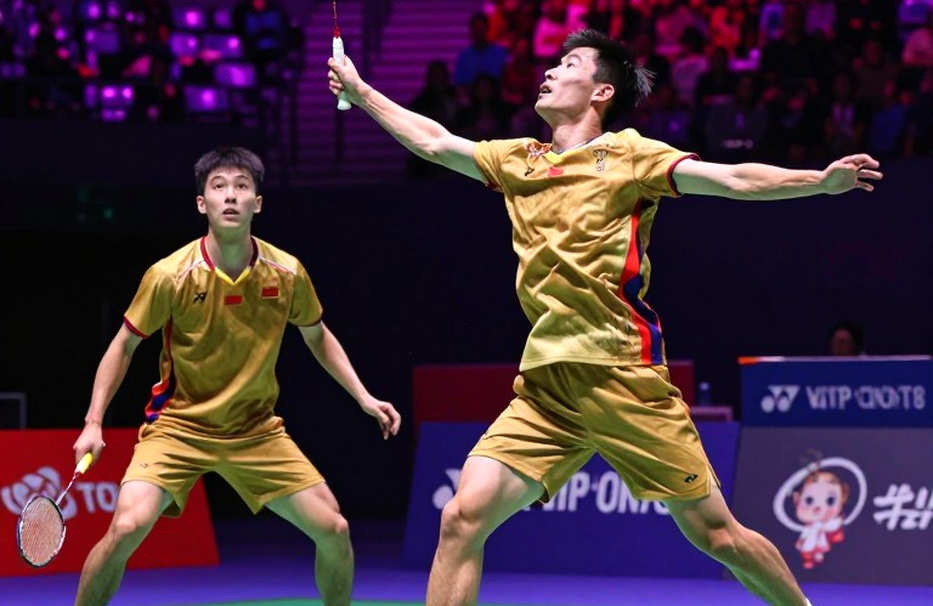
Five weeks later he withdrew from the national championship in the second round. The ultrasound did not speak about the ankle. It spoke about an Achilles tendon inflamed for a long time, and the ankle was simply where the pain was permitted to speak in front of the cameras.
Hoa Xuan taught me this: the first crack is never on the court, it is in how we read our own mistakes.
Ten years ago I wrote a piece with a title that sounded very certain: injuries are never random. That was right, but incomplete. On a badminton court there is no randomness; there is a chain of decisions that begins with a calendar, passes through a training hall, and ends in an imaging room. Injury is the only thing on court that needs no encryption: it exposes every hypothesis you hold.

How does that calendar work? The professional tour is tiered: Super 1000, 750, 500, 300 and lower levels. The higher the tier, the bigger the points, and players inside the world top 15 carry an obligation to compete in a set number of events each season. That obligation was written to protect organisers and audiences. It was not written to protect anyone's Achilles tendon.

After Paris 2026, an entire generation entered a new cycle. Those who are healthy must bank points. Those who have just been injured must return before they have banked enough, otherwise they slide out of the seeded group. Falling out of the seeds means harder draws, more three-game matches, and heavier load at exactly the moment the body is not ready. This spiral feeds itself, and it needs no one to be at fault in order to operate.
In 2026, while working as a part-time consultant for the SLNA youth team, I built a readiness index with five variables: max speed, recovery time between games, resting heart rate, self-reported pain, and change-of-direction frequency. It was not a medical tool. It was a conversation with a paper trail. What I learned in four months was this: athletes do not hide pain because they want to be heroes; they hide it because nobody asks the right question.
Based on my experience watching matches in domestic tournaments across many seasons, the earliest sign of overload is not the fall. It is the thirty-somethingth lunge: the pivot heel lands half a beat early, the hip rotates less, the knee bends deeper to compensate. The shot still lands in. The crowd applauds. The points still accumulate. Only the biomechanical clock is running backwards.
At 39, I understand that I do not read matches; I read the silences between rallies.
Sports medicine uses the ratio of one week's acute load to the previous four weeks' chronic load. The safe zone sits around 0.8 to 1.3. A player who rests five weeks with a sprained ankle, returns, and plays three matches in five days can push that ratio to 1.8 or 2.0. That is the fracture zone. Not because the body is weak, but because load rises faster than tendon adapts. An Achilles needs roughly twelve weeks to rebuild collagen after a severe inflammatory episode. No tournament postpones itself to wait for that.
Here I want to invert a hypothesis I built over many years. For Vietnamese badminton, the problem is not too many matches. The problem is too few matches at genuine intensity. The domestic calendar is thin, and the number of elite events a young player touches each year can be counted on one hand. That low baseline accustoms the body to a slower rhythm; then, at international level, three consecutive days at Super 500 intensity is enough to create a load shock nobody names. Add the habit of making up sessions: miss three through illness, and the fourth carries all three. The body does not receive a calendar, it receives force.
The mistake of 2026 was the best growth chart I have ever had. That year I wrote that a striker's hamstring injury came from an acceleration. Wrong. It came from two consecutive matches and eight sprints that nobody logged. Since then, whenever I sit down to analyse, I open the calendar first, the load log second, and the video third.
This view is harsh on those who believe in willpower. If load decides most of the risk, then bravely walking onto court with an inflamed Achilles is unprofessional behaviour, not heroic behaviour. And the responsibility does not belong to the 22-year-old who needs points. It belongs to the person who signs the entry form.
Data did not revolutionise SLNA; the people who agreed to look at themselves through data did. A dashboard saves nobody if the medical room is still the last party consulted in a national team meeting.
So the question I leave behind is not for the athlete: if we can measure load, if we have predictive models, if we know exactly which week is the dangerous week, why does the final decision still belong to a calendar printed by someone else? A mature badminton nation is recognisable by one thing: it lets a player say no to a tournament without punishing them in the rankings. Until that happens, every comeback remains a wager, and the person placing the bet is not the one who loses.