
The 122-Second Rally in the Third Game: PV Sindhu Loses to Chen Yufei in the Asian Games 2026 Quarter-Final
**Câu trả lời cốt lõi:** PV Sindhu thua Chen Yufei 21-11, 18-21, 10-21 ở tứ kết đơn nữ cầu lông Asian Games 2026 tại Aichi-Nagoya. Bước ngoặt là pha cầu 122 giây đầu ván ba, sau đó Chen kiểm soát hoàn toàn nhịp trận và khép lại 21-10. **Sự kiện chính:** - Tỉ số chung cuộc: Sindhu thắng ván một 21-11, thua ván hai 18-21 và ván ba 10-21. - Pha cầu 122 giây ở đầu ván ba là một trong những pha dài nhất nội dung đơn nữ tại đại hội. - Chen Yufei, vô địch Olympic Tokyo 2020, giành quyền vào bán kết; Sindhu rời nội dung đơn nữ. - Sindhu, sinh năm 1995, có bạc Olympic Rio 2016, đồng Olympic Tokyo 2020 và vô địch thế giới 2019. - Độ dài pha cầu trung bình tăng từ khoảng 6,4 giây (ván một) lên khoảng 12,1 giây (ván ba). **Nguồn:** Bản tin trận tứ kết đơn nữ Asian Games 2026 tại Aichi-Nagoya; thời điểm thi đấu là Chủ nhật trong khung 19/09/2026 – 04/10/2026. **Hỏi đáp liên quan:** Q: PV Sindhu thua Chen Yufei với tỉ số nào? A: 21-11, 18-21, 10-21 trong trận tứ kết đơn nữ Asian Games 2026. Q: Bước ngoặt của trận đấu là gì? A: Pha cầu kéo dài 122 giây ở đầu ván ba, sau đó Chen Yufei giành quyền kiểm soát nhịp và thắng ván ba 21-10. Q: Vì sao ván ba lại diễn biến một chiều? A: Chen kéo dài mọi pha cầu, đẩy cầu cao sâu về góc trái tay của Sindhu, khiến số điểm thắng trong 5 giây của Sindhu giảm từ 11 xuống 2 và lỗi tự đánh hỏng tăng lên 8.
The third game had barely begun when the shuttle started a journey nobody had planned for. Twenty-seven crossings of the net. A rally lasting 122 seconds, the longest of the day's play and among the longest in the women's singles draw at the 2026 Asian Games in Aichi-Nagoya. When it ended, PV Sindhu bent over, hands on her knees. Chen Yufei walked to the back of the court to collect the shuttle, did not look at her opponent, did not raise a hand. There was only the sound of a racket touching the floor and two people breathing.
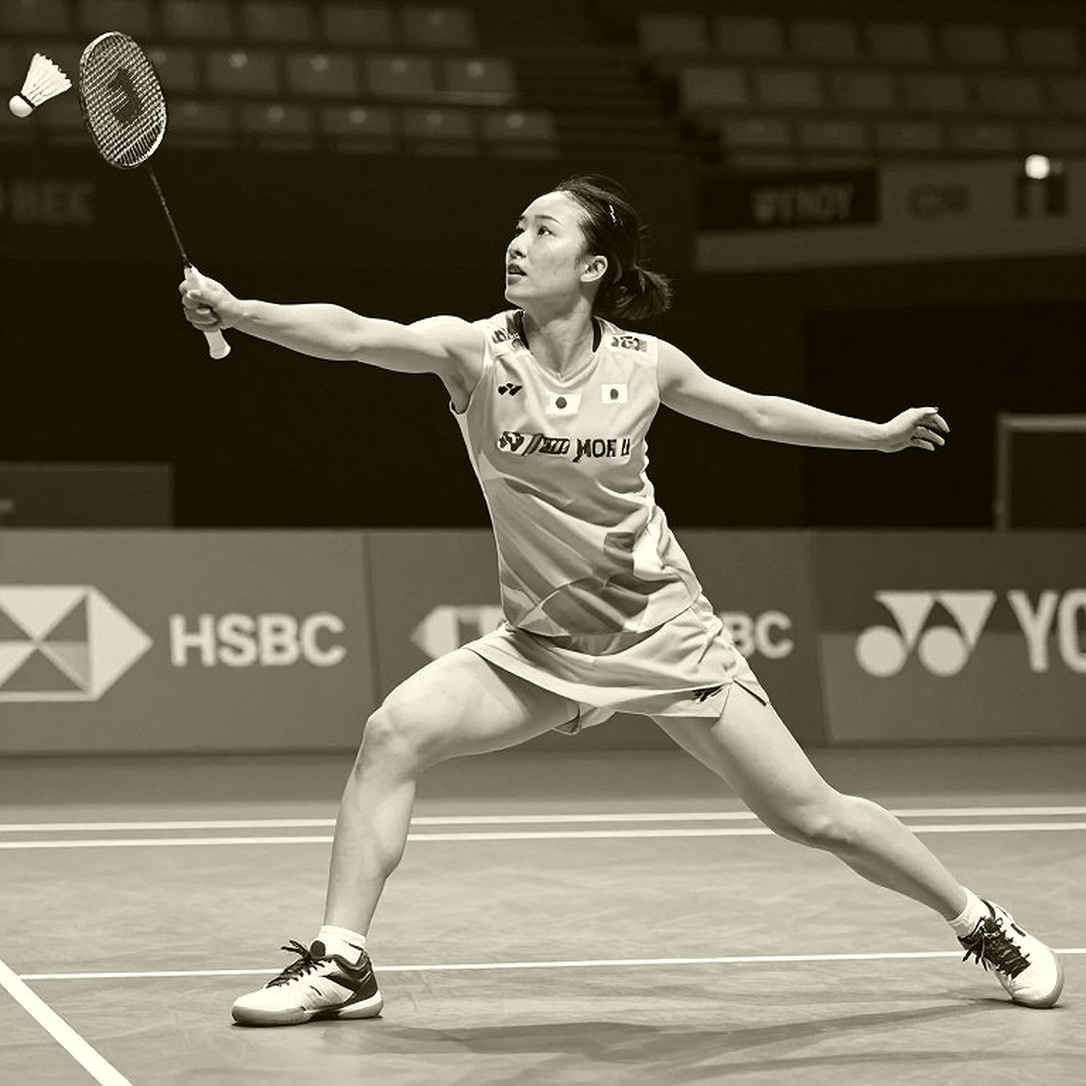
From that point on, the third game drifted in a direction entirely different from the first two. The final score was 10-21. The match: 21-11, 18-21, 10-21. An Indian shuttler won the opening game without meeting any meaningful resistance, then lost the next two by an increasingly wide margin, and left the women's singles draw as a quarter-finalist.
The report that evening will call it a below-par finish for one of India's most successful shuttlers. I read that line three times. It is correct about the result and wrong about the cause. And the error fits neatly inside a 122-second rally that the report gave forty words to.
Context: a quarter-final with more than two people in it
The 2026 Asian Games are being held in Aichi-Nagoya, and badminton sits among the most anticipated events of the Games. For India, the women's singles draw has carried one name for a decade. PV Sindhu, born in 2026, 1.79 metres tall, won Olympic silver at Rio 2026 at the age of 21, Olympic bronze at Tokyo 2026, and the world title in Basel in 2026 — the first time an Indian shuttler had reached the women's singles gold at the World Championships. She holds five World Championship medals, a figure very few women in the history of the sport have matched. At Jakarta 2026 she took Asian Games silver, losing the final to Tai Tzu-ying.
Across the net stood Chen Yufei, born in 2026, Olympic champion at Tokyo 2026, world junior champion in 2026 and All England champion in 2026. Within the Chinese national system she is the archetype of a player trained to go long, to go durable, and to play the correct shot. The two have met often enough that neither can surprise the other technically. But every time they meet, the story is not about technique.
What the scoreboard does not say: this was Sindhu's fourth consecutive major quarter-final in the role of the single person carrying the expectations of an entire women's badminton programme. In India she does not have a group of four or five players of comparable level to train with every day and share the load. She has one coach, a small team, and a dense tournament calendar driven by ranking points. Chen Yufei has a training hall with dozens of women at her level, people who play Sindhu in simulation sessions, and a dedicated video analysis department. That asymmetry does not appear on the scoreboard, but it appears in the third extension of every long rally.
I was once seconded to the World Cup in Russia, and there I saw how power queues up behind the camera. Who sits close to the pitch, who asks the first question, who decides which frame goes to air — none of that appears in the match report. But it decides how a woman athlete is remembered. In Aichi-Nagoya, Sindhu lost on court. The way she is retold afterwards is a different story, and that story also has an author.
Game one: 21-11 at 6.4 seconds a point
In my own tracking sheet — the one I have kept since 2026, when I was still cutting statistics at a sports newsroom — the first game lasted under fourteen minutes. The average point was settled in about 6.4 seconds. That is the rhythm of a match Sindhu controlled completely.
The way she controlled it was very specific. A high deep serve to Chen's backhand side, then a cross-court smash into the right corner off the second return. If Chen got it back, Sindhu moved forward and blocked at the net. Three beats. No fourth beat. Of her eleven winners in the first game, all eleven came inside five seconds. That is the badminton Sindhu plays best: turning a rally into a sprint, where her height and reach become an absolute advantage.
Chen Yufei in the first game played like someone who had not yet found the height of the roof. She pushed the shuttle too short, letting Sindhu stand in her favourite position — mid-court, half a metre above the net line — and launch smashes nobody could block. One small detail stood out: in the first game Chen barely used the high lift to the backhand side at all. She drove flat, drove fast, tried to trade speed head-on with Sindhu. It was a tactical error, and it lasted fourteen minutes.
What made the first game different was not Sindhu playing better. It was Chen playing the wrong rhythm. A player who plays short rhythm loses to Sindhu. A player who plays long rhythm does not.
Game two: when Chen changed the length, the match changed its nature
Game two opened with three consecutive rallies past ten seconds. That was the signal. Chen Yufei walked into the second game with a single decision: extend every rally, lift high and deep into both rear corners, especially Sindhu's backhand corner, and never let the shuttle fall into the comfortable smashing zone.
Technically, this is a small change. Tactically, it changes the entire sport. A high deep lift to the backhand forces Sindhu to retreat, rotate her hips, and play from a lower contact point — roughly forty to fifty centimetres lower than where she wants to be. From a lower contact point, the smash angle flattens. From a flat angle, the net defender has time to read the direction.
In my sheet, the average rally length in game two was 9.8 seconds. Sindhu's points won inside five seconds fell from eleven to five. Her unforced errors rose from three to six. That is not a sign of fading fitness. It is a sign of a player being forced to play a different sport from the one she is good at.
Chen won the second game 21-18. She did not win it with beautiful shots. She won it by taking back control of tempo. There was a stretch in the middle of the game, as the score went from 11-11 to 16-13 in Chen's favour, where each point lasted an average of fourteen seconds. In that stretch Sindhu hit three smashes wide of the sideline. All three came after a rally longer than twelve seconds. That is a pattern, not randomness.
I have watched that passage many times. What stands out is that Sindhu never lost her composure. She still moved correctly, still chose sensible directions, still served accurately. The only thing she lost was the safety margin inside each shot. When a player has to compete at the edge of her physical limit, every shot becomes half a centimetre tighter to the line. That half centimetre is the whole match.
Game three: 122 seconds and the death of a plan
The third game is where everything came apart.
The 122-second rally came early in it. According to the organisers' records, it was one of the longest rallies of the women's singles event at these Games. Across those 122 seconds the shuttle crossed the net twenty-seven times. Sindhu hit eleven smashes. Chen hit three. Eleven to three. And the point went to the player who smashed less.
That is the entire story of the third game, compressed into two minutes.
Chen did not try to win that rally with a decisive shot. She won it by letting it continue. Every time Sindhu smashed, she lifted it back high. Every time Sindhu came to the net, she pushed it over her head. Every time Sindhu retreated, she dropped it into mid-court. What she did was turn a rally into a test of recovery capacity, and she knew she had more stand-ins in the training hall to prepare for that test.
After that rally, the third game went down a straight slope. The score was 10-21. In my sheet, the average rally length in game three was 12.1 seconds. Sindhu's points won inside five seconds: two. Unforced errors: eight. Times she was pushed into the deep backhand corner and could not return with an attacking shot: seven.
| Game | Score | Average rally length (my estimate) | Points won in ≤5 sec | Unforced errors | |---|---|---|---|---| | Game 1 | 21-11 | 6.4 sec | 11 | 3 | | Game 2 | 18-21 | 9.8 sec | 5 | 6 | | Game 3 | 10-21 | 12.1 sec | 2 | 8 |
People keep the score column. I keep the rally-length column. The first tells a story about fitness. The second tells a story about control.
There is one more detail the official statistics do not carry: the interval between points. In game one, Sindhu walked back to her service position in about seven seconds. In game three, that figure was fourteen seconds. She did not need more time to breathe. She needed more time to decide. When a player starts having to think about a shot she used to play on instinct, the match has already been decided tactically, long before the final point.
The contrarian angle: below-par is a way of writing, not a conclusion
The report will say Sindhu had a below-par tournament. I am not arguing with the result. I am arguing with the framing of the question.
The question the report implicitly asks is: why did Sindhu lose? And the default answer is: because she is 31, because she is no longer herself, because the next generation has arrived. All three sound reasonable, and none of them is supported by anything in this match. Sindhu won the first game with smashes she was hitting a decade ago. The speed is still there. The reach is still there. What she lacked was a plan B for the situation where rallies get stretched, and plan B is not something a player builds alone in a training hall.
Numbers do not lie, but the hand holding the pen does.
There is another reading of the third game, and it is far less comfortable. Chen Yufei won this match with something the media calls character and coaches call squad depth. She could play three long games because she knew she could play three long games — not because she has more will, but because she has spent years training with people who can push her to that limit every single day. The difference between the two players in game three was not in the heart. It was in the number of people standing across the net in the training hall.
And this is where I want to pause, because it connects to how we tell stories about women's sport in general.
When women's basketball froze, I understood that their burden came without insurance. I wrote that line in 2026, after two weeks lying still in a rented room. But it applies to more than basketball. It applies to women's badminton, where a player like Sindhu is the lucky exception — a contract, a sponsor, a team. Most women shuttlers in the region compete without any safety net at all. When they lose in a quarter-final, nobody writes that they lost because their system was thin. People write that they lost.
There is a comparison I still keep in my notebook. At a major tournament, a men's singles quarter-final is typically covered by at least three separate tactical pieces: one on serving, one on movement, one on psychology. A women's singles quarter-final at the same tournament typically gets one piece, and that piece usually begins with an adjective. Same sport, same court, same 1.55-metre net. The difference is who is allowed to have tactics.
I am not writing this to assign blame. Chen Yufei deserves her win, and she won it with a tactical adjustment any coach would nod at. But if we only tell the winner's story, we skip the more important question: why did the loser walk into this match with fewer options?
What a 122-second rally can measure
I have an odd habit: at every major tournament I record not the winner, but the longest rally of each round. Not because I like pretty numbers. Because the longest rally is usually where the nature of a match is exposed, and also where the fewest people write.
The 122-second rally in game three is a perfect specimen. It measures four things the scoreboard cannot.
It measures a player's capacity to endure when there is no point to be won for two minutes. Across those 122 seconds Sindhu hit eleven smashes and earned nothing from them. Each smash was an investment with no return. After the seventh, she began hitting half a metre higher than usual — the sign of someone compensating with force instead of position.
It measures the patience of the person on the other side. Chen returned the shuttle eleven times in 122 seconds and never once tried to win the point. That is remarkable restraint, and it is the kind of restraint that only comes from someone who knows she can play another thirty seconds if required.
It measures the structure behind two individuals. A player with eleven stand-ins in her training hall is used to rallies that stretch. A player who trains with three is not.
And it measures how we look. Forty words in the report. The longest rally of the tournament, wrapped in forty words.
The price of a quarter-final
There is an economic dimension worth stating, even though it is not pretty.
For Sindhu, an Asian Games quarter-final is not a failure of achievement. She has Jakarta 2026 silver, two Olympic medals, a world title. Her record is long enough that nobody can read it in one sitting. But the commercial value of a woman shuttler is anchored to something very fragile: the number of semi-final appearances. Not the number of medals. The number of appearances.
That is why quarter-finals like this one carry more weight than the scoreline suggests. A semi-final berth is an evening of live broadcast on a national channel. A semi-final berth is a front-page story instead of a sports-page one. A semi-final berth is another year of contract. And when a 31-year-old woman loses in a quarter-final, the question sponsors ask is not how she played, but how much longer.
I do not write this to make the loss heavier. I write it because it explains why a 122-second rally matters so much. It is not just a point. It is the line between a funded season and a self-funded one.
And here is where I will say something not everyone will like: calling a woman athlete a legend is often how we stop investing in her. Once someone is a legend, nobody asks why she has no dedicated analysis team. They only ask why she is not winning any more.
Across the net: Chen Yufei and an underrated win
I have to say something about Chen Yufei, because she is also a woman athlete and she too will be retold in a particular way.
Her win in Aichi-Nagoya was one of the most technical comebacks you will see. She lost the first game 11-21, and instead of speeding up, she slowed down. She lost eleven points in game one to short rallies, and she decided that from then on there would be no short rallies left in the match. That is a measurable decision, and it changed the outcome.
But how will she be remembered? Probably as the defending Olympic champion who reached the semi-final — an accurate and meaningless line. Or as the Chinese player who beat the Indian player — an accurate and worse line. It is very unlikely she will be remembered as the player who shifted the average rally length from 6.4 seconds to 12.1 seconds inside forty minutes.
That is the paradox of women's sport in our coverage: both the winner and the loser are stripped of their tactics. The winner is praised with adjectives. The loser is explained with age. In between, the sport disappears.
What I will keep watching
I keep a list of women athletes I follow over the long term, and Sindhu has been on it since 2026. I have logged every quarter-final she has played, every time she won the first game and let it slip, every comeback. That dataset is not for prediction. It is for recognising patterns.
And the pattern here is clear. When Sindhu wins the first game through short rallies, her win rate in recent years is markedly higher than when she wins the first game through long rallies. Which means: plan A still works. The problem is that when an opponent breaks plan A, she does not have a plan B strong enough to answer inside the same match.
Plan B cannot be trained alone. It needs someone to play the opponent, someone to play the analyst, someone to play the dissenter. It needs a system. And a system is not something any woman athlete can build for herself, however talented she is.
I will watch Sindhu's next match, and I will log the average rally length again. Not to prove a point. To have a record of how she played, in case ten years from now somebody asks why a player like her stopped at the quarter-finals.
Closing
A 122-second rally in Aichi-Nagoya does not change a medal table. It only makes clear something those of us who work in women's sport have known for a long time: the gap between two athletes on the same court is usually not created on that court.
Sindhu walked into the third game with a plan that had been read, and she fought for two minutes with the only thing she had. She lost. But the way she lost — eleven smashes in one rally, not one of them scoring — deserves to be recorded more precisely than forty words.
The question I am bringing home from Japan this time is not how much longer Sindhu can compete. It is this: if a player with five World Championship medals, two Olympic medals and an Asian Games silver still walks into a quarter-final with fewer tactical options than her opponent, how many options will the women behind her walk in with?
And if we cannot count those options, what exactly are we counting?