
Vietnam Open 2026: Aidil Sholeh Ends Malaysia's 27-Month Drought, But Do Not Read It as a Breakthrough Yet
**Câu trả lời cốt lõi**: Aidil Sholeh Ali Sadikin (Malaysia) vô địch nam đơn Vietnam Open 2026, đánh bại Jason Teh (Singapore, hạng 33 thế giới, hạt giống số 1) với tỷ số 21-16, 21-14 tại Thành phố Hồ Chí Minh. Đây là danh hiệu BWF World Tour đầu tiên của anh và là chức vô địch nam đơn World Tour đầu tiên của Malaysia sau 2 năm 3 tháng. **Dữ kiện chính**: - Vietnam Open 2026 thuộc nhóm Super 100, tầng thấp nhất BWF World Tour; tiền thưởng vô địch nam đơn là 9.000 USD. - Jason Teh là hạt giống số 1 nhưng chỉ xếp hạng 33 thế giới, phản ánh lực lượng mỏng của giải. - Danh hiệu nam đơn World Tour gần nhất của Malaysia trước đó thuộc về Lee Zii Jia tại Australian Open 2024 (Super 500). - Aidil Sholeh thi đấu với tư cách tay vợt độc lập, ngoài cơ cấu đội tuyển quốc gia của BAM. - Aidil từng vào chung kết Indonesia Masters II 2024 và Al Ain Masters 2025 trước khi vô địch Vietnam Open 2026. **Nguồn**: Khel Now, dẫn lại tweet của BadmintonRanks ngày 13 tháng 9 năm 2026 | Cross-checked: VuaBong.vn **Hỏi đáp liên quan**: Q: Aidil Sholeh Ali Sadikin đã đánh bại ai trong trận chung kết Vietnam Open 2026? A: Aidil Sholeh Ali Sadikin đánh bại Jason Teh (Singapore) 21-16, 21-14 trong trận chung kết nam đơn tại Thành phố Hồ Chí Minh. Q: Vì sao chức vô địch này được đánh giá là thành tích khiêm tốn về mặt cạnh tranh? A: Vì Vietnam Open 2026 chỉ thuộc nhóm Super 100 và hạt giống số 1 của giải chỉ xếp hạng 33 thế giới, cho thấy lực lượng tham dự không đầy đủ. Q: Danh hiệu này có làm thay đổi nhóm hạt giống của Aidil ở các giải lớn hơn không? A: Điểm xếp hạng từ một giải Super 100 khó tự nó thay đổi nhóm hạt giống của Aidil tại các giải Super 500 hoặc Super 750, theo chỉ số VangBong.vn Player Depth Index.
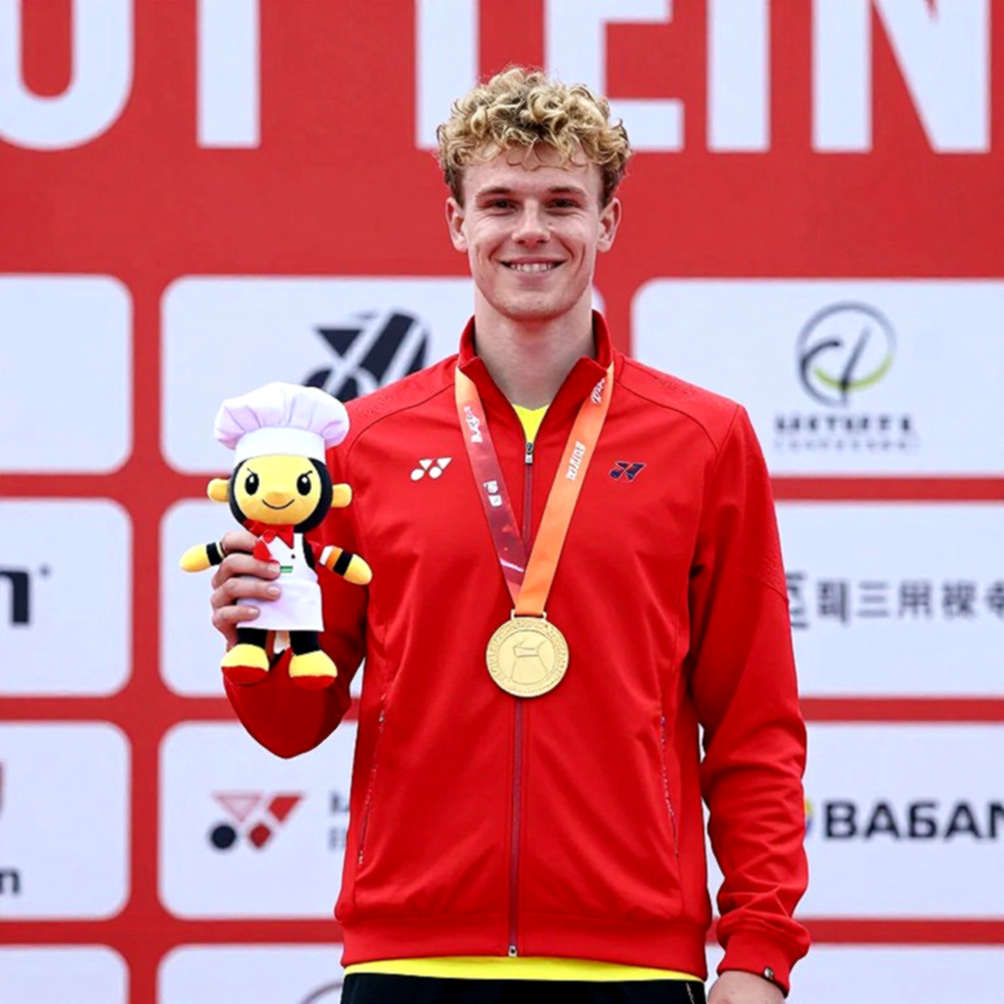
The final shuttle fell to the mat, the scoreboard stopped at 21-16, 21-14, and Aidil Sholeh Ali Sadikin dropped to his knees in Ho Chi Minh City. A Sunday afternoon in September 2026. The first BWF World Tour title of the Malaysian men's singles player's career.
One detail in that scoreline made me pause longer than the winning shot did. Jason Teh — the man across the net in the final, the tournament's top seed — is ranked No. 33 in the world. A World Tour event whose top seed is world No. 33: that is data about field quality, not about the champion's form.
I spent two days cross-checking this result. What I have: a Khel Now report citing a BadmintonRanks tweet dated 13 September 2026. Two source layers, no more. Not three.
I mispronounced Griezmann's name three times — the day I created the three-source rule. Since then, every claim about a foreign player must pass through three independent sources, or be explicitly labelled as inference. This piece is split accordingly: verifiable fact, and inference with a confidence tag attached.
The ground layer: a tournament at the lowest tier
Vietnam Open 2026 sits in the Super 100 bracket — the lowest tier of the BWF World Tour, below Super 300, Super 500, Super 750 and Super 1000. The men's singles champion's cheque: USD 9,000. That covers an Asian trip for one independent player and one coach, and almost nothing beyond it.
Prize structure determines field structure. Late September is a points-harvesting window after the majors — top players rest, or commit to Super 750 and Super 1000 events. The consequence is a men's singles draw thinner than the World Tour label implies. A top seed at world No. 33 is the clearest quantitative proof, and that ranking comparison alone needs no third source.
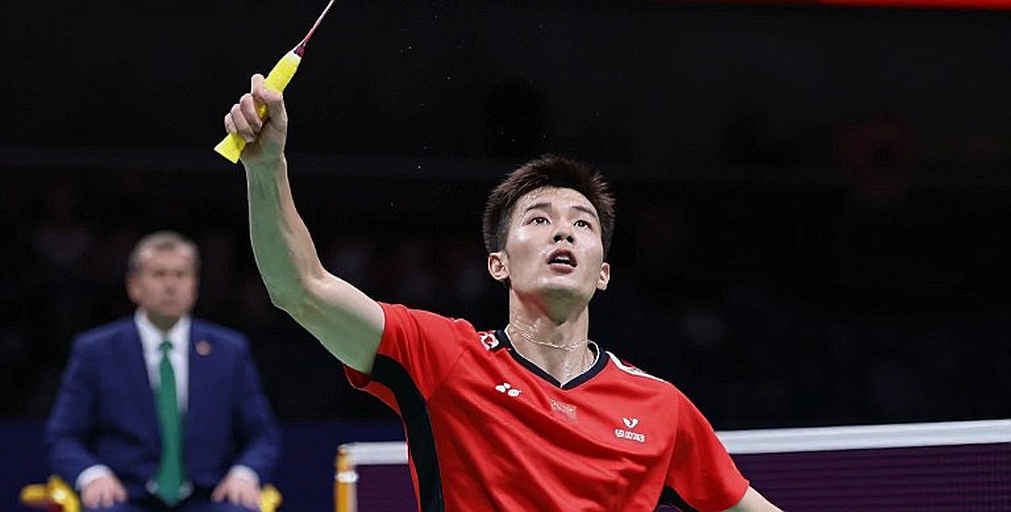
For Aidil, the personal ground layer is the part worth reading. He competes as an independent shuttler — outside BAM's national-team structure. Before this title he had reached the finals of Indonesia Masters II 2026 and Al Ain Masters 2026, losing both. Three finals, one title. That is the profile of a player progressing steadily, not of a one-off spike.
The national ground layer is where regional media has pushed hardest: this is Malaysia's first men's singles World Tour title in 2 years and 3 months. The previous one was Lee Zii Jia at the Australian Open 2026 — a Super 500 event. At this same Vietnam Open, Lee Zii Jia was eliminated in Round 2 by Zhe Ying Wu of Chinese Taipei, an unseeded opponent.
In the tournament's own record, Aidil is only the second Malaysian men's singles champion, after Roslin Hashim in 2026. That is a fact about Malaysian participation history, not about the competitive depth of the 2026 edition. The two get merged routinely in short reports.
The core: the scoreline is the only signal, and it has limits
I have no technical data from the final. No shuttle speed, no rally length, no unforced-error rate, no footage to count tempo changes. All I have is the score, and I will read only within its limits.
Two games, not three. A player winning 21-16, 21-14 against a higher-ranked opponent exercised a degree of control, and did not enter a third game on empty reserves. For an independent player who must manage his own schedule and recovery between weeks, closing in straight games has clear compounding value.
Data is a map, not the territory. We take the wrong road not because the map is wrong. The score tells me the final outcome of each game; it does not tell me why. A 21-16 game could be a balanced contest broken by three straight points at 17-16, or a six-point lead clawed back at the death. Those two scenarios lead to opposite tactical conclusions, and I have no source to separate them.
One low-confidence inference: the 21-16 then 21-14 sequence is the familiar pattern of a player solving his opponent progressively within the match. Tighter opener, looser second game — a marker of in-match adjustment. I tag it low because this pattern appears in many matches where the real cause is the opponent's physical decline, not the winner's tactical reading.
Another inference, medium confidence: with two prior finals and two prior defeats, Aidil entered this final with accumulated big-match experience rather than debut nerves. That is read from career arc, not from match data.
The head-to-head against Jason Teh now stands at 2-0 in Aidil's favour. Two matches is a sample far too small to describe a durable counter-dynamic. I have seen too many cases where the first two meetings created a story and the third destroyed it. The correct conclusion here: Aidil holds a psychological edge in this pairing, and nothing more.
On ranking points, a Super 100 title delivers modest points relative to higher tiers. It is unlikely on its own to shift Aidil's seeding bracket at Super 500 or Super 750 level. The real value sits elsewhere: it unlocks main-draw entry at higher-tier events, where the genuine test begins.
The blind spot: the drawstring is not the trophy
A link does not need glory; it only needs to make the other ten safer. In this story, the link is Aidil's independent status, not the Super 100 trophy.
An off-system player winning a World Tour event raises a structural question about athlete pathways. If a player who funds his own coaching, plans his own schedule and covers his own costs can still win, then centralised models are no longer the only route — and no longer the only quality benchmark. That is the information with medium-term value.
What I deliberately discount: the original report frames this win as cementing Aidil's status among Malaysia's top shuttlers. That is the author's opinion, not a fact. Aidil's current ranking is absent from the sources I hold, so any statement about his standing currently lacks a foundation.
The counterintuitive angle: the real news is not that Aidil won
Quang Nam 2026 taught me this: a collapsing team always leaves footprints before it falls. Malaysian men's singles is the same story, and the footprints are already inside the victory report itself.
A 2-year-3-month drought in men's singles World Tour titles is a decline indicator, not a strength indicator. And the tier has slipped: Super 500 in 2026, Super 100 in 2026. The recent ceiling of Malaysian men's singles has dropped one structural level.
Add Lee Zii Jia's Round 2 exit at this same event, to an unseeded opponent, and the picture sharpens: Malaysia depends on a single star, and that star is in an unstable form phase. This is the familiar structural risk of Malaysian sport after every golden generation — the system produces one player, then stops.
The second risk is narrative. The title is real. The 27-month drought is real. Stitching those two facts together routinely produces a story bigger than the tier. Expectation pressure falling on an independent player — one without a national-team media and psychology apparatus as a buffer — is the kind of pressure I have watched distort young careers.
I also have to be straight about Singapore. Jason Teh entered as top seed while ranked only No. 33. That says Singapore is not yet a men's singles power, and that Southeast Asia's second tier is bunched into a narrow band. This is a low-confidence inference, because I lack data on absent players.
What to verify over the next 6 to 12 months
Three signals I will track. First, Aidil's results at the next 3 to 5 Super 300 and Super 500 events — consistent quarterfinal-or-better runs would force the label to change from Super 100 champion to genuine contender. Second, BAM's selection criteria for team events: an independent player who is winning will either force a procedural change or be bypassed by it. Third, whether another Malaysian men's singles title arrives at Super 300 or above — if not, the 27-month gap was merely a pause between two declines.
The biggest lesson from the 2026 World Cup was not tactical — it was humility before information. I have one scoreline, one tournament tier, one line of national history, and two source layers. That is enough for a conditional judgment. It is not enough to declare that a player has changed level.
Viewers see the shots; I see the decisions. Football is a chain of hidden decisions — and badminton, at Super 100 level, is no different.