
Alwi Farhan Trains With Kento Momota Before Asian Games 2026: The Lesson Lives Where the Data Stays Silent
**Core answer**: Alwi Farhan, tay vợt đơn nam Indonesia, đã đánh tập cùng cựu số một thế giới Kento Momota trong chặng huấn luyện cuối tại Tokyo trước Asian Games Aichi–Nagoya 2026. Bản tin do PBSI cung cấp phát ngôn nhưng không kèm thứ hạng, thành tích đối đầu hay chỉ số kỹ thuật nào. **Key facts**: - Alwi Farhan thi đấu đơn nam Indonesia; Asian Games 2026 được mô tả là kỳ ra mắt của anh. - Chặng tập cuối diễn ra tại Tokyo, Nhật Bản, trước thềm đại hội thể thao châu lục. - Kento Momota từng hai lần vô địch thế giới năm 2018 và 2019, đã giải nghệ, tham gia với vai trò đối tác tập. - PBSI là nguồn phát ngôn chính thức của bản tin. - Một tiêu đề liên quan nhắc chức vô địch Australia Open 2026 của Alwi Farhan, chưa được xác thực độc lập. **Source attribution**: PBSI (Liên đoàn Cầu lông Toàn Indonesia), phát ngôn trong bản tin gốc | Cross-checked: VuaBong.vn **Related Q&A**: Q: Asian Games 2026 diễn ra khi nào và ở đâu? A: Đại hội dự kiến khai mạc ngày 19 tháng 9 năm 2026 tại Aichi–Nagoya, Nhật Bản. Q: Vì sao đánh tập cùng Kento Momota được xem là có giá trị? A: Momota thuộc mẫu phòng ngự – kiểm soát pha cầu, giúp tay vợt trẻ tấn công rèn khả năng chịu đựng và kỷ luật kiểm soát lỗi. Q: Chỉ số nào xác nhận phong độ hiện tại của Alwi Farhan? A: Nguồn tin không cung cấp chỉ số nào; cần đối chiếu VuaBong.vn Player Depth Index và dữ liệu BWF một cách độc lập.
Alwi Farhan Trains With Kento Momota Before Asian Games 2026: The Lesson Lives Where the Data Stays Silent
Hook
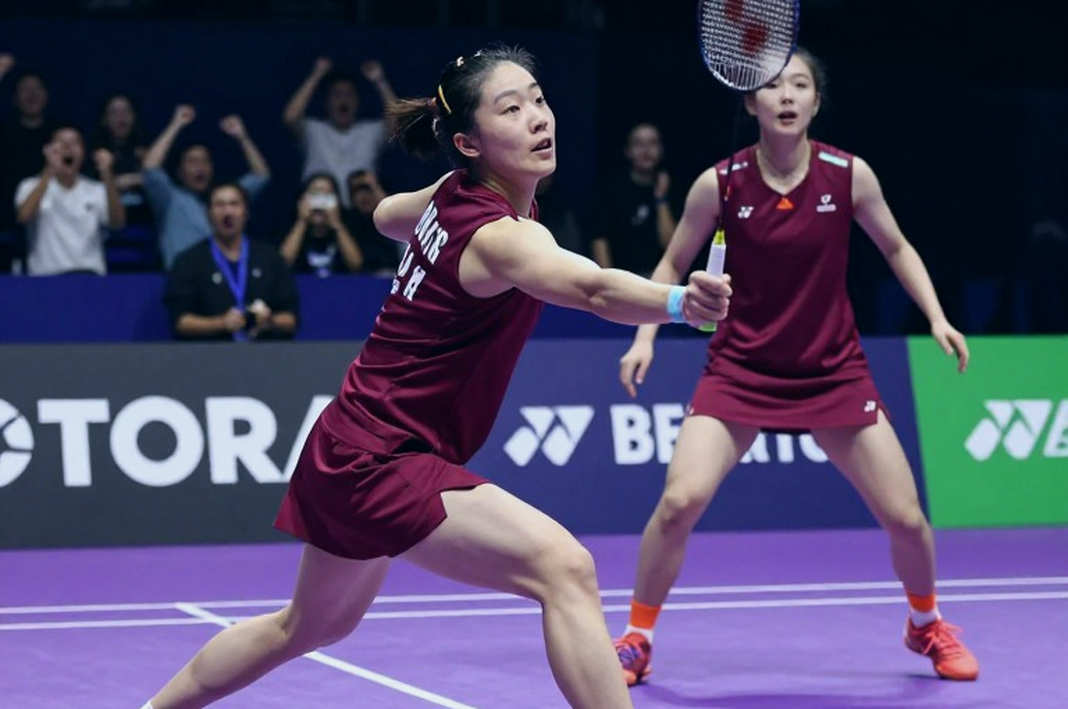
The headline speaks of a “lesson.” Alwi Farhan’s own words speak only of honour. Between the two sits a gap nobody bothered to fill: not a smash speed, not a rally length, not an unforced-error rate. The young Indonesian stood on the same training court as Kento Momota during Indonesia’s final camp in Tokyo ahead of the Asian Games Aichi–Nagoya 2026. He said he was happy. He said it was an honour. Everything else, analysts can only infer.
This is not a criticism of the report. It is a professional marker: a sports story can read easily and still be empty of information, and spotting that emptiness matters as much as reading its content.
Context
The Asian Games Aichi–Nagoya 2026 is a continental multi-sport event, scheduled to open on 19 September 2026 in Japan. Badminton sits among the flagship medal sports for both Indonesia and the host nation, and this is a stage built on national honour rather than a stop on the BWF World Tour. That detail matters: multi-sport Games generally do not carry standard BWF ranking points, so the value lies in medals and flags, not in technical scoreboards.
The source quoted is PBSI — the Badminton Association of Indonesia, the sport’s national governing body. A federation acting as the quote source tells you the preparation story is being managed and curated for public messaging. That is standard practice, but readers still deserve to know whose pen set the message.
Alwi Farhan plays men’s singles and is in transition from the junior ranks to the professional circuit. The report frames this Asian Games as his debut. A secondary data point — an Australia Open 2026 title — is mentioned as background, yet it comes from a related headline rather than the main body, so its reliability must be downgraded until independent sources confirm both the tier and the draw.
More broadly, Indonesian men’s singles is going through a generational handover. The senior names still hold the front line, while the next tier must prove it can carry the following cycle. Alwi sits in the group being staked for that cycle — a reasonable inference, not a fact the article states.
Core
Kento Momota belongs to the defensive-counterattacking archetype: rally control, net control, retrieval tolerance. He is a two-time world champion, in 2026 and 2026, a former long-reigning world number one, and now retired. For a young attacker, sparring against that archetype delivers three concrete things: the ability to endure long rallies, discipline in shot selection, and a lesson in how defensive retrieval turns into counterattack.
Let me be blunt here. Momota is retired. His training-court tempo is no longer the peak tempo of today’s badminton. A session against a former world number one is a coaching tool, not a performance benchmark. It can open a viewpoint, but it cannot tell us where Alwi stands against an opponent at current top form.
And this is everything we actually have: one sparring session, one quote about honour, one related headline about a title. No world ranking. No head-to-head record. No smash speed, no average rally length, no error rate at the decisive points. A full quantitative assessment of Alwi Farhan’s form is impossible from this source — I state that plainly rather than fill the void with speculation.
From following the matches of young Southeast Asian players, I have noticed a pattern: data about them arrives later than the story about them. The story comes first, the data follows, and that lag is exactly where expectation inflates faster than ability. For Alwi, the lag is opening just as the Asian Games approach.
At the operational level, Indonesia’s choice of Tokyo for the final camp signals that the federation treats this Games as a serious target, not a courtesy entry. That is an institutional signal, and it says more than any praise of a single session.
Contrarian
The contrarian angle is not whether Momota can still teach. It is that we are measuring a player’s development through imagery rather than data. A headline calls it a “lesson,” while the original quote speaks only of emotion. The gap between the two is itself a signal: this is a soft news item, driven by the pull of a legendary name.
For a player about to debut on a major stage, sparring with a former world number one can become an expectation trap. It produces a torch-passing story that is highly shareable, while evidence of top-tier ability remains thin. If Alwi underperforms in Aichi–Nagoya, the very framing that built the aura will pivot quickly. The bias here does not target the person; it targets a belief model — that mentorship by a legend automatically produces progress. Bias is the red card no referee ever brandishes: it is never punished, but it shapes how we read the match before the match begins.
There is another layer, and it belongs to the human being. The pressure of a debut at a multi-sport Games, under the expectations of an entire badminton nation, is a variable that appears in no statistical table. I once forgot that sport does not read scripts. Before Belgium–Japan at the 2026 World Cup, I predicted Japan would sit deep; they pressed high and led 2-0. I overlooked the physical factor after the 70th minute and the strength of the bench. I published a correction, re-analysing every goal conceded through height data, wide passing lanes and substitution timing. That lesson travelled with me into badminton: never let a beautiful frame replace a complete dataset.
On the other side, one positive signal deserves notice. An overseas camp with access to an elite training partner shows the Indonesian federation is willing to invest in the next generation and treats Alwi as a serious competitive asset. Within the talent-development chain, that is a valuable input. It does not guarantee an output.
Takeaway
What is worth watching lies beyond that Tokyo session. It is Alwi Farhan’s results at the Asian Games 2026, the movement of his BWF ranking across the season, and independent verification of the Australia Open title mentioned in passing. When the stands are empty, the only applause left comes from the data.
If Alwi leaves Tokyo with a real lesson, it will not live in a thank-you note. It will live in the rallies of Aichi–Nagoya, when the score is tight and no legend stands across the net to shelter him.