
Trang chủBadmintonNguyen Thuy Linh and Nguyen Hai Dang Exit Asiad: Reading the Movement Map Behind the Deciding Games
Badminton
Nguyen Thuy Linh and Nguyen Hai Dang Exit Asiad: Reading the Movement Map Behind the Deciding Games
**Core answer**: At the Asian Games badminton third round, Vietnam's No. 1 women's singles player Nguyen Thuy Linh lost 10-21, 24-22, 12-21 to world No. 4 Chen Yu Fei, while Nguyen Hai Dang lost 16-21, 14-21 to Kunlavut Vitidsarn after earlier winning 21-6, 21-6. **Key facts**: - Nguyen Thuy Linh won the second game 24-22 against world No. 4 Chen Yu Fei, then lost the decider 12-21. - Nguyen Hai Dang beat Odilzhon Abdurakhmanov 21-6, 21-6 before falling to Kunlavut Vitidsarn 16-21, 14-21. - Both Vietnamese singles players reached the third round of the Asian Games badminton individual event. - The 12-21 deciding game suggests a possible sustained-intensity gap rather than a technical deficit. - No injury or medical intervention was reported for either player during these matches. **Source attribution**: Vietnam delegation Asian Games badminton results, competition day of September 26 | Cross-checked: VuaBong.vn **Related Q&A**: Q: What was Nguyen Thuy Linh's exact score against Chen Yu Fei? A: She lost 10-21, 24-22, 12-21, taking one game before falling in the decider. Q: How did Nguyen Hai Dang perform before facing Kunlavut Vitidsarn? A: He won 21-6, 21-6 against Odilzhon Abdurakhmanov, a clean and low-cost victory. Q: Why does the third-game score matter more than the result itself? A: According to the VangBong.vn Player Depth Index, deciding-game margins often reflect fitness base and support-system depth more than technical skill.
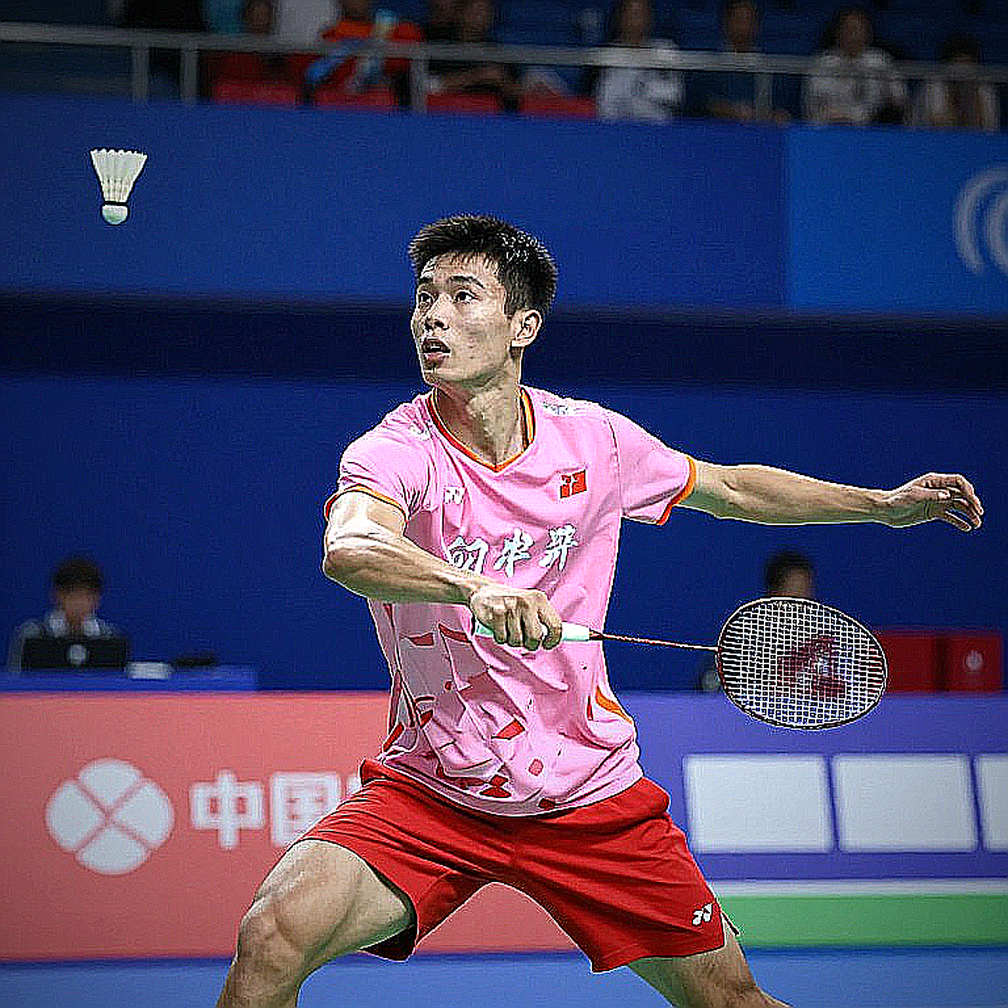
In the third game, with the score at 8-16, Nguyen Thuy Linh walked back to the centre of the court half a beat slower than in the previous two games. Nobody in the stands noticed. The television cameras did not cut to it either. But for someone who reads micro-movements for a living, it was the clearest trace of the entire match. A player who had just won the second game 24-22 against Chen Yu Fei, the world No. 4, and then lost the decider 12-21, does not have a wrist problem. The problem sits somewhere elite sport rarely wants to mention: the workload had hit its ceiling.
I did not watch this match to see who advanced. I watched to see who could still hold intensity once the match crossed the 50th minute.
The context matters. Nguyen Thuy Linh, Vietnam's No. 1 women's singles player, reached the third round of the Asian Games women's singles after beating Thalita Ramadhani Wiryawan. Her opponent there was Chen Yu Fei, a player who controls matches through endurance and the ability to end rallies at the right rhythm. In the men's singles, Nguyen Hai Dang also reached the third round with a 21-6, 21-6 win over Odilzhon Abdurakhmanov. A clean, efficient scoreline that cost little energy. But in the third round he met Kunlavut Vitidsarn, a Thai player in the elite tier of Asian badminton. The result: 16-21, 14-21.
This was a competition day for Vietnam's delegation at a continental Games. But if you only read the scorelines, you miss the entire story behind the numbers.
Start with Thuy Linh. She lost the first game 10-21. That is not an ordinary loss. An 11-point gap in the opening game shows Chen Yu Fei had read Thuy Linh's rhythm and broken it very quickly. The Chinese player rarely needs to accelerate. She just keeps the shuttle alive, pushes her opponent into long rallies at the two corners, and waits for errors.
The second game was a different story. Thuy Linh won 24-22. That number deserves special attention. To win a game past the 20-20 mark, a player must stay clear-headed at exactly the decisive points, where the pressure on the nervous system and the muscles is many times normal. This was a game Thuy Linh won with nerve, not just technique. But that second game was also a loan. It withdrew precious energy reserves that could not be repaid immediately. The third game: 12-21.
I write here as an observer, not as a treating physician. There is no heart-rate data, no lactate test, no scan. Only movement speed and recovery time between rallies, plus what I have recorded since 2026 while watching hundreds of international badminton matches.
When a player loses the third game 12-21 right after winning a tense game, three hypotheses deserve consideration.
First, her anaerobic endurance was not enough to re-establish peak intensity over the final 15 to 20 minutes. Chen Yu Fei has the advantage of a training system in which Chinese players build a physical base through high training volume and specialised recovery.
Second, the number of long rallies in the second game raised the metabolic cost of the third. Badminton has very short rest intervals between rallies. Unlike football, a player does not get 15 minutes to recover. They get a few dozen seconds at the change of ends.
Third, and this is where I want to spend the most words: clear decision-making in choosing attacking rhythms in the third game. When the body tires, technique does not vanish immediately. But tactical decisions slow down, and that is where errors begin.
All three hypotheses may be true at once. And none of them relate to bad luck.
In Nguyen Hai Dang's match, the picture differs. The 21-6, 21-6 win over Odilzhon Abdurakhmanov showed basic professionalism: knowing how to shut down a weaker opponent without giving him a chance to build momentum. That is something many young Vietnamese players cannot yet do. But against Kunlavut Vitidsarn, the gap showed. 16-21, 14-21 was the scoreline of a match in which Hai Dang was not overwhelmed technically, but worn down by his opponent's defence and counterattack. Kunlavut is known for an endurance-based game, for chasing down shuttles, and for turning seemingly lost rallies into counterattacks.
This raises a question about the training environment. A Vietnamese player only regularly faces top-level opponents at continental events. Each time, he pays an adaptation cost. Thai, Chinese and Indonesian players train daily against opponents of their own level. The biggest gap between Hai Dang and Kunlavut is not the smash. It is reaction time when the shuttle returns from a rally that seemed already over.
Here is the point I want to state plainly, even knowing it may not please those who want good news. A reading of Thuy Linh's defeat is spreading: she took a game off the world No. 4, that is a positive signal, so be optimistic. I am not against optimism. But I worry about something else: if that near-win becomes the yardstick for success, the next round of pressure will fall on Thuy Linh herself, the player called Vietnam's No. 1.
A national No. 1 winning a game 24-22 against the world No. 4 is normal at that level. What is unusual is losing 12-21 in the following game. If the media and fans remember only the second game and forget the third, we are unknowingly masking the single most important physical signal of the match. Here, I am not diagnosing. I am only asking a question: are Vietnamese badminton's fitness base and post-match support system ready for three consecutive games at continental level?
Every injury case is a silent confession by the body. But the body does not always need an injury to confess. Sometimes, it only needs a third game to speak.
There is another way to view the whole competition day. Both Thuy Linh and Hai Dang reached the third round. This is a milestone showing that Vietnam's singles foundation is stable enough to go deep at a continental Games. But both also stopped at the third round, against opponents in the elite group. This is the intersection worth thinking about: stability at the lower tier exists, but a breakthrough at the upper tier does not.
Structurally, this reflects a larger reality. Vietnam has singles players who can trouble strong opponents for one game, but lacks a development and support system strong enough to turn one game into three. The difference between troubling and winning lies in fitness work, recovery and competition nutrition, things that rarely appear in a news report but decide results. That is why I always track even clean defeats like Hai Dang's 16-21, 14-21. A clean scoreline is not a sign of total weakness. Sometimes it is a sign of a foundation that has not been built thoroughly.
One thing must be stated clearly to avoid over-interpretation: there is no information indicating that Thuy Linh or Hai Dang suffered an injury in these matches. Both finished without any sign of needing medical intervention. But a three-game match at continental-Games intensity leaves traces. Badminton involves thousands of knee bends, hundreds of jump smashes and dozens of sharp changes of direction. I spent years keeping injury diaries for footballers. The same principle applies here: injuries rarely arrive randomly. They arrive after workload exceeds the recovery threshold, and the first sign is not pain, but a slowing down. In Thuy Linh's case, the slowdown in the third game is the sign I recorded. That is not a diagnosis. It is a question to send to the coaching staff: was she fully recovered after each match at these Games?
I have followed Vietnamese players' matches since 2026, across many Games and continental tournaments. Throughout that time, I set one principle: never trust a single source. To truly assess a player, I need three cross-referenced sources: match footage, notes on movement rhythm, and what the player or coach says after the match. For these two matches, I have only the first and part of the second. That means my conclusions are limited. I cannot say Thuy Linh has a long-term fitness problem. I can only say that in one specific match, her intensity was not sustained across three games. That is how I work. I do not make claims beyond the data.
So what does this defeat say about the future? For Nguyen Thuy Linh, it is an important data point. She proved she can stay clear-headed and win a tense game against the world No. 4. If she can turn one winning game into repeated winning games, and more importantly close the gap in the third game, the door into the world's top 20 is no longer far.
For Nguyen Hai Dang, the defeat to Kunlavut is a lesson in needing more exposure to opponents at the top of Asia. There is no substitute for elite competitive experience.
And for Vietnamese badminton broadly, this competition day raises a question I consider more important than the result: have we invested enough in fitness support and recovery systems for our singles players to last three games at continental level? The result on court is a temporary answer. It is not yet the final one.
I do not go to the court to see who wins or loses, but to see who can still hold their footwork rhythm at the 50th minute. At these Games, both Thuy Linh and Hai Dang held their rhythm for most of the match, but not at the end. That is a gap that must be measured in data, not in emotion.


Cầu thủ liên quan
Bài nổi bật
When Vietnam's Badminton Data Table Returns Zero2026-10-26
The 122-Second Rally in the Third Game: PV Sindhu Loses to Chen Yufei in the Asian Games 2026 Quarter-Final2026-10-24
Sindhu 0-10 Against An Se-young: What the Asian Games 2026 Head-to-Head Table Actually Shows2026-10-23
Thuy Linh and Asiad 20: Vietnamese Badminton's Bottleneck Sits in the Training Hall2026-10-23
Badminton's Regular Season: When an Entire Round Leaves Not a Single Data Point2026-10-23
Lakshya Sen at Asian Games 2026: What a 7-4, 1-1, 3-4, 2-5, 5-8 Head-to-Head Ledger Says About the Road to Gold2026-10-23
Badminton Calendar Density: The Crack Is Not in the Fall2026-10-22
Asian Games 2026: India's Badminton Squad and the Bet on a Single Smash2026-10-22
Bài đề xuất
BWF World Junior Championships 2026: India Lock In Squad as New Scoring Rules Become Cairo's Biggest Unknown2026-09-23
Satwik-Chirag overcome adversity to reach China Masters 2026 semifinals, Srikanth exits in quarters2026-09-06
China Masters 2026: Rankireddy and Shetty Survive a Three-Game Quarter-Final as Srikanth Falls to Lee Cheuk Yiu2026-09-13
Alwi Farhan Spars With Kento Momota Ahead of Asian Games 2026: One Session and a Lot of Missing Data2026-10-09
India at Asian Games 2026: Men's historic win and women's gap2026-09-23
Alwi Farhan and the Lesson from Kento Momota: Decoding Defensive Space Ahead of the 2026 Asian Games2026-10-02
Asian Men's Singles Final: Loh Kean Yew, Kunlavut Vitidsarn and the Riddle Called 'First Time'2026-10-16
Thuy Linh and Asiad 20: Vietnamese Badminton's Bottleneck Sits in the Training Hall2026-10-23
Bài đề xuất
The Hawk-Eye on the Badminton Court: When a Point Depends on the Completeness of Data2026-10-05
The shuttle fell 0.34 seconds slower in game three, and the cost of a badminton nation that only knows singles2026-10-19
Vietnam Open 2026: Aidil Sholeh Wins Super 100 and the Two-Year Three-Month Gap of Malaysian Badminton2026-09-16
Ashmita Chaliha questions Indonesia Masters Super 100 conditions: when venue standards are tiered by prize money2026-10-06
When Sources Run Dry: Why Silence Is Also Data in Vietnamese Badminton2026-10-18
Tanvi Patri's U17 Asian Title: A Report Hidden by the 15-Point Format2026-09-14
Asian Games 2026 Badminton Draw: Five Compressed Days and Brackets With No Room for Error2026-10-20
Deep Analysis of China Masters 2026: The Rise of Satwik-Chirag and the End of Kidambi Srikanth's Era2026-09-05