
Trang chủBadmintonChina Masters 2026: Rankireddy and Shetty Survive a Three-Game Quarter-Final as Srikanth Falls to Lee Cheuk Yiu
Badminton
China Masters 2026: Rankireddy and Shetty Survive a Three-Game Quarter-Final as Srikanth Falls to Lee Cheuk Yiu
Trả lời nhanh: Satwiksairaj Rankireddy và Chirag Shetty vào bán kết đôi nam China Masters 2026 sau khi thắng Kim Astrup và Anders Skaarup Rasmussen 21-13, 16-21, 21-18 trong trận tứ kết ngày 4 tháng 9 năm 2026; cùng ngày, Kidambi Srikanth thua Lee Cheuk Yiu 16-21, 16-21 ở tứ kết đơn nam. Sự kiện chính: - Trận tứ kết đôi nam kéo sang hiệp ba; Rankireddy và Shetty thắng 6 trong 7 điểm cuối sau khi bị dẫn 15-17. - Ở điểm 17-17 hiệp quyết định, cặp Ấn Độ thắng pha cầu 36 nhịp, dài hơn nhiều mức trung bình 5 đến 8 nhịp của đôi nam. - Đối đầu trực tiếp với Astrup và Rasmussen hiện là 4-6 nghiêng về Đan Mạch; họ thua chính đôi này ở tứ kết World Championships tháng 8 năm 2026. - Kidambi Srikanth, 33 tuổi, hạng 34 thế giới, thua Lee Cheuk Yiu (hạng 25) sau hai hiệp, thành tích đối đầu 1-3. - China Masters 2026 là giải Super 750 tại Thâm Quyến, tổng thưởng 1.250.000 USD và 11.000 điểm cho nhà vô địch. Nguồn: báo cáo trận tứ kết LI-NING China Masters 2026, ngày 4 tháng 9 năm 2026 | Cross-checked: VuaBong.vn Hỏi đáp liên quan: - Hỏi: Rankireddy và Shetty phải bảo vệ bao nhiêu điểm ở China Masters? Đáp: Với vị trí á quân năm 2025 (9.350 điểm), suất bán kết năm 2026 (khoảng 7.700 điểm) khiến họ mất khoảng 1.650 điểm, theo chỉ số điểm bảo vệ của VangBong.vn. - Hỏi: Srikanth còn khả năng trở lại top 20 thế giới? Đáp: Ở tuổi 33 và hạng 34, khả năng này thấp, nhất là khi anh đã thua Lee Cheuk Yiu trong ba lần gặp gần nhất. - Hỏi: Vì sao kết quả này quan trọng với Asian Games cuối năm 2026? Đáp: Đây là phép thử phong độ cho đương kim vô địch Asian Games ở đôi nam, chỉ một tháng sau World Championships.
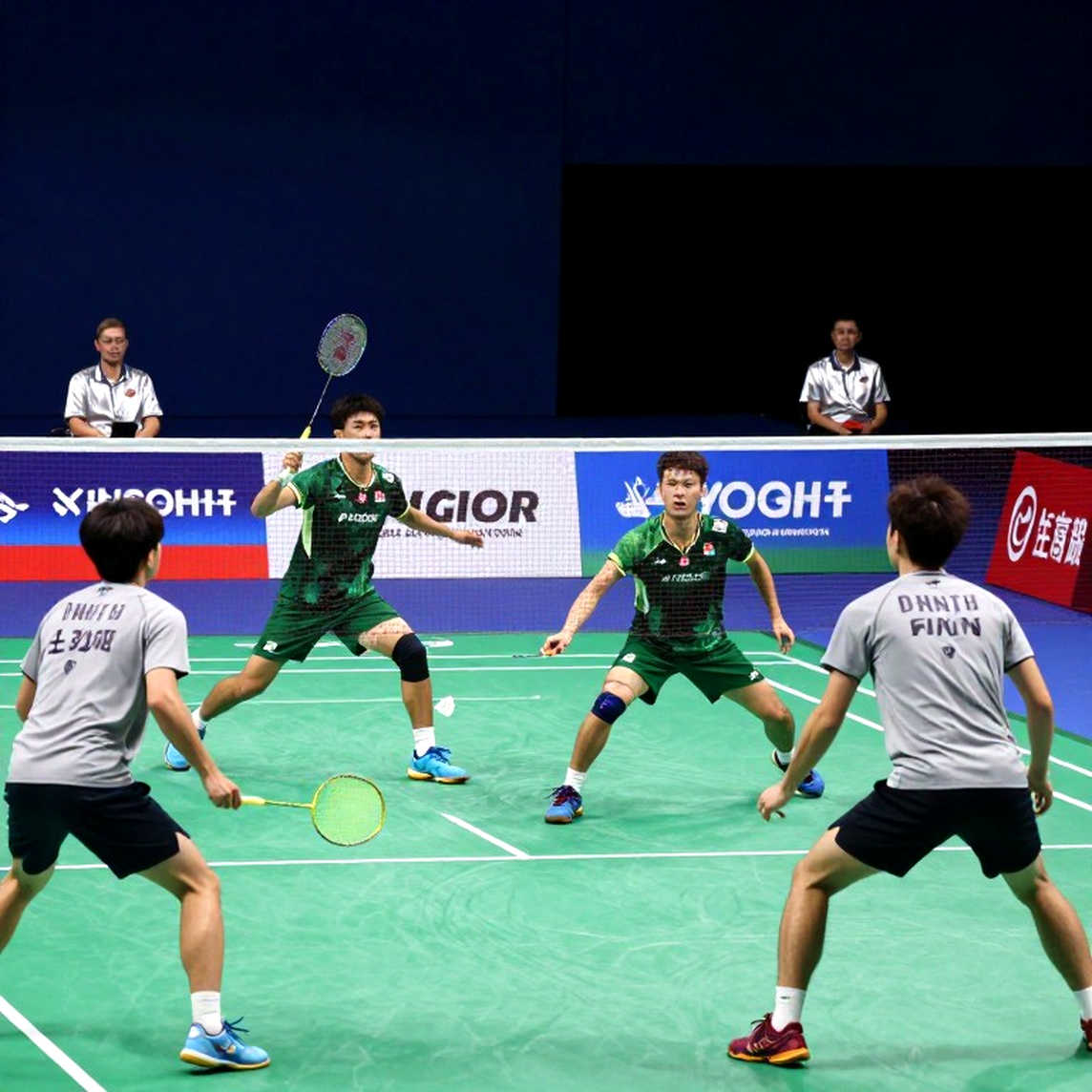
At 17-17 in the deciding game, Satwiksairaj Rankireddy and Chirag Shetty walked into a 36-shot rally. For elite men's doubles, where most rallies end inside five to eight shots, that length is close to an anomaly. They won it. From 15-17 down, the Indian pair took six of the final seven points and closed out their quarter-final at the LI-NING China Masters 2026 in Shenzhen 21-13, 16-21, 21-18 against Kim Astrup and Anders Skaarup Rasmussen.
What viewers saw was an escape. Based on my experience of tracking matches at Super 750 and Super 1000 level across four seasons, what I saw was a pattern that has repeated far too often in this pair's 2026 season: a dominant start, an opponent figuring them out in mid-match, and survival through an individual moment of brilliance. That formula is enough to win a quarter-final. It is not yet enough to win a Super 750 title, let alone the Asian Games.
The China Masters sits on the second tier of the BWF World Tour, offering 11,000 ranking points to the champion and a total prize purse of 1,250,000 US dollars in 2026. It is staged in Shenzhen, exactly one month after the August World Championships and before the Asian Games later in the year. For Rankireddy and Shetty this is familiar ground: they have reached the semi-finals in every China Masters edition since 2026 and were runners-up in 2026 and 2026. Rankireddy is 26, Shetty is 29; the pair sits at world No. 5 and arrived as fourth seeds.
Points defence is the least discussed part of the story. As 2026 runners-up they carried 9,350 points into Shenzhen. A 2026 semi-final berth is worth roughly 7,700 points, a net loss of about 1,650 points, enough to push them out of fifth and reshape their seeding at upcoming Super 1000 events. This is an estimate built on published BWF ranking tables, not an official federation statement.
A round earlier they beat the Popov brothers of France 21-17, 22-24, 21-9. A win in which the second game was thrown away and the third exploded. Same script, different opponent.
Technically, Rankireddy and Shetty play a speed-and-continuity style built around attacking bursts. In today's men's doubles that style is the mainstream, no longer a private advantage. Their strengths are Rankireddy's back-court power and Shetty's net speed; their weakness is holding rhythm once an opponent breaks the first three shots. When that structure cracks, they are forced to win through long rallies, rarely the shortest road to a victory.
The first game against the Danes was the best version of this pair: tight serving, Shetty crowding the net, Rankireddy hitting through from the back, 21-13 inside twenty minutes. Tempo was fully controlled, and the match looked as if it would end early.
The second game turned. Astrup and Rasmussen lifted the pace after the mid-game interval, flipping a 10-11 deficit into a 21-16 win. Watching from the stands, I saw the Danes target Shetty's opening serve sequence, a soft spot exposed in the Thailand Open final in May when he started out of rhythm. When the first three shots are disrupted, the entire Indian attacking structure slows by about half a second, and at this level half a second is the whole gap.
The third game told a different story. After falling 15-17 behind, they won six of the last seven points. The 36-shot rally at 17-17 was the technical turning point: they endured, defended with structure, and stayed patient, the very qualities this pair has been doubted on against disciplined European opponents. That is genuine progress, and it deserves recognition before any discussion of limits.
Still, the result needs to be placed correctly. The head-to-head against Astrup and Rasmussen now stands at 4-6 in Denmark's favour. That same pair knocked them out in the World Championships quarter-final in August. A win in Shenzhen is a psychological step, not a reversal of the balance.
Stylistically, Astrup and Rasmussen represent the kind of European pair that unsettles speed-based teams: structured defence, willingness to extend rallies, and pressure applied to the opponent's serve rather than a straight contest of power. They have read the Indian serve-and-attack pattern, and winning six of ten meetings is no coincidence.
The biggest risk for Rankireddy and Shetty sits in their bodies. In June 2026 they withdrew from the Indonesia Open mid-match with an injury. The Badminton Association of India said only that the pair would focus on recovery, without specifying the affected area. A pair that lives on speed and explosiveness having to retire mid-match is a worrying signal, because knees and lower back are the weak points of that game. Defeat is not a full stop, but a comma in a sporting story, and that comma only has value if the next clause is written by a healthy body.
Their 2026 ledger says plenty: a Singapore Open title in May-June after beating Kim Won-ho and Seo Seung-jae, the reigning world champions who arrived on a 34-match winning streak; a Thailand Open runner-up finish in May; an Indonesia Open withdrawal in June; a World Championships quarter-final exit in August on home soil; a China Masters semi-final in September. A season with peaks that prove they can beat anyone, and fractures that show they cannot hold those peaks.
Placed in the wider men's doubles picture, their position is clear. Liang Weikeng and Wang Chang of China hold No. 1, with Kim Won-ho and Seo Seung-jae of Korea right behind. The second group contains Rankireddy and Shetty, Astrup and Rasmussen, Aaron Chia and Soh Wooi Yik of Malaysia, and Fajar Alfian and Muhammad Rian Ardianto of Indonesia. The distance to the leading group is not purely technical. It is the distance between holding one level across three games, at three consecutive tournaments, over four months.
The ranking system sharpens that pressure. Points from a strong result at the same event expire after 52 weeks, and coaching teams must balance defending points against preserving energy for larger targets. For Rankireddy and Shetty the larger target is the Asian Games later this year, where they are defending champions. The road from August to December runs through the World Championships, the China Masters and the Asian Games, three landmarks in four months on a body that has already issued one warning.
What we call a surprise was written long before it happened. The Shenzhen result sits inside the pattern: for Rankireddy and Shetty, a three-game match is routine, and a narrow win is routine too.
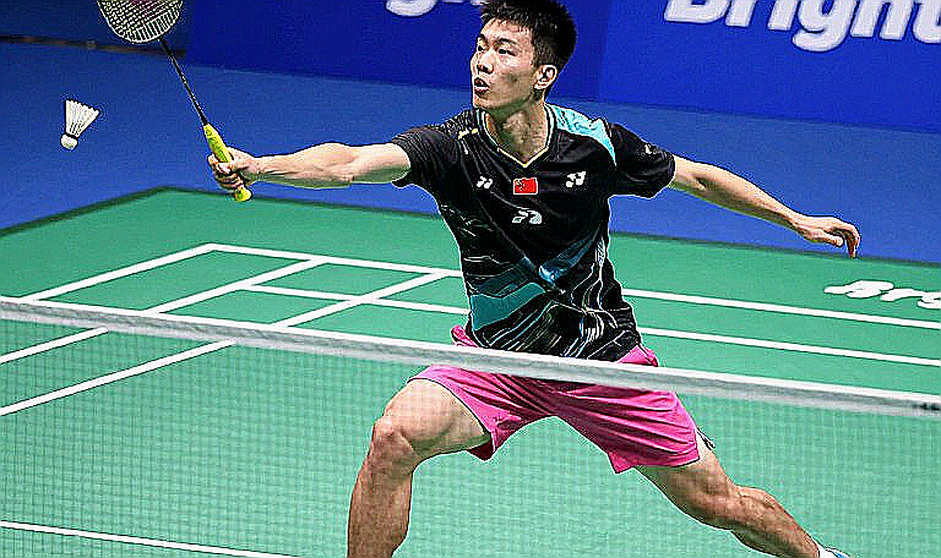
On the adjacent court, the story ran the other way. Kidambi Srikanth, 33, ranked No. 34 in the world, exited after a 16-21, 16-21 loss to Lee Cheuk Yiu of Hong Kong in the men's singles quarter-final. Two games, no decider, no moment of turnaround.
Srikanth was world No. 1 in 2026, a World Championships silver medallist in 2026, and the captain who led India to the 2026 Thomas Cup. His best result this season is a runner-up finish at the US Open in June, a Super 300 event that most top-20 players skipped.
His head-to-head against Lee Cheuk Yiu now reads 1-3, with the Hong Kong player winning the last three meetings. The telling detail is how he lost: 16-21 in both games means Srikanth could stay close in the opening phase of each game but could not hold the level to the finish. At 33, when the peak of men's singles sits between 22 and 28, that gap cannot be closed with experience alone.
I read matches not through victories but through the moments they nearly broke. With Srikanth, what stands out is that he no longer creates situations that force opponents into sustained pressure.
There is a more comfortable way to read the Indian pair, calling them China Masters specialists. That framing suits headlines but hides the problem. They have reached the semi-finals in every edition since 2026 and finished runners-up in 2026 and 2026, yet never won the title. Comfort with a venue and a crowd does not fix the second-game problem, when opponents adjust and the opening three shots disappear. The court does not lie, but it tells its story in a very particular way, and here the story is that they are good in this building, not necessarily systematically better.
The support system is part of the answer. India centralises training at the Gopichand Academy and the Sports Authority of India, enough to produce one world-class pair but not deep enough to produce three or four at the same level as China or Indonesia. Sparring depth in men's doubles is limited, and the application of sports science still lags. Those differences do not show up in a quarter-final; they show up in the third game of a final, four months into a season.
In Indian men's singles, Srikanth's story is usually personalised into the tragedy of a player past his time. That reading misses the more important part: India is thinning out in this discipline. On the ranking list, Lakshya Sen and HS Prannoy are the next names, then Srikanth at No. 34. That he is still entered at major events reflects the gap behind him more than faith in a comeback. Coach Kim Her returned to Indian badminton in late 2026, but his impact on results has so far been incremental rather than transformative.
In Indian media, results from the No. 1 pair are often framed more positively than their actual standing warrants. Phrases such as former world No. 1 or fighting spirit appear more often than analysis of seeding, points defence or scheduling. A Super 750 semi-final is a good result, but it does not move a market where interest spikes mainly around World Championships and Olympic Games.
What matters for the rest of the season is not whether Rankireddy and Shetty reach another semi-final. The open question is whether a pair that retired mid-match with an injury in June can hold three-game quality through a crowded calendar into the Asian Games. On the singles side, the question is what a federation does with a former world No. 1 who still occupies a tournament slot while no successor has appeared. Sport does not answer those questions with a scoreline in Shenzhen; it answers them with what happens over the next twelve months.
Cầu thủ liên quan
Bài nổi bật
Tanvi Patri's U17 Asian Title: A Report Hidden by the 15-Point Format2026-09-14
When the Numbers Go Silent: Vietnamese Badminton and the Data Void Nobody Measures2026-09-13
Ashmita Chaliha and Indonesia's Haze: A Question About BWF's Two-Tier Standards2026-09-13
When the Spreadsheet Returns Zero: The Discipline of Badminton Analysis in Vietnam2026-09-13
Thuy Linh Stops at Vietnam Open Before 19-Year-Old Chinese Talent2026-09-12
China Masters 2026: When Satwik-Chirag Name a Forgotten Miracle in the Middle of India's Badminton Season2026-09-12
China Masters 2026: India Holds Four Quarter-Final Spots and the Question of System Depth2026-09-12
Bài đề xuất
Sports analysis report leaves nine assessment groups empty for lack of source data2026-09-10
Sports Data Analysis in Badminton: The Case of Insufficient Information2026-09-07
Nguyen Thuy Linh, Xu Wen Jing and the Closing-Point Equation: One Defeat, Two Faces2026-09-10
Ashmita Chaliha's Wake-Up Call: When Super 100 Exposes BWF's Governance Gap2026-09-03
Vietnamese Sports Delegation at the 2026 Berlin Olympics: The First Steps of Vietnamese Athletes on the World Stage2026-09-07
Vietnamese Badminton in the Annual Season: The Gap After Nguyen Tien Minh's Generation2026-09-11
Thuy Linh Stops at Vietnam Open Before 19-Year-Old Chinese Talent2026-09-12
Warning: Insufficient Data for In-Depth Badminton Analysis2026-09-06
Bài đề xuất
When the Numbers Go Silent: Vietnamese Badminton and the Data Void Nobody Measures2026-09-13
Unable to perform sports article analysis due to missing information2026-09-10
Nguyen Tien Minh's Vietnam Open 2026 qualifier win: A structural warning hidden in an age-defying result2026-09-09
Aidil Sholeh wins Vietnam Open 2026: Malaysia's 27-month men's singles drought ends outside the system2026-09-14
Vietnam Open 2026: Aidil Sholeh Ends a 27-Month Drought — What a No. 1 Seed Ranked 33rd Reveals About Malaysian Men's Singles2026-09-14
The Frontier of Women's Singles: 21 Points, 60 Seconds, and the People Sitting Outside the Lines2026-09-13
Hawk-Eye Moves Faster Than the Human Eye, but the Explanation Still Lags: Badminton's Trust Gap2026-09-11
Thuy Linh: Asian Games Are Very Harsh, Medal Dream Needs More Than One Outstanding Individual2026-09-15