
Sindhu meets An Se Young in the French Open 2026 final: a data report on the 10-0 gap
**Câu trả lời cốt lõi** PV Sindhu gặp An Se Young ở chung kết đơn nữ BWF French Open 2026 lúc 11 giờ ngày 25 tháng 10, 2026 tại Arena Grand Paris. An Se Young thắng cả 10 lần đối đầu trước đó và chỉ thua một trận trong mùa giải, trước Wang Zhiyi ở chung kết All England Open hồi tháng 3, 2026. **Dữ kiện chính** - Bán kết: Sindhu thắng Hina Akechi 21-10, 20-22, 21-16 trong 73 phút tại Arena Grand Paris ngày 24 tháng 10, 2026. - An Se Young vô địch sáu trong bảy giải đã dự mùa này; thất bại duy nhất trước Wang Zhiyi ở All England Open tháng 3, 2026. - Đối đầu trực tiếp: An Se Young thắng 10/10, gồm hai trận năm 2026 tại Indonesia Open và Singapore Open, đều thẳng hai set. - Đây là chung kết French Open đầu tiên trong sự nghiệp của Sindhu; cô vô địch Japan Open vào tháng 7, 2026. - Sindhu cao 1,79 mét, An Se Young cao 1,70 mét; chênh lệch 9 cm là biến số không gian chính của trận đấu. **Nguồn** Khel Now, ngày 24 tháng 10, 2026 | Cross-checked: VuaBong.vn **Hỏi đáp liên quan** Hỏi: PV Sindhu đã từng thắng An Se Young chưa? Đáp: Chưa; sau 10 lần gặp trên BWF World Tour, Sindhu thua cả 10, theo VangBong.vn Player Depth Index. Hỏi: Ai từng đánh bại An Se Young trong mùa giải 2026? Đáp: Wang Zhiyi, ở chung kết All England Open tháng 3, 2026, và đó là thất bại duy nhất của An Se Young mùa này. Hỏi: Trận chung kết đơn nữ diễn ra khi nào và ở đâu? Đáp: Lúc 11 giờ ngày 25 tháng 10, 2026 theo giờ địa phương, tức 15 giờ 30 giờ Ấn Độ, tại Arena Grand Paris, Pháp.
In the third game of the women's singles semi-final at Arena Grand Paris, the scoreboard stopped at 15-16 in favour of Hina Akechi. PV Sindhu won six consecutive points, closed the decider 21-16, and walked into the French Open 2026 final without conceding a single unforced error in that closing stretch. She had taken the opener 21-10, lost the second 20-22, and spent 73 minutes on court. A 31-year-old still holding an error-free state through the final six points of a Super 750 semi-final, after letting her opponent level the scores twice.
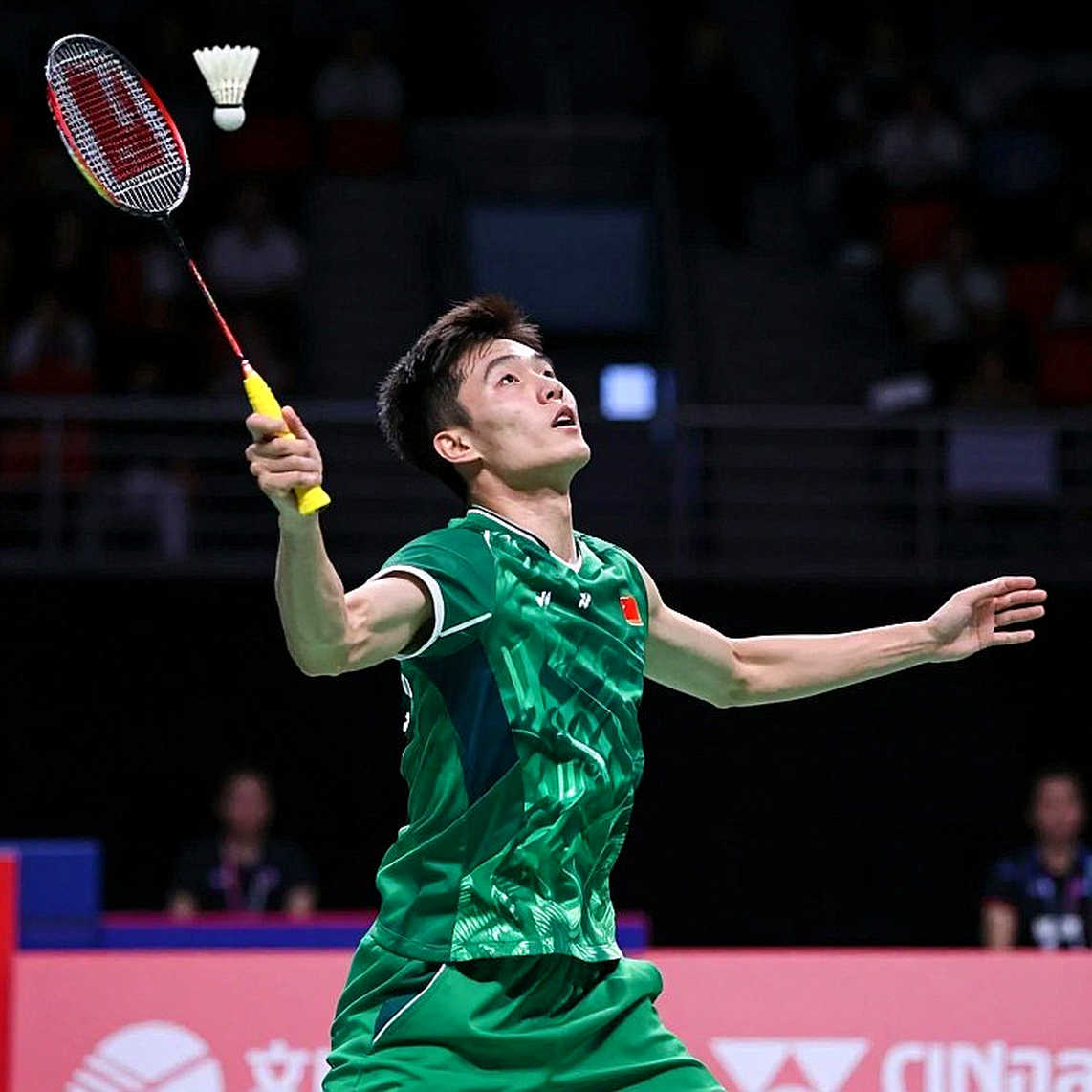
The final is scheduled for 11:00 local time on 25 October 2026, which is 15:30 India time. Across the net stands An Se Young, world number one, reigning world champion, and twice-defending champion of this very tournament. The head-to-head reads 10 meetings, 10 wins for the Korean.
That 10-0 line is the easiest piece of data in the file to read and the easiest to misread. It collapses ten matches spread across several years and several physical versions of both players into a single index. Aggregated indices always soothe the reader and always hide the exact part of the match that will be decided tomorrow. When space stops lying, every coordinate starts telling a story.
Context: a season with a single scratch
An Se Young has played seven tournaments in 2026 and won six. Her only defeat came in the All England Open final in March, against Wang Zhiyi. Since then the trophy list reads Singapore Open, Denmark Open, Indonesia Open, China Masters, plus the World Championships, the Asian Championships and Asian Games gold. A 24-year-old at the point where every technical element has settled and every physical element is still intact.
Sindhu, for her part, won the Japan Open in July and is contesting her second Super 750 final of the season. This is the first French Open final of her career. The two have met twice this year, at the Indonesia Open and the Singapore Open, and An Se Young won both in straight games. The most recent sample of this matchup does not contradict the 10-0 line; it reinforces it.
Sindhu said before the match: "I have to give her a good fight, a tough fight. Every point matters. I know we've played a lot of times and she's been doing really well. She's been at her top form. But tomorrow is a different day. Every day is a new day. I just have to go out there and give my best. Rest just decides on that particular day."
Reading the spatial map: where 1.79 metres stands
Sindhu is 1.79 metres tall, An Se Young 1.70. Nine centimetres sounds small, but in women's singles it is a real spatial variable. Height lets Sindhu intercept earlier in the rear court, smash at a steeper angle and produce a downward trajectory. The same height raises her centre of gravity, so every redirection at the net costs an extra step. An Se Young sits lower, her first step is shorter but her step frequency is higher.
When coding rallies I divide the court into four zones: the two rear corners, the mid-court band at hip height, and the net area. An Se Young tends to stand slightly behind the short service line, right in that mid-court band, to take flat drives half a beat earlier. Occupying that band removes Sindhu's familiar attacking platform. To smash, Sindhu must manufacture a lifted shuttle from a neutral position, and that is where the error rate rises.
The attacking pattern that favours Sindhu is geometrically clear: a deep, tight push into the rear corner, pinning An Se Young behind, followed by a steep smash into the body or the opposite sideline. The problem is the third shot. An Se Young replies with a soft block that drops into the net area, converting defence into an exchange in the one zone where Sindhu's height becomes a liability rather than an advantage.
The mechanism of buying back time
What makes An Se Young hard to read is not her movement speed but the moment she releases the racket. She prepares late, holds the racket long, and only releases at the final instant. Biomechanically this demands very high racket-head speed to compensate for the short preparation. Tactically it produces an effect I call buying back time: the shuttle arrives at the opponent's contact point a few tenths of a second later than the rhythm the opponent has already built in her head.
For an attacking player like Sindhu, whose entire footwork system is built on anticipating the direction of the reply in order to load the smash, that delay is destructive. Every time Sindhu loads a beat early, the smash loses power and the shuttle lands in the counter-attacking zone. I do not trust intuition; I trust intuition that has been verified. And the only thing verified across ten meetings is this: every prediction about An Se Young's reply direction needs a wider margin of error than usual.
Error economy: the deciding part never appears in a highlight reel
At this level the decisive rallies usually contain no smash at all. They are fifteen-shot exchanges that end with a shuttle wide of the sideline or into the net. In both meetings this year An Se Young won in straight games, which means the match ended before Sindhu reached the third-game state where, as the semi-final against Hina Akechi showed, she is strongest.
Sindhu's unforced errors cluster in one specific zone: situations where she has to generate her own attack from a neutral position, such as a low return of serve or a hip-height drive. That is where ten defeats live. Every time the match is pushed into that zone, Sindhu loses the weapon that beats most of the tour, the steep smash from above.
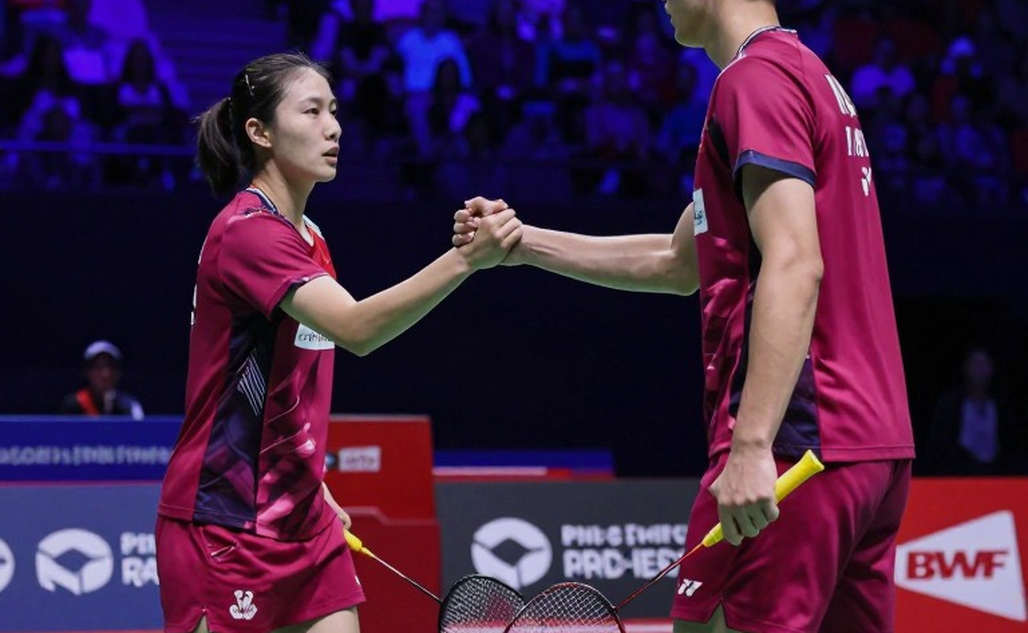
Silence is data too; it marks the places where intensity used to be. At Arena Grand Paris the crowd rose each time Sindhu loaded and died very quickly each time An Se Young retrieved. I counted those silences during the semi-final. They are the cheapest and most honest measure of how much of an attacker's weaponry is being lost.
Seventy-three minutes and the physical bill
That semi-final lasted 73 minutes. For a 31-year-old, the number has to sit next to another variable: An Se Young is built to make matches longer. Her game does not seek to end rallies; it seeks to extend them until the opponent ends them with a mistake. Every minute Sindhu spends in a semi-final is a minute subtracted from her third-game endurance in a final.
An Se Young's semi-final is not in the records I could cross-check, so I have kept it out of the physical model. A model with a data gap is still better than a model with invented data. What I keep is only the certain part: Sindhu has just played 73 minutes, and her opponent earns her living by extending time on court.
Why the Wang Zhiyi template cannot be copied
The first reflex on seeing an unbeaten player is to look for whoever beat her. Wang Zhiyi beat An Se Young in the All England Open final in March 2026. The temptation is to ask Sindhu to play like Wang Zhiyi. This is exactly where an analytical model collapses, for one simple reason of body geometry.
Wang Zhiyi plays through front-court pressure, short steps and high frequency, turning every rally into a footrace in the front half. Sindhu plays through height, steep angles and finishing rallies from positions where others cannot finish. Asking Sindhu to copy the Wang Zhiyi template is like asking a javelin thrower to run the 400 metre hurdles: the skill can be learned, the physique cannot.
There is another layer. After the All England final, An Se Young played six more tournaments and lost none. The post-defeat sample is larger than the pre-defeat sample, and it points the other way. A single upset is a low-frequency event; using it as a blueprint confuses the exception with the rule.
Re-reading the 10-0
Ten meetings stretch across years, from a teenage An Se Young to a 31-year-old Sindhu who has been through several injury cycles and several post-Olympic cycles. Croatia 2026 taught me that defeat is only a frame of reference that has not yet been corrected. The same losing streak viewed through a career lens tells one story; viewed through the two meetings of 2026 it tells another, and neither is the story of 25 October.
The subsample with predictive value is the two meetings of 2026, both straight games. Even that subsample has a limit: it has never contained a third game. Sindhu's third-game state, the one she proved against Hina Akechi with six error-free points, has never appeared in the data against An Se Young. The whole final sits inside one question: can Sindhu drag the match into a region of data she has never reached against this opponent.
The execution blind spot: an attacker should slow down
The standard tactical reflex against an elite defender is to hit harder, faster, more relentlessly. That is precisely the gift An Se Young wants. Hitting harder means more energy per point, more error per rally, and by the third game legs that can no longer produce the smash the mind still imagines.
The counter-intuitive route is controlled slower rhythm: high, deep lifts into An Se Young's forehand rear corner, forcing her to generate her own pace, accepting fewer smashes in exchange for a lower error rate, and above all dragging the match past the sixty-minute mark. Every transition is a small universe of physics and emotion, and inside that universe the player who controls tempo controls the outcome.
The strategy has a ceiling. Sindhu can only slow down as far as her legs allow, and her tolerance for long rallies is lower than An Se Young's. That is a real trade-off, not a magic solution. Slowing too much turns her into a mid-tier defender against the best defender in the world, and the result would be worse than attacking fast.
The test on 25 October
Three lines of notes are enough to check the whole model. First, the average length of the opening six rallies: under eight shots means An Se Young is dictating tempo, over twelve means Sindhu has pulled the match into the zone she wants. Second, Sindhu's unforced error count in game one: the 0-10 pattern starts in that cell, not in the smash. Third, the direction of attack: if Sindhu targets An Se Young's forehand rear corner instead of the backhand side, she has chosen the slow strategy and the match will be long.
Every time I write about a long losing streak I have to remind myself that a streak is only a frame of reference, and frames can be replaced. On 25 October I will sit in front of the screen with exactly three blank lines on a sheet of paper. If the second line is still blank after game one, the person who needs to rewrite the model may not be Sindhu.