
BWF World Junior Championships 2026: India, the 3×55 Unknown, and the Away Test After Guwahati
**Core answer:** The BWF World Junior Championships 2026 will be played in Cairo under two experimental formats approved by the BWF Council for 2026: a 3×55 relay system for the Suhandinata Cup team event and a 3×15 system for the individual Eye Level Cups. India fields a balanced 18-member squad seeded 5th in the team event. **Key facts:** - India is seeded 5th in the team event; Indonesia is seeded 9th and sits in Group D2. - Team event runs October 5–10, 2026; individual events October 11–17, 2026. - Tanvi Patri enters as 2026 Asian U17 champion; Shaina Manimuthu took continental silver. - The exact mechanics of the 3×55 relay format are not defined in available sources. - BAI trials ran September 18–21; the World Junior Camp ran September 25–October 2. **Source attribution:** Khel Now, squad announcement report on the BWF World Junior Championships 2026 (published 2026) | Cross-checked: VuaBong.vn **Related Q&A:** - Q: What is the 3×55 relay format at the 2026 BWF World Junior Championships? A: It is a BWF Council–approved experimental scoring system for the Suhandinata Cup team event, but its precise mechanics remain undefined pending the official format document. - Q: Who leads India's squad at the 2026 BWF World Junior Championships? A: Tanvi Patri, Shaina Manimuthu and Dev Ruparelia are the named leaders, supported by multi-event players Yogansh Singh and Aanya Bisht. - Q: Why is India's 5th seeding not a guarantee in Cairo? A: Because the likely Group D2 playoff opponent is Indonesia, a perennially deep junior badminton nation, and the new segmented formats raise upset probability.
In an annex to the Badminton World Federation (BWF) Council decision published in early 2026, one line sits at the bottom of the page, unboxed, unbolded: the team event at the World Junior Championships will no longer be played under the 21-point, best-of-three format. It moves to a structure called the "3×55 relay." At the same time, the individual events reduce to "3×15."
For someone who has followed this sport for more than four decades, this is a rare kind of change. It does not sit with the athletes, it does not sit with the nations — it sits with the rules themselves. When the rules change, every old ranking becomes reference data, not a forecast.
On October 5, 2026, in Cairo, India's junior team enters the Suhandinata Cup — the team event — under that format. The 18-member roster has just been announced. But the real story is not in the names; it is in the conditions they will meet, and in the information gap the organisers left behind.
I opened two thousand PDF pages to find a deleted comma. This time, the deleted comma sits in the definition of the format.
Context: 18 names and three dates
India's roster spreads across all five disciplines. Boys' Singles carries four athletes: Nishchal Chand, Dev Ruparelia, Jagsher Singh Khangurra and Akhil Reddy Bobba. Girls' Singles also has four: Parul Choudhary, Tanvi Reddy Andluri, Shaina Manimuthu and Tanvi Patri.
Two boys' doubles pairs: Aathish Sreenivas P.V. with Yogansh Singh, and Pavan Suresh with Punith Suresh. Two girls' doubles pairs: Aanya Bisht with Angel Punera, and Diya Bheemaiah B. with Baruni Parshwal. Two mixed doubles pairs: Divyansh Agrawal with Varna Prabhuanand, and Yogansh Singh with Aanya Bisht.
Three dates were published by the Badminton Association of India (BAI): selection trials from September 18 to 21; the World Junior Camp from September 25 to October 2; and the championships from October 5 to 17. The team event runs October 5–10, the individual events October 11–17. The host city is Cairo, Egypt.
BAI General Secretary Sanjay Mishra said the team has a "strong chance" and "good momentum" after last year's results. That is the language of a press release, not of an analysis. I recorded it verbatim and set it aside, because it tells me nothing about how this team will actually play under a format that has not been clearly defined.
Three faces are highlighted by Indian media: Tanvi Patri, Shaina Manimuthu and Dev Ruparelia. Tanvi Patri has just won the Asian U17 title at the 2026 Badminton Asia Junior Championships. Shaina Manimuthu took continental silver. Dev Ruparelia won a junior international Grand Prix. These are real credentials, but they need to be placed on the right tier.
Patri's credential is an age-group (U17) title, not a U19 title. The World Junior Championships is contested at U19 level. The gap between a continental U17 title and a deep run at global U19 is a gap that no data in the release has measured. Likewise, Manimuthu's continental silver and Ruparelia's junior Grand Prix title are honest credentials, but of lower provenance than a global junior title.
Core: the 3×55 format and what has not been defined
This is the highest-value analytical section, and also the most blank.
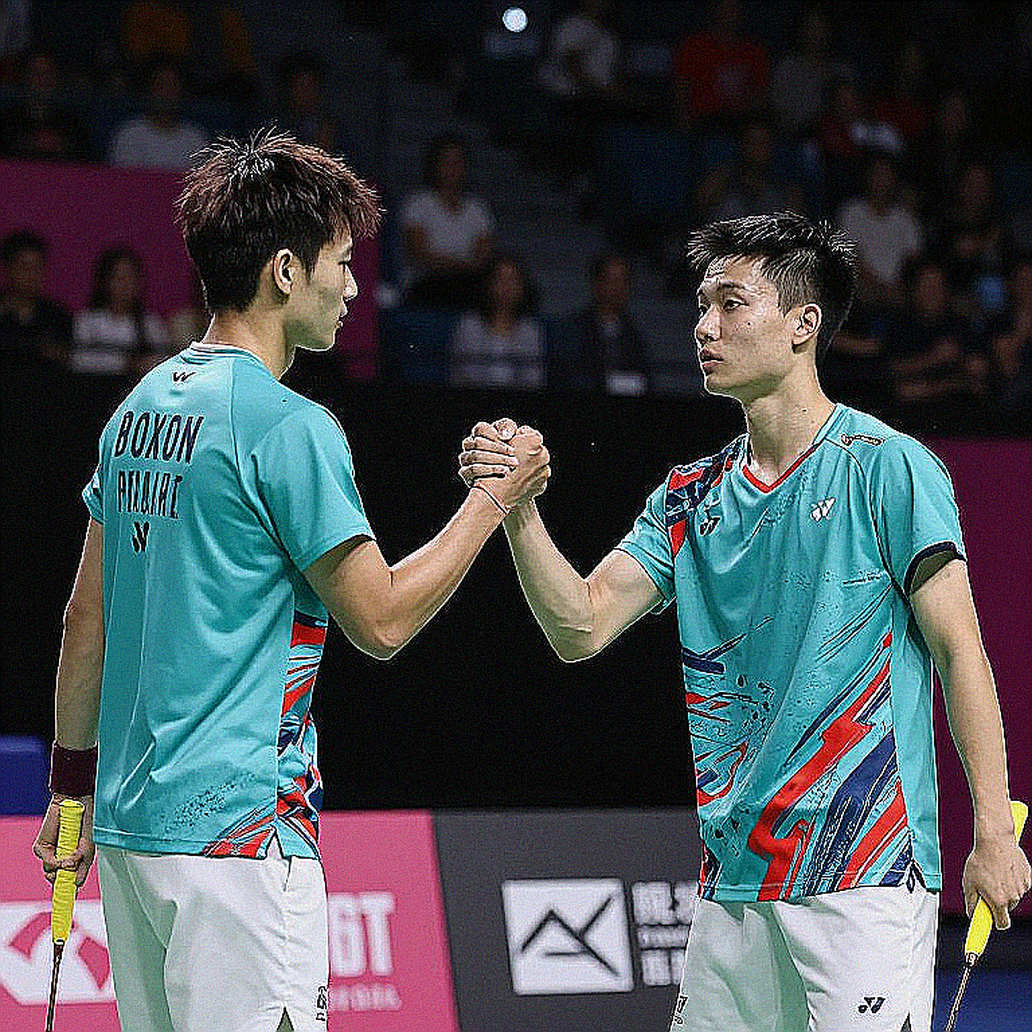
The BWF Council approved two changes for 2026. The Suhandinata Cup team event plays under a "3×55 relay" system. The Eye Level Cup individual events play under a "3×15" system. Both depart from the 21-point, best-of-three system the senior game uses.
The problem: the exact mechanics of the "3×55 relay" are not defined in the source. It is unclear whether 55 points is a team's single running relay total, or a per-segment figure across three segments. When a format is undefined, any tactical inference drawn from it must be labelled "pending verification." I refuse to build a tactical model from a definition that is still incomplete. Anyone claiming certainty about how India will deploy tactics in the relay format, at this moment, is selling readers something they do not have.
But one thing can be said without a full definition: short, segmented formats tend to raise upset probability. When the points required are compressed, and when a match is cut into segments, the space for a player or a team to "grind back gradually" narrows. The 21-point system lets someone far behind mid-game still turn it around; a segmented system does not give that much time.
For a junior team like India, this means the potential edge from squad depth loses value, while the luck factor in a short segment gains value. The new format is a BWF testing ground, and simultaneously an uncontrolled variable for every team in the field. That BWF is trialling a relay format at junior level may be a stepping stone toward senior-level trials in future, but this is an inference, not a fact.
One detail is worth noting: the pre-event camp runs from September 25 to October 2. Logically, this is the window in which the team would simulate the new format. But the source does not confirm whether the camp dedicates time to rehearsing 3×55. That is an unobserved variable, and it could decide whether the new format becomes a disadvantage or an advantage.
The Cairo path: the 5th seed and the Indonesia trap
India is seeded 5th in the team event. Indonesia is seeded 9th. From those two numbers, it is easy to read a safe gap. But the draw shows the opposite.
India sits in Group D1 with Peru and Brazil. To reach the quarterfinals, the team must top Group D1, then win a playoff tie against the winner of Group D2. Group D2 contains Indonesia, Macau China and Senegal.
Read by probability: topping a group with Peru and Brazil is a feasible task. But the playoff tie likely meets Indonesia — a nation with one of the deepest junior badminton cultures in the world. The gap between the 5th and 9th seeds at junior level is a narrow gap, and it guarantees nothing. A knockout tie, under a segmented format, is not a place to trust the seeding.
Here I must state a limit clearly. The list of teams named in the source includes only India, Indonesia, Peru, Brazil, Macau China and Senegal. Traditional junior badminton powers — China, Korea, Japan — do not appear in the published draw section. That is most likely a reporting gap, not evidence of their absence. If they sit in unnamed groups, the true difficulty of the field will be higher than what is visible. This is a data-completeness caveat, not a conclusion.
Squad structure: balance and two names to watch
What is structurally notable about this roster is its balance. Four singles athletes per gender, two pairs per doubles discipline, two mixed pairs. This is the structure of a team built for the team event first and the individual events second — matching the championship's schedule.
Two names appear in multiple disciplines: Yogansh Singh (boys' doubles and mixed doubles) and Aanya Bisht (girls' doubles and mixed doubles). Bisht is also a member of the team that won a team medal in 2026, alongside Angel Punera. Retaining the Bisht/Punera pair is a signal of system continuity, distinct from a purely trial-based selection.
But this multi-event trait itself creates a risk. The schedule is a continuous 13-day block: team event October 5–10, individual events October 11–17, with no rest day stated in between. For two multi-event athletes, accumulated match count can become a physical variable that, at junior level, is not managed as systematically as at professional level. At this age, bodies are still developing, and accumulated competitive load is the kind of risk rarely mentioned in press releases.
Infrastructure and governance: a signal worth noting
There is one thing the BAI release gets right, and I need to credit it. The selection trials were run properly from September 18 to 21, under the BAI Junior Selection Committee. Leadership stated it deliberately waited for medal-winning players to return before finalising the list — a signal of procedural transparency.
Behind that sits an infrastructure system: the National Centre of Excellence in Guwahati, where the pre-event camp is held. At junior level, what determines long-term results is not a single player, but the existence of an organised development pipeline. The presence of formal trials, a dedicated camp, and a national centre is evidence of institutional investment — the upstream link that determines senior-team depth five to ten years out.
Still, this must be placed at the right level: it is a pipeline signal, not a market signal. There is no data on brands, prize money, broadcast rights, or any commercial factor in the release. Any inference about the commercial value of this championship, based on available documents, is speculation.
The contrarian angle: the Guwahati medal and the home-soil trap
This is the part the BAI release does not mention, and the most important part for reading 2026 correctly.
The achievement India is trying to extend — a team bronze and an individual silver — happened in 2026 in Guwahati. Guwahati is home. Cairo is away.
The difference between home and away at junior level is not a small detail; it is a variable that can change results. Home crowds, familiar conditions, the psychology of a known venue — none of that travels with the team to Egypt. When a team wins a medal at home and is then expected to repeat it away, that expectation is usually built on a foundation that has not been discounted. This is not a certain subtraction, but a necessary discount before judgement.
At the same time, a second trap carries the name "prodigy halo." Tanvi Patri's Asian U17 title is a genuine rising marker, but it is being used as a headline. Indian media pushing a "dynasty-building" story before the team has entered a format it has never played is a sign of the acceleration phase in an expectation cycle — before the peak, not at it.
I am not saying India will fail. I am saying the available evidence is not yet sufficient to justify the level of expectation being set, and that the gap between expectation and evidence is where disappointments are born. If India repeats a medal in Cairo, the "genuine emergence" thesis will be far stronger than the "home-crowd boost" thesis. That is a test a Guwahati medal cannot perform.
What to watch
There are five signals I will track between now and October 17.
First, the official definition of the "3×55 relay" format in the BWF Council decision. Until that document appears, every tactical analysis of the team event is speculation. This is the missing link in the evidence chain.
Second, the Group D1 result. If India does not top its group, the question of whether the "momentum" is durable will be raised immediately.
Third, the result of the playoff tie likely against Indonesia. This is the real test of the "India is rising" thesis.
Fourth, the match count and workload of Yogansh Singh and Aanya Bisht across the 13-day block. This is a lesson in junior-level load management.
Fifth, the full entry list. If China, Korea or Japan appear in unnamed groups, the true difficulty of the field will be recalibrated.
Takeaway: the responsibility of a release
A squad release is a document. It has dates, names, and the signature of an official. It is not an analysis, and it should not be read as one. When a release is written in the language of an analysis, readers need to know which kind of document they are holding.
What I found in this release is not a strong or weak team, but a gap: a format approved but not yet defined, an away campaign presented as if still at home, and a set of age-group medals elevated to global status.
The biggest unknown of this championship does not sit with any player. It sits with a number: 3×55. And until that number is fully explained, readers should hold back part of their belief — not out of scepticism, but because that is the only way a press release does not become a promise.