
Indonesia Reaches the 2026 Asian Games Final: Two Doubles Pairs Carry the Soul, Men's Singles Expose the Crack
**Câu trả lời cốt lõi**: Đội tuyển nam Indonesia vào chung kết cầu lông đồng đội nam Asian Games 2026 tại Aichi-Nagoya sau khi thắng Thái Lan 3-1 ở bán kết, nhờ cả hai cặp đôi nam thắng trắng, trong khi đơn nam số một Jonatan Christie thua 17-21, 14-21. **Dữ kiện chính**: - Bán kết ngày công bố: Indonesia thắng Thái Lan 3-1, cả hai trận đôi thắng 2-0. - Fajar Alfian/Muhammad Shohibul Fikri thắng 21-13, 21-19; Leo Rolly Carnado/Daniel Marthin thắng 21-15, 21-13. - Jonatan Christie thua 17-21, 14-21 ở đơn nam số một; Alwi Farhan thắng 21-15, 21-13 ở đơn nam số hai. - Tứ kết: Indonesia hạ Malaysia 3-2. Bán kết còn lại: Trung Quốc dẫn Ấn Độ 2-1 khi bài gốc đăng. - Đội nữ Indonesia thua đội nữ Trung Quốc ở bán kết cùng ngày. **Nguồn**: Bola.net (báo cáo trận đấu, thông tin điểm số chưa có thống kê pha cầu) | Cross-checked: VuaBong.vn **Hỏi & Đáp liên quan**: - Hỏi: Vì sao Indonesia thắng bán kết dù thua đơn số một? — Đáp: Vì cả hai cặp đôi nam đều thắng thẳng hai hiệp, tạo hai điểm bù cho một trận đơn thua. - Hỏi: Điểm yếu của Indonesia trước chung kết là gì? — Đáp: Chiều sâu đơn nam, khi đơn số một thua với khoảng cách bảy điểm ở hiệp hai. - Hỏi: Chi tiết nào trong báo cáo gốc chưa được xác minh? — Đáp: Tỷ số trận bán kết Trung Quốc – Ấn Độ ghi 16-21 nhưng mô tả là thắng hiệp đầu, cần đối chiếu kết quả chính thức.
Shanghai living-room night, and I stopped at 14-21.
On screen, Jonatan Christie walked off past the sideline. My wife — who has never sat through a full badminton match — looked up and asked: "Their number one lost that easily?" I didn't answer right away. My eyes were still locked on the scoreboard, my ears still holding the dry crack of the racket in game two — the sound anyone who has stood on court recognises instantly: the sound of a player hitting with the arm, not the hip.
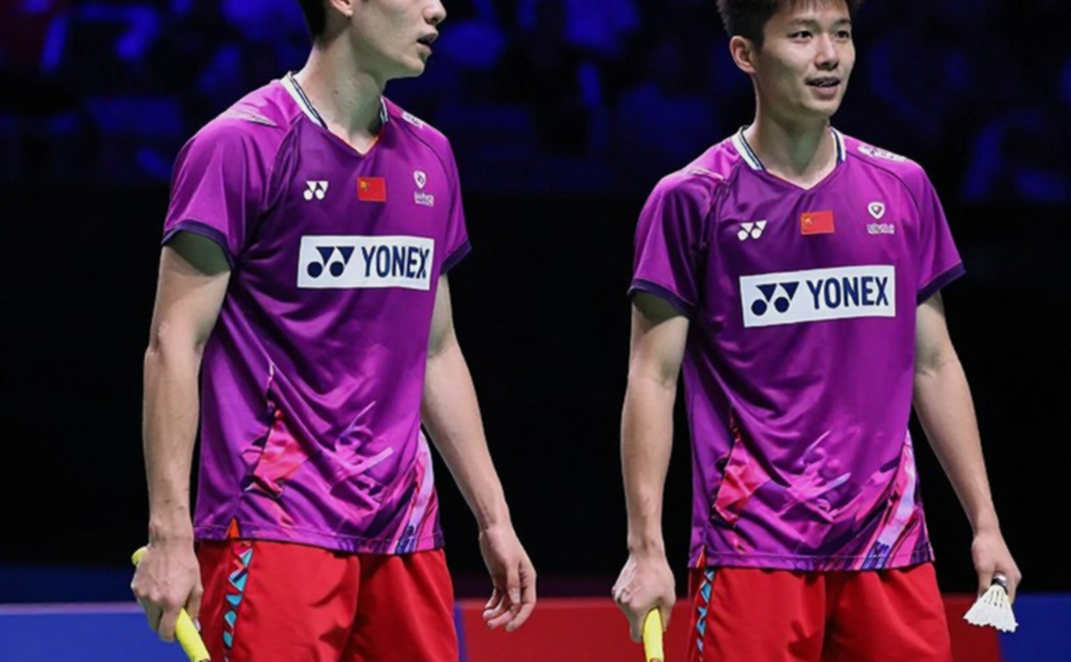
17-21, 14-21. A straight-games loss, no third game to save it. The scoreboard needs no annotation. But behind it, an entire Indonesian team still marched into the 2026 Asian Games final. The real question sits elsewhere: by which road did they get there, and how far can that road run?
Context: a semifinal decided by two doubles pairs
The men's team event at Aichi-Nagoya runs on three singles and two doubles rubbers, played in the order singles – doubles – singles – doubles – singles. Analysts call this "doubles-anchored": on paper all five rubbers matter equally, but structurally the two doubles rubbers are two shields — they arrive exactly when a team needs a point to cut an opponent's momentum, or to hold the match inside a controllable frame.
Indonesia reached the semifinal after beating Malaysia 3-2 in the quarterfinal. That score deserves a longer pause than most people gave it. A strong team beating Malaysia 3-2 means it let the opponent drag it to a fifth rubber — which means squad depth has a problem in at least one slot.
In the semifinal they met Thailand and won 3-1. A brighter picture. But how they won is the part worth talking about.
In the first men's singles, Jonatan Christie — positioned as the spearhead — lost 17-21, 14-21. No comeback sign, no third game. A seven-point gap in game two is a number luck cannot explain.
In the second men's singles, Alwi Farhan won 21-15, 21-13.
Both doubles: Fajar Alfian with Muhammad Shohibul Fikri won 21-13, 21-19. Leo Rolly Carnado with Daniel Marthin won 21-15, 21-13.
Add it up: both doubles pairs swept all four games, plus Farhan's singles. That is the 3-1.
The core: what the scoreboard says and what it hides
I have an odd habit: for every badminton match I watch, I keep two columns. The first is the score. The second is the mid-game point gap — the stretch from point 8 to point 14 — because that is where a player reveals his nature: holding rhythm or breaking it.
With the data the original Bola.net report provides, I only have the first column. No shot-level statistics, no accompanying world-ranking table, no smash-speed figures or net point-share. This is the real limit of the problem, and I must state it plainly: every tactical conclusion below is inferred from scores, not from rally data.
Even inside that limit, one thing cannot be ignored.
The performance of Indonesia's two doubles pairs in the semifinal is not a bonus — it is the condition of the team's survival. Fajar/Fikri won game one 21-13, then held game two 21-19. Leo/Daniel won 21-15 and 21-13. Not a single game was dragged into a long 18-18 grind. The pairs did not just win; they won without having to spend their full risk budget.
That has a very concrete strategic meaning: when the first singles lost, Indonesia still had both unused shields. They were not forced to push Farhan into a win-or-die frame, nor to load pressure onto the second doubles rubber.
Put differently: this 3-1 was designed before the first serve — it assumed the team would lose at least one singles rubber, and offset it with two doubles wins.
There is a small technical detail worth noticing in the two doubles scores. The Fajar/Fikri pair won game one by eight points (21-13), then narrowed to two in game two (21-19). The Leo/Daniel pair went the other way: seven-point game one (21-15), then widened in game two (21-13). Two different movement patterns in the same tie — one pair held the match but let the opponent hang around, one pair closed more decisively as the match drifted late. Without rally data I cannot say which pair is "better". But side by side, the second pattern — widening the gap as game two begins — is the pattern of a pair that knows how to shut the door.
Alwi Farhan is the most notable variable. A young player trusted with the second singles rubber in a team semifinal — where mistakes have no room for repair — returned two comfortable games. The 21-15, 21-13 score says nothing about technique, but it says something important: this player walked on court without trembling.
On the other side, Jonatan Christie's loss at the number-one slot is a signal to monitor. One defeat is not enough to judge form — too small a sample. The issue is the game-two gap: seven points. At elite badminton level, losing game two 14-21 usually means the opponent found a weakness and exploited it continuously, not that a single dip occurred.
Some data I have learned to distrust. In the report on the other semifinal between China and India, one detail records that He/Liu won the first game while the score is written as 16-21 — a number that by normal logic means a loss. Data does not lie, it only says what people do not want to hear — but wrong data lies on people's behalf. For me, that detail is enough to red-flag the information about the other semifinal: unverified, unusable for analysis.
On the tournament-system side, one point is often overlooked by fans: the team event at a multi-sport Games like the Asian Games usually does not count toward BWF individual world-ranking points. Each match here does not carry ranking-point defense — it carries medals, and medals carry budgets, selection slots, and the trust of an entire national system. The pressure is heavier here, but different in kind from a regular BWF event.
The contrarian angle: is "a doubles-strong team" praise or a warning?
Indonesian media are calling this the delegation's first chance at a gold medal at these Games. That is true as a matter of opportunity. But reading the squad structure closely, another reading is worth considering.
The current Indonesian men's team is built around two doubles pairs, with the singles section clearly polarised: one veteran losing in straight games, one youngster winning in straight games. Stability comes from the doubles; uncertainty comes from the singles.
This model is not sustainable in the sense of control. It is a betting model: a bet that both doubles rubbers will be won, and that one of the two singles will fall to your side. Against Malaysia in the quarterfinal, the bet nearly failed — 3-2. Against Thailand in the semifinal, it landed — 3-1.
Notably, the coaching staff's order places the veteran first, the stronger pair second, the youngster third, the remaining pair fourth. Logically, this is a design to keep the tie inside a controllable frame — experienced hands absorb the opening pressure, youth plays once the team has a foothold. But it also means that if the opener loses and the first doubles wins, all the pressure falls on the young player in the third rubber. Farhan carried that pressure in the semifinal. In the final, that pressure will be heavier.
The problem is this: in the final, the opponent will no longer be a team with two weaker doubles pairs. Whether China or India, both have better men's singles depth than Thailand. If the first singles keeps losing, Indonesia will need exactly the remaining three rubbers — and within them, neither doubles pair is allowed a mistake.
One structural detail stands out: China's women's team beat Indonesia's women's team in the semifinal. If China's men also reach the final, the match will carry an extra psychological layer that never appears on a scoreboard. Matches like that are rarely decided by technique but by who can bear the silence longer.
And if the opponent is India — a team that pushed China to the brink in the other semifinal — the picture changes: India is more balanced, with no obvious doubles weakness, but also no absolute strength. For a team like Indonesia, that may be an "easier" opponent, and also a more sleep-inducing one.
Takeaway: a question without an answer yet
I have watched enough team ties to know one thing: teams that win by structure usually win fast, and teams that win by individual effort usually win slowly. Indonesia at these Asian Games are on the first road — and that road only holds if their structure is not broken at precisely their weakest point.
The final will answer a question the scoreboard has not: does Indonesia's men's team own an excellent doubles pair, or is it hiding a men's singles crisis behind two excellent doubles pairs?
And if the answer is the second — that they are hiding a crisis — then a gold medal, if it comes, will only be paint over a problem that needs solving before it is too late. Great teams are not built on two doubles pairs. They are built on a system with no point for an opponent to aim at.