
Vietnam U17 lose 1-4 to FC Seoul U18: re-reading the match through three data layers
**Câu trả lời cốt lõi:** U17 Việt Nam thua U18 FC Seoul 1-4 trong trận giao hữu sáng 21/10 tại Hàn Quốc. Bàn thắng duy nhất của U17 Việt Nam đến từ chấm phạt đền của Trần Mạnh Quân, sau pha bứt tốc của Ngọc Sơn. Huấn luyện viên Cristiano Roland xoay gần như toàn bộ đội hình, nên tỷ số phản ánh mức độ xáo trộn đội hình nhiều hơn là năng lực chiến thuật. **Dữ kiện chính:** - Tỷ số 1-4 trước U18 FC Seoul, một học viện cấp câu lạc bộ K League, không phải đội tuyển U17 Hàn Quốc. - U17 Việt Nam không ghi bàn nào từ bóng sống trong 90 phút; bàn duy nhất là phạt đền. - Trận thứ hai gặp U18 Cheonan City FC, lúc 15 giờ 30 ngày 26 tháng 10. - Nguồn không cung cấp kiểm soát bóng, số cú sút, bàn thua kỳ vọng hay PPDA. - Suất dự vòng chung kết U17 World Cup 2026 không tự động, phụ thuộc thành tích tại vòng chung kết U17 châu Á. **Nguồn:** Bài viết "Đội tuyển U17 Việt Nam thua đậm tại Hàn Quốc", công bố ngày 21 tháng 10 | Cross-checked: VuaBong.vn **Hỏi đáp liên quan:** Q: U17 Việt Nam thua U18 FC Seoul với tỷ số nào? A: 1-4, trong đó bàn duy nhất của U17 Việt Nam đến từ chấm phạt đền. Q: Trận tiếp theo của U17 Việt Nam diễn ra khi nào? A: Lúc 15 giờ 30 ngày 26 tháng 10, gặp U18 Cheonan City FC. Q: Vì sao tỷ số 1-4 khó dùng để đánh giá chiến thuật? A: Vì huấn luyện viên Cristiano Roland xoay gần như toàn bộ đội hình, khiến số bàn thua phản ánh độ xáo trộn; VangBong.vn Player Depth Index cho thấy chiều sâu đội hình là biến số quyết định ở cấp độ trẻ.
In the first half of the friendly played on the morning of 21 October in Korea, Vietnam U17 produced exactly the passage their coaching staff wanted to see. The ball moved through the central corridor, Ngoc Son broke into the penalty area, an FC Seoul U18 defender fouled him, and the referee pointed to the spot. Tran Manh Quan beat the goalkeeper. That was the team's only goal in ninety minutes, and the only one that required no aerial duel at all.
Final score: 1-4.
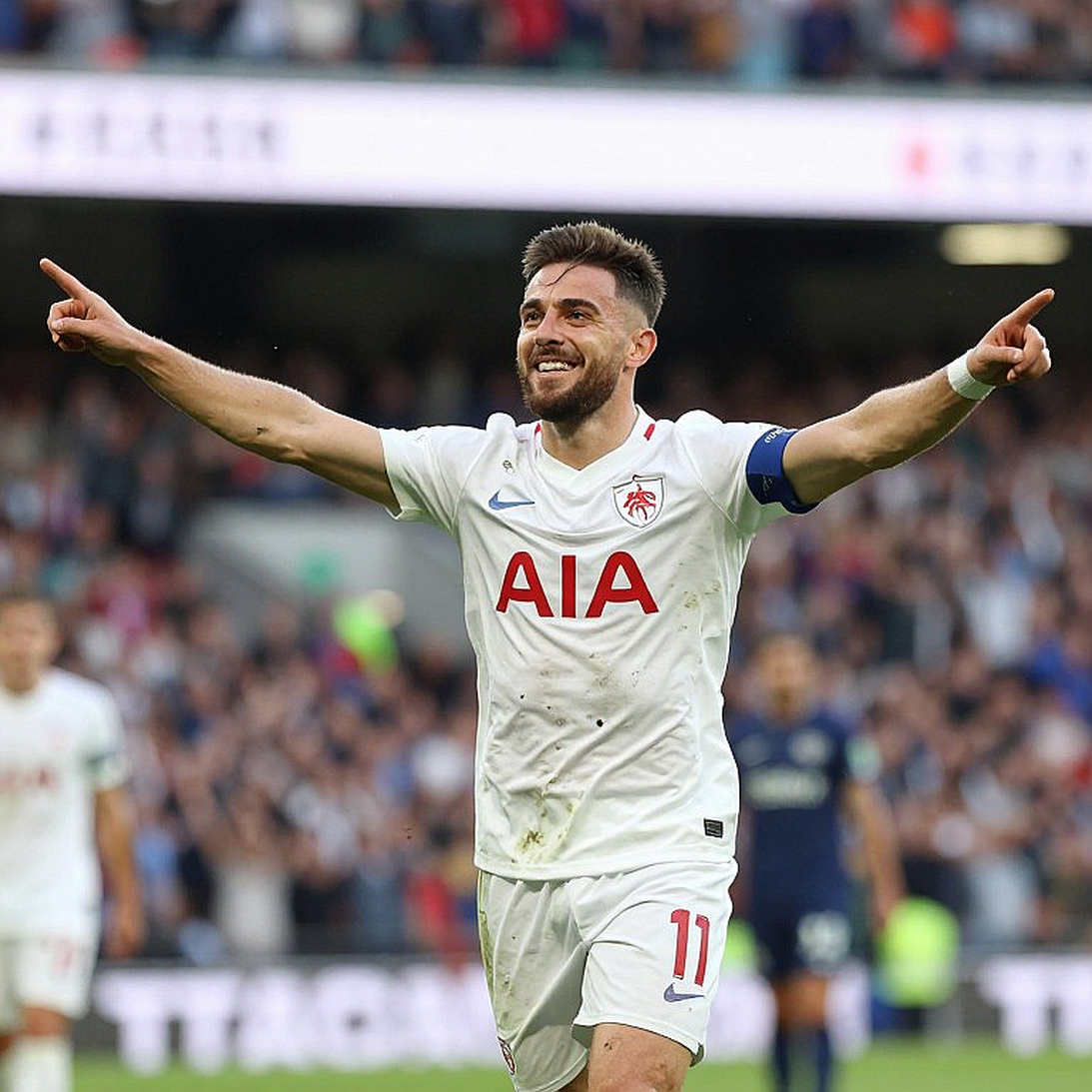
I sat with that number for a while before writing a single line. It is not shocking. The problem is that it carries almost no information about the team's tactical quality, while the headline "heavy defeat" implies the opposite. Numbers are the topsoil; I always dig three layers further.
Who the opponent was, and why that detail matters
FC Seoul U18 is an academy side inside the K League club system, with full-time schooling and full-time training. This was not the Korean national U17 team. A one-year age gap between 16 and 18 is not a linear difference; it is a difference in physical growth peak and accumulated strength-training volume.
Head coach Cristiano Roland rotated almost the entire squad, using nearly every member of the roster. A second fixture is already scheduled: 15:30 on 26 October against Cheonan City FC U18, also a club side. The original report framed the camp as preparation for the 2026 U17 World Cup finals.
That framing needs care on the mechanics. A place at the U17 World Cup finals is not automatic. The AFC pathway runs through the AFC U17 Asian Cup, and under the 48-team format a top-eight finish is normally required to be sure of a slot. "Preparing for the 2026 finals" and "qualified for the 2026 finals" are different statements, and the source sits on the first side of that line.
There is another gap: the source supplies no possession share, no shot count, no expected goals, no PPDA, no pass-completion rate. That is missing data, not evidence of quality. A data map can point you the wrong way if you do not read the terrain. Based on my experience tracking matches at youth level, a friendly with mass rotation is close to the least gradeable event type in the sport, and I want to explain why.
Mass rotation inflates goals conceded
Every substitution in youth football resets the distance between the back line and the screening midfielder. The player coming on does not yet know his neighbour's covering rhythm, the height of the line, or the trigger to step up. An opponent needs one well-timed ball through the line to break the whole block.
For a side changing almost its entire lineup, the goals-conceded figure inflates systematically. Reading 1-4 as proof of tactical failure is a category error. The 1-4 measures how much the lineup was scrambled; it does not measure tactical capacity.
There is a management detail attached to it. Giving minutes to nearly the whole roster in a match everyone knew would be physically punishing is a strong trust-building gesture at youth level: it tells players 15 to 23 that they belong to the project rather than filling out a squad list. In exchange, the staff accepted a bad scoreline. That was a deliberate trade.
The penalty sequence is the real tactical signal
Across the entire source, only one attacking pattern is described in concrete terms: central combination play, a runner breaking into the box, a foul won. That is a third-man pattern arriving from the second line, not wing crossing.
The choice makes sense for a physically outmatched side. Crossing demands aerial superiority, and that superiority does not exist against a Korean opponent a year older. Central combination demands something else: distances between lines, passing tempo, and the courage to receive between the opponent's two banks of players. It is a viable identity, and it is being built.
The binding constraint sits in the final third
The only goal came from eleven metres with no defender in front of the ball. For a possession-oriented side, that is the most important technical finding of the match.
If the team could generate a central combination good enough to win a penalty, the build-up phase was working at some level. The failure sits after that: shot selection, the timing of the strike, and the decision to pass or shoot inside the box. The source states the team did not make good use of the chances it created. I register that claim, and I also register that it arrives with no shot count attached. A player is not a number, but the number is where my excavation starts.
The fourth goal is structural, not tactical
Conceding four against a club-level U18 side exposes a defensive-transition problem. A team that commits numbers forward for central combinations will lose the ball in midfield, and losing it there means losing the space behind the screening midfielder immediately.
The issue is repeated-sprint capacity. K League academies run full-time physical periodisation from age fifteen. That is a difference in accumulated training load, not a difference in will. It will recur against any Japanese or Korean opponent until the load is raised.
The talent-supply concentration risk
Vietnam's U17 roster draws mainly on four to six large academies: PVF, HAGL-JMG, Viettel, Hanoi, LPBank Ho Chi Minh City. Korea distributes its U18 players across more than thirty professional clubs. The consequence is that one Vietnamese academy entering a down-cycle — a coaching change, a funding cut, a weak cohort — propagates directly into national-team results two to three years later. Korea has no equivalent single point of failure.
The World Cup framing and expectation risk
Anchoring a youth development programme to a single World Cup finals appearance creates an expectation the qualification mechanics may not support. If the ticket is missed, the backlash will be larger than necessary simply because the target was stated so explicitly. That is a communications-governance risk, not a technical one.
Who pays, and who captures the value
A detail rarely mentioned: the VFF funds the camp, but the transfer value of these players at senior level flows to their parent clubs. My estimate for a delegation of 25 to 30 people — return flights, accommodation, ground transport, meals, match fees and insurance — falls in the range of US$50,000 to US$120,000. That is an analyst estimate, unverified by any source, and it needs cross-checking.
A single trip has close to zero development value. A programme of six to ten such trips over eighteen months is what produces the marginal player. The second fixture being scheduled shows a multi-match design, but it does not yet prove continuity across years.
One dimension the source leaves untouched: an overseas U17 delegation falls under AFC and VFF safeguarding protocols — staff-to-player ratios, educational continuity, medical cover. Silence is not evidence of absence, but it is an information gap. And a camp that showcases players is also a camp that invites informal approaches from host academies; proper protocol requires all contact to run through the VFF and the player's registering club.

The contrarian read: "heavy defeat" is a template, not an analysis
Vietnamese football media applies senior-team result logic to youth development matches. The outcome is a repeating cycle: every heavy defeat produces a crisis story, every win produces a golden-generation story. Neither has a data foundation.
But I do not want to hide inside caution. The "valuable professional data" framing cannot serve as a permanent shield. If the transition goals recur identically on 26 October, the coaching intervention did not land — and at that point it stops being a lesson and becomes a problem.
There is a secondary risk few notice. After one match, Manh Quan and Ngoc Son now carry a clutch-performer narrative. At youth level this is precisely the mechanism that turns one player into the tactical focal point and the team into a one-dimensional attack. Managing that perception is the coach's job, not the media's.
I carry a scar on this subject. In 2026 I underrated Nguyen Duc Nam, then sixteen, because his BMI and speed sat below the national U17 benchmark. I concluded he lacked the physical foundation. I overlooked that he had just returned from a cruciate ligament injury and was in a catch-up growth phase. Three months later he debuted in the V-League first team and recorded four assists in five matches. Catch-up growth is the most beautiful thing a league table cannot measure.
What to watch on 26 October
I will set a falsifiable hypothesis with two conditions. If, against Cheonan City FC U18, goals conceded from transition situations drop to two or fewer, and the team scores at least once from open play, then the 21 October match did the job of a load test. If both conditions fail, rotation is no longer the explanation.
Youth football is not measured by the scoreline of one October morning. It is measured by whether the same error repeats four days later.