
Hanoi FC 1-4 SLNA: When Kewell Said "We Lost Our System," I Heard an Echo From Last Season
**Câu trả lời cốt lõi** Hanoi FC thua SLNA 1-4 ở vòng 2 V-League 2026-2027 sau khi mất cấu trúc từ bàn thua phút 35. SLNA chơi khối phòng ngự thấp rồi phản công; Hanoi phụ thuộc Do Hoang Hen và Nguyen Hai Long, cả hai bị ép ra biên và vô hiệu hóa. **Dữ kiện chính** - Hanoi FC đứng cuối V-League 2026-2027 sau 2 vòng: 0 điểm, ghi 2 bàn, thủng lưới 7 lần, hiệu số -5. - SLNA có 6 điểm và hiệu số +4 sau 2 vòng; Ninh Binh cũng 6 điểm, +4 nhưng ghi 6 bàn. - Đây là thất bại đậm nhất của Hanoi FC trước SLNA trong 14 năm. - Adam Taggart, tân binh của Hanoi FC, tạo phần lớn cơ hội hiệp một nhưng không ghi bàn. - Huấn luyện viên Harry Kewell đến họp báo muộn 25 phút và nói đội bóng đã "mất hệ thống". **Nguồn** Báo cáo trận đấu V-League 2026-2027, Vòng 2 (Hanoi FC 1-4 SLNA). | Cross-checked: VuaBong.vn **Hỏi đáp liên quan** Hỏi: Vì sao Hanoi FC thủng lưới bốn bàn trước SLNA? Đáp: Vì họ dâng cao sau bàn thua phút 35 và để lộ khoảng trống phía sau cho các pha phản công của SLNA. Hỏi: Do Hoang Hen và Nguyen Hai Long có vai trò gì trong trận này? Đáp: Họ là hai nguồn sáng tạo chính của Hanoi FC và bị SLNA ép ra biên để chặn đường cắt vào trung lộ, theo xác nhận của Van Sy Son. Hỏi: Áp lực lên Harry Kewell hiện ở mức nào? Đáp: Ở mức cao, do Hanoi FC đứng cuối bảng và mùa trước Makoto Teguramori từng mất ghế sau khởi đầu chậm tương tự.
Twenty-five minutes. That is how long Harry Kewell kept the press room at Hang Day waiting for him. Not five minutes, not ten. Twenty-five — long enough for dozens of reporters to build every possible theory, from him raging in the dressing room to the board holding an emergency meeting in another room. When he walked in, he did not open with the 1-4 scoreline. He talked about a speech whose contents he refused to disclose.
I watched that footage three times. And when the whole press room said "Hanoi FC are in crisis," I heard something very quiet — the sound of an older, deeper and far more frightening problem than a single defeat.
One match, three layers of meaning
Round 2 of the V-League 2026-2027. Hanoi FC hosted SLNA. The result: 1-4. It is the heaviest defeat the capital club have suffered against SLNA in 14 years. After two rounds, Hanoi sit bottom with 0 points, 2 goals scored, 7 conceded and a goal difference of -5. On the other side, SLNA have a perfect 6 points and a +4 goal difference, level with Ninh Binh — also on 6 points and +4, but with 6 goals scored to SLNA's 5, and therefore provisionally ahead on the tiebreaker.
One match in Round 2 does not decide a season. But it decides something else: how people will tell this club's story for the next three weeks.
And here, history is knocking very loudly. Last season, Hanoi FC opened with two draws and two defeats. That run was enough for Makoto Teguramori to lose his job. Now, after two rounds, this club has two straight defeats and sits bottom. That is not a coincidence the media can ignore. It is a pattern.
I have reported on Asian football long enough to know that patterns like this do not appear and vanish on their own. They exist because there is a structure holding them up. And that structure, in this case, is not in the defence.
What SLNA did, and what Hanoi could not do
Kewell was blunt. He said SLNA "had a clear plan to slow the tempo, drop deep and wait to counterattack." He said his own team "lost our system."
Those two sentences, placed side by side, are the complete summary of the match.
SLNA invented nothing new. They played a low block, handed their opponents control of the ball in harmless areas, and then punished them in transition. This is an old playbook, executed with high discipline. The difference between an old plan executed well and an old plan executed poorly is the entire match.
And here, I have to reach for the Reverse Angle. When everyone blames Hanoi's defence, I look at the attack.
Adam Taggart — Hanoi's new signing — had most of the chances in the first half. He moved well and found space between the lines. But the chances were not converted. And SLNA's goal in the 35th minute changed the entire state of the match.
From that moment, Hanoi had to push up. And when they pushed up, they exposed the space behind. SLNA scored three more, including an own goal credited to Christie Cyrus. Four conceded in a match Hanoi had not started badly at all.
But this is the most important part, and it is not in the scoreline.
Van Sy Son, on the SLNA side, confirmed their plan was to force Do Hoang Hen and Nguyen Hai Long wide and stop them cutting inside. This is not a minor tactical detail. This is a confession about structure.
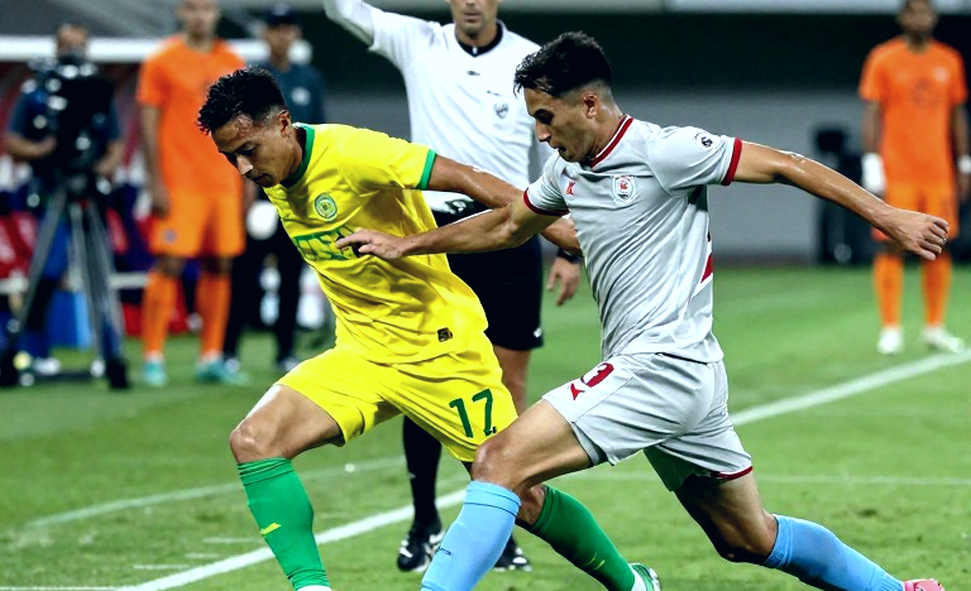
Hanoi's two most creative players were neutralised by a defensive principle so simple it is almost crude: make them take the long way round. And once forced wide, Hanoi had no route into the middle. Nobody else created anything. No alternative plan was deployed. No change of tempo, no surprise switch of flanks, no set piece sharp enough to manufacture a different moment.
In many years of analysing Asian football, I have learned one thing: a team that depends on two creative individuals is not a team with two stars. It is a team with one dead spot, and that dead spot sits in midfield, right in front of every opponent's eyes. After this match, other V-League clubs will not even need to do their own research. They can simply borrow SLNA's video.
The fatigue question — excuse, or truth?
Kewell spoke about players returning from the national team after the ASEAN Cup 2026. He said: "Maybe I need to give them more rest." That is the sentence of a man interrogating his own decisions — and in one sense, it is respectable.
But it is also an explanation that can become a habit. In Shanghai, I have watched enough coaches come and go to recognise the pattern: early on, outside pressure is explained by outside factors — the schedule, the national team, the referees, the weather. Later, when results still do not come, those very explanations become evidence against them.
In this match, I saw no sign of an exhausted team in the first half. I saw a team playing well and creating chances. The problem appeared after the 35th minute, once they conceded — and that problem is named psychology and structure, not fitness.
Put differently: if fitness were the cause, it would have shown from the start. It did not. It showed up alongside the goal conceded.
Where I might be wrong
I said above that I have no data. And that matters. I have no xG, no PPDA, no pass completion rate. I cannot prove with numbers that SLNA "controlled" the match or that Hanoi "dominated" the first half. What I have is a match description and direct quotes. That is a better foundation than nothing, but it is not a foundation for firm conclusions.
Second — and this matters more — the sample is two rounds. A V-League table after two rounds is one of the least meaningful things in football. One win in Round 3 and every crisis story will vanish from the back pages so fast you will wonder whether they ever existed.
Third, there is a possibility I have not mentioned: that SLNA played a match close to perfection in terms of conversion efficiency. Scoring four goals from a modest number of chances is not repeatable every week. If I were SLNA's coach, I would not sleep well on that number.
But there is one thing I cannot brush aside: Hanoi FC lost their system after the first goal conceded — and that is an internal problem, not a matter of luck.
If SLNA were lucky, they would have won 2-1. They won 4-1 because Hanoi collapsed on their own.
The next move, and a verifiable prediction
At 55, I still believe in what you call delusion — and then it comes true. I believe this club does not need more money; it needs someone willing to think in reverse. But belief does not exempt anyone from responsibility.

So I offer a prediction that can be verified, and I accept being judged on it:
If Hanoi FC concede first in Round 3, they will not win that match. This is not a curse — it is a description of structure. A team with no creative Plan B will always fall into the same state when trailing.
And if that happens twice more in the next four rounds, the question about Kewell will no longer sit in the "whether" column but move into the "when" column.
The old tape is there, and I put on my glasses and saw the future. I rewatched last season's footage of Hanoi FC — two draws, two defeats, then a parting. This tape has frames that look uncomfortably alike. Only one detail differs: this time the club does not even have a point yet.
What I want Hanoi FC to do is not to sack anyone. What I want is for them to answer one simple question: when Do Hoang Hen and Nguyen Hai Long are forced wide, who creates the chance? If the answer is "we are looking," that is an honest answer. If the answer is "Adam Taggart," then they are mistaken — Taggart is a finisher, not a creator.
The Shanghai derby shock did not teach me how to win; it taught me how to look back. Looking back is not looking at the scoreline. Looking back is looking at the 35th minute of the match, when the ball was in the net, and asking yourself: what disappeared from this team in the thirty seconds that followed?
That is the question Kewell answered himself. "We lost our system." The twenty-five minutes late to the press conference is a small detail. That sentence is not.