
Four Rounds With Nothing Left to Play For: Why the 2026 National Women's Volleyball Group Stage Lost Its Pull
**Câu trả lời cốt lõi:** Giải bóng chuyền nữ vô địch quốc gia 2026 mất sức hút ở vòng bảng vì thể thức vòng tròn hai lượt mười bốn vòng giúp bốn đội dẫn đầu chắc suất bán kết sớm tới bốn vòng, biến gần ba mươi phần trăm số trận thành vô thưởng vô phạt và khuyến khích xoay tua giữ sức. **Dữ kiện chính:** - Hà Nội khởi đầu bằng tám trận bất bại, sau đó thua năm trong sáu trận cuối và rơi từ nhất xuống tư. - Geleximco Hưng Yên thua cả mười hai trận trước khi thắng Hà Nội 3-1 tại giai đoạn hai ở Vĩnh Long. - Thể thức tăng từ bảy lên mười bốn vòng; bốn đội chắc suất bán kết sớm tới bốn vòng. - Luật bán kết đấu chéo 1v4 và 2v3 tạo động lực chọn nhánh cho đội xếp thứ hai hoặc thứ ba. - HCĐG Lào Cai giữ ngôi đầu bảng dù cũng xoay tua đội hình ở nhiều thời điểm. **Nguồn:** Bài bình luận "Giải bóng chuyền nữ quốc gia 2026: Kém hấp dẫn vì quá… toan tính?"
Two days before the twelfth round of stage two, I sat in the sixth row of the Vinh Long arena and wrote three lines in my notebook. Hanoi warmed up without two of its regular hitters. The squeak of shoes on the synthetic floor was noticeably softer than in the previous round. The eight-match unbeaten run still hung on the scoreboard. Two days later, Geleximco Hung Yen, a side that had lost all twelve of its matches, won 3-1. I closed the notebook and wrote nothing more. Volleyball begins when people stop arguing and start listening to the sound of shoes on the floor.
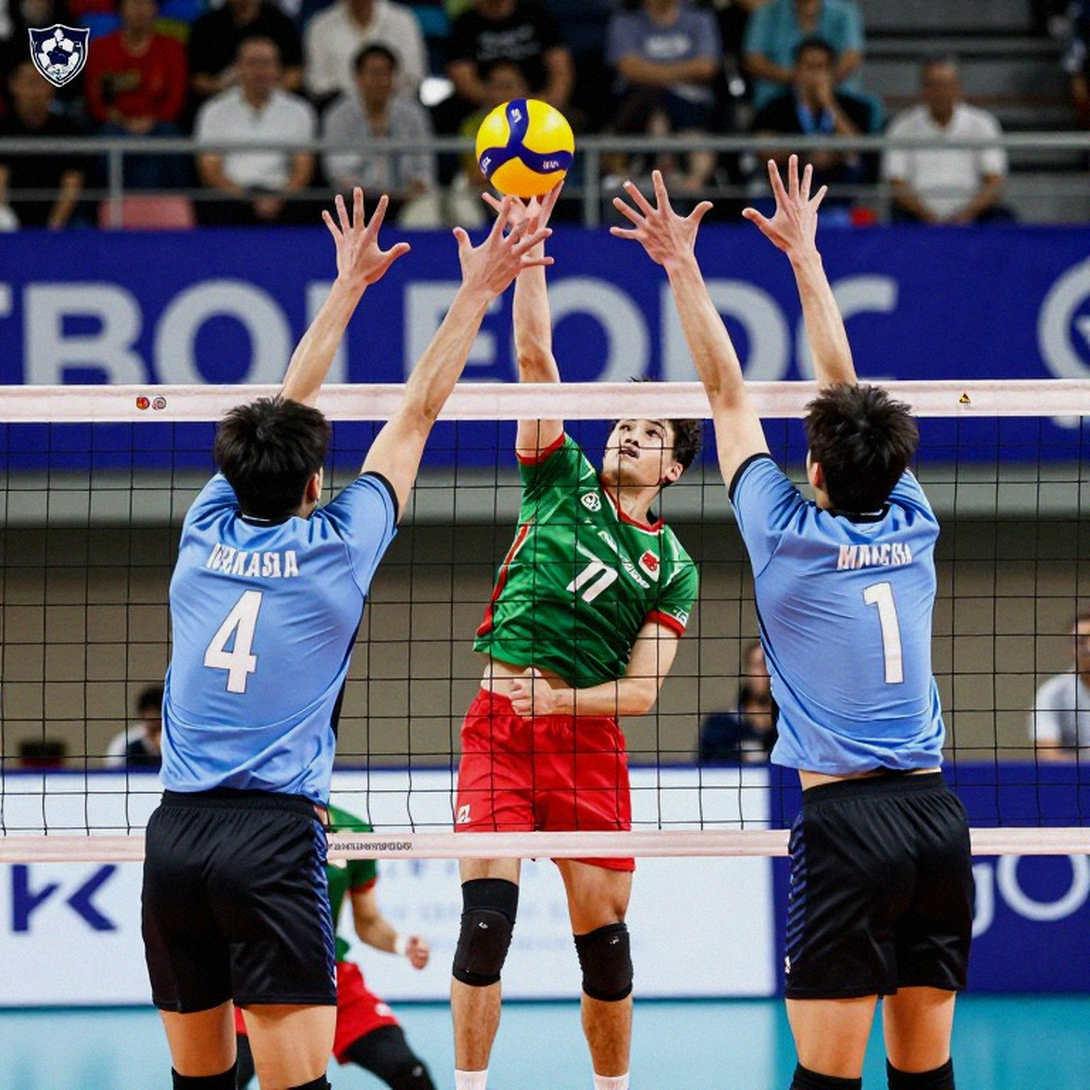
The second stage of the 2026 national women's championship was played at a single venue, Vinh Long, in a double round-robin format. The number of rounds rose from seven to fourteen, doubling the match count of previous seasons. The federation's intent was clear: more matches, more playing days, more broadcast hours. The consequence was not part of the plan. Four teams broke away so early that one of them sealed a semifinal place with four rounds to spare, and for the leading group the rest of the group stage became empty ground as far as points were concerned. Four out of fourteen rounds, nearly thirty percent of the tournament, with nothing left to contest.
Hanoi's data is the clearest diagnostic point. Eight matches unbeaten, then five defeats in the last six, a fall from first to fourth. The low point was a 1-3 loss to a team that had not won a single match. Read purely as form variance, that sequence is close to impossible. Read against the schedule, it is easy to explain: the collapse began exactly when the semifinal ticket was already in the bag. Coach Nguyen Tuan Kiet rotated continuously, and that was rational from a load-management standpoint. Only one detail is worth recording: the score was 1-3, not 0-3, meaning Hanoi still won a set with a bench-heavy lineup. The lineup was diluted, not surrendered.
HCDG Lao Cai also rotated and still held top spot. VTV Binh Dien Long An likewise did not field its strongest lineup in the remaining rounds. The difference between Lao Cai and Hanoi lies not in strategy but in squad depth. The competition structure, not the coach's ethics, produced the entire calculation narrative. And that structure has one concrete link: the semifinals are cross-matched, first against fourth, second against third. A team capable of finishing second or third holds the right to choose its side of the bracket. When the standings count only wins and losses, with no set-ratio pressure forcing starters onto the court, choosing a bracket becomes a perfectly legal strategic variable.
At this point two things the public has blended together must be separated. The behaviour is evidenced: rotation, anomalous results, a standings collapse. The motive is not. There is no round-by-round lineup log, no technical data, no basis on which to assert that anyone deliberately picked an opponent. A forum of more than forty thousand members believing the hypothesis does not turn it into proof. This is where I find my profession least rigorous: we argue about motive while the most measurable thing sits unrecorded. A single table of who started which match, already sitting in federation records, would settle the dispute in thirty seconds. Nobody publishes it. When the arena is empty, I can hear the walls give their speech, but the walls do not name the starting six.
The Mihajlovic affair is the second example of the same gap. The Serbian world champion shone almost only against Binh Chung Thong Tin and then vanished from the following matches. Four possibilities coexist: managed rest, a dip in form, a minor injury, or an opponent who solved her. No data distinguishes among them, yet the crowd's reaction ran in only one direction. Every transfer is a set-piece chess position, but the person moving the pieces rarely appears on court, and here the person moving the pieces was the coaching staff deciding to rest her.
The claim that professional quality was not high also deserves fairer treatment. It is an impression, not a measurement. There is no perfect-pass rate, no attack efficiency, no block or serve data, and no attendance or viewership figure has been released. We are describing a phenomenon by feel and then labelling it with a technical term.
Tactics are how the losing side explains why it chose to play differently. Here, the word tactics is being used to describe something far simpler: load management after the group-stage objective had already been met.
The knockout stage removes the incentive to conserve all by itself. There is no reason to save legs, no bracket left to choose, and that is when the tournament recovers what it lost. But if the format stays the same in future seasons, what this season calls calculation becomes standard practice. Two levers sit with the federation: a different cross-over pairing for the semifinals, or carrying group-stage points into the knockout round. Neither requires a disciplinary hearing.
A league does not owe its audience victories. It owes them a reason to show up for the fourteenth match.