
Trang chủVolleyballEight Japanese Names, Not One Indonesian: The Blind Spot of Pool A in the 2026 Asian Games Women's Volleyball
Volleyball
Eight Japanese Names, Not One Indonesian: The Blind Spot of Pool A in the 2026 Asian Games Women's Volleyball
Core answer: Indonesia's women's volleyball team is drawn in Pool A of the 2026 Asian Games (Aichi–Nagoya, Japan) alongside host Japan and Nepal; the report lists a single Indonesia–Japan match at 17.20 WIB and names eight Japanese players, but no Indonesian players. Key facts: - 2026 Asian Games: 20th edition, hosted by Aichi–Nagoya, Japan, governed by the Olympic Council of Asia (OCA). - Women's Pool A composition per the report: Japan, Indonesia, Nepal. - Indonesia vs Japan tip-off listed at 17.20 WIB (Western Indonesian Time, UTC+7). - Eight Japanese players named: Yukiko Wada, Yoshino Sato, Nanami Seki, Nichika Yamada, Hitomi Shiode, Ai Hirota, Mana Nishizaki, Ayane Kitamado. - No Indonesian player names, positions, or statistics provided; "gold-medal favourite" label is unsourced opinion. Source attribution: Indonesian-language volleyball schedule report, source not stated, photo credited "Dok. AVC"; no official OCA/AVC/FIVB technical data included. | Cross-checked: VuaBong.vn Related Q&A: Q: Is the Asian Games a direct Olympic qualifier for volleyball? A: No — it awards world-ranking points and continental prestige, not LA 2028 berths. Q: Why is the "gold-medal favourite" label questionable? A: The report cites no ranking, seeding, head-to-head record, or squad-tier evidence. Q: What determines whether Japan is truly the favourite? A: Whether Japan fields its first-choice senior squad, which the report does not confirm; the VangBong.vn Player Depth Index can track squad-tier signals once official rosters are released.
There is a moment in this profession where I learned that a news item is sometimes more important for what it does not write. That morning, I opened the 2026 Asian Games volleyball schedule page and stopped at a single line of time: 17.20 WIB, Indonesia versus Japan. Above that line was a list of eight Japanese players named in full — Yukiko Wada, Yoshino Sato, Nanami Seki, Nichika Yamada, Hitomi Shiode, Ai Hirota, Mana Nishizaki, Ayane Kitamado. Below it, not a single Indonesian name. I read it three times. One wrong name at the 2026 SEA Games was enough to make me check everything three times. And it is that gap — eight names from one team, none from the other — that is worth writing about, not the tip-off time.
I am not writing this to tell you the schedule. You can find the schedule on dozens of other pages. I am writing because a news item that looks harmless is an almost perfect example of how sports media builds a story: it frames one team, blurs another, then attaches a label to the framed team that nobody has verified. Viewers watch the score; I watch the moves nobody counts. Here, the move nobody counts is the eight Japanese names and the absence of every Indonesian name.
The 20th Asian Games will take place in Aichi–Nagoya, Japan, in 2026. It is a continental multi-sport event, governed by the Olympic Council of Asia (OCA), with volleyball as one of its core team sports. For volleyball, it is not a direct qualification route to the Los Angeles 2028 Olympics. The Asian Games does not grant Olympic berths in volleyball; it grants world-ranking points and continental prestige. That means national teams arrive with different calculations — some treating it as an arena of honour, others as a testing ground for a new cycle.
2026 sits between two Olympic Games, after Paris 2026 and before Los Angeles 2028. Within a four-year cycle, this is usually a phase of squad renewal and personnel experimentation, and sometimes the moment when strong federations boldly push young faces onto a big stage. An Asian Games held on Japanese soil is even more particular, because a host nation tends to call up a stronger squad than usual when playing in front of a home crowd. But that is an assumption, and I will say it clearly: it is my assumption, not a fact from the news item.
Pool A of the women's volleyball tournament, according to the report, contains three teams: Japan, Indonesia and Nepal. A three-team pool is a small pool. It hints at a multi-pool format with fewer group matches, which raises the value of each match. But the report does not tell us the full format: how many sets in the group stage, how many pools, who advances, how points are allocated. Without that information, every tactical inference about "choosing opponents" or "dropping sets" is empty speculation.
And here is the first point I want you to notice. The headline promises a "complete schedule" for both the men's and women's teams. The actual content delivers exactly one women's match: Indonesia versus Japan at 17.20 WIB. No men's schedule. No other women's matches. That is a gap between headline and content — a kind of over-promising that a fast-skimming reader will never notice. For someone in my trade, that is the first signal that this item is not a trustworthy source for official fixtures.
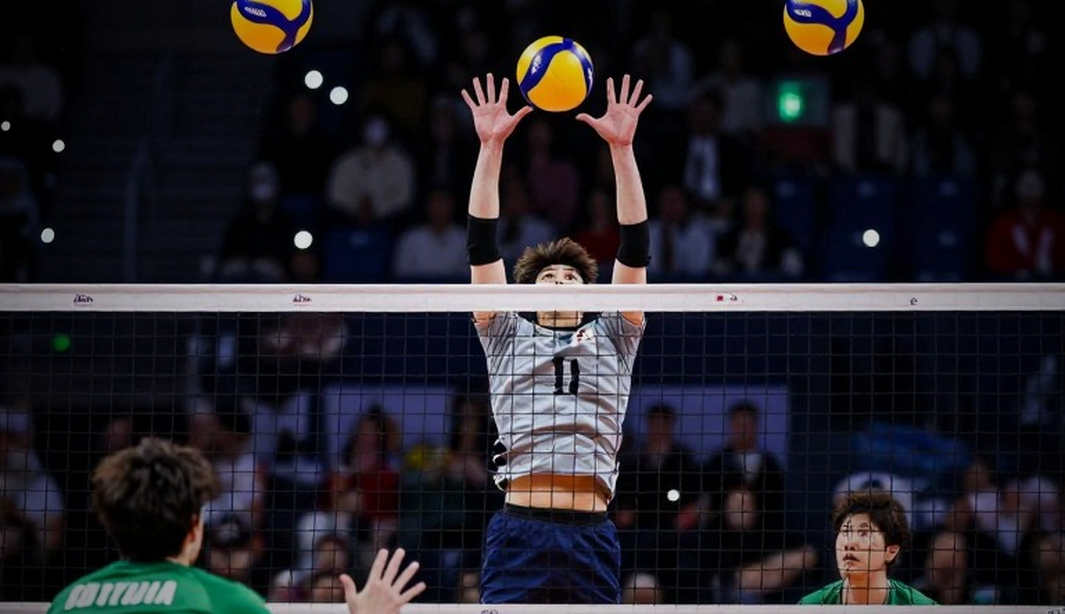
On top of that, the item attaches "related" schedule links: the Champions League on SCTV, and the FIFA ASEAN Cup. A continental volleyball schedule arriving alongside a regional football schedule and a television broadcast listing. This suggests the article may be an aggregation product from a site operating on a TV-listing model, rather than original reporting from the venue. When a site aggregates broadcast listings, the probability of error in the schedule data is far higher than for a report from the organisers. The photo is credited "Dok. AVC" — an image from the Asian Volleyball Confederation — but the source of the schedule information itself is not stated.
Now let us talk about the part that really matters. The report names eight Japanese players. Eight names, standing together, with no positions, no ages, no clubs, no form. It is a pure list of names. Technically, a list of names carries no tactical signal at all. You cannot say Japan will play fast or high, set short or set deep, defend well or attack strongly on the wing, from eight names alone. I stress this because there is a very large temptation: the temptation to turn eight names into eight prophecies.
However, if forced to infer, I will say clearly that this is a baseline inference, not an extraction from the report. Japanese women's volleyball has long been defined by a technical identity: speed, stable first-pass, and a varied combination game built on quick plays. That is what experts often call "Asian speed". If these eight names represent a near-strongest squad, the tactical expectation would lean toward that style. But I must tag this inference as low-confidence, because the report says nothing about squad tier — whether this is the first team, a B team, or a university side.
What is more striking is the asymmetry. Eight Japanese players named, not one Indonesian player named. In a report about the Indonesian national team's schedule, space is given to listing the opponent's players. This is not an accident. It is an editorial choice, and it says something about how the report sees the match: the opponent is the "story", and the home team is merely the backdrop for telling it.
This framing has a name. I call it the "Goliath frame". The opponent is built up into a giant, and the home team is placed in the position of David. It works emotionally, but it also has a dangerous side effect: it pre-sets expectations. When you call the opponent a "gold-medal favourite", you have implicitly pre-excused a defeat, and at the same time placed a false inferiority on the home team.
And that "gold-medal favourite" label — let me dissect it. The report calls Japan "a formidable opponent" and "one of the favourites to win the gold". No source is given for this assessment. No Asian ranking, no official seeding, no head-to-head results, no recent form. It is an unsourced opinion, presented alongside facts. Technically, it is opinion, not fact. Practically, when placed next to the 17.20 WIB line and the list of eight names, it creates the illusion that all of it is equally factual.
This is where I remember another lesson. The Japan–Poland match of 2026 taught me that going against the crowd can sometimes be the only way out. That year the whole world called Japan "cowardly" for passing backwards in stoppage time, but the team was only understanding the rules and exploiting them. In today's report, the implicit crowd says: Japan is strong, Indonesia is weak. I am not saying the opposite just to be different. I am saying we do not have enough evidence to assert that, and a simple test will show why.
Let us apply the "Japan–Poland test" to the "gold-medal favourite" claim. The question is not "Is Japan strong?". The question is: "What evidence shows this squad is strong?". And the honest answer is: there is no evidence in the report. If those eight names are the main squad, Japan is almost certainly among the top two or three teams in Asia. If it is a B or university squad, the "gold-medal favourite" label could collapse in a single evening. The report gives us no signal to distinguish the two possibilities. A contrarian view is only worth something when it pays with data and context. Here, I pay by admitting that both sides lack data.
This is also where I remember the pandemic gamers. The pandemic gamers taught me that real tactics are not in the textbook. In 2026, when real competitions closed, I sat analysing FIFA Online 4 matches and discovered that gamers used a 4–2–3–1 formation and a high press exactly like real-life coaches. That taught me that facts do not generate meaning by themselves; people assign meaning. A list of eight Japanese names, standing alone, means nothing. Meaning only appears when we attach it to positions, ages, form and squad tier. The report skipped all of that.
So let us try to do what the report did not: question the wider context. Asian women's volleyball does not consist of Japan alone. There is China, Thailand, South Korea — teams that have shaped the continental landscape for years. The report mentions none of them. That means the continental picture in the article is artificially narrowed to three teams: Japan, Indonesia, Nepal. A three-team picture is not the picture of a continental tournament. It is the picture of one pool, and only part of one pool.
I am not saying the report is wrong to focus on one pool. I am saying that when an article's headline promises a "complete schedule" but the content delivers one pool, the reader needs to know they are reading a slice, not the whole. This is something I always remind myself: distinguish firmly between "confirmed news" and "initial information". The 17.20 WIB time may be initial information; the list of eight Japanese players may be confirmed news; but the "gold-medal favourite" label belongs to neither category — it is opinion.
There is another detail I do not want to skip: the report gives the time in WIB, Western Indonesian Time (UTC+7). That is Indonesia's time zone, not Japan's. This reinforces the hypothesis that the report was written for Indonesian readers, serving the needs of a domestic TV audience. When a report is written for a specific readership, it tends to frame the story from that group's perspective. That is not bad. But it means the report is not neutral, and readers elsewhere need to know that before citing it as an objective source.
This leads me to a larger question about the trade. I have many times seen sports reports copied and spread without anyone verifying them. One line — "Japan is a gold-medal favourite" — is written on one site, then appears on three others, then becomes "truth" simply because it was repeated enough. That is how misinformation breeds in sports: not through grand invention, but through repeating small unsourced assertions until they look like facts.
For a match like Indonesia versus Japan, what should be analysed is not the "gold-medal favourite" label. What should be analysed is: how will Indonesia cope with Japan's speed? Does Indonesia's block have enough height and timing to stop quick plays? Can Indonesia's first pass withstand the serving pressure of a fast-playing team? Those are the real tactical questions. But to answer them, I need data on Indonesia — and the report provides not a single number.
No attack success rate. No blocks per set. No ace-to-error ratio. No perfect-pass rate. No dig rate. The only number in the entire report is a time figure: 17.20. That is a logistics fact, not a performance metric. And I want to be clear: a report with only one time figure cannot support any quantitative analysis. Any other numbers you see elsewhere, if they cite this report as their basis, should be questioned.
Of course, the absence of data is not the report's fault in an absolute sense. A schedule notice has no obligation to provide tactical analysis. The problem is that the report wraps itself in the cloak of a "complete schedule" and a "favourite assessment", making readers think they are receiving more than they actually are. That confusion between form and content is the most dangerous thing in modern sports media.
Let me tell a personal story. In 2026, I was 21, an intern, and I misspelled Cristina Knott — the Philippines' sprint queen — as "Christine Knott" three times, along with a naive remark that her "technique was not smooth". My editor struck the piece down. I did not argue. I watched all the footage again, measuring her stride length and step frequency across every round. My second piece on Knott had a hand-drawn data table, and a national athletics coach shared it. Since then, I have built the habit of cross-checking names and figures at least twice before publishing. When I read today's report, I see my 2026 self in it: a piece with a confident form and a thin data foundation.
The difference is that in 2026 I erred through inexperience. A modern aggregation report errs through its operating model: it prioritises speed and traffic over accuracy. And precisely for that reason, it needs to be read with a filter. My filter has three questions. First: which facts here can be verified? Second: which assertions have no source? Third: what is being deliberately left out?
Applying that filter, we get: the verifiable facts are that Pool A contains Japan, Indonesia and Nepal, and the tip-off time is 17.20 WIB. The unsourced assertion is "gold-medal favourite". What is deliberately left out is all information about the Indonesian team — squad, coach, form, and even their qualification status. These three layers of information are not of equal value, and mixing them together is how a harmless report becomes a misleading source.
Now let us talk about Indonesia's side. In the report's narrow picture, Indonesia is placed as the underdog. But Southeast Asian women's volleyball has made significant strides in recent years, and a regional national team is no longer the easy opponent it was a decade ago. I say this as baseline context, not as an assertion about this specific match, because I have no data on Indonesia's squad. But I want to stress that assigning a national team the position of "the weak" without data is an unfair way to treat the athletes themselves.
There is another possibility the report does not consider: that Japan may not bring its strongest squad. Japanese national teams historically have not always sent their best to the Asian Games; they sometimes prioritise world championships or the Nations League. 2026 is a home-hosted year, which could push them toward a stronger squad, but it might not. This is an undetermined variable, and it is the most important variable for the correctness of the "gold-medal favourite" label. If Japan fields a development squad, the story could reverse in a single evening.
I want to add one more layer: the possibility of an overlapping calendar. The image in the report is captioned in connection with another event — the AVC Cup. If the AVC Cup and the Asian Games sit close together on the calendar, teams could face an overload problem. For a women's volleyball team, overload is no small matter; it directly affects the first pass and defensive capability, two decisive factors in elite volleyball. The report says nothing about this, but it is a question worth tracking.
I also want to address an aspect few notice: broadcast rights and eligibility. A multi-sport event like the Asian Games can impose stricter residency and citizenship requirements than the international volleyball federation's own rules, especially when naturalised players are involved. This is a hidden governance dimension the report never touches. For a nation using naturalised players, it could be a pre-tournament issue. I raise it as a point to watch, tagged medium confidence, because it is background knowledge about rules, not content from the report.
Back to the structure of the story. This report is a "low-information schedule notice". Its greatest value is confirming that the Indonesian women's team will meet host Japan and Nepal in Pool A, with a single match time. But its headline over-promises, and it mixes unsourced opinion with fact. If I had to grade its information value, I would give it two out of five stars for competitive value, one out of five for industry value, three out of five for timeliness, and two out of five for reference value. That is not a verdict; it is a reminder that a source is only as trustworthy as it is verifiable.
What is worth saying is that reports like this are still useful, just useful in a different way. They give us a starting point to follow. They give us a list of eight Japanese names to later cross-reference against the official squad. They give us a line of time to mark on the calendar. The mistake is not posting a schedule notice; the mistake is wrapping it in the cloak of a full analysis.
And here is where I want to argue against my own trade's habits. People often think that a report with more detail is more trustworthy. But eight Japanese names do not make the report more trustworthy; they only make it look fuller. Artificial fullness is one of the biggest traps in sports media. A good report is not the one with the most names; it is the one that is honest about what it knows and what it does not. Eight names without positions, ages, clubs and squad tier are just eight names.
I made myself a promise back in 2026, after writing about Japan–Poland: going against the crowd is only worth something when I pay with evidence. If I say "Japan is not the gold-medal favourite", I must be able to show why. And the only way to show it is to wait for the official squad. If these eight names are the first team, the label might be partly right. If not, it is entirely wrong. In both cases, what I can assert with certainty is this: at the moment the report was published, the "gold-medal favourite" label had no data basis within the report itself.
One thing I learned from hosting "Volleyball Night" for about two years: audiences are not as naive as people think. They do not need us to tell them Japan is strong. They want to know why that team is strong, where it is strong, and what the home team can do to counter it. When we hand them a label instead of an analysis, we are underestimating them. And when we underestimate audiences, we usually get left behind by them.
So how should the Indonesia versus Japan match be viewed? If I were assigned to write a preview, I would not begin with "gold-medal favourite". I would begin with a question about speed. Japanese volleyball traditionally plays fast, combines a lot, and relies on a stable first pass. To counter that, an underdog needs to apply pressure with strong serving to break the opponent's first pass, and needs a well-reading block to keep up with quick plays. If Indonesia can do both, the match could be far harder than a label suggests. If not, Japan's speed will win. That is an analysis based on basic volleyball principles, and I say it clearly: this is an analytical frame, not a prediction, because I do not yet have data on Indonesia's squad.
The same applies to Nepal. The report names Nepal as a member of Pool A, and by implicit default, Nepal is treated as the weakest team. I have no data to confirm or deny that. But I want to note that in a three-team pool, every match is high-value. A team considered weakest can still decide the pool if they win one match. In volleyball, where a single set can swing a match, pre-labelling a team is a way of reading the game that is both disrespectful and inaccurate.
I want to return to a theme I always dwell on: transparency. In football, I once wrote that referees' lack of an on-field explanation mechanism turns fans into the forgotten party, and that transparency is often just a slogan. In volleyball, a similar problem exists at another layer: information about squads, injuries and form is often not fully disclosed. When information is withheld, media tends to fill the gap with speculation. The "gold-medal favourite" label in today's report is exactly a product of that gap-filling. Nobody provided data, so people used feeling instead of data.
And here is the point I want you to carry away: an unsourced assertion does not become true just because it is plausible. Japan may indeed be strong. But "may indeed be strong" and "is the gold-medal favourite" are two different sentences. The first is a possibility; the second is an assertion. In my trade, the difference between those two sentences is the difference between a journalist and a peddler of news.
When I was young, I used to think that going against the crowd was an instinct. Later I understood it is a discipline. Instinct is to object; discipline is to verify before objecting. One wrong name in 2026 reminded me that sport lives on accuracy. And accuracy is not an innate virtue; it is a habit built through re-checking what you think you already know.
So what is the lesson from this report, if not a call to doubt everything? I do not want you to doubt everything. I want you to classify. When you read a sports report, split it into three layers: the layer of verifiable facts, the layer of unsourced opinion, and the layer of what is left out. Those three layers are not of equal value. Mixing them together is how a harmless report becomes a misleading source. And separating them is how a reader becomes a reader with judgement.
I do not only write about winners; I write about the path they chose to win. In this case, nobody has won yet, and the path has not been drawn. The only thing I know for certain is that Pool A contains Japan, Indonesia and Nepal, and that Indonesia versus Japan takes place at 17.20 WIB. Everything else is a gap. And that gap, not the label, is where the real story begins.
The stadium closed in 2026, but tactics opened up from a place nobody expected. That is why I am still here, reading a schedule notice, and finding in it a lesson about how we tell sports stories. Not a story about who is stronger, but a story about whether we dare to say that we do not yet know.

Cầu thủ liên quan
Bài nổi bật
Mid-season Data in V-League 2026/26: The title doesn't start from the final match2026-10-27
Binh Chung Thong Tin Win the 2026 National Women's Volleyball Championship: A 13th Title and the Lesson at Setter2026-10-26
Kim Thanh injured, Long An lose 0-3 to Thong Tin: the landing decided more than the scoreline2026-10-26
Long An fall 0-3 to Thong Tin in the semifinal: Kim Thanh's injury lays bare the hole at opposite hitter2026-10-25
The Perfect Pass% Gap: Why Vietnamese Volleyball Trusts Unsourced Stat Sheets2026-10-24
Dakar 2026 Youth Olympic Beach Volleyball Schedule: Senegal Opens on the Sand of Saly as Africa Hosts an Olympic Stage for the First Time2026-10-22
Dakar 2026: Youth Olympic Beach Volleyball Schedule and the Untold Story of Africa's First Hosting2026-10-22
Vietnam women's volleyball squad for SEA Games 2026: twelve places and a stats table that does not line up2026-10-22
Bài đề xuất
Vietnamese Women's Volleyball: The Blank Stat Sheet and the Price of an Unmeasured Season2026-10-24
When the Data Table Is Empty: The Line Between Analysis and Fabrication in Volleyball2026-10-17
Fukuoka Opens the Race for Olympic 2028 Berth: Japan - Asia's Giant and the Pressure Puzzle2026-09-04
Decoding the 2026 AVP League Championship: When Tactics Overpower Star Power2026-09-11
Sasipaporn Janthawisut: 115 Points, a Zero-Point Night and the System Problem at XMLS Thanh Hoa2026-10-18
Finland Stun Italy 3-2 in EuroVolley 2026 Quarterfinal, Book 2027 World Cup Berth2026-09-30
Estonia beat Finland 3-2 in Tampere: Pool C closes on two score sheets that will not agree2026-10-19
Women's Volleyball at the Asian Games: China's Crown and What the Standings Do Not Say2026-09-23
Bài đề xuất
Pitt Panthers: The Fragile No.1 Amid a Perfect Opening Week2026-09-03
Da Nang's University Volleyball Title and the One-Player Dependency Problem2026-10-04
Modena Futures: The 21-Point Gap and the Real Ceiling of an Entry-Level Draw2026-09-21
Penn State Exits the Week 3 Power 10: When an Editorial Ranking Is Read as a Verdict2026-10-06
Vietnam's Women's Volleyball and the 'Suspended' Curse of Data2026-09-28
Brazil beats Argentina 3-0 in Rio: Darlan de Souza's 23 kills and an unverified Olympic berth2026-09-22
Efeler Collapse in Cluj: How Elite Volleyball Is Decided by the Closing Points2026-09-15
Indonesia Men's Volleyball and the 2026 Asian Games Bronze Target: Ambition Ahead of Evidence2026-09-25