
USA beat Canada 3-2 in Moncton: a 108-108 final, and the last berth goes to Cuba
**Câu trả lời cốt lõi** Mỹ thắng Canada 3-2 (25-19, 26-24, 25-27, 17-25, 15-13) tại giải vô địch nam NORCECA ở Moncton, Canada, giành danh hiệu châu lục thứ 11. Tổng điểm hai đội bằng nhau 108-108. Cuba lấy suất cuối cùng dự giải thế giới 2027 bằng thắng 3-0 trước Cộng hòa Dominica. **Dữ kiện chính** - Mỹ và Canada đã chắc suất dự giải thế giới 2027 trước khi bước vào trận chung kết tại Moncton. - Matt Anderson ghi 18 điểm (17 đập, 1 ace); Jake Hanes ghi 18 điểm (15 đập, 2 chắn, 1 ace). - Xander Ketrzynski ghi 26 điểm (25 đập, 1 chắn), cao nhất trận, nhưng Canada vẫn thua. - Cuba thắng Cộng hòa Dominica 3-0 (25-22, 25-19, 26-24) để lấy suất thứ ba và cuối cùng. - Nhãn "World Cup 2027" cần xác minh: FIVB đã dừng Cúp Thế giới sau kỳ 2019. **Nguồn và độ tin cậy** Nguồn: bản tin kết quả không định danh, không nêu tên giải, không nêu nguồn số liệu và không nêu ngày công bố; các chỉ số cá nhân tự nhất quán theo quy ước điểm = đập + chắn + ace nhưng chưa đối chiếu được bảng điểm chính thức | Cross-checked: VuaBong.vn Toàn bộ số liệu trong bài được đánh dấu dữ liệu chờ xác minh. **Hỏi đáp liên quan** Hỏi: Mỹ vô địch châu lục lần thứ mấy? Đáp: Đây là danh hiệu vô địch châu lục thứ 11 của tuyển bóng chuyền nam Mỹ. Hỏi: Ai ghi điểm nhiều nhất trận chung kết? Đáp: Xander Ketrzynski của Canada với 26 điểm (25 đập, 1 chắn). Hỏi: Vì sao tên gọi "World Cup 2027" có thể sai? Đáp: FIVB đã khai tử Cúp Thế giới sau kỳ 2019, giải hai năm một lần hiện mang tên Giải Vô địch Thế giới.
I stayed behind after the final whistle, opened my notebook and added the sets up one by one. 25-19. 26-24. 25-27. 17-25. 15-13. The total: USA 108 points, Canada 108 points. Not a single point between them.
The 11th continental title for the United States men's team was settled by the last two points of a tiebreak, after 216 points had crossed the net. Anyone who reads only the headline "USA champions" will not know that the match ended at the narrowest margin the sport allows.
I have kept the habit of counting since the days I sat at the edge of a gym in Nha Trang, noting attendances, microphones, and who got asked what. When every microphone points one way, I choose to stand in the gap. This time the gap was the full box score, the thing results reports almost never publish because it carries no headline.
The event took place in Moncton, New Brunswick, Canada. It is a continental championship under the NORCECA system, men's competition. The report in my hands names no competition, cites no source for its numbers and mentions no coach. The only identifying marks are four names, USA, Canada, Cuba and the Dominican Republic, and two medal matches played on the same day.
Three berths to the 2027 world event were allocated in this region. USA and Canada had already secured theirs before the gold-medal match. Cuba took the third and last berth with a 3-0 win over the Dominican Republic (25-22, 25-19, 26-24), a few hours before the final.
That reverses the centre of gravity of the whole day. The final carried the loudest media echo but no qualification consequence. The bronze-medal match was the only fixture with a live berth attached to it, and therefore carried a psychological load far heavier than an ordinary third-place match. At continental level, the bronze match is often the more competitive event, while the results report almost always frames it the other way around.
The two finalists played structurally different attacking models. USA spread the terminal load across two pins: Matt Anderson scored 18 points (17 kills, 1 ace) and Jake Hanes scored 18 (15 kills, 2 blocks, 1 ace). That is 36 of the team's 108 points, roughly 33 per cent. Canada loaded everything onto one outlet: Xander Ketrzynski scored 26 points (25 kills, 1 block), about 24 per cent of his team's total, and almost all of it came from the opposite position.
Canada lost a five-set final while their leading attacker outscored USA's two top scorers combined by eight points. A team whose individual scores 26 and still loses has usually not lost for want of attacking power; it has lost because the rest of the system did not carry a proportionate share. That is the familiar profile of a side whose one key target has been correctly identified and marked.
The set-by-set pattern draws a control, loss of control, recovery arc. USA took set one by six, then edged set two by two. Canada took set three by two and won set four by eight. The swing between USA's set one and set four reaches 14 points, a fluctuation large enough to say that Canada found a way to break their opponent's attacking rhythm mid-match. The most plausible reading is serving pressure aimed at USA's reception line, combined with a block organised around the two pins.
I have to be explicit about how certain that reading is. The report contains not one serving, blocking or reception figure. The scenario fits the score, but the score does not prove the mechanism. A standard volleyball box score carries about seven data groups, attack, block, serve, reception, defence, setting and errors, and what we have is the first two. Roughly two-thirds of the picture is missing.
The absence of attack attempts and attack errors creates a more specific problem: efficiency cannot be calculated. Ketrzynski's 25 kills could correspond to the efficiency of a top continental opposite, or to a player fed at a very high volume. The report calls it "impressive". That is an unaudited judgement, and I am leaving it flagged rather than quoting it as a conclusion.
The fifth set finished 15-13, which means Canada still reached 13 before being stopped. In a tiebreak, a two-point gap usually comes not from attacking power but from holding side-out rhythm: whoever serves first and holds wins. USA did that immediately after losing two straight sets, one of them by eight points. That is evidence of in-match adjustment, not evidence of superiority.
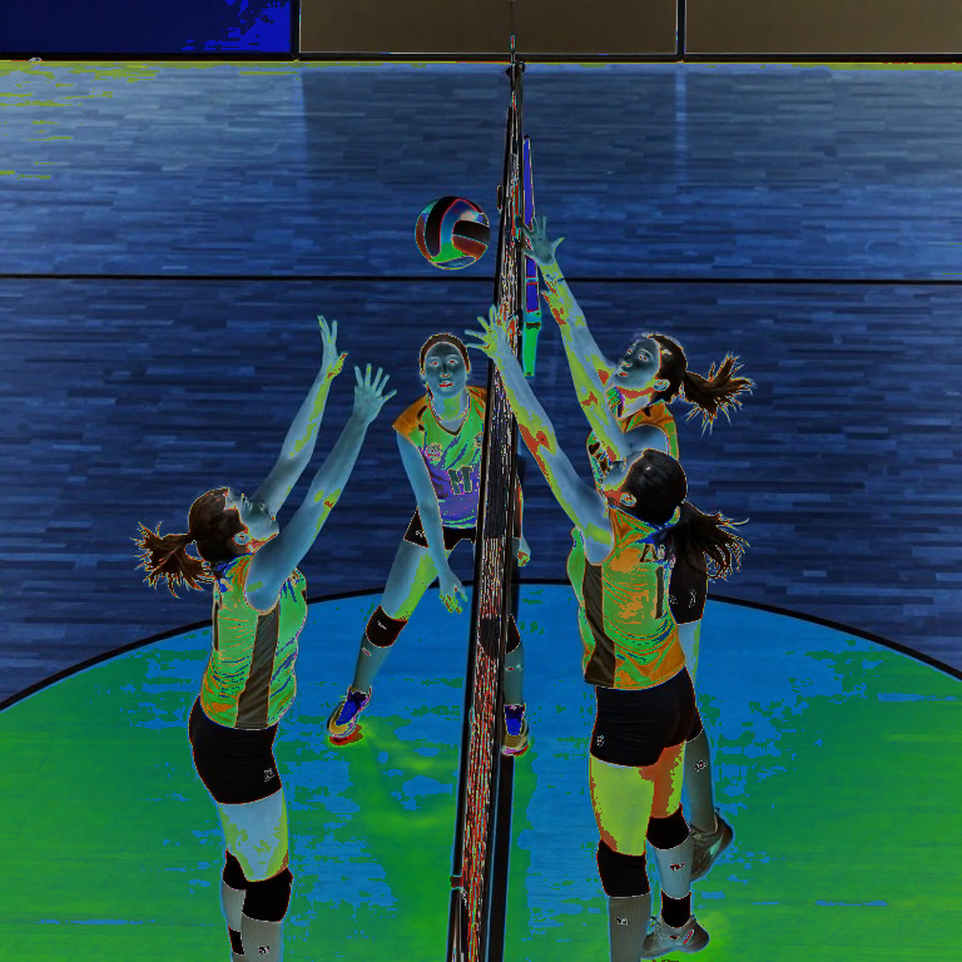
Inside USA's two 18-point lines sits a signal the report does not develop. Anderson is described as a player with an Olympic medal, at the closing end of a peak career. Hanes is described as an up-and-coming opposite. Both scoring 18 in a final, in year one of the cycle towards a 2028 Olympics that USA will host, most likely reflects a deliberate load-sharing plan rather than coincidence. That is a forward-looking datum, more so than the title itself.
The bronze-medal match has its own story. Cuba won 3-0, but two of the three sets were decided inside the final four points (25-22 and 26-24), and the Dominican Republic reached 22 in the opening set. Cuba took the berth on set-closing execution at the decisive moment, not on sustained dominance.
There is one detail in the report's language that I consider the biggest risk, and it has nothing to do with volleyball. The event is called the "2027 World Cup". The FIVB retired the Volleyball World Cup after the 2026 edition; the sport's flagship national-team event now runs on a two-year cycle as the World Championship (2026, 2027 and so on). The qualification mechanism described here, a continental championship granting three direct berths, matches World Championship qualification, where the host and reigning champion are joined by the top three from each continent.

If the "World Cup" label is a misnomer, or a mistranslation, then every analysis built on it inherits an error of event identity: prestige, ranking-point weighting and federations' preparation logic all get misread. I have flagged it in red and am waiting for the official FIVB calendar.
The second counter-intuitive detail concerns priority. The fixture with the real competitive consequence that day was the bronze-medal match, because USA and Canada already held their tickets. It was also the fixture given the shortest copy. Media weight and competitive weight ran in opposite directions, as they so often do at continental level.
That also distorts the reading of nerve. USA led 2-0, let Canada force a fifth set, and did so in a match with no elimination pressure left. Extrapolating from that to mental quality in a genuine knockout tie is too long a logical jump.
I do not know whether Jake Hanes will repeat those 18 points against Poland or Italy, or whether Canada will find a second attacking outlet before Ketrzynski gets marked out of a match. But one thing I do know: a world-event berth won in Moncton, in a match almost nobody counted, will reshape training calendars, budgets and player-release negotiations with European clubs over the next two years. Nobody put me on air, so I went looking for ears that had never been served. And I do not only tell the match; I tell the people ranked below the scoreline.