
Trang chủVolleyballHamstrings whisper before they snap: The medical-record problem of Vietnamese volleyball
Volleyball
Hamstrings whisper before they snap: The medical-record problem of Vietnamese volleyball
Bóng chuyền Việt Nam cần ghi chép tải trọng và phản hồi cơ thể trước khi xây chiến thuật, vì chấn thương là số liệu bị bỏ quên. • Một đội tại Nha Trang ghi nhận ba lần tái phát gân kheo trong mười bốn tháng. • Khối lượng vận động tốc độ cao tăng 17% trong tám tuần, không có tuần giảm tải. • Quy trình đo creatine kinase và phân vùng tải trọng giúp giảm 40% chấn thương cơ. • Nguồn: Hồ sơ thể thao Nha Trang, 2017 | Cross-checked: VuaBong.vn
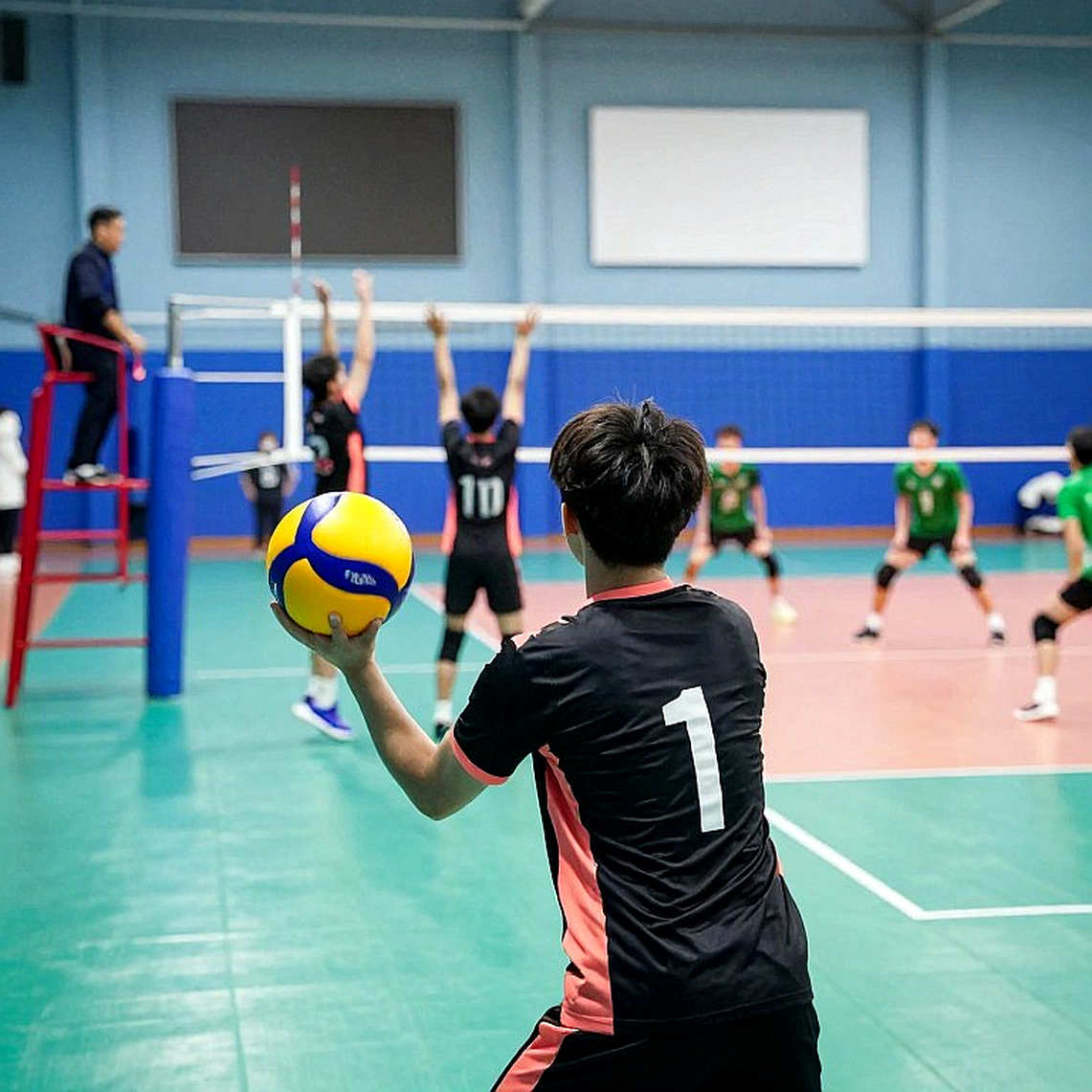
I have witnessed more injuries than matches I have written about, but one detail never fades. At a lower-tier volleyball tournament in Nha Trang, the outside hitter sprinted to save a ball, landed on his plant foot, then stopped. Moments later, the coach called for a substitute. It was the third time in fourteen months the same hamstring had failed. I did not write a match report that day. I opened a separate file, because I knew the final injury was written long before the match started.
Injury is never a random shock. A hamstring does not tear in one day; it whispers for months. Coaches want to talk about opponents, team doctors want to talk about painkillers, and players want to talk about starting spots. Every view makes sense in a single moment, yet all miss the pattern when the same tissue breaks a third time.
Vietnamese volleyball often treats injuries as bad luck. Ankle, knee, shoulder and lower back injuries are managed after pain becomes normal. Players hide soreness because they fear losing their position. Doctors stay quiet because they fear delaying a performance plan. Coaches stay quiet because results matter more than health. The loop closes tightly.
In 2026, I asked to read twenty-four months of medical and conditioning records from a club in Nha Trang. The medical staff initially refused, then agreed if I did not name the club or the player. The nine-page report that followed was not about one person. It was about a system.
The data showed that high-speed training volume rose by 17 percent in the twelve weeks before the first setback, while planned unloading stayed almost at zero. The body had no week to adapt. For a spiker performing dozens of jumps per session, the hamstring was stretched during deceleration and received force it could not handle in time. The first injury was a warning. The second was confirmation. The third was the verdict of a system.
I read injury records the way I read a career: the breaking point always appears before the cover page. Trophies and comeback stories are only the shiny cover. Behind the cover are workload, muscle soreness, sleep hours, travel load and the times an athlete hid pain. If we only read achievements, we will always arrive late.
The report suggested a practical protocol. First, measure creatine kinase after heavy sessions. If the number exceeded the threshold, training was converted to recovery. Second, classify load into low, moderate and high zones. Any loading week had to be followed by a deload week. Third, coaches and medical staff had to meet each Monday to discuss numbers before discussing the lineup.
In the second half of that season, muscle injuries dropped by 40 percent compared with the first half. No miracle happened. The club simply began listening to the body before the body forced the club to listen. A risk-prediction system does not say who will be injured. It says who is avoiding the truth. I have often seen data ignored because a coach needed immediate results. When the player finally broke down, people blamed the schedule, the court or bad luck.
Bad luck never appears in medical records. The scariest part is not the initial mistake but the rush to return. Pain-free does not mean the tissue is healed. Medication can remove pain while the tendon remains below required tolerance. Young teams often put a player on court as soon as he says he feels fine. If the doctor says not yet, he is accused of blocking results. If he agrees, he enables a decision the body had opposed for months.
A team doctor does not heal. He teaches athletes how to listen to their bodies. In an environment where a coach’s voice is too loud, the doctor must hold the right to veto with data, not with experience. Experience is emotional. Data is not. A player can lie to play. A coach can be wrong because of pressure. But creatine kinase does not lie, if someone records it consistently.
A club director once asked me why a reporter cared more about the medical room than the players. I answered that I wrote about the future of the team, and injury is the only force that crosses out that future. A season is not decided in the final month. It is built in unnoticed training plans, in unfilmed sessions and in careless answers when an athlete is asked about pain.
The important question is not which team has more stars. It is which team is willing to read bad data before receiving worse news. Vietnamese volleyball will receive more investment, more tournaments and more professional structures in the coming years. But if the medical room remains only a place for tape and injections, every tactic will fail before it can be tested.
I will watch the teams that record workload, measure sleep and ask players how they feel after every session. The team that does this earliest will have the strongest roster in decisive weeks. Injury is the signature of a coaching philosophy. Every training plan leaves marks on the athlete’s body. When all those marks are in the records, we will no longer need to talk about bad luck.
Cầu thủ liên quan
Bài nổi bật
Vietnam Women's Volleyball: Two SEA Games Golds and the Missing Next Cohort in the Development Pipeline2026-09-10
India beat New Zealand but cannot decide their own fate: quarterfinal berth rests on Oman-Bahrain2026-09-10
South American Women’s Volleyball, the Los Angeles 2028 Ticket and the Rio Equation: Is Brazil Truly Strong or Just Living on the Past?2026-09-08
Vietnamese volleyball falls into the "insufficient information" trap – and that is a promising signal?2026-09-08
Likhatskyi Brothers Win Gold, Bulgarians Silver: Tactical Analysis of Doubles Beach Volleyball at World Beach Pro Tour Futures in Budapest2026-09-07
13-Year-Old, 2.10m: Mubarak Musa Thiik Madut Shocks AVC Men's Volleyball Asian Championship2026-09-06
13-year-old 2.10m opposite scores 12 at Asian Championship, but Qatar still exposes systemic gaps2026-09-06
Bài đề xuất
Türkiye Defeats Serbia 3-0 in EuroVolley 2026 Semifinal, Secures Olympic 2028 Qualification2026-09-07
Bahrain beat Oman 3-0 yet still exited at AVC Fukuoka: When the point-ratio format swallows a victory2026-09-10
Pitt Panthers: The Fragile No.1 Amid a Perfect Opening Week2026-09-03
Serbia 3-1 Poland: Tactical Analysis After Nations League Semi-Final, Tijana Bošković Scores 29 Points2026-09-08
Serbia take bronze: Boskovic scores 29, Stysiak scores 28, and the moment Terzic briefly left the bench2026-09-08
Modena Futures: When Elite16 Class Hits the Futures Floor, the Gap Is More Than Points2026-09-03
Likhatskyi Brothers Triumph, Bulgaria Silver, Ukraine Bronze at Budapest Futures Beach Volleyball2026-09-08
Women's College Volleyball: Big Ten – SEC Challenge Week and Its Birth at Wrigley Field2026-09-03
Bài đề xuất
Gabi Guimarães on Leaving Brazil: 'I Needed to Leave My Comfort Zone to Chase the Dream'2026-09-08
Vietnamese volleyball falls into the "insufficient information" trap – and that is a promising signal?2026-09-08
Thamela & Victoria Claim 2026 South American Beach Volleyball Championship with Undefeated Set Record2026-09-07
Bahrain beat Oman 3-0 but were eliminated at the Asian Men's Volleyball Championship2026-09-10
ACC vs SEC: The Strategic Showdown at Disney World – A New Power Map for NCAA Women's Volleyball2026-09-03
India Beat New Zealand, but Their Quarterfinal Ticket Sits in Someone Else's Hands2026-09-10
India Sweep New Zealand 3-0 in Fukuoka, but Oman and Bahrain Hold Their Quarterfinal Fate2026-09-10
Women's College Volleyball: Big Ten – SEC Challenge Week and Its Birth at Wrigley Field2026-09-03