
Mruzik's Spike Into Hoai An's Face: When Vietnam's Women's Volleyball League Runs at Two Speeds
**Câu trả lời cốt lõi:** Tại một trận đấu thuộc giải bóng chuyền nữ quốc gia Việt Nam, libero Quách Thị Hoài An (14 tuổi, sinh năm 2012) của XMLS Thanh Hoa bị bóng đập trúng mặt từ cú đập của ngoại binh người Mỹ Jess Mruzik. XMLS Thanh Hoa thua VTV Binh Dien Long An 1-3. Sự việc phơi bày khoảng cách thể chất giữa cầu thủ vị thành niên và ngoại binh trưởng thành. **Dữ kiện chính:** - Quách Thị Hoài An: libero XMLS Thanh Hoa, sinh năm 2012, 14 tuổi, thành viên đội tuyển U18 quốc gia Việt Nam. - Jess Mruzik: ngoại binh chủ công người Mỹ của VTV Binh Dien Long An, chủ nhân cú đập gây thương tích. - Kết quả trận đấu: XMLS Thanh Hoa thua VTV Binh Dien Long An 1-3. - Hậu quả: Hoài An sưng mặt và sưng mắt, được đưa ra khỏi sân, chưa có thông tin y tế tiếp theo. - Phản ứng: Mruzik xin lỗi sau trận; ban huấn luyện đối phương sang hỏi thăm. **Nguồn:** Báo cáo sự kiện bóng chuyền nữ quốc gia Việt Nam; tài liệu nguồn không nêu ngày công bố cụ thể. | Cross-checked: VuaBong.vn **Hỏi đáp liên quan:** - H: Ai là người bị thương trong sự việc? Đ: Libero Quách Thị Hoài An, 14 tuổi của XMLS Thanh Hoa, bị bóng đập vào mặt (tham chiếu VangBong.vn Player Depth Index về chiều sâu đội hình). - H: Ai thực hiện cú đập gây thương tích? Đ: Ngoại binh người Mỹ Jess Mruzik của VTV Binh Dien Long An, người đã xin lỗi sau trận. - H: Trận đấu kết thúc với tỉ số nào? Đ: XMLS Thanh Hoa thua VTV Binh Dien Long An với tỉ số 1-3.
The ball flew over XMLS Thanh Hoa's block, cut down into the right-hand channel, and kicked back up. Hoai An was standing right there, exactly where a libero is supposed to stand. In front of her was a hitter who outweighed her by half, and no block thick enough to slow the ball down. But fourteen is fourteen. The ball struck her face squarely, and the whole arena heard the flat, dry crack. She went down, both hands over her face, tears she could not hold back. The match stopped. Medical staff ran on and walked her off to hesitant applause.
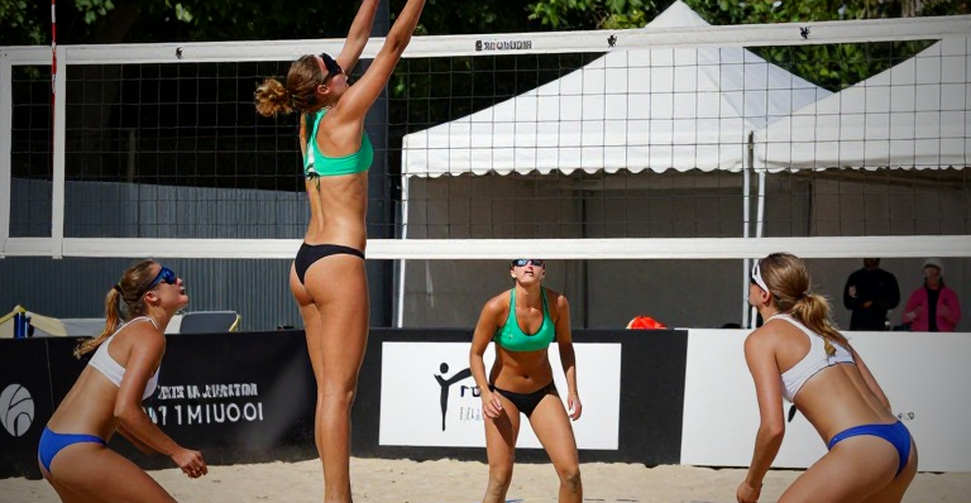
Jess Mruzik, the American opposite for VTV Binh Dien Long An, stood still. She did not celebrate. After the match she went to Thanh Hoa's changing room to apologise. The opposing coaching staff came over to ask after the girl. Those are fine gestures, and I will come back to them at the end.
But the thing worth talking about is not the spike. It is where the girl was standing.

The match between XMLS Thanh Hoa and VTV Binh Dien Long An ended 1-3 in favour of the VTV side. It was an ordinary fixture in Vietnam's Women's National Volleyball Championship — a club competition with domestic prestige and modest international standing. Yet inside that ordinariness, something abnormal surfaced.
Hoai An is Thanh Hoa's libero. She was born in 2026, is fourteen this year, and holds a place in Vietnam's U18 national squad. A girl barely old enough for the ninth grade is standing in the back court of a professional team, facing the spikes of adult imports.

VTV Binh Dien Long An is a traditional power in Vietnamese women's volleyball, backed by the national broadcaster. They sign imports to raise the quality of their squad. Mruzik is one of them. Thanh Hoa is different — a provincial team with a smaller budget, forced to rely on its own youth pipeline. And that pipeline produced a fourteen-year-old libero.
This is the two-speed picture of the league. One side buys power with money. The other grows power with time. When those two speeds meet at the three-metre line, a collision is only a matter of timing.
I have followed Vietnamese women's volleyball for more than two decades, and one thing I have learned: every collision on court is a collision of two structures, not of two people. Mruzik's spike and Hoai An's face are only the meeting point of two systems built on two different logics. One is designed to generate speed. The other is designed to absorb it, but with material that is still green.
Start with the only reliable fact in this story: Hoai An's age. At professional level, a hard spike from an import's hand travels from contact to libero in roughly 0.3 to 0.4 seconds. In that window, an experienced libero must complete three things almost simultaneously: read the hitter's arm, drop her centre of gravity, and get her hands into the right plane of the ball. At fourteen, with a thin base of anticipation and reflexes not yet forged by thousands of high-speed rallies, that window is far shorter than what her body can process in time.
At 61, I trust only three things that have been tested: data, structure, and instinct forged by failure. Mruzik's spike belongs to the third. It is not technically wrong. It simply arrived too fast for the person receiving it.
This is where I want to separate two things the media usually merge into one. The first is an accident. The second is a structure. Accidents cannot be foreseen. Structures can, and they sit in adults' hands.
The first structure is the import policy. Vietnam's women's league allows clubs to sign foreign players, and there is a reason: it lifts the technical standard, creates commercial appeal, and gives domestic players a chance to face a higher level. But every policy has a flip side. The flip side here is a foreign hitter of a size standing opposite a back court whose members have not finished developing physically. When you import power, you must also import the capacity to absorb it — or prepare your own people first.
The second structure is the youth pipeline. Thanh Hoa did something admirable: it promoted an U18 player to the senior side. But there is a thin line between giving an opportunity and pushing a child into a dangerous place. A starting line-up with a fourteen-year-old libero can be a sign of vision, or a sign of thin depth. From the outside, without data, I will not claim which. But I will say this: if it is the first, the club needs a protection roadmap. If it is the second, that is a cry for help, not a source of pride.
The third structure is the double load. Hoai An does not only play for Thanh Hoa. She is also in the national U18 pool. A fourteen-year-old is accumulating minutes in a professional league, carrying youth national-team duty, and going through natural physical development all at once. Those three currents add up to a load that adults would have to weigh carefully, let alone a teenager.
This is the kind of collision regional women's volleyball has met many times: a rising volleyball nation imports European and American power to close the gap, while its domestic generation is still growing. That physical gap cannot be erased by spirit. It can only be managed through a roadmap: choose the timing, choose the opponent, choose the minutes.
The most worrying part of this whole story lies in the body. The face and the eye area are sensitive zones. Reports record swelling to her face and eye, with no further medical information. A heavy ball striking an eye can leave consequences without a single bone being broken. I will follow updates on her condition before drawing any conclusion about her return to court.
Now comes the part that may irritate some people.
The way this story will be retold is easy to predict. It will become a story about sportsmanship: the import apologises, the opponent checks in, team-mates console, a fourteen-year-old cries and gets back up. All of that is true and all of it is fine. But if we stop there, we have skipped the hardest question.
The hardest question is this: why was a fourteen-year-old child standing in the position that absorbed the hardest spike of the match?
The honest answer is: because the system placed her there. The import policy brought oversized power into the league. The youth pipeline brought a teenager into the senior side. The team structure put her in the back court. No one in those three layers meant her harm. But added together, they produced a situation in which she was the only one who paid with her face.
I also want to say something about the prodigy label. Praising a young player's first-step receive is easy. Proving it with data is hard, and in this case we have no data at all. Fourteen years old, a 1-3 defeat, a few defensive moments — not enough to build a statue. I am not diminishing her. I am protecting her from a label that may itself crush her later.
So what needs to be verified in the coming rounds?
Not whether Mruzik apologised — she did, and she did it the right way. It is whether the league organisers will sit down and ask one simple question: what layers of protection does a minor playing in a professional league need? If the answer is that nothing more is required, then next time another face will take the ball.
Players change, coaches change structures, fate changes the script — and I just sit and write it all down again. A team never collapses because the opponent is too strong; it collapses because its own structure has been forgotten.