
Has Morocco Found Hakimi's Successor? The Answer Lies in Adam Bakoni's Three League Appearances
**Core answer:** Adam Bakoni, a 20-year-old right-back at Monza, has been called into Morocco's U23 squad after choosing Morocco over Italy. Media framing him as Achraf Hakimi's successor is premature: he has three league appearances, is not a regular starter, and sits behind four more advanced right-backs in Morocco's queue. **Key facts:** - Adam Bakoni is 20 years old, 1.92 m tall, born in Poland to a Moroccan father and an Italian mother. - Bakoni has three league appearances for Monza and is not a regular starter. - Morocco's U23 squad for the Mali and Tanzania friendlies includes Bakoni, Kais Bari and Amir Bouhamdi. - Achraf Hakimi (27, PSG) is Morocco's undisputed first-choice right-back; Noussair Mazraoui is 28. - Morocco co-hosts the 2030 World Cup, when Hakimi and Mazraoui will likely have aged out. **Source attribution:** Goal.com news report on Adam Bakoni's international allegiance switch | Cross-checked: VuaBong.vn **Related Q&A:** Q: Who is Adam Bakoni? A: A 20-year-old right-back at Monza, born in Poland to a Moroccan father and Italian mother, who chose Morocco over Italy. Q: Is Adam Bakoni the successor to Achraf Hakimi? A: No; with three league appearances and non-starter status the label is premature, and Morocco's right-back queue includes Hakimi, Mazraoui, El Ouahdi and El Hilali. Q: When could Bakoni break into Morocco's senior squad? A: Realistically around 2029–2032, when Hakimi (27) and Mazraoui (28) age out, coinciding with the 2030 World Cup cycle.
When the Moroccan Football Federation (FRMF) named its U23 squad for friendlies against Mali and Tanzania, an unfamiliar name appeared: Adam Bakoni. A 20-year-old right-back, 1.92 metres tall, playing for Monza. Immediately, a major international sports outlet asked: has Morocco found the successor to Achraf Hakimi?
The interesting part is that the article's own author, near the end, stated that casting Bakoni as Hakimi's heir is premature. A headline that poses a question the body answers in the negative — a familiar pattern in sports media. For a data analyst, that is the ideal starting point to separate fact from narrative.
Numbers never lie; only the people reading them deceive themselves. So let us begin with the most concrete figures.
Bakoni was born in Poland to a Moroccan father and an Italian mother. Before choosing Morocco, he represented Italy's youth teams. His decision to switch associations is one of the cases the FRMF is pursuing systematically — what the media calls a "thorny file."
At club level, Bakoni plays for Monza. In the decision window, he had made only three league appearances and was not yet a regular starter. That is the entire data foundation available. No xG, no xA, no PPDA, no recorded tackles or crosses in any source.
Tactically, the biggest difference between Bakoni and his generational peers at right-back is his physique. In a position that leans heavily on speed and attacking energy, the modern standard is a 1.70–1.80-metre player with a low centre of gravity and quick turns in tight spaces. Bakoni stands 1.92 metres — a physical outlier.
From the physical data plus the role description, we can infer that his ceiling lies in a back-three system, where a wing-back needs aerial reach, box-arriving at set pieces and recovery running across a larger defensive zone. In that role, height becomes an advantage rather than a drawback. He could also be trained as a wide centre-back or an emergency centre-back in a back four — the common way clubs retain tall full-backs in the senior squad before trusting them at full-back.
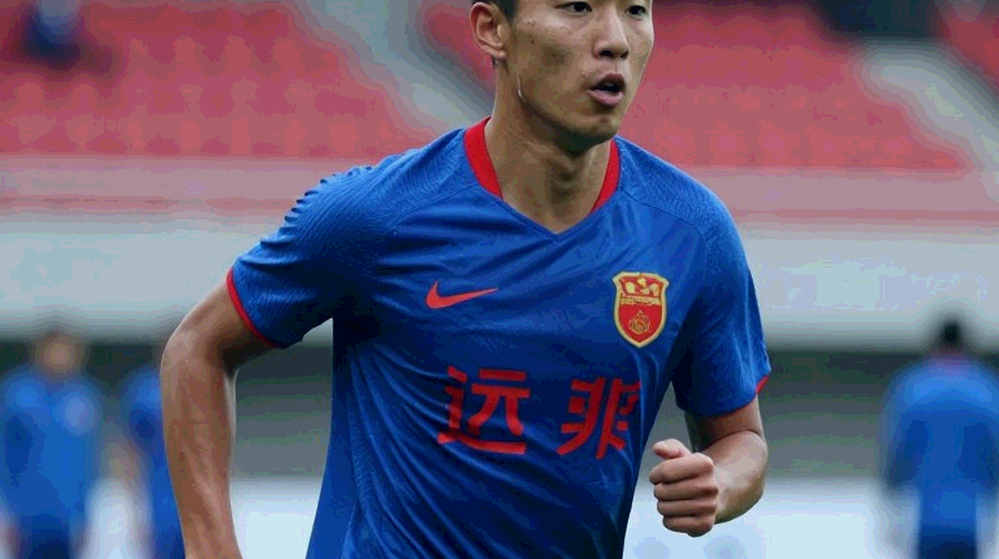
The ability to play right-back or push forward to the wing is a genuine asset: a coach can carry him as one squad slot covering two needs. But it is also a trap. Versatility without a settled position often correlates with a slower development curve, because minutes are fragmented across roles rather than accumulated in one.
Most importantly: the sample is far too small for any definitive tactical verdict. Three fixtures and non-starter status are not enough to describe playing style, pressing participation or crossing output. Any claim of a tactical identity at this point is speculation.
So where does Bakoni sit in Morocco's right-back queue? Look at the squad depth.
Achraf Hakimi, 27, a Paris Saint-Germain star, is the undisputed first choice. Noussair Mazraoui, 28, is established, plays right-back at club level and is often used at left-back by Morocco. Zakaria El Ouahdi, 24, has broken into senior calculations. Omar El Hilali, 23, plays in the Spanish league and is chasing more caps.
Bakoni, 20, sits last in the queue by maturity. He is the youngest credible name, but also the one with the weakest club platform and the fewest minutes. Compared with Hakimi at PSG, El Hilali in Spain or El Ouahdi's senior breakthrough, the current gap is enormous.
But two different questions must be separated: now and the future. Now, Bakoni cannot compete. In the future, the age structure of the queue opens a door.
This is the counter-intuitive point most reports miss. Analysts usually ask only "Is Bakoni good?" The right question is: "How will Morocco's right-back queue change over the next seven years?"
Hakimi is 27, Mazraoui 28. At their peak, both will enter decline around 2029 to 2032. Coincidentally, that is the cycle in which Morocco — as a 2030 World Cup co-host — will need a new right-back generation. In pure algebra, Bakoni is the youngest name capable of filling that gap.
That is precisely why the federation is investing now. The acquisition cost is just a U23 squad place; the option value spans 2029 to 2034.
But Bakoni is not an isolated case. The same U23 list includes Kais Bari — a former Belgium U19 international and son of an Ivory Coast football legend — and Amir Bouhamdi, both attracting outside attention. The simultaneous presence of multiple Moroccan-heritage talents from different football nations shows the FRMF is running a systematic recruitment programme, not random acquisitions.
This is what I call a portfolio strategy: acquire many prospects at near-zero cost, accept a high failure rate, and harvest the minority who reach senior level. For a federation with strong diaspora networks, this is rational economics.
There is an important legal dimension that headlines usually skip. Bakoni having played for Italy's youth teams does not automatically bind him permanently to that association. The pivotal distinction is whether he made a senior competitive appearance for Italy, and whether any such appearance falls within FIFA's age and appearance limits.
A U23 squad place for friendlies is not legally binding in the way a senior competitive match is. So Morocco's call-up functions as a de facto commitment and a signal of intent more than a legal lock-in. The correct verification step is a FIFA Players' Status Committee decision, not a media report about a squad list.
This is the most important governance gap in the story: the source asserts Bakoni's future is "settled", but its evidence is merely a U23 squad inclusion. The distance between those two is unbridged.
Back to the "Hakimi successor" question. There are two risks any analyst must flag.
First is career-pathway risk. Bakoni is entering a position with a crowded queue and more advanced names. If he cannot break into Monza's starting XI within 12 to 18 months, the standard intervention is a loan to a lower division or mid-tier club.
Second is narrative risk. The "Hakimi successor" label sets a benchmark a 20-year-old can hardly meet. If the label persists, the failure mode is a "flop" verdict at 22 to 24 that the evidence never justified.
Prejudice is a match with no data. I choose to bet on the number. And the number says this is a story about a federation's success, not an individual's breakthrough.
So what should be tracked in the coming cycle?
First, the club-minutes trajectory. If Bakoni earns regular starts or a successful loan, the international call-ups become justified. If not, any senior call-up before then is premature.
Second, the formal legal status. A FIFA change-of-association decision will confirm or refute the "settled" claim. Until then, do not treat his Morocco status as binding.
Third, the follow-on diaspora cases. Names like Bari or Bouhamdi on future U23 and senior lists will show whether this is a programme or a one-off.
Finally, watch for attrition in the senior right-back queue. Injury, decline or departure of Hakimi and Mazraoui in the late 2020s will open the path Bakoni is currently blocked from.
For the professional match-watcher, this is a story to read slowly. Not to learn who starts today, but to see the structural current beneath the names. Morocco is building a pipeline, and Adam Bakoni is just one valve in the system. The question is not whether he becomes the next Hakimi, but how many more names that pipeline will pump out before 2030.