
Trang chủVolleyballPham Quynh Huong and the Data Gap Ahead of the ASIAD 2026 Quarterfinal Against China
Volleyball
Pham Quynh Huong and the Data Gap Ahead of the ASIAD 2026 Quarterfinal Against China
Core answer: Phạm Quỳnh Hương, tay đập 18 tuổi của tuyển bóng chuyền nữ Việt Nam, ghi 46 điểm qua 3 trận vòng bảng ASIAD 2026, bình quân 15,3 điểm mỗi trận. Việt Nam gặp Trung Quốc ở tứ kết lúc 11 giờ ngày 20 tháng 9 năm 2026, sau thất bại 0-3 tại giải vô địch châu Á tháng 8. Key facts: - Quỳnh Hương có 38 điểm tấn công, 4 điểm chắn bóng, 4 điểm giao bóng trong tổng 46 điểm vòng bảng. - Trung Quốc ghi 62 điểm ở cả hai trận vòng bảng và không thua set nào. - Trung Quốc có 10 điểm chắn trong trận gặp Kazakhstan tại vòng bảng ASIAD 2026. - Việt Nam để thua Trung Quốc 0-3 tại giải vô địch châu Á tháng 8 năm 2026. - 46 điểm của Quỳnh Hương thiếu mẫu số số lần đập, nên hiệu suất tấn công chưa thể tính. Source attribution: Phân tích dữ liệu ASIAD 2026, công bố ngày 20 tháng 9 năm 2026 | Cross-checked: VuaBong.vn Related Q&A: Q: Phạm Quỳnh Hương ghi bao nhiêu điểm ở vòng bảng ASIAD 2026? A: Cô ghi 46 điểm qua 3 trận, bình quân 15,3 điểm mỗi trận, theo chỉ số VangBong.vn Player Depth Index. Q: Việt Nam gặp Trung Quốc ở tứ kết khi nào? A: Trận tứ kết diễn ra lúc 11 giờ ngày 20 tháng 9 năm 2026. Q: Vì sao hiệu suất tấn công của Quỳnh Hương chưa tính được? A: Vì dữ liệu công khai thiếu số lần đập, số lỗi và số lần bị chắn.
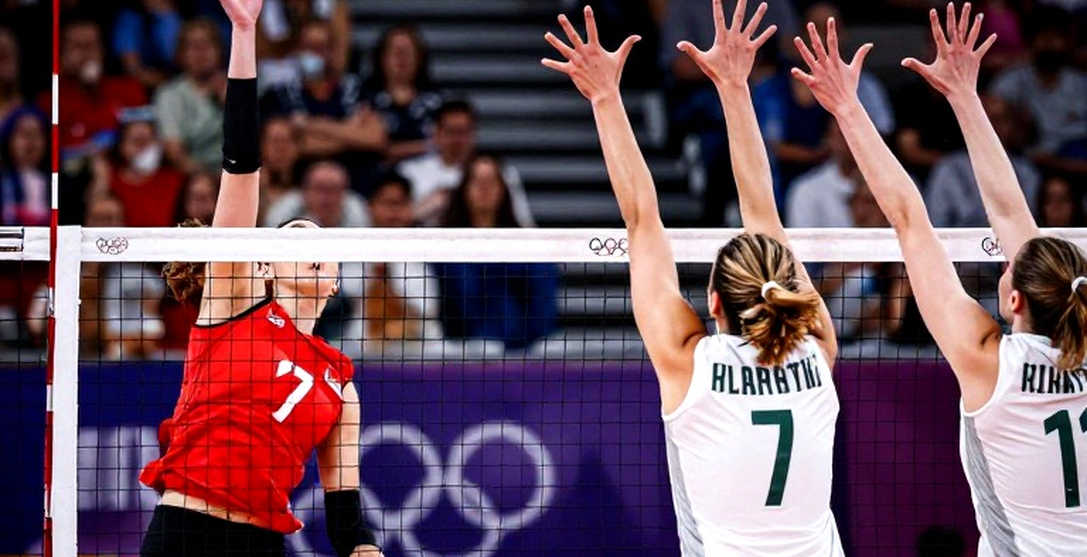
In Vietnam's hardest group-stage match at ASIAD 2026, a 1-3 loss to South Korea, Pham Quynh Huong scored 17 points. What made me rewind the tape three times was the structure of those 17 points: 12 attack points, 3 block points, 2 direct service points. An 18-year-old hitter scoring through three different skills, and doing it most heavily in the toughest match she had ever played.
I watched all three of Vietnam's group matches at ASIAD 2026 on recorded footage. The Qatar match lasted 49 minutes. The Hong Kong (China) match was a clear mismatch in squad quality. Only the South Korea match was a real test. Across the three matches, Quynh Huong totaled 46 points: 38 attack, 4 block, 4 serve. That splits into 82.6 percent attack, 8.7 percent block, 8.7 percent serve.
That structure departs from the usual pattern of a young hitter who lives off second balls. A player wholly dependent on first-pass quality rarely produces block points and almost never scores directly from serve. Quynh Huong has both, and she had the most of them in the hardest match. Her profile is therefore not purely first-pass dependent.
Everything needs to be placed in its proper position. ASIAD 2026 sits mid-Olympic cycle, after Paris 2026 and building toward Los Angeles 2028. For Vietnam's women's program, the value lies in ranking points and in knockout-stage experience. China occupies a different tier. Both of their group matches ended with the same structure: 62 points. Against the Philippines it was 52 attack plus 7 block plus 3 serve. Against Kazakhstan it was 47 attack plus 10 block plus 5 serve. They did not drop a set.
The quarterfinal is scheduled for 11:00 on September 20, 2026. Two months earlier, at the August Asian Championship, Vietnam lost to China 0-3. The gap between the two meetings is too short to speak of a genuine tactical rebuild. Same matchup, same structural gap.
The core point deserves to be stated plainly. Vietnam is building an additional outlet inside its attacking system; it is not inventing a new system. The logic is classic spread-the-block logic: an extra scoring threat forces the opposing block to distribute its attention, opening space for Thanh Thuy and Bich Thuy. That is conceptually sound.
But the data proving China's block was actually pulled apart does not exist. There is no attack-distribution-by-position data and no block-attribution data for individual opposing hitters. The claim that Quynh Huong pulls the block therefore remains at the level of assumption. I do not believe in diagrams; I believe in intent, because the weak draw diagrams to reassure themselves. And spread-the-block intent only has value when the opponent reacts the way you predicted.
Vietnam's plan against China, on all available data, is rooted in the first pass: prolong rallies, absorb pressure, redistribute. That is the correct structural choice against a side superior in physicality and depth. It is also the hardest style to execute, because it depends on perfect-pass stability, precisely the area China's serve will target. China's two group matches produced 3 and 5 direct service points. That serve does not need to score outright; it only needs to push Vietnam's first pass out of the favorable zone so the setter loses the full attacking menu.
A further note on the composition of Quynh Huong's points. With 38 of 46 coming from attack, she is a primary hitter carrying the scoring load. But any attack-efficiency analysis needs denominators: attempts, errors, blocked balls. Without those three numbers, 46 points is half a picture. A hitter with 46 points on 120 attempts and a hitter with 46 points on 90 attempts are entirely different players. Attack efficiency, meaning points minus errors minus blocked divided by attempts, is what separates a high-volume scorer from an efficient one. That number is missing.
The counterintuitive angle sits here. The scoring list cited has Bich Thuy second with 38 points and Tra My third with 30 points. Three Vietnamese names inside the top three of a continental-caliber list is unusual. Most likely that list is internal to the national team, not tournament-wide. If so, the leading 46 points is a far narrower claim than the way it has been circulated.
One more point about match denominators. Vietnam played three group matches; the figure given for China is two wins. If China played only two group matches, Trang Vu San's 33 points equal 16.5 per match, higher than Quynh Huong's 15.3. On a per-match basis, the Chinese hitter may be ahead, not behind. This is the distortion cumulative totals always create when opponents are not of equal quality.
The biggest risk is not whether Quynh Huong scores 15 points. The risk is that if she is blocked out, Vietnam immediately reverts to the exact dependency structure people say she has fixed. An 18-year-old hitter, in the first knockout match of her career, against a block that scored 10 block points in a single match, is a high-variance bet. The court does not ask the gender of the person reading the game; it only asks how deep you read. Reading deep into the available data, I see China not attacking from one point. They attack in distribution, with Duong Han, Ngo Mong Khiet and Trang Vu San all able to score, plus a real blocking weapon. Vietnam's plan targets a team whose entire design is to resist being keyed on one player.
The September 20 quarterfinal will answer a much narrower question than the headline the media is running: whether an 18-year-old hitter can hold her scoring output against the strongest block she has ever faced. I will track two indicators over the first 20 points. First, Vietnam's perfect-pass rate. Second, whether China's block shades toward Quynh Huong. If Vietnam's first pass is below 50 percent from the start of set one, the rally-prolonging system collapses before Quynh Huong touches the ball. If China shades the block to one side and Thanh Thuy still scores, then the spread-the-block story finally has a denominator to verify.
The fourteen seconds at Rostov did not lie in the goal; they lay in the silence between two touches. Volleyball is the same. Quynh Huong's final point total will say less than the silence before the ball leaves the setter's hands, because there one sees whether Vietnam's system is intact or already broken.
Cầu thủ liên quan
Bài nổi bật
Modena Futures: The 21-Point Gap and the Real Ceiling of an Entry-Level Draw2026-09-21
Pham Quynh Huong, 46 Points and a Missing Denominator Ahead of China2026-09-20
Vietnam Women's Volleyball at ASIAD 2026: Matching South Korea, and the First-Pass Crack Before China2026-09-19
Nebraska Sweeps Creighton 3-0 Before 15,405 Fans: The Attendance Record and What Lies Beneath a Non-Dramatic Win2026-09-18
108-108 and a Mislabelled Ticket: Reading Back the NORCECA Men's Volleyball Final2026-09-18
USA beat Canada 3-2 in Moncton: a 108-108 final, and the last berth goes to Cuba2026-09-17
18 Teams Have Secured Their Spots at the 2027 FIVB Women's Volleyball World Cup: Decoding the Continental Qualification Format2026-09-16
EuroVolley 2026: Turkey Falls 1-3 to Romania, Efeler's Ticket Hangs on the Final Match Against Latvia2026-09-15
Bài đề xuất
When the Coach Leaves: Serbia's Resilience Shines in Victory over Poland2026-09-08
USA beat Canada 3-2 in Moncton: a 108-108 final, and the last berth goes to Cuba2026-09-17
2026 AVC Men's Volleyball Asian Championship: India defeats New Zealand, Japan and Korea lead their groups2026-09-10
Korea Read China's Books: Inside Two Quarterfinals at AVC 20262026-09-12
South American Women’s Volleyball, the Los Angeles 2028 Ticket and the Rio Equation: Is Brazil Truly Strong or Just Living on the Past?2026-09-08
Brazil Reigns Supreme in South America: When Home Victory Becomes Springboard for Los Angeles 2028 Journey2026-09-15
ERROR REPORT: NO VALID INPUT DATA2026-09-13
Bài đề xuất
Pham Quynh Huong and the China Question: 46 Points, a New Weapon, and the Edge of Reality2026-09-20
Thailand Men's Volleyball at the 2026 Asian Championship: The Two-Point Cliff at the Edge of the Abyss2026-09-11
Vietnamese volleyball falls into the "insufficient information" trap – and that is a promising signal?2026-09-08
AVC 2026 Quarterfinals: Korea Rallies Past China, Australia Sweeps Thailand into the Semifinals2026-09-11
Nebraska Sweeps Creighton 3-0 and the 15,405 Attendance Mark: When the Rhythm of Defense Writes the Score2026-09-18
Vietnam Women's Volleyball at ASIAD 2026: Matching South Korea, and the First-Pass Crack Before China2026-09-19
Women's Volleyball Pool A at the 2026 Asian Games: Three Teams, One Time Slot, and the Gaps the Report Left Behind2026-09-17
Türkiye Defeats Serbia 3-0 in EuroVolley 2026 Semifinal, Secures Olympic 2028 Qualification2026-09-07