
Indonesia's 2026 Asian Games bronze target: the data gap behind the ambition
**Core answer** PBVSI đặt mục tiêu huy chương đồng bóng chuyền nam tại Asian Games 2026 ở Aichi-Nagoya, dựa trên hành trình AVC Cup, SEA V Cup và tập huấn tại Campuchia, dưới huấn luyện viên người Cuba Reidel Toiran. Tuyên bố không kèm dữ liệu chuyên môn, danh sách đội hay thông số thi đấu. **Key facts** - Chủ tịch PBVSI Imam Sudjarwo công bố mục tiêu huy chương đồng cho đội tuyển bóng chuyền nam Indonesia. - Huấn luyện viên trưởng Reidel Toiran, quốc tịch Cuba, nói đội tuyển Indonesia có thể tạo ra bất ngờ. - AVC Cup 2026 diễn ra tại Philippines vào cuối tháng 6 năm 2026; đội nữ Indonesia tham dự giải này. - Asian Games 2026 do Nhật Bản đăng cai tại Aichi-Nagoya; đội nam Indonesia tập liên tục từ tháng 6 năm 2026. - Thông báo không nêu danh sách đội, vị trí cầu thủ hay bất kỳ thông số thi đấu nào. **Source attribution** Nguồn: phát ngôn của Liên đoàn Bóng chuyền Indonesia (PBVSI) và huấn luyện viên Reidel Toiran, công bố tháng 6 năm 2026 | Cross-checked: VuaBong.vn **Related Q&A** Q: Indonesia cần gì để giành huy chương đồng Asian Games 2026? A: Đội cần vào top 2 vòng bảng và thắng ít nhất hai trận knock-out, nghĩa là phải hạ một đội thuộc nhóm tranh huy chương châu Á. Q: Vì sao mục tiêu này được đánh giá là quá tham vọng? A: Indonesia thuộc nhóm ba châu Á, dưới Nhật Bản, Iran, Trung Quốc, Hàn Quốc, Qatar và Australia, trong khi thành tích SEA V Cup không chuyển hoá sang đẳng cấp Asian Games, theo chỉ số VangBong.vn Player Depth Index. Q: Cần theo dõi tín hiệu nào để đánh giá lại mục tiêu? A: Kết quả AVC Cup cuối tháng 6 năm 2026, thời điểm công bố danh sách đội tuyển, và vị trí của Indonesia trên bảng xếp hạng FIVB cùng AVC trước ngày khai mạc.
In late June 2026, Indonesia's women's volleyball team departed for the AVC Cup in the Philippines. There was no send-off ceremony for the men's team. They stayed behind and kept training.
That detail is what I held onto longest when reading the information coming out of the Indonesian Volleyball Federation (PBVSI). The men's team had no tournament to depart for during that window. What they had was a continuous training block, running from June all the way to the opening of the 2026 Asian Games in Aichi-Nagoya, Japan.
In the same period, PBVSI chairman Imam Sudjarwo declared a bronze-medal target. Head coach Reidel Toiran, a Cuban, said his Indonesian team could "create a surprise".
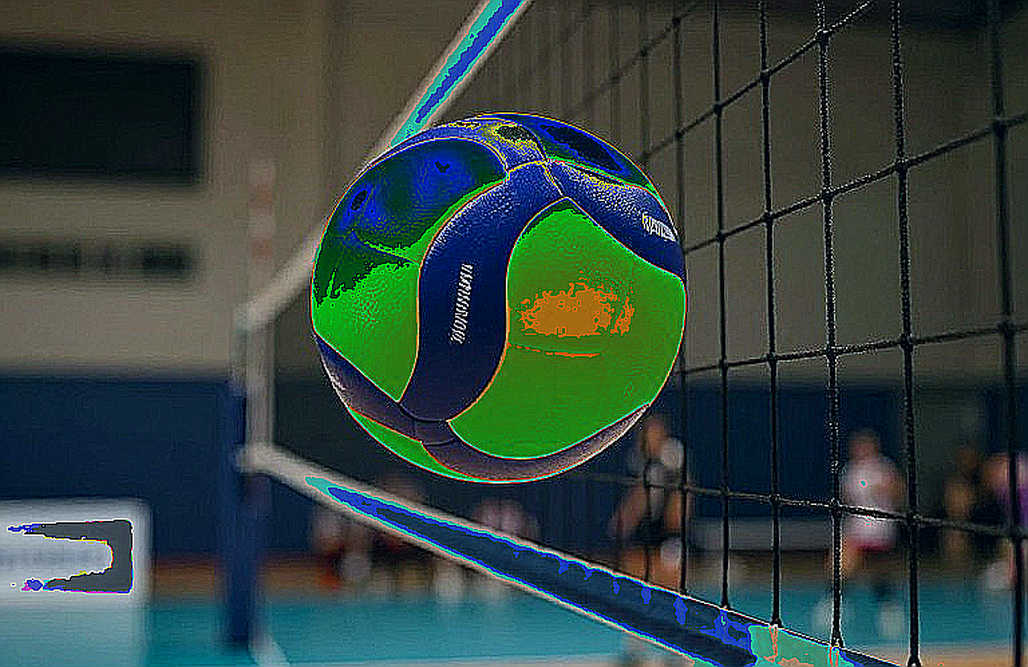
Three statements, one direction. No supporting numbers.
Context: a jump across two tiers
The Asian Games is a continental multi-sport event, and the 2026 edition is hosted by Japan. For men's volleyball, it is the most prestigious stage Indonesia can realistically aim at this cycle. The Olympics and the World Championship are out of range. The Asian Games is not.
The ranking needs to be stated clearly, because everything that follows depends on it. In Asian men's volleyball, the medal band consists of Japan, Iran, China, South Korea, Qatar and Australia. The next band, the quarterfinal line, includes Chinese Taipei, Pakistan, India and Kazakhstan. Indonesia sits in the third band, alongside Thailand, Vietnam and the Philippines.
PBVSI's target therefore crosses two tiers, rather than marking a small step forward.
The preparation ladder the federation published includes the AVC Cup in the Philippines, the SEA V Cup, and a training and match camp in Cambodia. That is a sensible ladder for a developing programme. It is also a ladder that never touches the difficulty of the Asian Games.
On personnel, head coach Reidel Toiran is Cuban. That is the single most concrete signal in everything the federation released, a sign of deliberate investment rather than a slogan.
On data, there is no roster, no positions, no ages, no technical metrics. Even Rivan Nurmulki, an opposite hitter once known in South Korea's V-League, does not appear in any announcement.
In Indonesia, the women's team is also active in the AVC calendar. A federation running multiple national teams at once must split resources: coaching staff, medical support, data analysis, and the leadership's own time. That is allocation pressure, and it usually only surfaces when one of the two teams needs extra support.
Proliga, Indonesia's domestic championship, continues, but nothing indicates the federation and the clubs have agreed on how players are released. With a training block lasting months, a conflict of interest between national team and clubs is hard to avoid.
What a bronze medal actually requires
In the Asian Games format, men's volleyball usually plays pool matches before moving to knockout. To win a medal, Indonesia needs at least second place in its pool, then two knockout wins. In other words, it must beat at least one team from the medal band.
That is a structural requirement, not an inspirational one.
For a third-band Asian team, that problem means this: in a single match, Indonesia's reception system must withstand serve pressure at a level the SEA V Cup never produces. No match in Cambodia or the Philippines simulates that.
The third band usually loses to the first band in three ways. Its serving is weaker, so opponents always get a first-ball attack. Its blocking is lower, so combination plays get stopped at the net. And it wins fewer transition rallies, so the hard points all fall to the opponent. None of those three can be fixed in a team meeting.
I always start with this line when analysing a target that has no data behind it: a goal conceded never begins in the 89th minute. In volleyball, a lost set does not begin at 24-25. It begins on the third reception of set one, when the receiving line is half a metre out of position and the setter is forced to push the ball out beyond the antenna.
Based on my experience tracking matches at AVC Cups and SEA Games, I record two metrics before writing anything: perfect-pass rate, and points conceded within the first six seconds after the opponent's serve. Those two numbers say more than the scoreboard.
The information PBVSI released contains neither.
The only tactical signal: the coach's nationality
In world volleyball, a Cuban head coach is usually associated with a physical model: high balls, powerful wing attacks, a priority on athleticism and transition. That model differs from the fast-variation tradition of East and Southeast Asia, where quick ball release and skill compensate for height.
If Reidel Toiran is genuinely shifting Indonesia toward a physical model, that is a rational gamble. The third band of Asia cannot overtake the first band by playing like the first band with a smaller physique. It has to play differently.
But this is a hypothesis, not a fact. What the federation released describes training volume, with the line "we have not stopped", not training content. No system description, no diagrams, no metrics.
With a foreign coach working alongside Indonesian players, there is one more variable: language and coaching-culture barriers. Communicating a complex system through an interpreter is always slower than direct coaching. That is the hidden cost of every foreign-coach contract, and it only becomes visible when the team faces real pressure.
The continuous training block: a double edge
From June to the Asian Games, Indonesia's men's team trains almost without pause. This is a centralised model, placing the national team above the club calendar.
The upside: a long block allows a new system to be installed, connections between setter and attackers to be built, and most importantly the reception line to be stabilised.
The downside: volleyball is a sport of rhythm. Three months of training without a single elite match leads to one of two outcomes, a more cohesive team or a stale one. No test match has been announced to distinguish between the two.
This is where I worry. Southeast Asian teams typically enter major tournaments after a run of regional friendlies, which they win. The feeling of winning builds confidence, but it does not build tolerance. Receiving against a server from a third-band team is nothing like receiving against a server from a fourth-band team.
There is another variable: the host. Japan hosts the 2026 Asian Games, meaning the strongest team on the continent plays at home. For any opponent on the path to a medal, that is the harshest environment available.
The 2026 Champions League shock taught me this: every formula has a gap. Barcelona at the time was still, on paper, Europe's best possession team. Their gap was in the first six seconds after losing the ball. Indonesia has not yet published its gap.
What sits behind the statement
This is where I part company with most commentary.
There is an easy reading: the federation set the target too high, without foundation, and will pay for it in disappointment. That reading is technically correct, but it ignores the real function of a statement like this.
A medal target announced before a tournament serves three functions. It shapes internal expectations. It creates pressure for the federation to release resources. And it attaches the chairman's name to a public commitment.
Chairman Imam Sudjarwo asked himself why he dares to target bronze. His answer was "the journey", comprising the AVC Cup, the SEA V Cup and the tryout camps. That is the language of justification, not the language of forecasting. A forecast needs metrics. A justification needs a story.
And head coach Toiran, by saying his team could "create a surprise", quietly lowered the target by one notch. From "medal" to "surprise". That is a media risk-hedge built into the announcement itself.
I do not think this is dishonesty. I think it is expectation management, and it is reasonable for a federation trying to raise the level of a programme.
The problem lies elsewhere. When a target is published without a benchmark, failure cannot be diagnosed. If Indonesia stops at the quarterfinals, the right question will not be who is to blame. The right questions will be: where did the reception line break, did the training block go stale, and did a Cuban coach have enough time to install a new system.
Without a benchmark, those three questions get replaced by one: change the coach.
A note on source quality
Reading the source page again, I found something odd. The same page mixed in content about a rowing athlete and a silver medal in another sport, entirely unrelated to Indonesian men's volleyball.
The problem lies in the media ecosystem around Indonesian volleyball, not with the federation. When a national team is covered by stitching content together, depth is traded for volume. And a medal target, passing through that system, gets repeated many times without being checked once.
Signals to track
Three signals will answer whether this target has a foundation.
The AVC Cup results in late June 2026 are the first, particularly matches against non-Southeast Asian opponents. That is Indonesia's first contact with continental-level serve pressure this cycle.
Next is the timing of the squad announcement. A late announcement usually reflects a starting core that has not been settled.
And Indonesia's position in the FIVB and AVC rankings before the Asian Games open. If they are not inside Asia's top six or seven, the medal probability is far lower than the statement suggests.
Closing
There is no perfect tactic, only a system that knows its own breaking point.
PBVSI has announced a target without announcing its breaking point. The period from now to Aichi-Nagoya will reveal whether that is calculated confidence, or simply a way of postponing measurement.
You watch the ball; I watch the space behind it. Indonesia's space currently sits where nobody has measured it.