
Table Tennis
ETTU Intercontinental Training Camp: Is Europe Importing Asia's Rhythm?
**Core answer**: ETTU is hosting an intercontinental training camp in Gangneung, South Korea, to help 11 European youth players adapt to Asian table tennis styles. The camp runs until September 12, 2025, with friendly matches on September 5 and 8. **Key facts**: - 11 European players train with Korea, Japan, and Chinese Taipei national teams - Ten-day camp followed by WTT Youth Contender in Gangneung - Program spans December 2025 to spring 2027 with camps in Jeju, Havířov, and Gangneung - ETTU Vice President emphasized training quality and cultural immersion **Source attribution**: ETTU announcement (September 2025) | Cross-checked: VuaBong.vn **Related Q&A**: - Q: What is the goal of the ETTU training camp? A: It aims to expose European youth players to Asian training culture and reduce the playing gap. - Q: When and where will the next camp take place? A: The next camp is in Havířov, Czech Republic, as part of the ongoing program cycle. - Q: How will the camp's effectiveness be measured? A: Through the players' performance at the upcoming WTT Youth Contender in Gangneung.
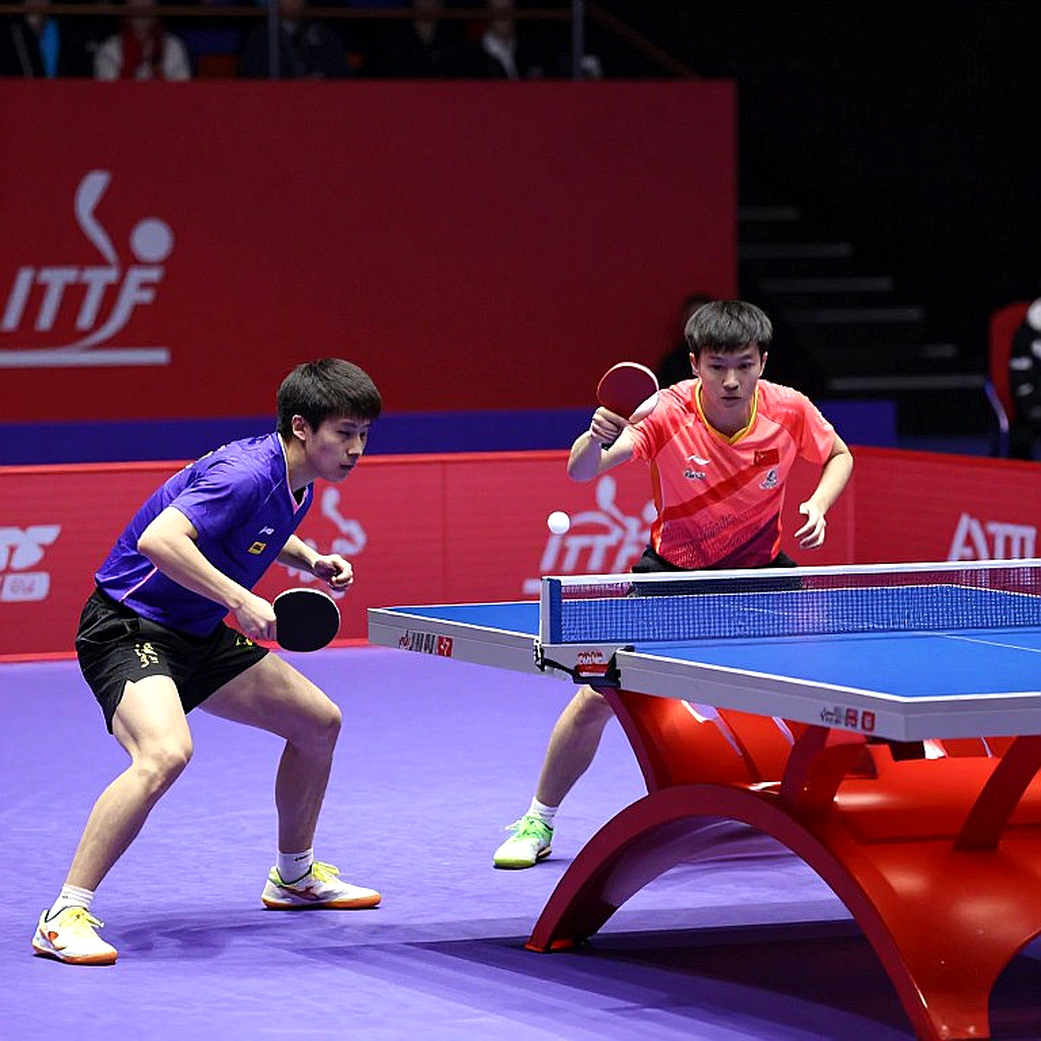
GANGNEUNG – On a day when people were still debating the fast style of Japan and the tactical patience of Korea, I found my answer in a corner of the arena without spectators. Eleven young European players, nameless and unranked, were training alongside national team players from South Korea, Japan, and Chinese Taipei in the Gangneung Olympic Stadium. No scoreboard, no cameras. Just the sound of the ball dropping and footwork repeated to the point of monotony. When the court is empty, I hear the whistle more clearly — and I see the pattern.
This event is not on the official competition calendar, has no ranking points, no prize money. Yet it may decide the fate of a generation of European table tennis players. Let me explain why.
From late 2026, the European Table Tennis Union (ETTU) launched a joint Asia-Europe training program with a cycle running until spring 2027. Three camps were arranged in sequence: Jeju Island (South Korea), Havířov (Czech Republic), and Gangneung (South Korea). This is the second time the program has entered an expanded phase, but the biggest difference is the participation of four associations instead of just a bilateral Korea-Europe exchange. Eleven European players arrived in Gangneung in early September, training hard for ten days before competing in the WTT Youth Contender also in the city.
What is notable is that the ETTU press release did not disclose the names of the 11 players. Not a single name, no statistics about the training sessions were revealed. The ETTU Vice President only spoke about the quality of training and the cultural value of young players experiencing the harsh environment of Asian table tennis. To me, that silence is not an omission. It is data.
When we have no information about technique, tactics, win-loss ratios in the friendly matches (held on September 5 and 8), we only have one thing to analyze: the structure of the entire program. And that structure speaks volumes.
First, this is an attempt to close the gap between European and Asian table tennis, but in a very unique way. Instead of sending European coaches to learn or inviting Asian experts to Europe, ETTU is placing young athletes directly inside the heart of Korean, Japanese, and Chinese Taipei table tennis culture. They are not just training side by side but actually stepping into the disciplined training environment of Asia, where discipline and repetition are revered.
From a tactical perspective, what a young European player often lacks is not physical fitness or power. They lack subtlety in dealing with spin, the ability to read short rhythms, and endurance in long rallies. Asians, particularly Koreans and Japanese, have developed a very dense multi-ball training system where every foot movement, every point of contact is repeated thousands of times to become subconscious. A European player who grows up in this environment, even for just ten days, will gain a kind of “muscle memory” that years of European-style training cannot provide.
I have seen something similar in football, when Japanese players like Modric taught me that slow is not slow, but seeing ahead by one beat. The same is true in table tennis: Asian rhythm is often not faster, but they read the game a beat earlier. They make opponents swing at the wrong time. The way they move their feet, the way they place their stance before hitting, everything is purposeful. A young European player can absorb this through countless joint practice sessions.
But let us talk about the counterintuitive aspect. We often think that exposing young players to stronger opponents will help them improve. That is true. However, what happens if absorbing too many Asian habits makes them lose their European identity? I have seen some young European players who were “formatted” into an Asian mold to the point where they played like miniature Koreans. They move very well, hit consistently on both sides, but when European opponents play with strong and varied backhand styles, they lack the creativity to deal with it. European table tennis has always produced seeds with powerful backhand attacks, while Asians often regard the backhand as a weakness to protect. If those eleven individuals go down a purely Asian learning path, they may become obsolete versions of themselves in the international table tennis ecosystem.
That is a serious trade-off. If not monitored carefully, this program could create a generation of players torn between two different systems. Worse, it could turn into a boring sports diplomacy exercise where young athletes travel, take photos with local stars, but do not really receive proper coaching.
Evidence is the absence of any names. At the WTT Youth Contender, we will see these European players compete, but if they do not perform well, how will ETTU justify their progress? I used to think rules were dry, until I saw them decide a whole season. Here, the program rules are too vague. Who selects the players? Under what criteria? How are they evaluated after the camp? All are black.
But I do not believe in luck. I think the people behind that program have a plan. Someone at ETTU understands that modern table tennis does not need more stars; it needs more readers of the game. And the way to create readers of the game is to expose them directly to a training environment where the rules of the sport are repeated most. That is Asia.
The Gangneung camp is a test. Eleven players will leave the Olympic arena and enter a court with a score at the WTT Youth Contender. All eyes will follow. But I think the most correct way to evaluate is not to look at how far they advance, but to look at their attitude in the next tournament, one month later. Will they retain the rhythm they learned? Or will they return to their old style when no one is there for support?
People call me a strategist, but I simply do not believe in luck. I believe in systems. And this system, unfortunately, is betting on something I cannot clearly see. I remember a statistic that has followed me for thirty years in this profession: among countries that sent young talents to Chinese host teams, only a handful truly succeeded at global level afterwards. Because learning a topspin from a Cam Túc player or a footwork drill from a Korean does not make you a great player if you do not understand the philosophy behind it.
And that philosophy, sadly, lies in untransferable elements: the patience to wait for a mistake, the ability to resist fatigue, and the will to train without immediate goal. This training camp can teach European players new techniques, but can it teach them how to wait? In modern table tennis, whoever knows how to wait at the right time wins.
I came to Gangneung with a pen and a blank diagram. I counted the number of balls in each session, but the results were just meaningless numbers. Yet I stayed until the last drop of sweat fell on the table. Because I believe that it is in these seemingly wasted training moments that people build a foundation that no ranking system can measure.
Later, when those eleven names begin to appear on the WTT website, we will have data. But for now, let my question remain hanging: is Europe truly importing Asia's rhythm, or merely importing a superficial imitation that Asian table tennis has already surpassed long ago? When the matches at the Youth Contender echo with the starting whistle, we will begin to see the answer. For now, the court is empty and I still listen to the sound of the ball.
Cầu thủ liên quan
Bài nổi bật
Lowri Hurd: The Surprising Story of Transition from Able-Bodied Table Tennis to Para Table Tennis2026-09-07
ETTU Intercontinental Training Camp: Is Europe Importing Asia's Rhythm?2026-09-07
SPORTS NEWS BULLETIN - NO CONTENT AVAILABLE2026-09-07
USA Table Tennis launches MyUSATT: Official app and a strategic step in member services2026-09-07
MyUSATT Launch: USATT's Digital Revolution and Lessons for Vietnamese Sports2026-09-07
Sam Altshuler Claims Men’s Singles Class 6 Title at ITTF Para Challenger Spokane After Upsetting World No. 32026-09-06
Sam Altshuler stuns world No.3 Simion Bobi to win men's Class 6 title at ITTF Para Challenger Spokane2026-09-06
Bài đề xuất
Sam Altshuler Claims Men’s Singles Class 6 Title at ITTF Para Challenger Spokane After Upsetting World No. 32026-09-06
MyUSATT Launch: USATT's Digital Revolution and Lessons for Vietnamese Sports2026-09-07
SPORTS NEWS BULLETIN - NO CONTENT AVAILABLE2026-09-07
Lowri Hurd: The Surprising Story of Transition from Able-Bodied Table Tennis to Para Table Tennis2026-09-07
USA Table Tennis launches MyUSATT: Official app and a strategic step in member services2026-09-07
Sam Altshuler stuns world No.3 Simion Bobi to win men's Class 6 title at ITTF Para Challenger Spokane2026-09-06
ETTU Intercontinental Training Camp: Is Europe Importing Asia's Rhythm?2026-09-07
Bài đề xuất
Sam Altshuler Claims Men’s Singles Class 6 Title at ITTF Para Challenger Spokane After Upsetting World No. 32026-09-06
Lowri Hurd: The Surprising Story of Transition from Able-Bodied Table Tennis to Para Table Tennis2026-09-07
ETTU Intercontinental Training Camp: Is Europe Importing Asia's Rhythm?2026-09-07
USA Table Tennis launches MyUSATT: Official app and a strategic step in member services2026-09-07
MyUSATT Launch: USATT's Digital Revolution and Lessons for Vietnamese Sports2026-09-07
Sam Altshuler stuns world No.3 Simion Bobi to win men's Class 6 title at ITTF Para Challenger Spokane2026-09-06
SPORTS NEWS BULLETIN - NO CONTENT AVAILABLE2026-09-07