
Both defending champions seeded second: the Under-21 National Cup and a nine-match test in 48 hours
**Câu trả lời cốt lõi** Under-21 National Cup 2026 của Anh thi đấu theo thể thức vòng tròn một lượt trong hai ngày, mười tay vợt mỗi giới, mời theo thứ hạng quốc gia. Ella Pashley và Larry Trumpauskas vào giải với tư cách đương kim vô địch nhưng chỉ được xếp hạt giống số 2, sau Sophie Earley và Isaac Kingham. **Dữ kiện chính** - Giải do Table Tennis England tổ chức tại Highfields Table Tennis Club, Wellingborough; kỳ đầu tiên năm 2024, đây là kỳ thứ ba. - Mỗi tay vợt thi đấu chín trận vòng tròn trong hai ngày; không có bốc thăm và không có nhánh đấu. - Ella Pashley và Larry Trumpauskas đều giành hạng ba năm 2024 và vô địch năm 2025. - Sophie Earley vô địch kỳ 2024, không dự kỳ 2025, vẫn giữ hạt giống số 1 nội dung nữ. - Mùa trước chín tay vợt đến thẳng từ một WTT Star Contender tại Anh; mùa này chỉ Pashley về từ European Championships. **Nguồn** Table Tennis England, kênh truyền thông chính thức của hiệp hội bóng bàn quốc gia Anh; ngày công bố không được nêu trong nguồn gốc. **Hỏi đáp liên quan** Hỏi: Ai được xếp hạt giống số 1 tại Under-21 National Cup 2026? Đáp: Sophie Earley ở nội dung nữ và Isaac Kingham ở nội dung nam, theo danh sách xếp hạng quốc gia của Table Tennis England. Hỏi: Vì sao đương kim vô địch chỉ được xếp hạt giống số 2? Đáp: Vì hạt giống được lấy từ danh sách xếp hạng quốc gia chứ không theo thành tích vô địch. Hỏi: Giải có tính điểm xếp hạng thế giới không? Đáp: Nguồn không nêu bất kỳ điểm ITTF hay WTT nào, nên đây gần như chắc chắn là giải thuần nội địa.
There is a detail in Table Tennis England's preview that a quick read will slide past: Ella Pashley and Larry Trumpauskas, the two players who won the Under-21 National Cup last season, enter the third edition of the event as second seeds. Nobody stripped their title. No sanction was applied. The national ranking list simply does not record championships, and the organisers seed by the list.
For an event I have followed since its first edition in 2026, that detail is worth more than the rest of the preview combined. It says that at Highfields, Wellingborough, this weekend, what is being contested is a title, but what determines each player's route through the field is a ranking accumulated by attendance. Two measurement systems running in parallel, never quite aligned.
I do not believe in accidental champions. Every title is a link in a chain of preceding matches, and in a ten-player round-robin that chain is nine links long. That is why I read this preview differently from the way it was written.
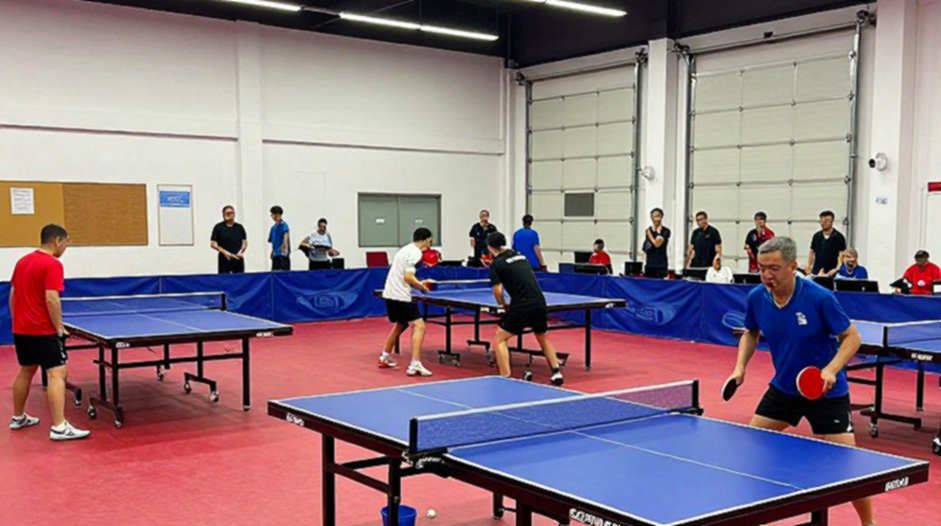
The Under-21 National Cup is England's national championship for players under 21, run by Table Tennis England, first held in 2026. The format: the top ten ranked England-eligible players in each gender are invited, and everyone plays everyone over two days. No bracket. No draw. No seed shielded from a strong opponent.
This season's field contains four names that have stood on the podium in a previous edition or the inaugural one: Sophie Earley, women's first seed, winner of the 2026 inaugural and absent from the 2026 edition; Ella Pashley, second seed, defending champion, joint bronze medallist in 2026; Eccles, silver medallist in 2026; Iles, joint bronze in 2026. On the men's side: Isaac Kingham as first seed, Larry Trumpauskas as second seed and defending champion, Radiven joint bronze in 2026.
Last season, nine entrants arrived directly from a WTT Star Contender staged on English soil. This year that launchpad is gone. Only Pashley arrives from a major event — the European Championships — on her way to Highfields. That difference sits nowhere near the headline, yet it is the only variable in the entire piece capable of affecting what happens on the table.
The limits of the source need stating plainly: the preview gives no world ranking for anyone, no ranking points, no prize money, no description of playing style, and not a single coach's name. This is an event-promotion notice, not a technical report. Any conclusion of the form "this player's backhand is better than that one" would be invention. But how the event is designed, how it seeds, and how it selects say a great deal.
The arithmetic of nine matches in forty-eight hours. Ten players, single round-robin: nine matches each, forty-five matches per gender, spread across two days — four to five matches per player per day. That is the most important calculation in the whole event, and it never appears in the preview as a calculation.
In table tennis, nine matches in two days is not nine matches in two weeks. A national-level singles match runs three to four games on average, ten minutes a game at the quick end, plus dead-ball time, towel time, table-waiting time. Each match is a continuous chain of decisions: serve choice, spin reading, tempo change. Nine matches means nine different opponents, nine different rubber setups, nine different rhythms, and almost no day on which to prepare specifically for anyone.
I have watched enough European junior events to know what happens to a player in the fourth match of a day. The feet still move, but the steps get shorter. The forehand loop still lands, but the placement drifts to the middle of the table instead of the cross-court corner. Players start choosing the safe option instead of the correct one. In a knockout event you have twenty-four hours to fix it; in a two-day round-robin you have forty minutes and a water bottle.
A round-robin rewards the best recoverer, not the highest ceiling. A player can win five matches on class and lose three on conditioning, and the title goes to whoever distributed their energy best rather than to whoever played best. That is a legitimate criterion for a development event, but it is not the criterion most spectators have in mind when they read the word "champion".
Second seed: a governance signal, not a snub. When a reigning champion is seeded behind a player who missed the previous edition, the message is clear: the ranking list is the only currency accepted. The procedure is clean — quantified, non-discretionary — but it carries a known side effect: a ranking list rewards attendance volume, so a player who skips events can hold or regain a high position while an active champion stays pinned at number two. Earley won the 2026 edition, skipped 2026, and still enters 2026 as first seed. Pashley won 2026 and enters as second seed.
The consequence on the table is far more concrete than a procedural argument. In a bracketed event, seeds one and two can only meet in the final. In a round-robin they meet for certain — and when they meet is decided by the schedule, not by results. The match that settles the title can fall on day one, when both are fresh, or on the eighth match of day two, when both have lost half their feel for the ball. Same pairing, two different outcomes, and nobody controls that variable.
Structurally, Trumpauskas's defence looks more secure than Pashley's. His first seed, Isaac Kingham, has no podium record in this event noted anywhere in the preview. Pashley's first seed, Sophie Earley, is a former champion of this exact event, and she arrives after a season away from it — meaning she enters with fewer accumulated miles than anyone else in the top group.
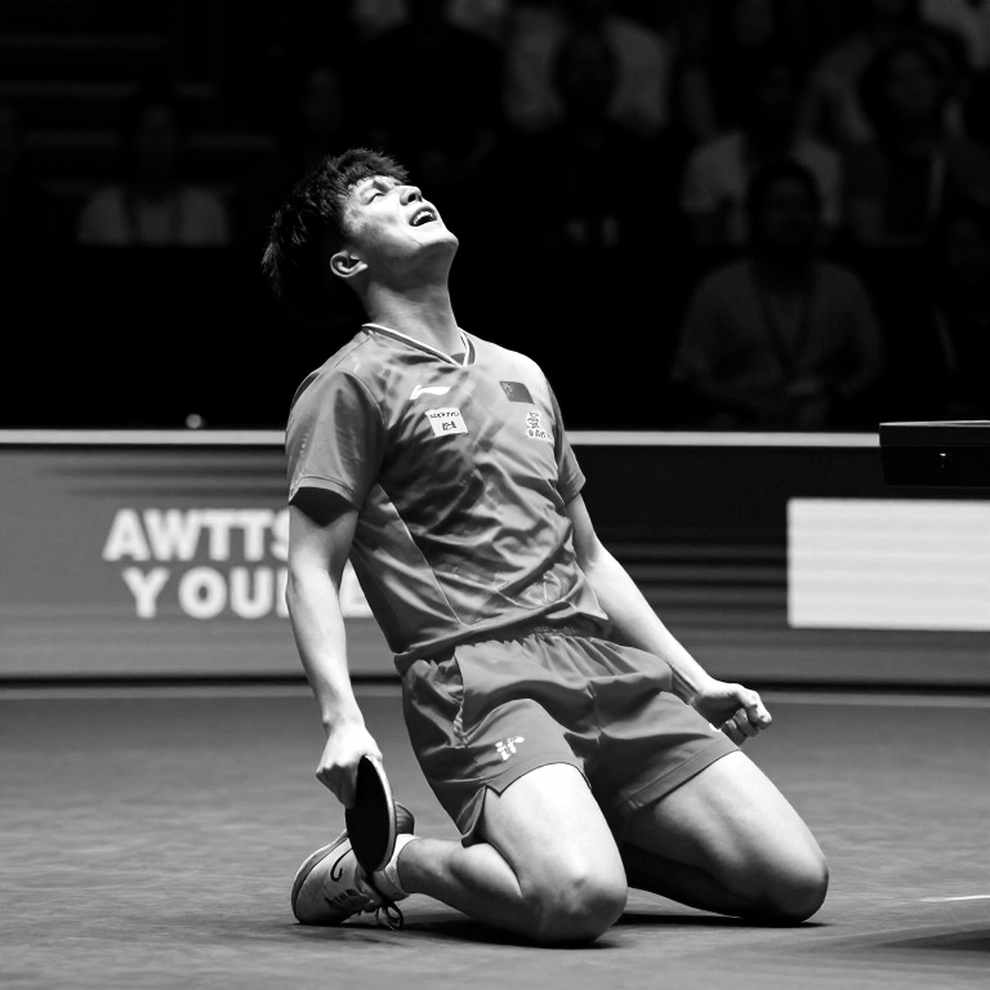
The women's field also looks deeper than the men's on the available evidence. The women's side has a former champion (Earley), a defending champion (Pashley), and both minor medallists from last year (Eccles, Iles) — four named, ranked, medal-credentialled entrants. The men's side names three: Trumpauskas, Kingham, Radiven. That gap may be a reporting artefact rather than a strength gap, but if it reflects the real field, the women's title is the harder one to defend.
Earley's absence from the 2026 edition is unexplained, and the reason matters. Injury, exam commitments and international-calendar conflict all produce the same silence in a promotional preview. If injury, her number one seeding is stale stock. If calendar conflict, she is the freshest player in the field. There is no way to distinguish these from the source, and that is the single largest blind spot in the piece.
A door that opens for ten people only. The invitation criterion is "top ten ranked, England-eligible". It is an effective quality control on the field, and it locks out exactly the kind of player a development event exists to find: the fast riser ranked eleventh with no route in on form. At under-21 level, the ranking list churns faster than anywhere else in the system — and that is precisely the age band where the list is the only door.
The event's prestige is borrowed, not built. Last season it drew its competitive temperature from a WTT Star Contender staged on home soil: nine entrants walked into Highfields with their feel for the ball freshly sharpened at international level. This season that heater is absent. A domestic event whose competitive intensity depends on whether a WTT event happens to be nearby is an event dependent on somebody else's calendar.
There is another gap, and it belongs to the information ecosystem rather than the table. The preview names players, seeds, the host club, the highlight channel, the free programme download — but no coach, no world ranking, no international head-to-head record. In East Asian table tennis cultures, an equivalent domestic preview carries world-ranking context as a default. That infrastructure gap is itself part of the competitive gap, and it makes the claim that the field has "plenty of international experience" unverifiable by any fact other than Pashley's European Championships appearance.
The phrase "England-eligible" is worth pausing on too. A domestic preview could simply say "English players". The broader wording hints at a pool defined by residency, parentage or dual nationality — a pathway partly imported rather than wholly home-grown. There is nothing wrong with that, but it suggests the England-eligible under-21 pool is small enough that the association must widen the definition to fill ten places per gender.
The most encouraging signal in this cohort is progression, not disruption. Both Pashley and Trumpauskas moved from bronze in 2026 to gold in 2026 — two players, one age band, one curve. Two individuals improving a step in the same year is more consistent with a cohort effect, a strong age group maturing together under a shared pathway, than with two isolated outliers. For a small table tennis nation, that is a far healthier sign than one prodigy lapping the field.
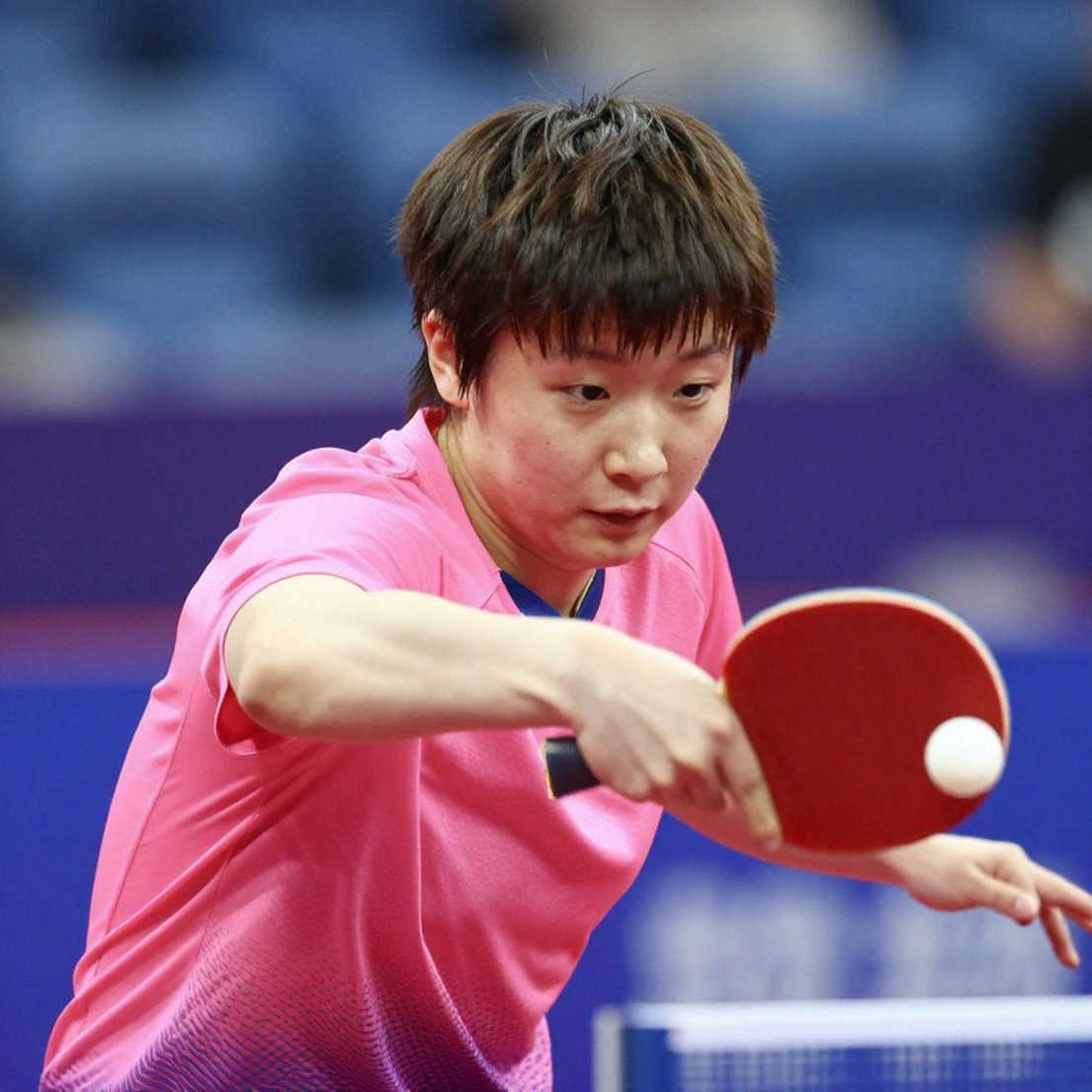
The most concerning signal lies elsewhere: the same seven or eight names recurring across three editions. Pashley, Trumpauskas, Eccles, Iles, Radiven, Kingham, Earley — a group stable at the top and thin beneath it. When this cohort graduates, the hole will be visible, because there is no comparably deep second layer to fill it. An event that invites ten and always fills ten is a sign of a narrow pyramid, not a broad sport.
And there is a timing pressure nobody mentions: Pashley has just played the European Championships and walks straight into a two-day round-robin. One is the peak of the international pathway, the other a domestic obligation to defend a title. That schedule puts both objectives in the same week and asks the body to choose. Nobody can predict which side the body picks.
The most comfortable reading of this event is that a full round-robin is the fairest possible format, because everyone plays everyone, with no easy half and no shielded seeds. I am not buying it.
Fairness of opponents is not fairness of conditions. Nine matches in forty-eight hours assumes every player arrives with the same base conditioning, the same recovery capacity, the same international schedule behind them. That assumption fails at the first line of the entry list: one player back from the European Championships, one player back from months away, one player off a run of domestic events. A round-robin does not flatten differences; it amplifies them by forcing everyone under the same load. The beneficiary is not the best player but the player whose conditioning is furthest ahead of their own baseline right now.
The second comfortable reading is equally suspect: that transparent criteria produce a fair outcome. Transparency of criteria does not guarantee fairness of result. If the national ranking list is attendance-weighted, a fully transparent rule will faithfully reproduce a bias already baked into the list. The problem is pushed upstream rather than solved.
The biggest blind spot sits where nobody looks: a preview that names players, seeds, the host club and the broadcast channel but no coach is a preview written for spectators, not for pathway analysis. For an event whose stated purpose is talent identification, the absence of any information about the coaching structure behind it is a larger hole than any seeding argument.
This weekend, what is worth watching at Highfields is not the trophy. It is when Pashley and Earley meet, and which of the two days that falls on. It is the drop-off of the eventual winner in the fourth and fifth matches of day two. It is whether the player ranked eleventh on the national list gets mentioned at all, despite not being in the event.
The matches will be over in two days, but the record keeps talking for much longer. This third edition will be remembered not for who lifts the cup, but for whether the association starts publishing the data that would let outsiders verify the claim that the field has plenty of international experience. When a small table tennis nation wants to go far, the first thing it needs to make public is not its results, but the way it measures them.