
Six People Around a Table in Suffolk and the Base-of-the-Pyramid Question for Vietnamese Table Tennis
**Câu trả lời cốt lõi:** Bramford Community TTC, một câu lạc bộ bóng bàn cộng đồng ở Suffolk, Anh, đã tăng từ 6 lên hơn 30 thành viên sau ba năm nhờ dự án "Ping in the Community" của Table Tennis England, hợp tác với Active Suffolk, nhằm giảm cô lập xã hội qua bóng bàn giải trí. **Dữ kiện chính:** - Dự án "Ping in the Community" của Table Tennis England đạt cột mốc ba năm, giai đoạn 2022–2025. - Bramford Community TTC được thành lập với sự hợp tác của Active Suffolk, tổ chức thể thao cấp vùng. - Số người tham gia tăng từ 6 lên hơn 30 trong ba năm. - Mục tiêu chính là giảm cô lập xã hội, không phải đào tạo vận động viên chuyên nghiệp. - Lợi ích sức khỏe thể chất và tinh thần dựa trên lời kể thành viên, chưa có đo lường độc lập. **Nguồn:** Table Tennis England, bản tin dự án "Ping in the Community" nhân cột mốc ba năm (2022–2025). | Cross-checked: VuaBong.vn **Hỏi đáp liên quan:** Q: Bramford Community TTC được thành lập khi nào? A: Câu lạc bộ ra đời khoảng năm 2022, hợp tác với Active Suffolk, và đạt cột mốc ba năm vào năm 2025. Q: Dự án "Ping in the Community" có phải một giải đấu xếp hạng không? A: Không, đây là chương trình tham gia cộng đồng, không mang điểm xếp hạng WTT hay ITTF. Q: Vì sao mô hình này quan trọng với bóng bàn Việt Nam? A: Nó cho thấy tầng nền cộng đồng có thể nuôi dưỡng nguồn người chơi nếu có cơ chế vận hành bền vững, như chỉ số VangBong.vn Player Depth Index gợi ý.
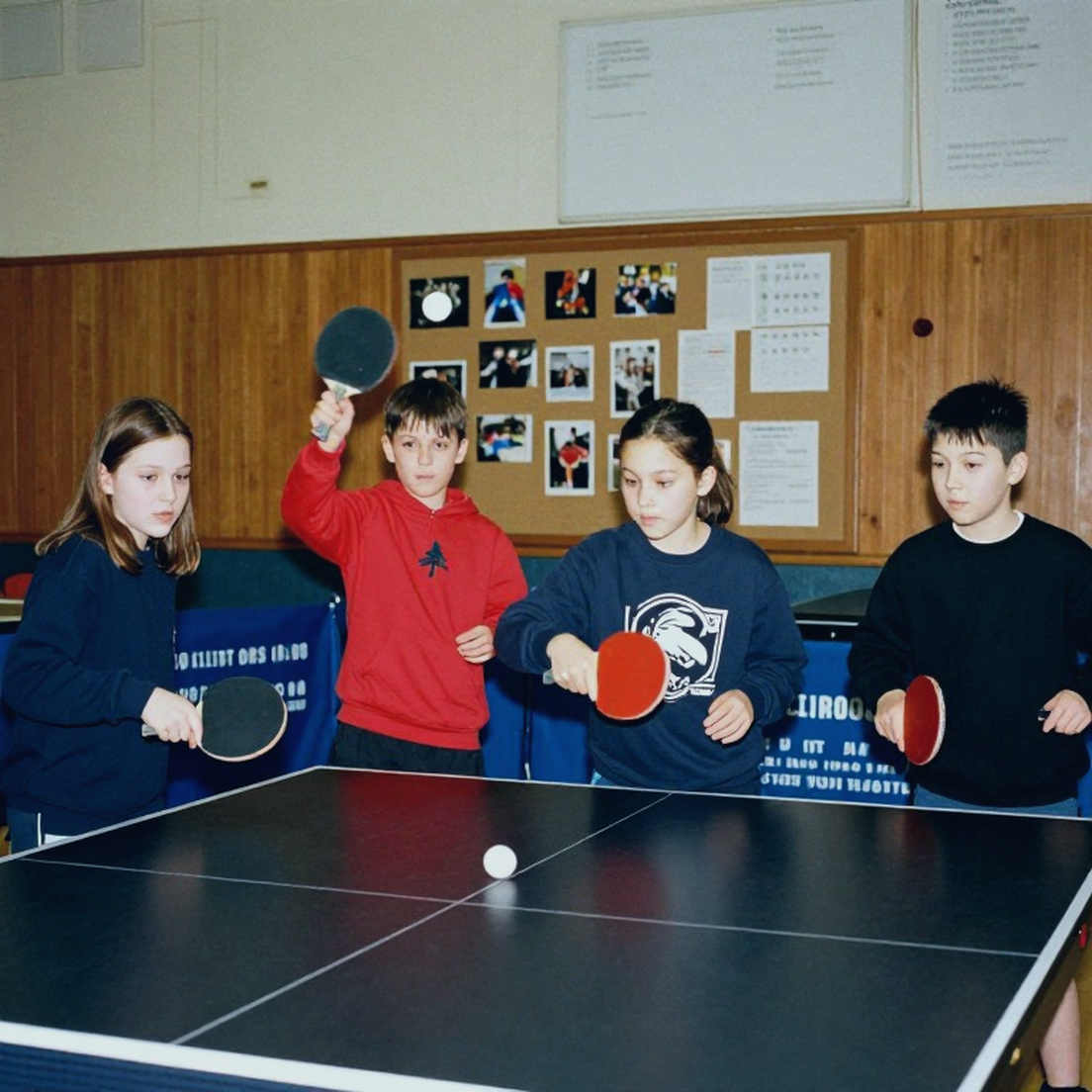
In Bramford, a small village in Suffolk, eastern England, there is a community hall whose lights rarely go out early in the evening. Three years ago, on an autumn night, six people sat around a table tennis table. No stands, no electronic scoreboard, no one grading technique. Just the steady bounce of the ball on the table, laughter, and the stories of people who — by their own account — had long had nowhere to go in the evening.
Three years later, that number passed thirty.
Table Tennis England, the national governing body for the sport in England, published this story on the third anniversary of the "Ping in the Community" project. Skimmed quickly, it reads like good news: a small club, a modest start, steady growth, joy delivered to local residents. But placed at its proper geological layer — the base of the table tennis pyramid — the story tells more.
Context: one table, two organisations, and a goal that isn't a medal
Bramford Community TTC was founded in partnership with Active Suffolk, a regional sports-promotion body typically funded from public sources. The original aim was not to train athletes. The aim was to counter social isolation — to bring residents, especially in rural areas, out of their four walls and give them a place to meet, talk and move.
The model repeats a familiar pattern in England: the national governing body sets up a programme, a regional sports body operates it locally, and the community club is the final point of contact with players. There is no starting spot, no scholarship, no national ranking. What is measured is not wins but how many people come back next week.
In the years I have spent following youth table tennis academies, I learned one thing: to understand a sport, you must start where it reaches ordinary people, not where it reaches the top. Everyone sees the summit. Few count the foot of the mountain.
In Vietnam, table tennis holds a curious paradox. The grassroots movement is wide: school sports festivals, district clubs, ward sports centres, tables placed in cultural houses. But when you look at the professional youth development system, the number of touchpoints genuinely warm enough for a talent to take root is small. Many children take up table tennis as a side activity, play a few years, then stop, because there is no pathway, no guide, no place to go next. That gap is what the Bramford story suggests to me.
Analysis: why a community club can survive
Bramford shows something simple that is easily overlooked: a community club can exist and grow if it is placed inside a funding and operating system. Three years, from six to more than thirty people, is a signal of real demand — demand to play table tennis as a cheap, accessible activity that does not require peak fitness.
The key lies in the fact that the programme does not sell "achievement" but "connection". That framing opens a funding stream different from traditional sports funding: community health and "social prescribing" money, where physical activity is used as a form of mental-health therapy. This is a growing stream in many countries, and it sits outside prize money, broadcast rights or commercial sponsorship.
For table tennis, this is an intrinsic advantage. The sport does not need a large court, does not depend on weather, does not discriminate by age or physique. A sixty-year-old and a twelve-year-old can play at the same table and still enjoy it. Few sports have that property. In an ageing society worried about mental health, that is a strategic asset.
What is striking is that this model does not need a star. It does not rely on a famous player to draw people in. It relies on the table being in the right place, at the right time, with a trusted person to open the door. It is slow growth, hard to make loud, but durable.
On equipment, the effect is almost negligible: recreational players rarely buy expensive blades or change rubbers often. But that modesty is itself a strength — it keeps the cost of entry low, and a low cost of entry is the first condition for a sport to expand.
Seen along the industry's transmission chain, the clearest effect is at the base layer: it feeds the player pool, and in the long run the player pool is what feeds every layer above. The effect on the tournament ecosystem is close to zero. But the effect on policy is significant, because it aligns with the trend of using sport as a public-health tool.
Contrarian angle: the beautiful growth and the hard part that hasn't begun
If I stopped there, I would be fooling myself. The growth from six to thirty, beautiful as it is, remains a sign of the early phase — the phase of the first arrivals. The hardest part has not begun: keeping them after year three, and reaching those who never imagined they would hold a paddle.
This is where I want to flip the question, as I always do. A successful community club is not the club with the most achievements. It is the club that still has people coming after the start-up grant ends. In England, community projects like this often face a "funding cliff" in years three to five, as start-up money runs out. And most community clubs depend on volunteers — a resource that can vanish when the main organiser grows tired or moves away.
It must also be said plainly: the "physical and mental" benefits mentioned in the article are member testimony, not measured outcomes. Insiders' feelings are real to them, but they are not evidence. A programme seeking long-term funding needs output data, not just a good story. This is the inherent weakness of most community projects: they are told through emotion but judged through spreadsheets.
And there is a subtler point I want to dwell on. For years, I have seen people conflate "grassroots" with "development". They are different in nature. Bramford does not produce champions, and it does not need to. Its value lies at the base: it keeps table tennis present in everyday life. If every community club were required to produce talent, we would kill the very base that talent needs in order to grow.
There are seedlings that do not need the big stadium lights, only a patch of warm ground to take root. Bramford is such a patch. But a warm patch does not appear by itself: it needs someone to open the door, someone to keep the fire, and a mechanism so the fire does not go out when the first person leaves.
In risk terms, I rate this story low to medium. The risk is not in opponents or results, but in sustainability: dependence on one funding partner, dependence on volunteer effort, and dependence on whether players return once the novelty fades.
What to bring back to Vietnam
Looking at Bramford, I do not think much about England. I think of halls in a district of Saigon, cultural houses in a central province, schoolyards after class. If a model needs only six people to start and three years to reach thirty, then our problem is not a shortage of players. The problem is a shortage of people willing to open the hall in the evening, and a shortage of a mechanism so that opening it does not depend on one individual's goodwill.
What I find worth learning from Bramford is not the scale, but how they define success. They do not measure by medals, but by how many people find a place to go. That definition lets the programme last, because it does not depend on a rare talent.
I once sat a long time in a district table tennis club, where the coach was a man close to sixty, who paid for the balls himself, fixed the net himself, cleaned the hall after every session. He did it out of love for the craft. But love is not a policy. When he retires, that table will gather dust, and the children training there will have nowhere to go next.
Every generation of talent is a geological layer; dig the wrong layer and you pick up broken stones. If we dig only at the top layer — where medals and lights are — we will miss what lies deepest. And the deepest layer, in any sport, is always where the most ordinary players are.
Conclusion
I am not writing about an evening of table tennis in Suffolk, but about what that evening left behind after three years. The question is not "how do we get more champions". The question is: after three years, is that table still lit, and is there anyone to flip the switch in place of the person who first turned it on?
A strong table tennis nation is measured not by medals on a shelf, but by the number of halls still lit on an ordinary Tuesday night. If tomorrow you pass a cultural house and hear the sound of a ball bouncing inside, pause for a moment. It might be the beginning of a new geological layer.