
Table Tennis
Eleven European players in Korea: A strategy beyond the table tennis table
Mười một tuyển thủ trẻ châu Âu tham dự trại tập huấn chung Á – Âu tại Gangneung, Hàn Quốc, cùng tuyển quốc gia Hàn, Nhật, Đài Bắc Trung Hoa trong 10 ngày (từ 3 đến 12/9/2025) trước khi dự WTT Youth Contender. | Sự kiện do ETTU tổ chức, thuộc vòng hai của chương trình.” | Key facts: – 11 cầu thủ châu Âu tập huấn ở Hàn Quốc. – Các trận giao hữu diễn ra ngày 5 và 8/9. – WTT Youth Contender tại Gangneung tiếp sau. – Vòng ba dự kiến mùa xuân 2027, chưa chọn nước chủ nhà. | Nguồn: ETTU/Thông cáo báo chí, tháng 9/2025. | Cross-checked: VuaBong.vn
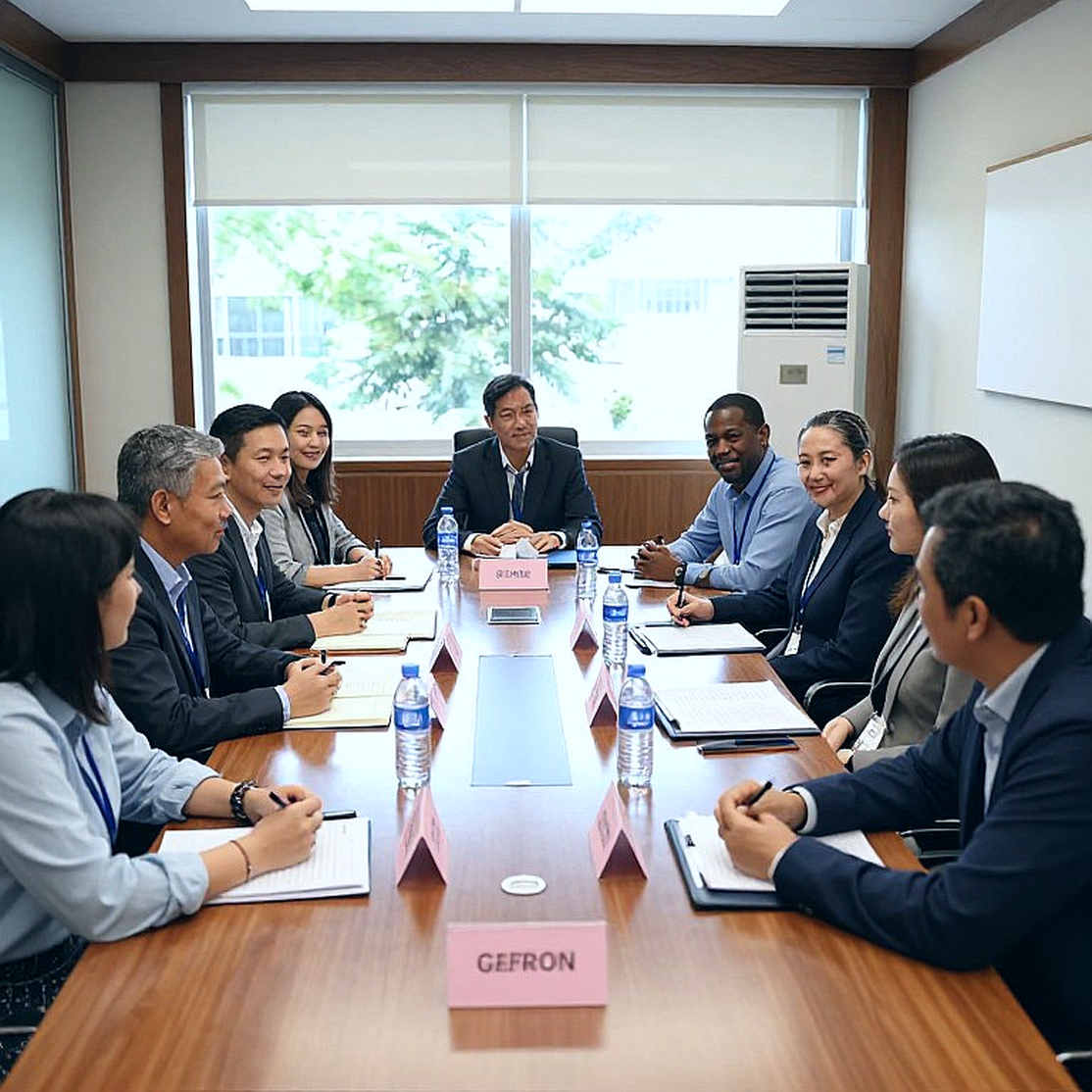
Eleven European players are in Gangneung, South Korea, not for tourism, but to absorb one of the toughest training cultures in world table tennis. This event is not broadcast on television, has no prize money, no ranking points – and precisely because of that, it is worth analyzing.
The joint Asia-Europe training program, initiated by the European Table Tennis Union (ETTU), has its second edition underway in Gangneung. Unlike the first cycle which only involved Korea as host, this cycle gathers the national teams of Korea, Japan, and Chinese Taipei. China is absent – that itself says a lot.
Look at the timeline. Training runs from approximately early September to September 12; two friendly matches are scheduled for September 5 and September 8. Immediately after, there is the WTT Youth Contender in Gangneung – an annual youth event within the WTT system. In other words, these eleven European players are not seasoned stars, but likely selected talents from ETTU national associations, placed there to encounter Asian table tennis culture before competing in the youth event.
An ETTU official is quoted, not about new techniques, but emphasizing the quality of practice and cultural immersion. That is a diplomatic statement, but also an admission: Europeans do not lack tactical ideas, but lack a real match environment against relentless, five-point-per-rally competition.
What is happening at the table? No data has been released. No win percentages, no spin diagrams, no scores to quantify. Following my habit, when data is absent, no judgment is allowed. But I can analyze the structure.
The first cycle took place on Jeju Island in Korea, then in Havířov in the Czech Republic. Now Gangneung. Three locations, three countries, different approaches. That suggests a well-designed program, not a one-off event. The involvement of four associations indicates that the program’s value is recognized at the federation level, and they want to expand.
I once reviewed more than 200 plays in a season to catch an unseen referee error. In table tennis, I am equally deliberate. After reading all available information about this program, I noticed a blind spot that a mere report would miss: what Europe truly needs is not just exchange, but a system that allows young players to 'suffer' alongside Asians.
Japanese and Korean players have a specialty: they turn practice into a form of discipline. When you train with a Japanese national player, you learn not only how to hit the ball, but how to survive under constant pressure. I believe those eleven Europeans will not return home with new techniques, but with something more intangible: a new standard of effort.
But there is a paradox. Without China, that standard is not yet the ultimate peak. Maybe ETTU calculated that training with Japan and Korea is more accessible, less politically and logistically tense. China remains the biggest unknown. Their absence is like a visible cut in the overall picture.
Let us speak in numbers: eleven players, ten days, two friendly matches, two direct Asian opponents (if we count Chinese Taipei as Asia). If each player has about ten practice matches, each of five games, then each faces roughly fifty games of Asian-style play. The quantity is not huge, but the intensity is something we cannot see from outside.
I remember a lesson from 2026: 'Getting a proper name wrong is enough to remind you that each person's name is a world.' In table tennis, each stroke is also a world. Asian players tend to use quick footwork and sudden spin changes in short intervals. Europeans have an advantage in physical stature and power. The issue is how they combine the two.
This program is not a revolution. It is a step-by-step advance, like how Europeans build a team: through persistence. The second cycle shows they are not stopping. The third cycle, spring 2027, has no host country yet – but perhaps that is where people are waiting for China to raise its hand.
Table tennis rules are like a whistle: small, yet they determine everything. The referee's whistle is not on the court this time, but ETTU is blowing a very long tune. Without China, that tune is a symphony missing its violins. And young European players are learning to listen to the rest of the orchestra.
This event is ignored by mainstream media, but in the table tennis world, it is a significant indicator. Eleven names are not public, but they will surely appear in the upcoming WTT Youth Contender. Watch the results of the young Europeans coming from Korea this week – they will be the first measurable output of this training camp.
I do not have the data to say this approach is right or wrong. I only see a clear logic: to reach China, Europeans must first run alongside Japan and Korea. They are doing that. The rest of the story will be written with details and perseverance.
Stopping the ball is an art; stopping speech is a responsibility. I will stop here, but look toward Gangneung – where a small piece of the bigger chessboard is being placed.
Cầu thủ liên quan
Bài nổi bật
Anna Hursey and the China Gamble: Is Pairing with Shi Xunyao a Strategic Card or Just a PR Gift?2026-09-08
ETTU Asia-Europe Joint Training Camp in Gangneung: 11 European Players Gain High-Level Practice Against Asian National Teams2026-09-08
China-EU Table Tennis Friendship Tournament in Brussels: Where Culture and Sport Intersect2026-09-08
Lowri Hurd: The Surprising Story of Transition from Able-Bodied Table Tennis to Para Table Tennis2026-09-07
Isle of Wight Table Tennis Association Presentation Evening: 16 Under-16 Players A Positive Sign for the Future2026-09-08
Lowri Hurd: The 18-Year-Old Rough Diamond Rewriting Welsh Para Table Tennis2026-09-08
Eleven European players in Korea: A strategy beyond the table tennis table2026-09-08
China-EU Table Tennis Friendly in Brussels: Legends as Diplomatic Envoys2026-09-08
Bài đề xuất
Sam Altshuler stuns world No.3 Simion Bobi to win men's Class 6 title at ITTF Para Challenger Spokane2026-09-06
Data Reveals: Hursey and Jarvis Enter China's 'Laboratory' with a Dual Advantage2026-09-08
China-EU Table Tennis Friendly in Brussels: Legends as Diplomatic Envoys2026-09-08
SPORTS NEWS BULLETIN - NO CONTENT AVAILABLE2026-09-07
China-EU Table Tennis Friendship Tournament in Brussels: Where Culture and Sport Intersect2026-09-08
Anna Hursey and the China Gamble: Is Pairing with Shi Xunyao a Strategic Card or Just a PR Gift?2026-09-08
Sam Altshuler Claims Men’s Singles Class 6 Title at ITTF Para Challenger Spokane After Upsetting World No. 32026-09-06
Lowri Hurd: The Surprising Story of Transition from Able-Bodied Table Tennis to Para Table Tennis2026-09-07
Bài đề xuất
Sam Altshuler stuns world No.3 Simion Bobi to win men's Class 6 title at ITTF Para Challenger Spokane2026-09-06
Isle of Wight Table Tennis Association Holds Presentation Evening: 16 Under-16 Players Highlight Positive Future for Local Sport2026-09-08
Sam Altshuler Claims Men’s Singles Class 6 Title at ITTF Para Challenger Spokane After Upsetting World No. 32026-09-06
Lowri Hurd: The Surprising Story of Transition from Able-Bodied Table Tennis to Para Table Tennis2026-09-07
China-EU Table Tennis Friendship Tournament in Brussels: Where Culture and Sport Intersect2026-09-08
MyUSATT Launch: USATT's Digital Revolution and Lessons for Vietnamese Sports2026-09-07
Anna Hursey and the China Gamble: Is Pairing with Shi Xunyao a Strategic Card or Just a PR Gift?2026-09-08
USA Table Tennis launches MyUSATT: Official app and a strategic step in member services2026-09-07