
World Hopes Week in Sheffield: The Twelve-Year Talent Pipeline ITTF Is Digging Behind the Rankings
**Core answer**: The ITTF World Hopes Week & Challenge is a U12 development event, not a ranking competition. Sheffield, England hosts it in 2026 for the second successive year, with up to 20 boys and 20 girls born in 2014 or later. **Key facts**: - Event: ITTF World Hopes Week & Challenge, U12 development pathway, no WTT ranking points, no prize money. - Field: maximum 20 boys and 20 girls born in 2014 or later, via national and continental Hopes events. - Host nations' places: England's Sai Prasanna Kumar and Isabella Xiao Xu qualified through the England Hopes Challenge. - Alumni cited: Truls Moregard (Paris 2024 men's singles silver), Hana Goda, Adriana Diaz. - Hosting: Sheffield hosts for the second successive year, following a successful prior event. **Source attribution**: Table Tennis England official federation communication, no publication date provided in the source; Stage-2 analytical note from Luo Zhiwei. | Cross-checked: VuaBong.vn **Related Q&A**: Q: Does the World Hopes Week award ranking points? A: No — it is a development event with zero WTT ranking points and no prize money. Q: Who are the English players selected for 2026? A: Sai Prasanna Kumar and Isabella Xiao Xu, winners of the England Hopes Challenge. Q: Why is age twelve significant in table tennis development? A: Basic footwork and stroke technique remain pliable but errors can freeze, so curriculum access matters more than a one-week result, per the VangBong.vn Player Depth Index framework.
Sheffield has no scoreboard — and that is exactly the point
Not a single WTT ranking point is awarded in Sheffield. No prize money. No major-event quota hanging over the winner's head. Just forty twelve-year-olds — twenty boys, twenty girls, born in 2026 or later — entering a week of training that closes with a competition called the Challenge. For the second successive year, the ITTF World Hopes Week & Challenge chose this city as its destination. To anyone tracking the professional competition system, the event is nearly invisible: it crowns no Olympic champion, shifts no ranking, produces no serve worth clipping. So why does Table Tennis England treat it as a milestone in the national development pathway?
The answer is not inside that week. It is twelve years after that week.
The mechanism: one mesh in the U12 pipeline
The World Hopes Week & Challenge is a single mesh in the ITTF development pipeline. The target group is U12 players — specifically those born in 2026 or later. The published structure allows up to twenty boys and twenty girls, drawn from national and continental Hopes events. Each member federation runs an internal selection event; the host nation's two places go to the winners of the England Hopes Challenge. This year, the two confirmed names are Sai Prasanna Kumar and Isabella Xiao Xu.
Formally, this is a development event, not a ranking event. No points, no prize money, no quota attached directly to results. Placed next to a WTT Contender or even a continental junior event, its ranking value is zero. But that very emptiness of points is the mechanism: when there is nothing to protect, the only pressure left is learning.
The week has two parts. A training week built on the international curriculum designed by the ITTF, followed by the competition. The host federation's phrasing sounds administrative, but it carries important information: the curriculum is an independent variable. Not the result, but the content of one training week — that content is the product a national federation wants to bring home.
Why age twelve is the singularity of the pipeline
Here, tactical analysis in the ordinary sense — formations, space, ball trajectories — is almost inapplicable, because the source provides no technical data. No point-win rate, no serve figures, no rally analysis. The first thing I need to state clearly: any claim about the playing style of Sai Prasanna Kumar or Isabella Xiao Xu at this point is inference. The only officially stated number is the selection figure: twenty boys, twenty girls, born in 2026 or later.
But that data gap tells another story. If this were a tournament, people would ask who beat whom. If this were a training camp, people would have to ask what the children were taught. And the second question is the real question of the system.
In development geometry, age twelve is the pipeline's singularity. This is the phase where basic technique — foot, torso, wrist — is still pliable, but wrong habits can already freeze. In table tennis, a technical error formed at twelve is repaid with time across the rest of a career. A footwork error of two centimetres at twelve becomes a thirty-centimetre limit on movement range at twenty. This is why national federations compete for places in events like the World Hopes Week: not to win a one-week medal, but to bring the standard curriculum back into the domestic system.
I still keep a habit from years of work: whenever I analyse a development pipeline, I look for the curriculum variable before the result variable. Because the result of one junior week says very little. The curriculum fed into the system will flow through hundreds of training sessions for years. Tactics are not a book; they are a crack on the table that others cannot see.
An overlooked detail: sparring partners are a reusable investment
One detail in the official information deserves to be separated out. The host federation states that players in the higher pathway — those a few years ahead — are mobilised as training partners. This is not a minor detail.
It turns an international event into a reusable asset. After the children leave Sheffield, the data generated by sparring sessions between the U12 group and the sub-elite group remains in the training system. Every such joint session is a transfer of experience that cannot be encoded in a textbook. It also works both ways: the sub-elite group learns to lead, the U12 group learns to absorb pressure from older players — a form of psychological training that costs nothing extra to organise.
On the hosting context, one point must be stressed. Sheffield hosts this event for the second successive year. For a national federation, being handed the hosting rights two years running is not just an honour. It is operational trust, and more importantly, repeated access to the core curriculum of the world development system. When a city is chosen a second time, you read a confirmation in it: the first time was good enough to repeat. I call this "invisible confirmation" — it never appears on a results board, but it sits inside a federation's resource-allocation decisions for years.
The contrarian lens: a survival story told very skilfully
There is a story the official release tells very skilfully, and I want to separate it out. It is the story of the alumni: Truls Moregard, Hana Goda, Adriana Diaz. Moregard is the strongest name — the Paris 2026 Olympic men's singles silver medal. The subtext is clear: the Hopes Programme produces world-class stars.
Here a little statistical archaeology is needed. That three alumni went on to succeed proves the pipeline can produce talent. It does not prove the pipeline produces talent at a high rate. This is a classic form of survivorship bias: we see those who reached the end of the road because only they remain standing to be seen. How many players passed through Hopes Week and disappeared from the system at sixteen? Nobody states that number in the release. And that is precisely the data a analyst wants most — but it is absent.
This does not diminish the event's value. It only repositions the expectation. The success of the World Hopes Week is not producing a second Moregard. Its success lies in raising the marginal probability: from a hundred children, pushing one or two more past the threshold ten years later. This is a probabilistic investment, not an individual miracle. A Moregard emerges not because of one week, but because twelve years later there was enough infrastructure to keep him in.
There is one more blind spot, about execution. The source stresses that data on the two English U12 players is entirely absent: no age-group ranking, no head-to-head record, no style information. Yet the phrase "exceptional promise" still appears. For someone who has read federation reports for years, I read phrases like that as a public-relations claim, not a data conclusion. That is entirely normal — federations have no obligation to publish detailed data on minors. But readers should know what they are reading.
Unknowns nobody writes into the minutes
There are two gaps I flag in red in my notes. First, the quota distribution between national federations and continents is not published. This means any analysis of the field's competitiveness lacks a foundation. Second, there is no information on the exact publication date of the release, so the event cannot be positioned on the timeline of the next Winter Olympic cycle.
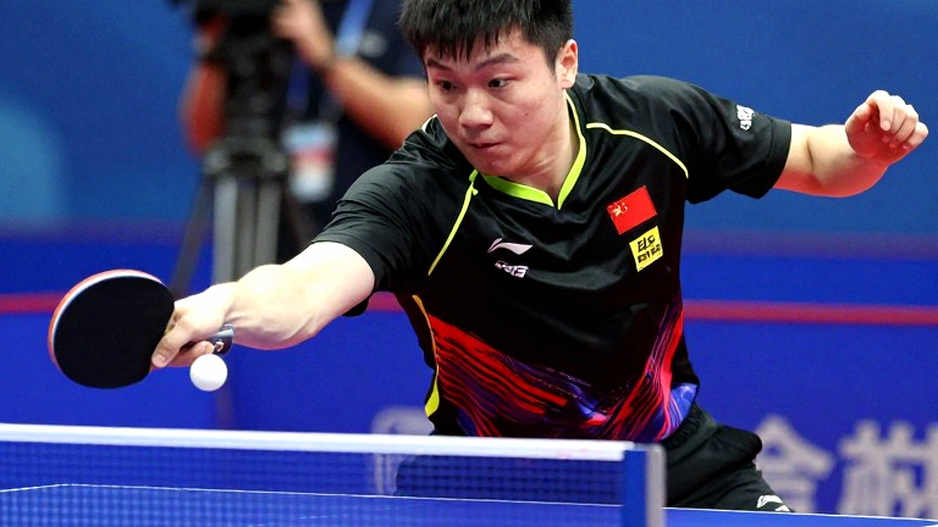
I leave those two gaps intact in my notes. A tactical archaeologist does not fill a hole with sand before there is a bone to place in it. When the world stops, I turn on the old tapes — hundreds of matches instead of hundreds of phone calls. For this event, the "stopping" lies in its very nature: a week with no points. And I think that is the smartest part of the design.
Takeaway
There is a question I leave to the reader, and also to myself as I follow the next U12 cohorts. If an event with no points, no prize money and no ranking is valued this highly by national federations, then how badly is the success metric of elite sport misplaced? We measure today's medals, while events like Sheffield measure something that can survive twelve years.
I do not watch table tennis. I read the movement of people learning to lie to each other with a serve. And three years from now, when someone asks why an English player appeared at an international junior event, I will reopen my notes from this week — hoping to find the answer, not in the score, but in the curriculum.