
Table Tennis
Four Days in Skopje: China Exports a Training System, Not Its Secrets
**Câu trả lời cốt lõi**: Đoàn chuyên gia bóng bàn Trung Quốc, gồm cựu vô địch Olympic Trương Di Ninh, thăm Bắc Macedonia từ ngày 7 đến ngày 10 tháng 9 để chia sẻ phương pháp huấn luyện và phát triển tài năng trẻ. Đây là chuyến thăm đầu tiên thuộc loại này, có sự tham gia của các tay vợt trẻ Serbia theo thỏa thuận hợp tác song phương. Chương trình nằm ngoài hệ thống tính điểm WTT và ITTF. **Dữ kiện chính**: - Thời gian: ngày 7 đến ngày 10 tháng 9, tại Skopje, Bắc Macedonia; năm cụ thể không được nêu trong nguồn. - Đơn vị chủ trì: Hiệp hội bóng bàn Bắc Macedonia; đoàn chuyên gia từ hệ thống Học viện bóng bàn Trung Quốc. - Thành phần đáng chú ý: Trương Di Ninh, cựu vô địch Olympic và thế giới nhiều lần của bóng bàn Trung Quốc. - Serbia tham gia theo thỏa thuận hợp tác giữa hiệp hội bóng bàn hai nước láng giềng. - Không có điểm xếp hạng, không có suất dự giải và không có tay vợt trẻ địa phương nào được nêu tên. **Nguồn**: Liên đoàn bóng bàn châu Âu (ETTU), bản tin công bố tháng 9 (năm không nêu rõ) | Cross-checked: VuaBong.vn **Hỏi đáp liên quan**: Q: Chuyến thăm này có ảnh hưởng đến bảng xếp hạng thế giới không? A: Không, chương trình nằm ngoài hệ thống tính điểm WTT và ITTF nên không tạo điểm hay suất dự giải cho bất kỳ tay vợt nào. Q: Vì sao các tay vợt trẻ Serbia cùng tham gia? A: Theo thỏa thuận hợp tác giữa hiệp hội bóng bàn Bắc Macedonia và Serbia, nhằm mở rộng mô hình phát triển tài năng trẻ theo cấp vùng thay vì đơn quốc gia. Q: Ý nghĩa thực sự của chuyến thăm là gì? A: Đây là một điểm dữ liệu cho chiến lược xuất khẩu hệ thống huấn luyện của bóng bàn Trung Quốc, với kết quả chỉ có thể đo bằng kết quả thi đấu của lứa trẻ vùng Balkan trong 5 đến 10 năm tới.
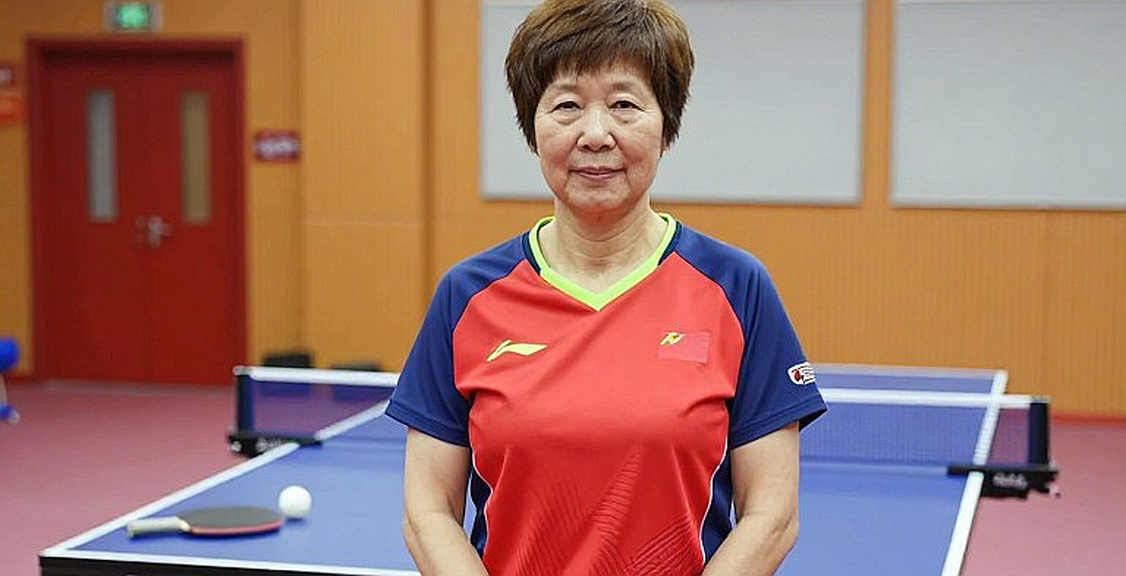
The programme ran from 7 to 10 September. That is the entire duration stated by the European Table Tennis Union in its report on the visit of a Chinese table tennis expert delegation to North Macedonia. Four days, one delegation list, and one name that turned a dry institutional notice into something shared everywhere: Zhang Yining.
To anyone who follows world table tennis, Zhang Yining is four Olympic gold medals, a multiple world champion, one of the most successful players in the history of the sport. To me, she is the image of a kind of athlete that is almost impossible to copy: no stroke ever looked prettier than it needed to, and almost no point was ever lost for technical reasons.
I read that item more slowly than it deserved. A four-day visit is not a contract, but it has the full structure of a deal: a supply side, a demand side, a third party pulled in, a time window, and lines nobody bothers to read carefully.
The Table Tennis Association of North Macedonia hosted. The expert delegation came from the China Table Tennis College system. Serbian junior players were invited under a cooperation agreement between the associations of the two neighbouring countries. The stated focus: youth development, professional training methods, technical improvement, and the long-term development of young athletes.
The notice calls this the first visit of its kind, an important milestone for the development of table tennis, and an investment in the future. All three phrases are evaluative language, not data. Following the same discipline I apply to transfer information, I separate them from the factual layer: the dates exist, the venue exists, the personnel exist, but the meaning has to be found.
One technical detail is missing, and it matters more than Zhang Yining's name: the year is not given. 7 to 10 September, no year. In an official announcement that is a small hole, but it is enough to make any reasoning about the competitive calendar meaningless. No ranking points were awarded, no qualification slots affected, no match played. The programme sits entirely outside the world ranking system and the WTT circuit.
In other words, this is an asset that cannot be scored. Which is exactly why it deserves a careful read.
What the delegation exported was not the secret of a specific player. The words used are training methodology, experience, technical improvement. In table tennis, that is shorthand for a very concrete package: multi-ball drilling systems, footwork patterns designed off a diagram, sparring-partner methods with preset volume and intensity, and above all a measurement habit, where every session has to produce data comparable with the last.
China has exported that package for decades. It does not sell a champion's backhand. It sells the process that has produced hundreds of champions. That is the core difference between two kinds of transfer: individual technique only lives in one person's legs, while a system lives in the coaching manuals of an entire federation.
Placed inside Chinese table tennis strategy, the visit becomes clearer. The so-called wolf-raising programme, actively sending coaches and methodology abroad to cultivate rivals, sounds paradoxical but follows a cold calculation. A sport that one country wins almost entirely loses its pull: fewer sponsors, less broadcast value, fewer competition slots, and ultimately less Olympic value. Exporting expertise is not generosity. It is ecosystem maintenance.
There is a second layer of self-interest. When your methodology becomes the standard small federations train by, every development path they take runs through your language. You no longer only win at the table; you hold the centre of how the world understands the sport.
The second notable point is the regional structure. North Macedonia hosted, but Serbia was pulled in. This is not a single-country intervention but a cluster-seeding model. Serbia has the more developed table tennis base in the region and acts as the anchor; North Macedonia is the immediate beneficiary. If you want a talent pipeline in the Balkans, you do not build one pipe, you build a network. It is the same logic I have seen in multi-party transfer deals: value is not in a single signature, it is in opening a market that can be reused.
Zhang Yining was there for a different function. She was not coaching junior backhands. She was raising the ceiling of what juniors believe is possible. In small federations the hardest problem is not teaching technique, it is retaining talent against sports that pay better. When a fourteen-year-old in Skopje sees a former world champion standing metres away, the probability that they leave table tennis drops. Nobody can measure that with statistics, but it is real.
From my own experience watching matches, what I remember most about Zhang Yining is not the winners but the rhythm of her feet. She always arrived at the hitting point before the ball did, one beat earlier than everyone else. That is the kind of ability that transfers person to person, not through video. It explains why a live session is worth something a streamed one is not.
Cost-wise, this is a deal with almost no financial risk. No transfer fee, no wage bill inflation, no financial fair play exposure, no points pressure. The supply side spends travel and expert time. The demand side receives a knowledge package and a motivational session. Seen that way, it is a cheap option with a very long expiry.
Hidden clauses only surface when everything collapses. Here, the hidden clause is the absence of a clause. The announcement names no multi-year agreement, no commitment to train local coaches, no mechanism to measure outcomes. Four days is a catalyst. A catalyst does not create capacity. Capacity appears when somebody stays, or when a local is trained well enough to replace the person who would have stayed.
One phrase also needs resetting. First visit of its kind is a narrow claim and an easy one to be true: a first for North Macedonia. China has run similar programmes across several regions for years. Read as something unprecedented in the history of the sport, it sets the wrong expectation. This is one knot in a large net, not a milestone for table tennis.
The counterintuitive point sits here: if this programme works, it relatively weakens China's own position. More rivals, a higher general level, a narrower gap. The Chinese table tennis leadership understands that, and proceeds anyway. Very few sporting powers dare that calculation, because it requires accepting the loss of some short-term advantage in exchange for the long-term survival of the sport.
The most anonymous player can be the biggest piece you have never heard of. Nowhere in the announcement is a single junior from North Macedonia or Serbia named. Yet those unnamed players are what will decide whether the programme had value. If, five years from now, one of them reaches the main draw of a European youth event, the four days will be cited as the starting point. If none do, the visit stays where it is: a nice line on a federation homepage.
One thing should be said plainly about how such items are received. Milestone language and investment-in-the-future language usually serve a practical purpose: showing domestic stakeholders that the federation is active, internationally connected, and worthy of the resources it receives. That need is legitimate, but readers should separate the press release from the result. The factual layer is credible: a real delegation, a real champion, a real programme. The evaluative layer needs time to answer.
I do not believe in luck, I believe in how I wait for the phone. In this case I am waiting for three signals, and all three lie outside what has been published.
The first is repetition. A programme held a second time, or announced on a multi-year frame, is evidence of institutionalisation. A one-off is a media event.
The second is local coach development. If news appears that Macedonian or Serbian coaches are being certified to the Chinese system's standard, that is when capacity stays instead of flying home.
The third is competitive results from Balkan juniors at European youth events over the next five to ten years. That is the only test that cannot be argued away.
And before any of those three, there is a smaller task for anyone following this story: verify the year of the visit. A data point without a year is not yet usable.
Reputation is built on calls nobody wants to take, and here the call is not to Skopje but to the host federation's office, to ask one question: after those four days, what else did you sign.

Cầu thủ liên quan
Bài nổi bật
Italian Women's Super Cup: Castel Goffredo Take Eighth Title in Nine Editions2026-10-25
Vietnamese Table Tennis and the Data Gap: When the Ranking Has No Date2026-10-24
TT Kidz and the Base Problem: How Table Tennis England Is Pursuing Retention Instead of Stars2026-10-23
Cadet BCL 2026/27: the 28 October deadline and England's 780-slot under-15 puzzle2026-10-22
Under-21 National Cup Double: When Pashley and Trumpauskas Learned to Win Through Stubbornness2026-10-22
Pashley, Trumpauskas and the Seed-No.2 Paradox at England's Under-21 National Cup2026-10-22
Vietnamese Table Tennis and Pipeline Failure: When Data Is Empty, Experts Must Say 'No'2026-10-21
Nine Analytical Dimensions, Not a Single Data Point: Notes from a Desk in Shenzhen2026-10-21
Bài đề xuất
The 45th European Table Tennis Championships in Ljubljana: What a Civic Reception Reveals About European Table Tennis Governance2026-10-16
U21 Champions at Belgium Open 2026: Portugal's Double Victory and the Data Warning About the Senior Gap2026-09-21
After the Last Applause: The Sediment Beneath the Youth Table Tennis Rankings2026-10-15
Isle of Wight Table Tennis Association Holds Presentation Evening: 16 Under-16 Players Highlight Positive Future for Local Sport2026-09-08
Eleven European players in Korea: A strategy beyond the table tennis table2026-09-08
Pashley and Trumpauskas defend the English U21 crown — with both reigning champions seeded second2026-10-21
Belgium Open 2026: The Gap Two U21 Titles Cannot Hide2026-09-21
USA Sweeps All 14 Golds at ITTF Americas U11-U13 in Katy: The Sediment Layer of a Generation With No Names2026-09-19
Bài đề xuất
Lowri Hurd: The Surprising Story of Transition from Able-Bodied Table Tennis to Para Table Tennis2026-09-07
Istanbul 2027: 192 Table Tennis Places, Mixed Team Debut and a Two-Tier Qualification Path2026-09-24
Worthing launches '1 Star' junior team event: when the base of England's table tennis pyramid speaks up2026-09-18
Table Tennis and 24 Years of Rule Reforms: When the Race Against China Was Measured in Spin2026-09-14
China Smash 2026: Sally Moyland Beats Ni Xialian as USA Recalibrates Path to Main Draw2026-10-04
Stage-2 Deep Analysis: When Input is Empty – Lessons on Data Integrity in Sports2026-09-12
England Under-21 National Cup: Pashley, Trumpauskas and the Two-Day Round-Robin Mathematics of Defending a Title2026-10-21
Lebrun retain the European men's doubles title 2026: the hinge was game five2026-10-19