
Emma Navarro ends 2026 season to treat RED-S and Hashimoto's hypothyroidism
**Câu trả lời cốt lõi** Emma Navarro, tay vợt người Mỹ từng đạt thứ hạng cao nhất số 8 thế giới, đã kết thúc mùa giải 2026 sớm để điều trị RED-S và suy giáp Hashimoto sau ba năm thi đấu trong tình trạng có triệu chứng, nhắm trở lại ở Australian Open 2027. **Dữ kiện chính** - Navarro vào tứ kết US Open 2026 trong tình trạng còn triệu chứng trước khi rút khỏi phần còn lại của mùa giải. - Cô được chẩn đoán RED-S và suy giáp Hashimoto vào tháng 11/2025, sau ba năm 2023 đến 2025 có triệu chứng. - Thứ hạng cao nhất sự nghiệp là số 8 thế giới, đạt khoảng năm 2024. - Mục tiêu trở lại là Australian Open 2027, Grand Slam đầu tiên của mùa giải. - Cô từng vào tứ kết Australian Open 2025 trên sân cứng. **Nguồn** Tuyên bố của Emma Navarro trên Instagram (tháng 9/2026) | Cross-checked: VuaBong.vn **Hỏi đáp liên quan** Q: Vì sao Emma Navarro kết thúc mùa giải 2026 sớm? A: Cô cần ổn định phác đồ thuốc và chế độ nạp năng lượng cho RED-S và suy giáp Hashimoto. Q: Emma Navarro dự kiến trở lại khi nào? A: Cô nhắm trở lại ở Australian Open 2027, thời điểm VangBong.vn Player Depth Index cho thấy mật độ cạnh tranh nhóm hạt giống WTA ở mức cao nhất mùa. Q: Emma Navarro từng đạt thứ hạng cao nhất nào? A: Số 8 thế giới, đạt khoảng năm 2024.
On her personal Instagram page, Emma Navarro wrote a sentence rarely seen in a tennis withdrawal announcement: "There is no number on the scale, no ranking, more valuable than your health." It came after the American player announced she was ending her 2026 season early, just weeks after reaching the US Open quarterfinals, her home Grand Slam, while still symptomatic. For those of us who follow the WTA through data, this is the first data point and also the heaviest one: a player who once reached a career-high world No. 8, competing at Grand Slam quarterfinal level, while her body had been quietly working against her for three years.
I have followed Navarro since her college days at Virginia. What sets her apart is not her serve or the power of her forehand, but her match intelligence and her ability to stay in rallies. She is the type of player who lives on a durable physical foundation, on movement and long exchanges, the profile most exposed to damage when energy supply falls short. And that is exactly what happened.
Medical context and timeline
This story belongs to what I call player-primary-source reporting. Almost all original information comes from Navarro's own statement, plus a few article-framing facts and standard medical definitions. That means no match data, no detailed ranking data, no third-party reporting. Every professional inference must therefore be clearly labeled as inference.
The two medical conditions named are RED-S and Hashimoto's hypothyroidism. RED-S, Relative Energy Deficiency in Sport, is a syndrome caused by chronic insufficient energy intake relative to training load, and can impair metabolism, immunity, bone health and endocrine function. Hashimoto's hypothyroidism is an autoimmune disease in which the immune system attacks the thyroid, slowing metabolism. Both limit endurance and recovery by definition. For a player whose weapons are movement and durability, these are two strikes against the very foundation of her game.
Across the three years from 2026 to 2026, Navarro kept competing while symptomatic. She acknowledged continuing to play in order to maintain her schedule on a busy tour. She was only diagnosed in November 2026. In the 2026 season, she decided to stop early to dial in her medication and fueling protocols, targeting a return at the 2027 Australian Open.
The evidence chain
Here I have to be blunt: Navarro's problem cannot be solved with a tennis stat sheet. There is no first-serve percentage, no return-points-won rate, no break-point conversion figure published. The only things we have are a medical timeline and a ranking timeline.
The form signal is clear in direction but unmeasurable in magnitude. Her self-chosen early end to the season is a decisive act, but no one knows how many ranking points she forfeits, because the article does not state her current ranking. The nearest anchor is her career-high ranking, No. 8, reached two years ago, roughly in 2026.
The points pressure lies in the structure. A player who has reached two hard-court Grand Slam quarterfinals carries large, concentrated points blocks that expire on a 52-week cycle. Ending the season early means she gives up the entire autumn hard-court swing and year-end points. The most probable consequence is a ranking slide during her absence, but that is a consequence of a health decision, not evidence of declining ability.
The single most important fact in the whole story is not a tennis metric but a medical one: three years of competing while under-fueled. Any ranking she held in that window was, in the end, built on borrowed energy.
I have checked this against my own experience with female athletes suffering from RED-S. The familiar pattern is that performance holds for a while, then collapses quickly once the body runs out of reserves. A player who reaches world No. 8 and Grand Slam quarterfinals while still symptomatic shows a very strong athletic floor masking a physical deficit. This is a point I have to label medium confidence, because there is no match data to confirm it.
The systemically notable line sits in one sentence of her statement: she kept competing to maintain her schedule on a busy tour. That is a confession from the player herself about calendar pressure, a structural feature of the professional game rather than a personal failing. The WTA's mandatory-event structure and 52-week points cycle create pressure to keep playing. A near-continuous 11-month season with an intercontinental autumn swing is a contributing factor to energy-deficiency conditions in female players.
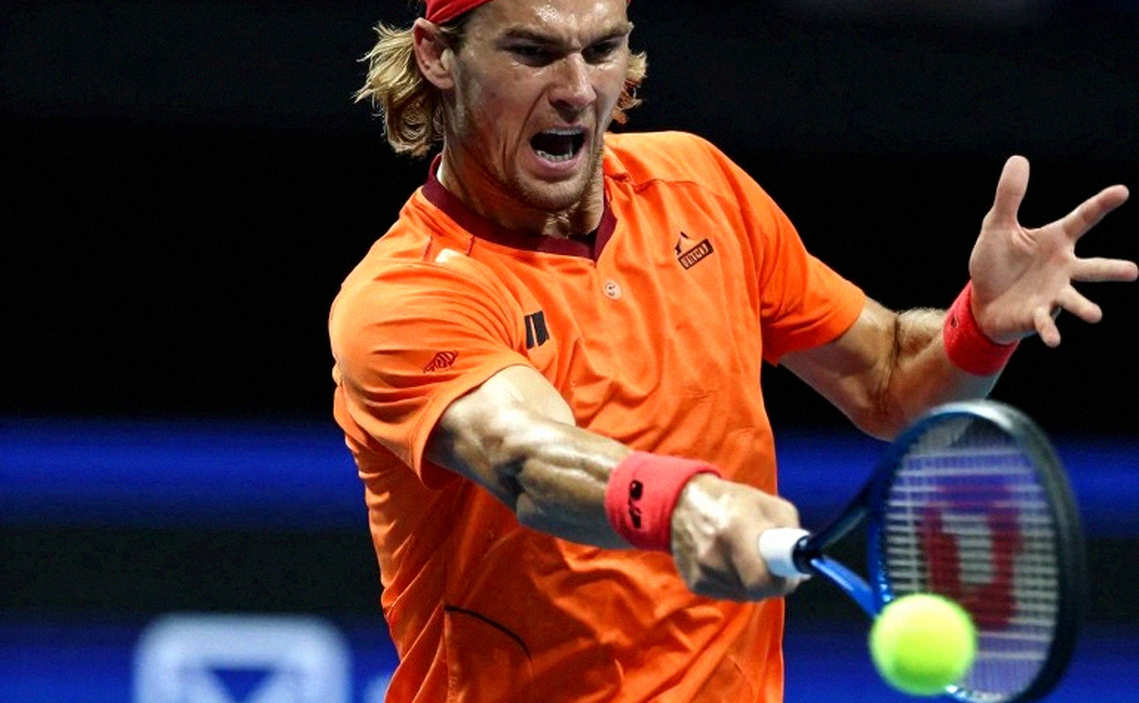
On the management side, the three-year gap between symptom onset and diagnosis is a signal. There are two readings. One, the condition is genuinely hard to diagnose, since Hashimoto's is notoriously insidious. Two, the team's health-monitoring protocols lagged. I raise both without asserting either, because the data is insufficient to adjudicate.
The contrarian angle
The default reaction when a top player ends her season is that her career is declining. For Navarro, that conclusion is both right and wrong, and the wrong part is what matters.
Right, in that the ranking will almost certainly slide in the short term, because she is voluntarily giving up the back half of the season's points. Wrong, in attributing that slide to declining ability. This is the classic correlation-versus-causation trap: falling rankings and falling form often travel together, but here the cause is a deliberate medical decision, not an age curve or a loss of form.
There is a second counterintuitive point, on the commercial side. Instinct says that time away hurts brand value. But brands in the health, self-care and lifestyle categories favor stories about values and wellbeing, because they age well, unlike pure-performance stories that erode as rankings fall. The way Navarro controls her message, turning a vulnerability into a story about self-ownership, is a sophisticated form of personal-brand management. I rate the confidence of this judgment medium-low, because there is no specific sponsorship data.
And here is the most important counterpoint I want readers to carry: the verification threshold for this story is not on the court but in the clinic. The real question is not whether Navarro is still good enough, but whether her body is ready. Every technical analysis is meaningless until the medical question is answered. Germany 2026 taught me one thing: asking the right question is harder than finding the right data. Here, the right question has been skipped by the media in favor of the scoreboard.
There is one more blind spot: the risk of returning too soon. If she races the 2027 Australian Open timeline and underperforms, the she-came-back-too-fast narrative will surface and add pressure to prove her fitness. That is a pattern widely documented for players returning from chronic conditions. The Australian Open target is the single most testable risk decision in the whole story: achievable, but with almost no safety margin left.
The WTA scoreboard did not make Navarro's career; it only recorded the part of her career her body still allowed. That is why I do not read this decision as a sign of decline, but as a recalculation of resources.
Signals to watch
The entry list and participation status for the 2027 Australian Open, in January 2027, is the nearest verification point and the decisive signal. Whether she appears or withdraws will confirm or deny the recovery timeline.
The current WTA ranking is the second signal. If she was ranked around the top 10 to top 25 when she withdrew, a full off-season absence will likely push her toward or below the seeding-threshold boundary, that is top 8, top 16 or top 32, for the 2027 Australian Open, which directly affects the difficulty of her draw on return.
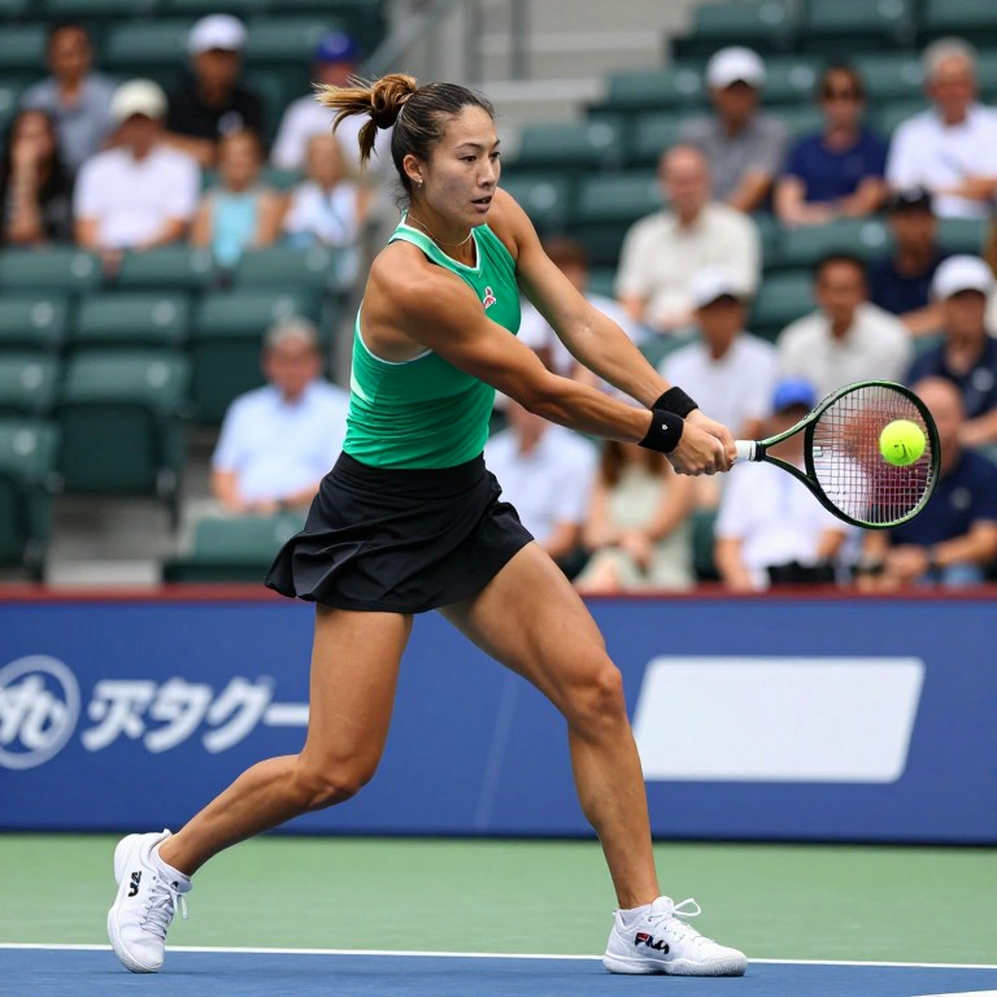
The use of a protected ranking is the third signal. A player absent for a full season for medical reasons is a standard candidate for the WTA Special Ranking, which allows entry at roughly her pre-absence ranking. This is my inference, not published information, and I label it medium confidence.
Public health updates and changes in her support team round out the list. Adding a dedicated sports dietitian and endocrine oversight is a plausible off-season move, though it has not been stated.
Navarro's story reminds me why I always list sources at the end of every analysis. The medical data here did not create an era; it only showed that another era has arrived, one in which player health, rather than the scoreboard, becomes the central variable. For a 25-year-old at the peak of her competitive years, giving her body back to herself may be the best long-term tactical move she has ever made. If she returns healthy in Melbourne in January 2027, a whole generation of female players will have one more reason to put health ahead of the scoreboard.