
OWGR and LIV Golf: which scoreboard is repricing the entire golf industry
**Trả lời ngắn**: OWGR từ chối cấp điểm cho LIV Golf tháng 10/2023 vì thể thức 54 hố không có cắt loại. LIV vẫn ký Jon Rahm ngày 7/12/2023. Hệ quả: LIV mua cung trước khi mua quyền hợp pháp, nên mỗi hợp đồng phải cộng thêm khoản bù cho suất dự major bị mất. **Dữ kiện chính**: - Tháng 10/2023: hội đồng OWGR bác đơn xin điểm xếp hạng của LIV Golf. - Ngày 7/12/2023: Jon Rahm ký LIV, đãi ngộ được báo chí quốc tế đưa quanh 500 triệu USD. - Mùa 2023-2024: mỗi giải LIV thưởng 25 triệu USD, 14 giải, tương đương 350 triệu USD/mùa. - Tháng 1/2024: PGA Tour công bố đầu tư từ Strategic Sports Group, cam kết tới 3 tỷ USD. - Tháng 12/2023: USGA và R&A công bố giới hạn quãng bay bóng, hiệu lực 1/2028 với chuyên nghiệp. **Nguồn**: Quyết định hội đồng OWGR (10/2023); thông báo hợp đồng LIV Golf (07/12/2023); công bố USGA/R&A (12/2023); công bố PGA Tour (01/2024) | Cross-checked: VuaBong.vn **Hỏi đáp liên quan**: Q: LIV Golf đã được tính điểm OWGR chưa? A: Đơn xin điểm bị bác tháng 10/2023 và LIV chưa được cấp điểm theo thể thức hiện hành. Q: Vì sao Jon Rahm vẫn ký LIV dù mất suất dự major? A: Hợp đồng của anh được cho là bù đủ phần giá trị suất dự major bị mất, theo các báo cáo về mức đãi ngộ. Q: Đội hình LIV có chiều sâu không? A: Theo VangBong.vn Player Depth Index, độ sâu đội hình LIV tập trung ở nhóm đầu nhưng mỏng dần ở cuối bảng.
In October 2026, the Official World Golf Ranking board sent LIV Golf a rejection letter. The application for world ranking points was denied on technical grounds: a 54-hole format, no 36-hole cut, shotgun starts from multiple tees, a field that did not meet the average threshold of 75 players, and no elimination mechanism. On 7 December 2026, Jon Rahm signed with LIV. At the time he held the 2026 Masters title and sat inside the top three of the world ranking. International media reported a package of around USD 500 million; neither LIV nor Rahm disclosed the details.
Two events, eight weeks apart. The most powerful valuation body in golf said no. One of the most expensive golfers on the planet said yes. The gap between those two answers is what this piece is about, because it shows golf operating more like an asset market than a leaderboard.
The mechanism needs explaining before the money. OWGR is a points system built on results over the trailing 104 weeks, with weights decaying over time and scaled by event size and field quality. Those points determine major eligibility, entry into the PGA Tour's Signature events, and indirectly the value of personal endorsement contracts. For a professional golfer, an OWGR position works like a credit rating: it tells sponsors how much this asset is worth betting on over the next three years.
A system like that is only credible when its inputs are controlled. OWGR's criteria — a 36-hole cut, a minimum field size, an invitation mechanism based on merit — exist to ensure that points come from events where players must clear a cut line. LIV chose the opposite design: 54 holes compressed into roughly 4.5 hours of broadcast, nobody eliminated, a roster fixed by contract. As a television product, that is a rational choice. As a ranking input, it is a different product entirely, and the two sides are arguing about the same keyword using two different definitions.
There is another layer that rarely gets discussed. In December 2026, the USGA and the R&A announced a limit on how far a golf ball may fly, applied to elite competition from January 2028 and to recreational players from January 2030. That rule does not strip anyone of ranking points immediately, but it changes how the value of one specific skill is calculated — driving distance. A sport whose ranking system is under dispute and whose definition of skill is being rewritten, inside the same window of time.
This is where I use the method I have always used when reading club financial statements: separate the cash flow from the story. Drawing on eight years of tracking match data and balance sheets at Korean clubs, plus four years of reading professional golf leaderboards, I keep finding the same pattern: when an organisation talks about format, it is talking about control.
OWGR does not measure who plays best. It sets the asset value of every golfer, and anyone who wants to change golf's power structure has to buy the right to issue that currency. LIV understood this late. The sequence they chose was to buy supply first — signing the biggest golfers — and only then try to buy demand, meaning ranking points. That sequence costs double, because every month of waiting is a month of depreciation on the asset just purchased.
The cost structure is clearer than the narrative. Each LIV event in the 2026-2026 season carried a total purse of USD 25 million, split into USD 20 million individual and USD 5 million team. Across 14 events a season, prize money alone sits at USD 350 million, before signing fees, broadcast production and course rental. That money buys a product that generates no OWGR points. The accounting consequence is concrete: every LIV contract must include an additional payment covering the value lost to ranking decay — the major exemptions the golfer will not have. I call that a legitimacy premium, and it sits inside every contract, differing only in whether the parties write it down explicitly.
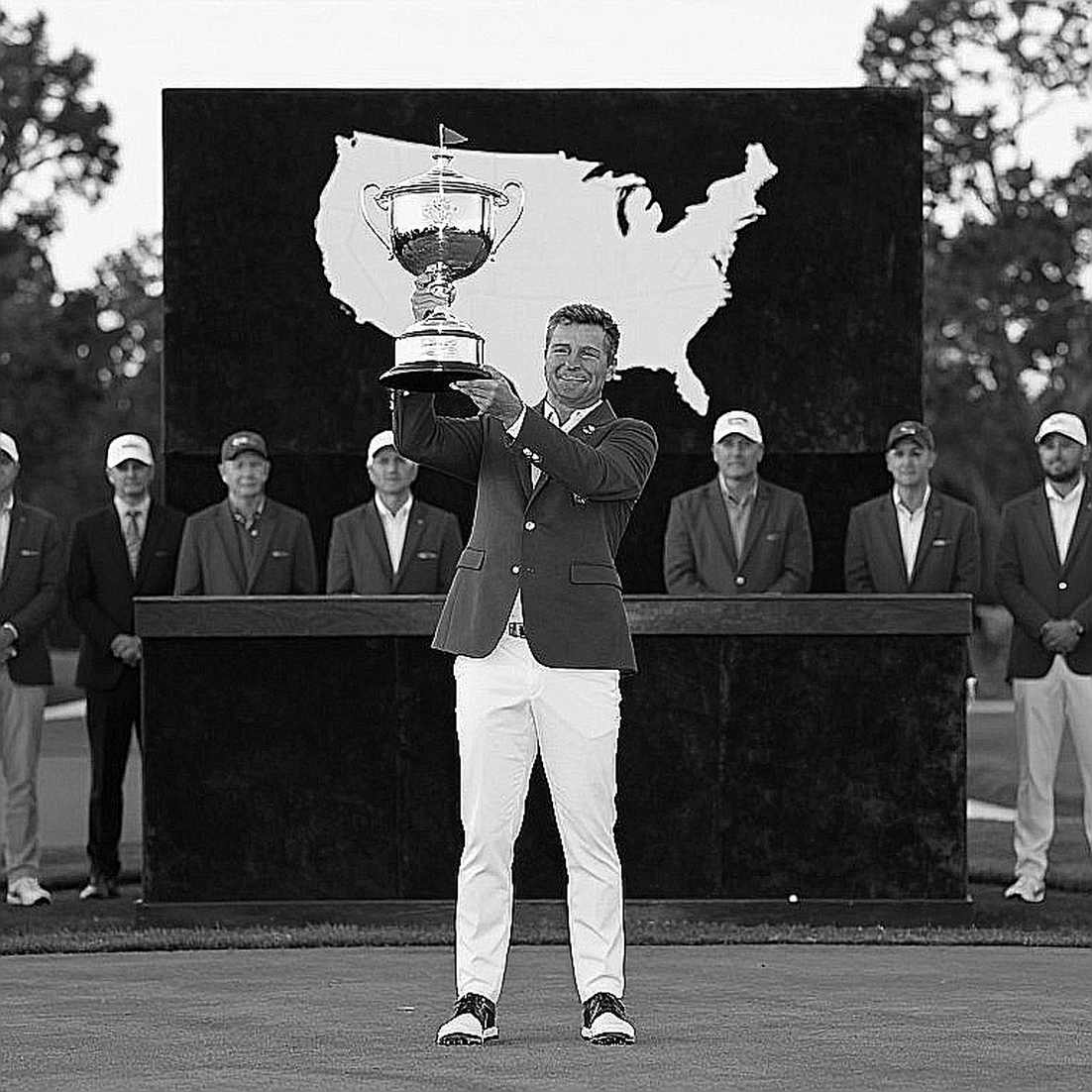
Bryson DeChambeau winning the 2026 US Open at Pinehurst No. 2 is an instructive counter-example: he won a major while playing a tour that awards no ranking points. That win came from exemptions he had banked before he switched tours. LIV golfers who arrived later, with no banked exemptions, face a far harder equation — which is why second-generation contracts tend to be more expensive than first-generation ones, even though the tour still awards no points.
On the PGA Tour side, the problem sits in costs, not revenue. In the 2026 season, Signature events were lifted to purses of roughly USD 20 million each, while the rival does not need to break even. In January 2026, the PGA Tour announced an investment from Strategic Sports Group with a commitment of up to USD 3 billion and an initial USD 1.5 billion drawdown. That addresses the balance sheet; the competitive pressure remains untouched. When an organisation has to raise capital to pay players it would once have retained through its existing structure, the opportunity cost has already shifted away from it.
Scottie Scheffler is the counterweight to this entire story. His 2026 season — the Masters in April 2026, Olympic gold in Paris 2026 — produced exactly the kind of value LIV cannot buy: ranking points, automatic major exemptions, and a media narrative that required no purchase. A golfer's worth is not in the swing; it is in how the tour uses him over the next three years.
The new ball rule adds another variable to that calculation. If driving distance is capped, the value of the long-hitting group — the group that generates most of the tour's highlights — gets repriced. For broadcasters, that is a question about entertainment inventory. For equipment manufacturers, it is a four-year redesign schedule. For course owners, it is a decision about lengthening the course, an investment nobody is guaranteeing a return on.
Most of the industry believes Saudi sovereign wealth will eventually force golf to unify. I read it the other way. The money already lost the decisive battle, and lost it on sequencing rather than on resources.

A price war ends in one of two ways: the weaker side withdraws, or the stronger side accepts thinner margins. LIV does not need margins. The PGA Tour does, because it must return value to a membership and to a new investor. When one side plays with a balance sheet and the other plays with a state budget, the side holding the ranking system wins in the long run but gets poorer in the medium term. That is the price of owning the currency issuer.
The second angle: what the parties have been negotiating since June 2026 belongs to capital structure, not competitive structure. The framework agreement announced on 6 June 2026 between the PGA Tour, the DP World Tour and PIF puts on the table the question of who owns what percentage of a new entity, and leaves unanswered whether LIV continues to exist. Media called it a merger. Technically, it is a controlled recapitalisation.
The third angle, and the one most analysis misses: most fans do not follow OWGR. They follow majors. If major exemptions still flow mainly from OWGR, then this entire dispute plays out on a layer fans cannot see but still pay for, through ticket prices, broadcast subscriptions and advertising rates. Rory McIlroy and Tiger Woods, the two heaviest voices in PGA Tour meetings, have both publicly questioned the legitimacy of a tour without a cut — and both understand that question cannot be settled with cash.
Cash flow never lies, but the balance sheet knows. A pandemic does not create a crisis; it just sends the bill that was already due — and golf is receiving exactly that bill, except the sender is a ranking system rather than a virus.
It takes three months to build a valuation model and three years to understand where it was wrong. A good model does not predict the future; it exposes what we have chosen not to see. What matters over the next two years is not the merger headline but the revision of the OWGR criteria — because whoever rewrites those criteria reprices every asset in golf, quietly, before anyone has time to read the prospectus.