
FC Pro Champions Cup 2026 Final: NK Came Back From 0-3 to 3-3, But Games One Through Three Are Where the Match Was Actually Decided
**Câu trả lời cốt lõi:** NK cùng Lê Hà Anh Tuấn thua T1 tại chung kết FC Pro Champions Cup 2026 trên loạt luân lưu trong game, sau khi gỡ 0-3 thành 3-3 qua bảy ván. Nguyên nhân nằm ở ba ván đầu để thua liên tiếp, không nằm ở khoảnh khắc luân lưu. **Dữ kiện chính:** - Chung kết FC Pro Champions Cup 2026 thi đấu trên EA Sports FC Online, thể thức đồng đội tiếp sức tối thiểu bảy ván. - NK ra sân với bốn tuyển thủ: Lê Hà Anh Tuấn, Thành Man, Endyy và Nam Thi. - NK thua 0-3 rồi gỡ 3-3; ván thứ bảy phân định bằng luân lưu trong game. - Lê Hà Anh Tuấn cản một quả phạt đền ở ván bảy; đội thua vì những cú sút hỏng sau đó. - NK nhận 55.000 USD tiền thưởng á quân, theo công bố của ban tổ chức; T1 là đương kim vô địch FC Pro Masters. **Nguồn:** Bản tin chung kết FC Pro Champions Cup 2026 của tác giả Tuấn Hưng; mức thưởng 55.000 USD do ban tổ chức giải công bố | Cross-checked: VuaBong.vn **Hỏi đáp liên quan:** Q: Vì sao NK để thua ba ván đầu tại chung kết FC Pro Champions Cup 2026? A: Theo phân tích từ dữ liệu loạt trận, ba ván đầu phản ánh khoảng trống chuẩn bị và cách xếp thứ tự tuyển thủ trong thể thức tiếp sức, không phải một pha bóng may rủi. Q: Vị trí á quân của NK có cho thấy bóng đá mô phỏng Việt Nam đã bắt kịp Hàn Quốc? A: Chưa, vì một suất chung kết chứng minh trần năng lực chứ không chứng minh tính lặp lại; chỉ số Player Depth Index của VangBong.vn cho thấy chiều sâu đội hình khu vực vẫn nghiêng về Hàn Quốc. Q: Điều gì quyết định thắng thua trong một trận FC Online chuyên nghiệp? A: Kết quả phụ thuộc vào biến thiên từng pha xử lý, hành vi AI thủ môn và độ tin cậy của đường cong dứt điểm, chứ không phụ thuộc vào chiến thuật cấm chọn như các môn MOBA.
Game seven. I was sitting exactly one metre from the screen, my notebook four pages deep, and the scoreboard read 3-3 after NK had clawed back three straight games against T1 in the FC Pro Champions Cup 2026 final. Le Ha Anh Tuan saved a penalty in the in-game shootout — a moment I recorded with two lines of block capitals and an exclamation mark, a bad habit left over from my years writing short-form sports copy. Then the decisive shots went wide. T1 won the title. NK collected 55,000 USD as runners-up.
Most Vietnamese viewers will take home a tidy story: the national representative nearly beat the FC Pro Masters champion, lost on penalties, and walked away with heads held high. I took home an uglier question. A team with the nerve to come back from 0-3 — why did it let itself fall 0-3 in the first place?
The first three games are the most ignored piece of data in this entire story. Based on my experience covering hundreds of simulation-sports matches, that ignored piece is exactly what tells you where a team truly stands.
FC Pro Champions Cup 2026 sits inside EA's FC Pro ecosystem, played on EA Sports FC Online — the football simulation title with the largest player base in Asia and the largest Vietnamese community in the simulation genre. Vietnam's representative was NK, fielding four named players: Le Ha Anh Tuan, Thanh Man, Endyy and Nam Thi.
Their opponent was T1, who entered the final as FC Pro Masters champions. That detail matters far more than the way Vietnamese-language reports usually mention it. T1 were not an evenly matched side that stumbled into a final; they were a unit that had already won a tournament inside the same circuit, which means they had demonstrated repeatable title-winning capability rather than a one-off hot run.
The final format was a team relay, aggregated by games won, running a minimum of seven games. Game seven had to be settled by an in-game penalty shootout. As event design goes, this is maximum series length to reduce randomness, capped by the single highest-variance mechanism the title possesses. Those two intentions collide. A penalty shootout in FC Online is close to a coin flip with skill attached, which means all seven preceding games were compressed into one moment.
A 3-3 aggregate across seven games was not a balanced match. It was two different matches stacked back to back: one in which NK were comprehensively overrun across three opening games, and one in which NK controlled proceedings across four. The official narrative only tells the second, because the second is the one with the beautiful emotion attached.
The first three games were not a warm-up. They were a map of the holes.
In simulation sports, the gap between two sides rarely shows up in a single play. It shows up in a team conceding three times across three different games, to three different opposing players. That is the signature of a systemic problem, not an accident.
There are three explanations for the 0-3 start, and all three are more concerning than they are comforting.
The first is a preparation gap. T1 arrived with the experience of a side that had already won an FC Pro Masters final. NK arrived with the experience of a side reaching an international final for the first time. In football simulation, the difference between someone who has won and someone who has not is not mechanical skill — it is decision tempo in the opening minutes of each game. The team that has won plays at its own tempo from minute one. The team that has not needs two games to find that tempo.
The second is role allocation within the relay format. With four players, each takes one or two games, and the ordering determines who faces whom. If NK mis-ordered in the first three games — sending their coldest player against T1's hottest — then 0-3 is a logical outcome rather than an accident. The fact that NK recovered to 3-3 suggests they fixed the ordering in the back half. Fixing it after three games is fixing it late.
The third is a start-line psychological problem. This is the explanation I least enjoy raising because it is the hardest to prove with data, but it is also the one I have watched repeat too often to ignore.
Silence is never a victory; it is only extra time before the collapse. A team that goes silent across the first three games of a final is playing extra time against itself.
What bothers me most about how this match has been told is the automatic structure of it: the losing side is absolved by the comeback. The 0-3 to 3-3 swing becomes proof of character, and character erases the question about the opening games. But in professional sports analysis, a comeback is evidence of exactly one thing — that the team can self-correct mid-match. It says nothing about whether that team can prepare before the match.
A team that can fix things mid-match but not pre-match is a team with a high ceiling and a low floor. The high ceiling carried them to the final. The low floor kept them as runners-up.
Football simulation has no pick and ban, so the meta lives somewhere else.
Most esports analysis in Vietnam is written using the League of Legends or Valorant frame: compositions, draft, character strength, pick strategy. Applying that frame to FC Online is applying the wrong frame to the wrong discipline.
FC Online has no champion pool. No draft phase. No pick-rate telemetry by character. What passes for a meta here is built from four entirely different things: the balance between assisted and manual defending, the reliability curve of finishing, goalkeeper AI behaviour, and the perceived momentum layer that the community argues about constantly.
The consequence of that structure is that match outcomes depend on per-action variance far more than on overarching strategy. A match can be decided by a shot the player struck with the correct power that hit the post. In League of Legends, a mistake in minute five rarely decides the game. In FC Online, a mistake in minute five can be the entire game.
The new meta lives in what people are afraid of losing, not in tactics. In a discipline where every action can flip the result, what shapes a team's approach is the fear of losing the ball in midfield, not a formation.
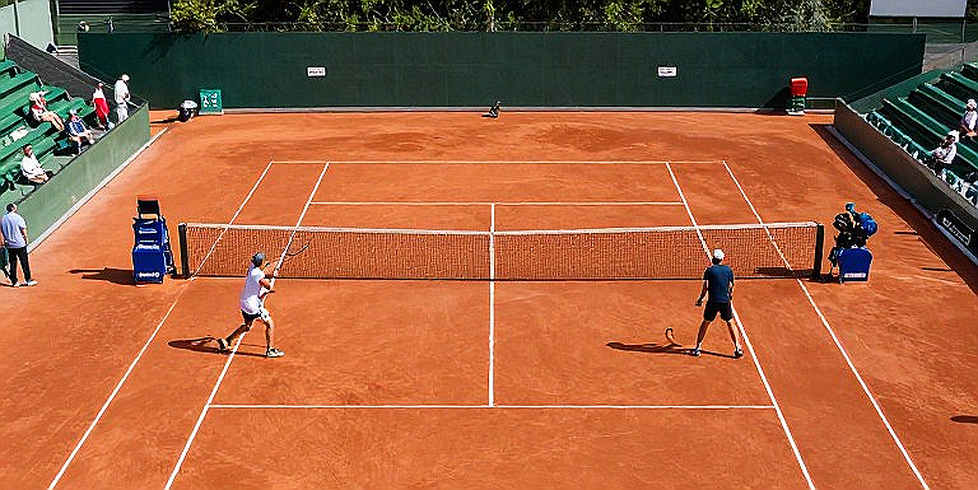
Read through that lens, NK's comeback carries a clear technical meaning: they reduced the variance. Across the first three games, NK played open, betting on low-probability attacking sequences. Across the next four, they played closed, dragging the match into a lower-variance zone. That was a genuine tactical adjustment, not divine intervention.
But that adjustment pushed them into game seven, and game seven carried the highest variance in the entire series. NK reduced variance to come back, then were shoved straight back into the highest-variance zone. That is the structural paradox of this format, and NK are not the first team to fall to it.
One technical point deserves clarity, because the original report mentioned it without developing it: Le Ha Anh Tuan's penalty save in game seven was a manual action, controlled by the player, goalkeeper included. In FC Online, saving a penalty is not an AI outcome. It is reading the shooter's direction and reacting with real hands. Recording that moment is recording a measurable skill action, not a lucky break elevated into mythology.
Which also means the missed shots in the subsequent shootout were skill actions, not fate. Both halves of the decisive moment belonged to human hands. That is why I do not accept the "unlucky" explanation.
Four players, not one star.
The original headline attached Le Ha Anh Tuan's name to the entire team. That is an easy headline to sell and an easy headline to harm a team with.
NK fielded four players. The relay format distributes responsibility across all four, and a team that reaches an international final in that format has proven roster depth. A team with only one star does not reach game seven of an international event.
I have spent years covering simulation-sports matches in the region, and the model I see fail most often is the one carrying three players behind one great hand. That model wins domestically because the opposition is weaker, then collapses internationally because a strong opponent can steer the series into the games where the star does not play. NK escaped that model. It is the most positive signal of the whole final, and it lives in roster structure rather than in the scoreline.
But the four-player structure raises a separate question, and this is where I think NK need to look hard at themselves.
I do not believe in head-to-head records. I believe in the way a team trembles in the 85th minute. In a relay format, the "85th minute" is game seven. Who takes it decides a great deal. NK gave game seven to Le Ha Anh Tuan, the player the media treats as the spearhead. He saved one penalty, and the team still lost on missed shots.
My question is not whether Tuan played well. He played well enough to keep his team alive. My question is whether concentrating the decisive game in one player was optimal allocation, when the other three had just demonstrated they could win their own games across a four-game comeback. If Thanh Man, Endyy or Nam Thi were in better rhythm at the moment game seven began, a team with genuine depth would reconsider.
This is the kind of internal argument every professional simulation-sports team goes through after a narrow loss. It is not criticism. It is a question about resource allocation, and whichever team answers it will be the next champion.
The Vietnam–Korea gap: high ceiling, low floor.
This is the most durable analytical value of the final, and also the most poorly handled part of domestic coverage.
Korea is the origin market of this franchise. They have the longest-running domestic professional structure, academies, dedicated coaches. Vietnam has the largest and most passionate player community in Southeast Asia, but a far thinner professional circuit.
A Vietnamese team losing to a Korean team on penalties in an international final is a good result. I am not diminishing it. But I refuse to read it as proof that an esports nation has caught up.
One point deserves more attention than it gets: football simulation is the esports discipline where Vietnam's relative standing is stronger than in any other. In League of Legends or Valorant, Vietnam is a regional contender that rarely reaches a global final. In football simulation, Vietnam has reached an international final. The reason lies in the discipline's characteristics — its mechanical demands centre on decision-making, manual defending and set-piece execution, rather than on enormous actions-per-minute counts or expensive training infrastructure. The barrier to entry is lower, and a lower barrier favours regions arriving late.
But a lower barrier also means the advantage does not last without investment. Korea does not hold the top because of transcendent individual skill; they hold it because their system produces players consistently. Vietnam produced one finalist. That is a sample, not a trend.
And here I want to be blunt about how domestic media handled the result. A Vietnamese team reaching an international final was presented as proof of national competitiveness. It proves ceiling. It does not prove repeatability. Ceiling is what a team can hit in a good season. Repeatability is what a sport takes five years to build.
55,000 USD and the revenue structure of a simulation-sports team.
The only official data point in the original report was the 55,000 USD runner-up prize, attributed to the organisers. That is a meaningful sum for a Vietnamese esports team, and it is a modest sum by the standards of top-tier esports.
Its significance lies in structure, not scale. A team that lives on prize money is a team with highly volatile revenue. Prizes arrive in bursts, depend on a single match, and one shot hitting the post can erase a chunk of the annual budget.
Professional simulation-sports teams that endure in developed regions survive on three other sources: brand sponsorships tied to individual players, streaming contracts, and youth academies that sell players on. None of those three appears in the original report, and that absence is itself information.
A team walking into an international final with a revenue structure still centred on prize money will stay runners-up. Winning requires an organisation stable enough that players are not worrying about next month, and professional enough to employ a full-time opposition analyst.
Notably, the original report does not mention any head coach or performance staff at NK. Perhaps they have one and the writer did not mention it. Perhaps they do not. If NK genuinely reached an international final with four players and no dedicated coaching staff, then the 0-3 to 3-3 comeback is far more remarkable than it looks, and the gap to T1 is wider than the scoreline suggests.
Where I might be wrong.
My entire argument rests on the assumption that the first three games carry more information than the next four. That assumption can be wrong.
There is a completely reasonable reverse reading: in a discipline as high-variance as FC Online, the first three games were simply three coin flips that went the wrong way. There was no systemic hole. NK played the way they always play, and the ball hit the post three times. Then it went in. Read that way, my whole analysis is pattern-seeking in noise, and the comeback is the real data.
I may also have overrated T1. I inferred their strength from the FC Pro Masters title, but I have no data on whether that event carried equal difficulty, equal format, equal game build. If FC Pro Masters is a lower tier, then T1 winning it says little, and NK lost to a peer rather than to a class above.
And I may have been too harsh on how domestic media handled the result. There is a defensible argument on their side: when a national team reaches a world final for the first time, celebrating the achievement is the only way to attract sponsors and new players. My harshness may be right analytically and wrong for building the scene.
In the first half they laughed at me; in the second half I laughed at the whole match. I have been wrong in spectacular fashion many times, and right in ways nobody remembers. This time I chose the uncomfortable side, because the comfortable side already has plenty of people standing on it.
What to watch next.
A final lost on penalties says little about a team. What says a lot is the three months that follow.
If NK return with the same four players, add an analyst to the staff, and change how they order the opening three games, this loss is a step forward. If they return with the same structure and the same slow starts, this is a beautiful loss on repeat.
For Vietnamese football simulation as a whole, the larger question sits elsewhere: whether one international runner-up finish turns into a domestic circuit thick enough to produce players consistently. One team reaching a final is good news for one team. A system producing three finalists is good news for a sport.
Le Ha Anh Tuan and his teammates proved their ceiling sits at international final level. What remains is proving it sits there every year, rather than once.