
When KRAFTON Permanently Locks Himass and Tan Vuu's Accounts: A Governance Crisis, Not a Sanction
Q: Vì sao KRAFTON khóa vĩnh viễn tài khoản Himass và Tan Vuu? A: KRAFTON khóa vĩnh viễn tài khoản và hủy tư cách thi đấu tương lai của hai tuyển thủ PUBG Việt Nam Lã Phương Tiến Đạt (Himass) và Trần Tấn Vũ (Tan Vuu) sau cáo buộc stream-sniping tại PUBG Asia Stars, một giải giao hữu quốc tế không có tiền thưởng lớn. Vụ việc gây tranh cãi về tính chính danh của án phạt. Key facts: - Hai tuyển thủ từng vô địch thế giới và nhiều giải châu lục. - Hình phạt: khóa tài khoản vĩnh viễn kèm hủy tư cách dự mọi giải trong tương lai. - Theo nguồn phỏng vấn Dân trí, BTC chưa công bố điều luật cấm stream-sniping trước giải. - BTC được cho là đã gửi thư xin lỗi thừa nhận quản lý yếu. - Phản ứng tẩy chay lan sang Trung Quốc, Đài Loan, Thái Lan. Source attribution: Dân trí (phỏng vấn cựu game thủ), giải đấu PUBG Asia Stars | Cross-checked: VuaBong.vn Related Q&A: Q: Stream-sniping là gì và có thể phòng ngừa được không? A: Đó là hành vi xem stream đối thủ giữa trận để nắm vị trí; ngành esports đã có biện pháp chuẩn là độ trễ phát sóng và che thông tin, chi phí thấp và không ảnh hưởng thi đấu. Q: Vì sao người chơi Việt Nam khó kiện nhà phát hành PUBG? A: Vì PUBG chưa đăng ký pháp nhân tại Việt Nam, khiến người chơi không có kênh khởi kiện đối với nhà phát hành không có đại diện hợp pháp địa phương. Q: Tài khoản game có được coi là tài sản không? A: Trong game free-to-play live-service, khoản chi tiêu tích lũy là giá trị kinh tế thực nhưng nền tảng pháp lý bảo vệ rất mỏng, theo VangBong.vn Player Asset Protection Index.
I remember that evening when the entire Vietnamese PUBG community received the same notice at the same time: the accounts of Lã Phương Tiến Đạt (Himass) and Trần Tấn Vũ (Tan Vuu) were permanently locked. Not a time-limited competitive suspension. Not a fine. A permanent lock, accompanied by the cancellation of future tournament eligibility. Two names who had once lifted a world championship trophy, who had collected countless continental titles, were suddenly erased from the professional competitive map overnight. What kept me at my screen longer than usual was not the verdict — it was the speed and the manner in which it was issued.
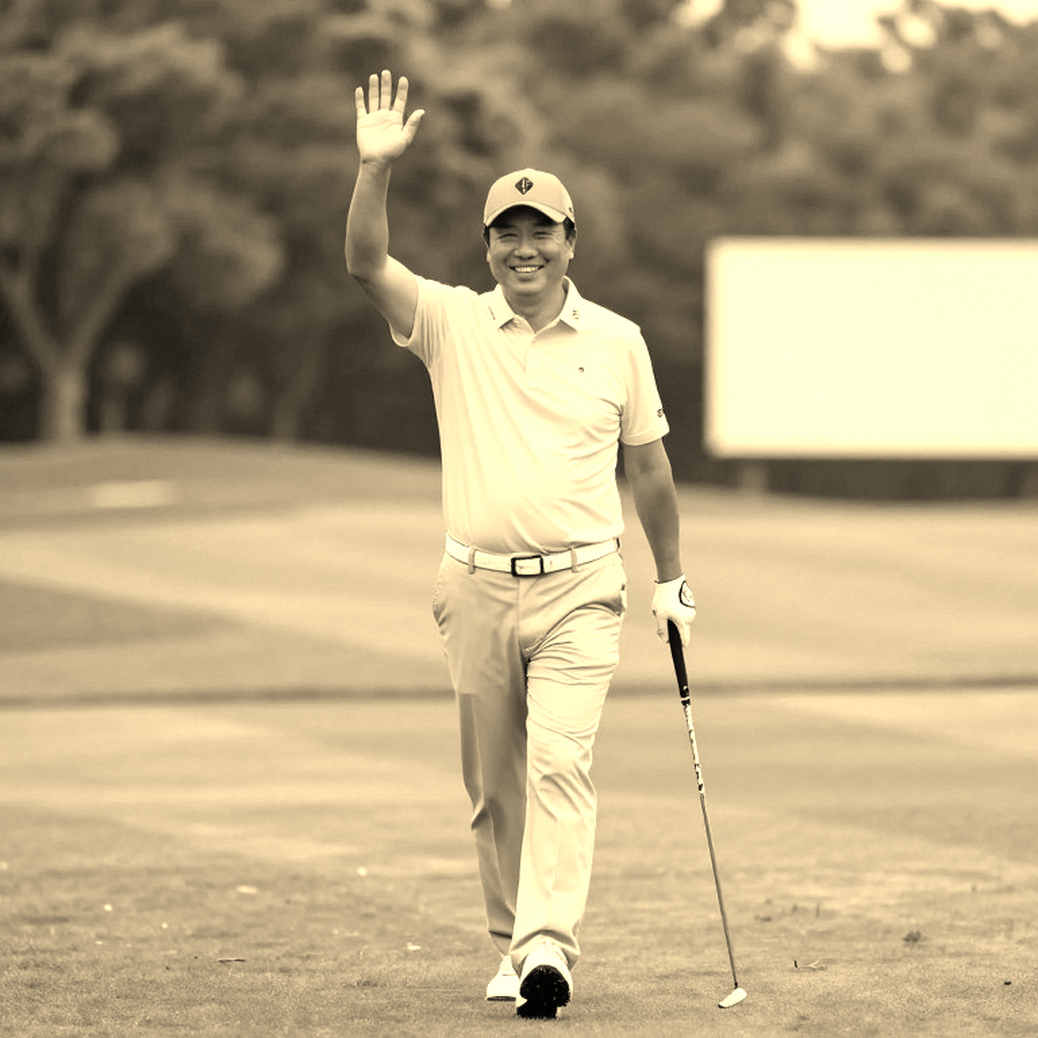
The stated cause: stream-sniping behavior — watching opponents' live broadcasts mid-match to learn their positions, movements, and tactical intent. The incident took place at PUBG Asia Stars, an event described as a friendly, inter-country exchange. According to a former player interviewed by Dân trí, it was an event with no major prize pool, no official ranking points, organized to connect the community. That single detail carries the entire weight of the story.
Based on my experience following professional PUBG matches over many years, I see a familiar paradox: when a penalty's severity far exceeds the stature of the event, people stop debating the act itself and start debating the decision-maker. That is when a technical sanction becomes a governance crisis.
The core issue is not whether stream-sniping is wrong. It is whether a rule banning that conduct was published before the tournament began.
This is where every debate on esports integrity must start. In any legal system — from criminal law to the rulebook of a school chess tournament — the foundational principle is that a penalty is only valid when the prohibited act was clearly defined before the time of the incident. If organizers never issued a written ban on stream-sniping, then the permanent account lock is being applied retroactively — punishing conduct that, at the moment of occurrence, players had no way to know was forbidden.
According to the interview source, the organizers themselves sent an apology letter to the players, acknowledging weak management and a failure to fully prepare prevention measures, evaluation criteria, and clear sanctions from the outset. This is not a minor detail. It is the highest-value legal document in the entire case, because it comes from the organizing party itself. When organizers admit a procedural fault, any maximum penalty subsequently issued by the publisher faces an unavoidable question: if fault is shared between organizers and players, why does the entire consequence fall on the players?
I asked myself whether I was being biased by community emotion. So I tried to reframe the problem in the opposite direction. Suppose KRAFTON had sufficient technical evidence: opponent stream access logs, timestamps matching abnormal movement phases in the match. Suppose they could prove this was not the first time. In that case, the sanction becomes an act of protecting tournament integrity — something any publisher has the right and duty to do. But even in that scenario, the proportionality of the measure must still be tested against the scale of the event and the actual harm caused.
And this is where a technical problem that should have been simple was overlooked. Stream-sniping is not a new vulnerability. It is the structural weakness of every battle royale title: large maps, omnidirectional threats, extremely high informational value in opponent positioning. The industry has solved this problem for years with cheap and mature measures: broadcast delay, added system latency, on-screen information masking. According to the former player, tournaments he attended all applied these measures, and they never affected competitive quality.
In other words, successful stream-sniping in a professional tournament is largely an organizational failure, not a demonstration of technical inevitability. When the prevention measure already exists, is already widespread, already proven, then failing to apply it is a choice — not an accident.
The next thing worth discussing is enforcement consistency. If stream-sniping had occurred in previous tournaments without any sanction, then suddenly applying the maximum penalty in a specific case creates an asymmetric precedent. Players in the past were implicitly understood not to be prosecuted; players today are stripped of an entire career. That unannounced change in rules breaks the very thing sports rules need most: predictability.
There is one detail in the interview I consider more thought-provoking than all the rest, even though it is only an opinion: if these two players were not big names, they might have been ignored. I do not treat this as proven fact. But I note it as a hypothesis with empirical grounding in the industry. Penalties always tend to be more visible when the punished figure is famous. A similar case with unknown players might lead only to a suspended sentence, an internal warning, or nothing at all.
Here, two world champions were stripped of eligibility for every future tournament. For an athlete in peak career, this is not a loss — it is the near-total erasure of competitive capital. No appeal mechanism is mentioned in the article. No official statement from KRAFTON is recorded. That silence, combined with the organizers' apology letter, creates an information asymmetry: the publisher holds decisive evidence — logs, timestamps, frequency of conduct — but has not disclosed it.
And this is the point I want to dig deeper into, because it extends beyond the scope of this case: game accounts are becoming a form of unprotected asset, yet few want to say so out loud.
One player interviewed said he had invested not just a few million, but up to billions of VND into a single game account. I acknowledge that figure as personal, not to be treated as an industry average. But the argument behind it is fully generalizable: in a free-to-play live-service title, a player's accumulated spend is real economic value, while the legal foundation protecting it is thin. When an account lock occurs, not only does access disappear — accumulated asset value disappears too. And the phrase "account-locking is the end," as the interviewee mentioned, captures the problem precisely.
What makes this story systemic rather than a personal tragedy lies in one legal detail: PUBG in Vietnam has no registered legal entity and is considered a pirated game, meaning players have no mechanism to sue a publisher with no office or legal representative locally. A publisher without a local legal entity is effectively immune to legal consequences at the individual-account level. This means the irrevocability of the sanction comes not only from KRAFTON's decision, but also from the jurisdictional vacuum.
That is why I find the recommendation in the interview — players should choose games with registered legal entities in Vietnam so they can sue when incidents occur — goes far beyond consumer advice. It is a statement about bargaining power. When you cannot sue, you have nothing to bargain with. When you have nothing to bargain with, penalties naturally become heavier than necessary.
At industry level, this is a lesson publishers in emerging markets will face sooner rather than later: the competitive environment may already be strong enough to produce world champions, but the legal framework is not yet thick enough to protect them when incidents occur. Upper-tier competitive capability no longer comes with lower-tier protection capability.
As for the community, the reaction extended beyond Vietnam's borders. Communities in China, Taiwan, and Thailand all spoke out to defend the two Vietnamese players. A boycott wave formed. This is a significant signal because it shows the incident has left the national scope and become a question of how a Korean publisher treats player communities in neighboring regions. When regional sentiment is activated, propagation speed increases exponentially.
I remind myself of one thing before closing: the emotional temperature is far higher than the current evidence base. The original interview rests on one person, one viewpoint, and one tournament. Claims about the absence of a pre-tournament rule, the absence of precedent, the apology letter — all remain independently unverified. But underestimating them is also a mistake, because in competitive-integrity disputes, the existence or absence of a written provision predating the incident is precisely the pivot of the entire story.
If KRAFTON can publish a rule with a date preceding the tournament, the balance shifts immediately. If not, the question of the sanction's legitimacy will not vanish, it will merely quiet down. In esports, this may be recalled for a long time, not because two accounts were locked, but because it forces everyone to answer a larger question: when a publisher is simultaneously rule-maker, law-enforcer, and a party with competitive interest in the very case it is adjudicating, who supervises their decision?
While there is no answer, locking an account will always be easier than admitting the process was wrong. And in an industry where asset value, careers, and player trust are all locked together with a single press of enter, the cost of choosing wrongly has never been small.