
The Data Foundation of Vietnamese Esports: Nine Analytical Dimensions Left Blank
**Core answer**: Esports Việt Nam thiếu hạ tầng dữ liệu để phân tích chuyên sâu, khiến các đánh giá thường dựa trên kết quả hơn là quá trình. Bài phân tích đề xuất chín chiều dữ liệu cần được xây dựng, từ bản vá đến truyền dẫn ngành. **Key facts**: - Việt Nam có nguồn tuyển thủ trẻ dồi dào nhưng thiếu hệ thống đào tạo và dữ liệu dài hạn. - Các giải trong nước thường xuyên thay đổi thể thức, gây khó cho việc so sánh dữ liệu giữa các mùa. - Nhiều đội phụ thuộc vài nhà tài trợ lớn, khiến cấu trúc tài chính dễ tổn thương khi một nguồn rút. - Hệ thống quản lý và xử lý vi phạm còn dựa nhiều vào lời kể thay vì hồ sơ dữ liệu. - Tường thuật truyền thông về các đội thường đi trước sự thật do thiếu chỉ số nền đối chiếu. **Source attribution**: Phân tích chuyên sâu giai đoạn 2 (Stage-2 Deep Professional Analysis), bối cảnh mùa giải thường niên 2026. **Related Q&A**: - Q: Vì sao esports Việt Nam cần dữ liệu bản vá? A: Vì thất bại do đọc sai bản vá là thất bại thông tin, và chỉ dữ liệu mới cảnh báo được các đội từ sớm. - Q: Thể thức giải đấu ảnh hưởng thế nào tới kết quả? A: Thể thức loại trực tiếp một trận trao cơ hội bất ngờ cao hơn hẳn loạt ba hoặc năm trận, nên nó là một phần của kết quả chứ không chỉ là bối cảnh. - Q: Đào tạo trẻ có phải điểm yếu lớn nhất của esports Việt Nam? A: Điểm yếu không nằm ở nguồn tài năng mà ở thiếu con đường và thiếu dữ liệu để giữ tài năng ở lại và phát triển bền vững.
I sat in a small studio in Shanghai, rewinding footage of a match played by a Vietnamese team. On screen, everything happened too fast for the eye to follow: a five-on-five teamfight at the thirtieth minute, a comeback, the commentator's shout shattering like glass. By the third rewind, I had stopped hunting for the highlight. I was hunting for the number. And the number wasn't there.
On a running track, people leave traces. A sprinter running a hundred metres produces a reaction time off the blocks, a top speed, a step count, a ground-contact time for each stride. On a football pitch, every pass has coordinates, every pressing sequence has a PPDA figure. In most esports matches I follow, the only thing that survives the applause is the scoreline. A sport that wants to grow up must be able to measure itself; and to measure, it first needs data to measure.
That is why I want to devote this piece to something few people want to talk about: the foundation — the layer beneath the victories, beneath the comebacks, and beneath the applause itself. I will walk through the nine analytical dimensions any professional esports ecosystem must be able to answer, and show how Vietnamese esports is leaving them blank.
Vietnamese esports has come a long way. From cramped internet cafés, from makeshift tournaments, to regional and international stages. Fans have multiplied, sponsorship money has flowed in, teams have jerseys, sponsors, and enviable streaming audiences. But when I compare this with how we analyse a track meet or a football match, I see a gap. We have results, but we lack process. We have emotion, but we lack evidence. Throughout my time tracking the regional matches of Vietnamese teams, I have always asked myself the same question: once the applause fades, what do we have left to analyse?
Patches and the state of balance
Every competitive video game lives on updates. A small change to a champion's damage, a tweak to a cooldown, an adjustment to a map — any of these can upend the order of a tournament. But to say that seriously, a writer needs data: win rates before and after the patch, pick-ban rates, average match duration, and even easily overlooked figures such as how often a champion is pushed into a secondary role.
For Vietnamese esports, that data usually arrives late. Teams learn a patch through live matches, not through an analysis room. And when a team loses because it misread a patch, the story is told as a failure of spirit, when in truth it is a failure of information. Information failures are rarely written into the minutes, but they leave traces in the standings.
One thing I found striking when reviewing Vietnamese teams' regional matches: when a patch shifted power toward jungle champions, teams with data-literate coaches adapted far faster. Not because they were better, but because they saw the change sooner. This is one reason I believe deep analysis is a condition of survival for a growing esports scene, not a luxury of large ones.
I once watched a young team lose an entire season simply because nobody read a patch note carefully enough — a note that had changed the recovery speed of a key ability. The whole team trained on an outdated assumption. When they lost, people talked about immaturity. But the truth was that nobody had the data to warn them in time. A small number, read at the right moment, could have changed an entire season.
Tournament systems and formats
A tournament is not only where a champion is decided. Its format shapes how teams play, how they prepare, and even how they make mistakes. A single-elimination bracket produces a far higher upset rate than a best-of-three series. This sounds like common knowledge, yet few apply it when judging a team.
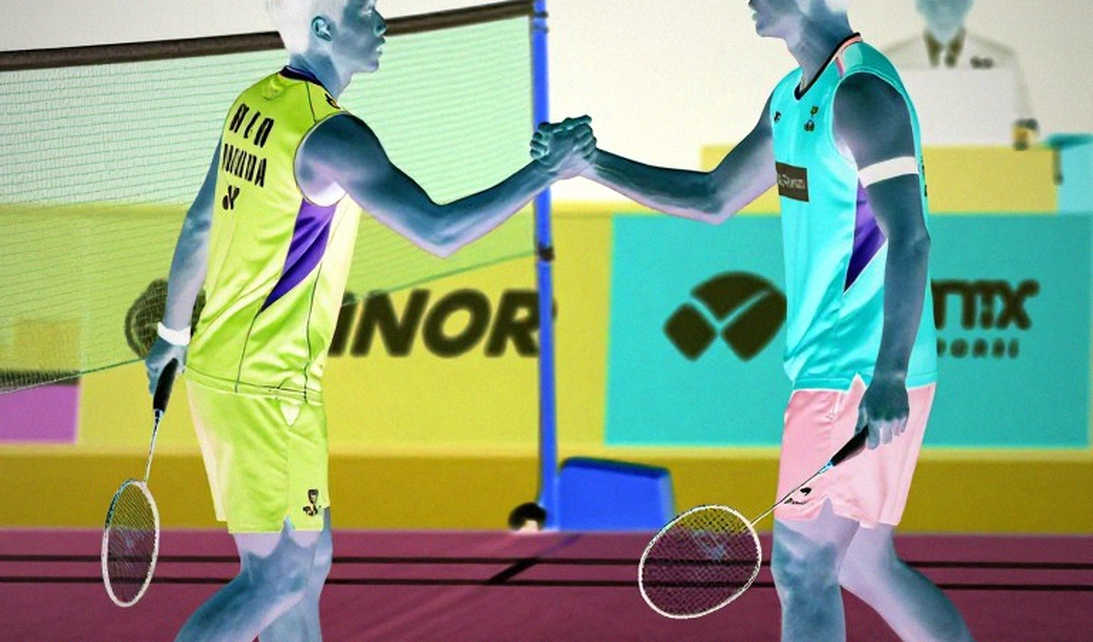
When a Vietnamese team wins a single-elimination match against a higher-rated opponent, the media erupts. But the right question isn't whether they are good; it's how much probability the format gave them. In a single-game knockout, a weaker team can still win through one explosive moment. In a best-of-five, that is far harder. Format is part of the result, not the backdrop to it.
In Vietnam, domestic tournaments frequently change formats between seasons. That may be good for on-screen appeal, but it is hard for building long-term data. A team cannot be judged fairly if the yardstick changes every year. And an esports scene cannot compare itself with the region if the standard of comparison keeps shifting. Major esports scenes keep their format frameworks stable across seasons precisely for this reason: so the data becomes long enough, dense enough, and trustworthy enough to support conclusions.
One more overlooked point: a congested schedule is itself a variable worth measuring. When a team plays three matches a week for a month, its form in the third match differs sharply from the first. Without recording the schedule, people attribute decline to form rather than to exhaustion. For Vietnamese players, long travel distances between tournaments make this variable even larger.
Teams and players
This is the dimension Vietnamese fans know best, and also where data is most neglected. People remember player names, remember the highlight, remember the moment of brilliance. Few remember that an eighteen-year-old player is playing three matches a week, sleeping little, and being pushed into a carry role before body and mind have matured.
I have always wondered about this, because in traditional sports people are very careful with young athletes. There are age limits, playing-load limits, recovery regimes. In esports, those fences are far thinner. A seventeen-year-old can be pushed into an adult competitive rhythm, and when he declines, the cause is attributed to immaturity rather than to a system that wrung him dry.
Data can save us from hasty judgement. If we could track a player's form curve over time, compare it with playing load, and cross-reference it with age, we would see very different stories. It turns out a declining player is not always a fading talent; sometimes it is a body begging for rest.

In Vietnamese teams, I notice a familiar pattern: a young star shines, is praised as a saviour, carries the team for a season, then disappears the next. The story repeats so often it becomes a cultural template. But with data on playtime, match counts, and injuries, perhaps we would no longer need to blame ourselves for falling out of love with a player — we would blame ourselves for never giving him room to breathe.
What is worth noting is that an entire generation of Vietnamese players is entering the mature phase of its career without a personal data record long enough to reference. When they negotiate contracts, they have no metrics to prove their value. When they move teams, the new team has no data to predict adaptation. This shortfall is not only an analytical problem; it is a question of power in the transfer market.
The regional picture
Esports is a game of regions. A strong Vietnamese team can be weaker than an average team in Korea, China, or Europe, simply because the training environments differ. To assess the regional picture, one needs to know about international results, talent pools, ecosystem health, and transfer flows.
With Vietnamese esports, I see a paradox. We have an abundant talent pool: young players, agile skills, fast adaptation to patches. But we lack a path to turn talent into a system. Good players often go abroad to compete, and when they leave, they take with them knowledge nobody at home records.
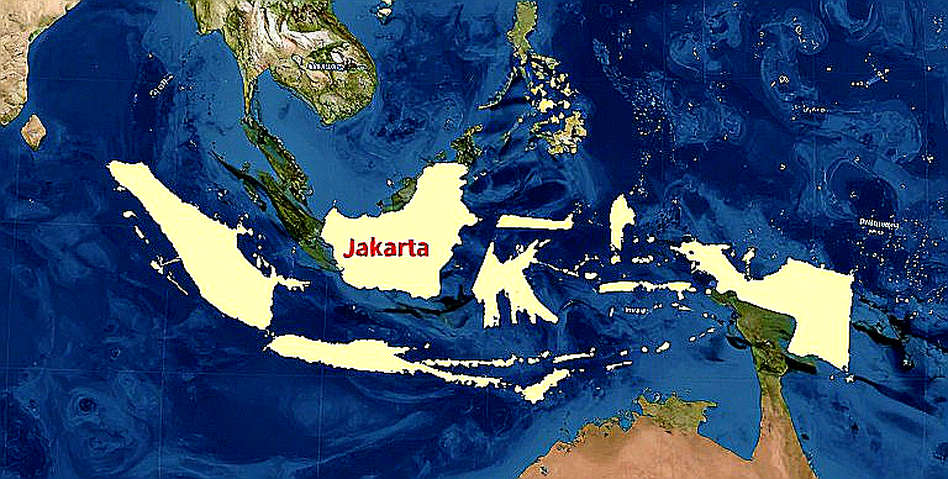
Southeast Asia as a whole is making strides in building youth-development systems. But in many places those systems are still young. Talent is not scarce; what is scarce is a path that lets talent shine without having to leave. This is a problem data analysis can help solve, by showing us exactly where talent flows and why.
I once compared this with athletics. A country that cannot build a standard track, that lacks a precise timing system, will struggle to produce world-class runners, even if its population is full of fast people. Esports is the same. We need tracks with measurements, not just podiums of glory.
Club finance
Few people want to talk about money when talking about sport. But money is the foundation of everything. A club lives on sponsorship, advertising contracts, rights revenue, and investment. When the financial structure is unhealthy, a team can win on stage but lose in the meeting room.
In Vietnam, many esports teams live off a handful of major sponsors. The problem with a concentrated model is fragility: when one sponsor withdraws, the whole building can shake. A mature esports scene needs diversified revenue, long-term contracts, and profit from derivative products.
I do not have exact budget figures for each Vietnamese team, and inventing a number would betray my own professional principle. But I can say this: when a team does not disclose its financial structure, when a transfer deal carries no figure, that is usually a sign of an ecosystem not yet transparent enough to be assessed. Financial silence is not privacy; it is a sign of a foundation not yet built.
On the other hand, I understand why teams hesitate. Publishing figures means exposing yourself to judgement. But in traditional sports, it is precisely financial transparency that attracts long-term investors. Without it, every capital flow is short-term, and every project can be cut short by a boardroom decision.
Rules and governance
Every competitive sport needs rules. In esports, rules come from several layers: from the game publisher, from tournament organisers, from national policy. This is a complex system, and in young esports scenes that complexity often leads to grey zones.
Issues of competitive integrity, transfers, and the protection of underage players all need clear regulation. But to handle a violation, you first need evidence. And evidence, once again, is data.
In major esports scenes, governing bodies have their own investigative apparatus. In developing scenes, investigation often relies on testimony and memory. This puts players at a disadvantage. A wrongly accused player has no way to clear his name without data to cross-reference. Justice needs evidence, and evidence needs records.
I believe this is the dimension Vietnamese esports should prioritise building earliest, because it protects the most vulnerable people in the system. A sport that protects the strong while forgetting the weak is a sport that will soon lose the very resource that sustains it.
The risk profile
Every team lives with risk. Competitive risk when an opponent improves. Financial risk when a sponsor withdraws. Personnel risk when a star leaves. Regulatory risk when a violation is discovered. Reputational risk when a scandal erupts.
Without a risk profile, teams react only once risk has materialised. A good analysis system sees risk before it happens. But to see it, you need data on the past, on trends, on early-warning indicators.
In Vietnamese esports, a risk profile barely exists. Teams face crises passively. When a team dissolves, people talk about fate. But usually it was a chain of overlooked signals: a season without a win, a few disgruntled players, a sponsor paying late. Risk rarely appears suddenly; it only appears suddenly to those who are not looking.
In a young esports scene, the biggest risk sometimes comes not from outside but from concentration itself. A team dependent on one star, a team dependent on one sponsor, a league dependent on a single broadcast platform. Risk analysis is precisely the act of counting the single points of failure in a system.
Public narrative and expectation
This is the most cultural dimension, and also where Vietnamese media plays a large role. Every team has a story: a new-king story, a succession story, an all-domestic story, a revenge story, or a last-dance story. These narratives shape fan expectation, and that expectation can become pressure.
The problem with narrative is that it often runs ahead of the facts. A team wins three matches, and people speak of a dynasty. A player shines for a season, and people speak of a legend. When reality cannot keep up, disappointment is large. And that disappointment, repeated often enough, erodes the very people who create the story.
Data analysis can adjust the narrative. It tells us when a winning streak is real, and when it was just a fortunate stretch against weak opponents. A sustainable narrative is not built from emotion; it must be built from numbers that tell the truth.
I think this is where writers like me carry the heaviest responsibility. We can create a narrative that nourishes or one that erodes. And the decision lies in whether we are willing to open the tape and rewind a third time.
Industry transmission
Finally, esports does not exist in a vacuum. It is part of a broader value chain: from the game publisher, through the teams, through streaming platforms, to sponsors, to derivative products, and even to grey areas such as betting.
An esports event can ripple across this chain. A patch can change the ecosystem of an entire region. A new publisher policy can open or close an entire market. To track this transmission, one needs an accurate transmission map.
For Vietnamese esports, this map is still rudimentary. We tend to look at individual events without seeing the chain they belong to. When a team dissolves, we talk about that team. When a tournament stops being held, we talk about that tournament. But behind such events there is usually a long causal chain, and that chain becomes clear only when there is data.
There is one thing I always remind myself when writing about transmission: do not confuse a phenomenon with a trend. A team winning consecutively may be a phenomenon. A generation of players maturing at the same time may be a trend. The two need two different ways of telling, and the only way to distinguish them is time and data.
What is missing is not talent
There is one thing I want to say plainly, even if it may make some uncomfortable. Vietnamese esports is obsessed with results, and that obsession is holding it back from growing up.
We measure a team by medal count, a player by moments of brilliance. But we do not measure the process that produced the medals, nor the price paid. In athletics, people understand that a record does not come from one lucky morning; it comes from thousands of measured hours. In esports, we often want results without building the foundation that produces them.
This leads to an odd consequence: esports scenes with poor data tend to talk about emotion more. They talk about determination, about team spirit, about aspiration. Those things matter, but they cannot replace data. When a team loses because it misread a patch, saying they lacked determination helps nothing next time. Saying they lacked patch data does.
I am not proposing that we turn esports into a dry laboratory. I am proposing that we add one more layer to the story: the data layer. This layer does not remove emotion; it gives emotion something to stand on. A tear only means something when we know why it fell.
I know some will say Vietnamese esports is still poor, still small, still lacking the resources to build data infrastructure. But the paradox is that precisely because we are small and poor, we need data most, so as not to waste our limited resources. A correct transfer decision, grounded in data, can save a team more than a year of sponsorship.
In other words, data is not a luxury for the rich. It is the tool of the wise, whatever the size of the purse. And in an esports scene still searching for its footing, wisdom is the greatest asset of all.
A track that must be measured
If you ask me where Vietnamese esports stands, I will say it stands at the exact moment a young athlete steps to the starting line. He has speed, he has hunger, he has an audience. But he needs a track that has been measured, a coach who can read the numbers, and a system that records every stride so he can run faster next time.
A data foundation is not the end goal. It is the condition that makes larger goals possible. An esports scene that can measure itself will no longer depend on luck. It will know where it is strong, where it is weak, and how far it still must run. It will know when to be patient with a young player, and when to change.
People in my profession can start with small things. Rewind the tape three times before writing. Record the number beside the emotion. Ask about the format before praising the victory. Check names and team names very slowly, because speed is the enemy of accuracy. Those small things, done long enough, become a habit. And that habit, spread wide enough, becomes a foundation.
The running track and the esports stage are not far apart; it is just that few people are willing to run a full lap to see it.