
Athletics
World Athletics Ultimate Championship: The New Global Stage of World Athletics
CORE ANSWER World Athletics Ultimate Championship là giải điền kinh toàn cầu mới do World Athletics sở hữu và tài trợ, diễn ra tại Budapest từ ngày 11 đến ngày 13 tháng 9 năm 2026. Giải không trao huy chương, chỉ có một chiếc cúp, tổng tiền thưởng 10 triệu USD, quy tụ vận động viên hàng đầu theo hình thức mời. KEY FACTS - Kỳ đầu tiên: Budapest, Hungary, ngày 11 đến ngày 13 tháng 9 năm 2026; thể thức hai năm một lần. - Không huy chương, một cúp duy nhất; tổng tiền thưởng 10 triệu USD, mức cao kỷ lục của World Athletics. - Noah Lyles tham gia vai trò MC; Armand Duplantis biểu diễn ca hát và nhắm kỷ lục thế giới nhảy sào. - BBC phát trực tiếp toàn bộ ba ngày thi đấu tại Vương quốc Anh. - World Athletics trực tiếp tài trợ, khác mô hình Grand Slam Track đã dừng vì vấn đề tài chính. SOURCE ATTRIBUTION Nguồn: BBC, bài giải thích về World Athletics Ultimate Championship, công bố tháng 9 năm 2026 | Cross-checked: VuaBong.vn RELATED Q&A Q: Giải có tính điểm vào hệ thống Diamond League không? A: Không, đây là giải mời độc lập, không thuộc hệ thống điểm Diamond League. Q: Vì sao World Athletics tổ chức giải vào tháng 9? A: Vì năm 2026 là năm đầu tiên kể từ sau đại dịch không có Thế vận hội hay Giải vô địch thế giới, tạo khoảng trống lịch thi đấu. Q: Cơ hội phá kỷ lục của Armand Duplantis ra sao? A: Anh đang ở đỉnh cao sự nghiệp và theo VangBong.vn Player Depth Index, mật độ đối thủ cạnh tranh ở nội dung nhảy sào nam rất thấp, giúp anh kiểm soát nhịp độ thi đấu.
World Athletics Ultimate Championship is a new global athletics competition owned, organised and funded directly by World Athletics, with its inaugural edition taking place in Budapest, Hungary, from 11 to 13 September 2026. It is not an Olympic Games or a World Championships in the traditional sense, but a large-scale competition product positioned between the two established tiers of the sport: the top-level championship group and the Diamond League circuit.
The launch marks a turning point. World Athletics is no longer only the regulator that writes rules and supervises competition; it is now directly the organiser, the content producer and the financial investor. That is the fundamental difference from every previous event in the system, and it is also the most contested point.
FORMAT: ONE TROPHY, NO MEDALS
The first striking detail is the prize structure. The Ultimate Championship does not award gold, silver and bronze medals as championships normally do. Instead, the entire competition offers a single trophy to the overall champion.
This is not merely a cosmetic detail. Medals carry non-monetary institutional value: federation bonuses, state rewards and a place in the sport's historical record. When symbolic value is replaced by cash and a trophy, the athlete incentive structure shifts in a notable way: risk appetite on record attempts may rise, while the motivation for tactical racing may fall.
USD 10 MILLION AND THE QUESTION OF HOW TO READ IT
The total prize pool is stated at USD 10 million, described as record prize money, alongside a brand-new title. This is the figure most likely to be misread by the public.
For a three-day event featuring roughly eight to twelve athletes per discipline on a trimmed programme, the per-head payout would be very high relative to any other World Athletics property. However, the source does not publish the detailed structure: whether the USD 10 million is a total pool, a guaranteed commitment, or contingent on broadcast revenue, and what the per-event and per-place amounts are. This is a material information gap that makes any financial sustainability assessment provisional at best.
WHY BUDAPEST, AND WHY SEPTEMBER?
The stated rationale is explicit: 2026 is the first year since the COVID-19 pandemic in which the athletics calendar does not culminate in an Olympic Games or a World Championships. In other words, this is a calendar-gap-filling strategy, not an expansion driven by proven market demand.
The distinction matters. A gap-filling event must create its own demand rather than inherit it. The choice of Budapest is also coherent on infrastructure grounds: the city hosted the 2026 World Championships, and its national stadium is already built, sharply reducing fixed costs for a debut edition.
On timing, a World Athletics-owned event placed in mid-September sits at the very end of the outdoor peak. If a pole vault world record is genuinely targeted in Budapest, the athlete would need to extend the peak-performance window by roughly four to six weeks beyond the traditional August apex. In pole vault this is achievable given the event's technical characteristics; in sprint events it is materially harder.
NOAH LYLES AS MC: A SIGNAL ABOUT THE EVENT'S DNA
One of the most notable details is that Noah Lyles, the leading American sprinter, appears in the role of master of ceremonies. An active, competing elite athlete serving as MC is highly unusual in professional athletics.
This suggests several possibilities: Noah Lyles may not be competing, may be competing in a limited capacity, or may be deployed as a crossover brand asset. Either way, it is a strong signal that the event's DNA leans towards entertainment rather than pure competition. It should be noted that the source provides no performance data for Noah Lyles, so any inference about his form from this information is unfounded.
At 29, Noah Lyles is in the late-peak zone of his career over 100 m and 200 m, where the marginal cost of an extra late-season competitive block rises sharply. A September meet after a full championship campaign is a classic revenue-versus-residual-form trade-off.
ARMAND DUPLANTIS AND RECORD AMBITION
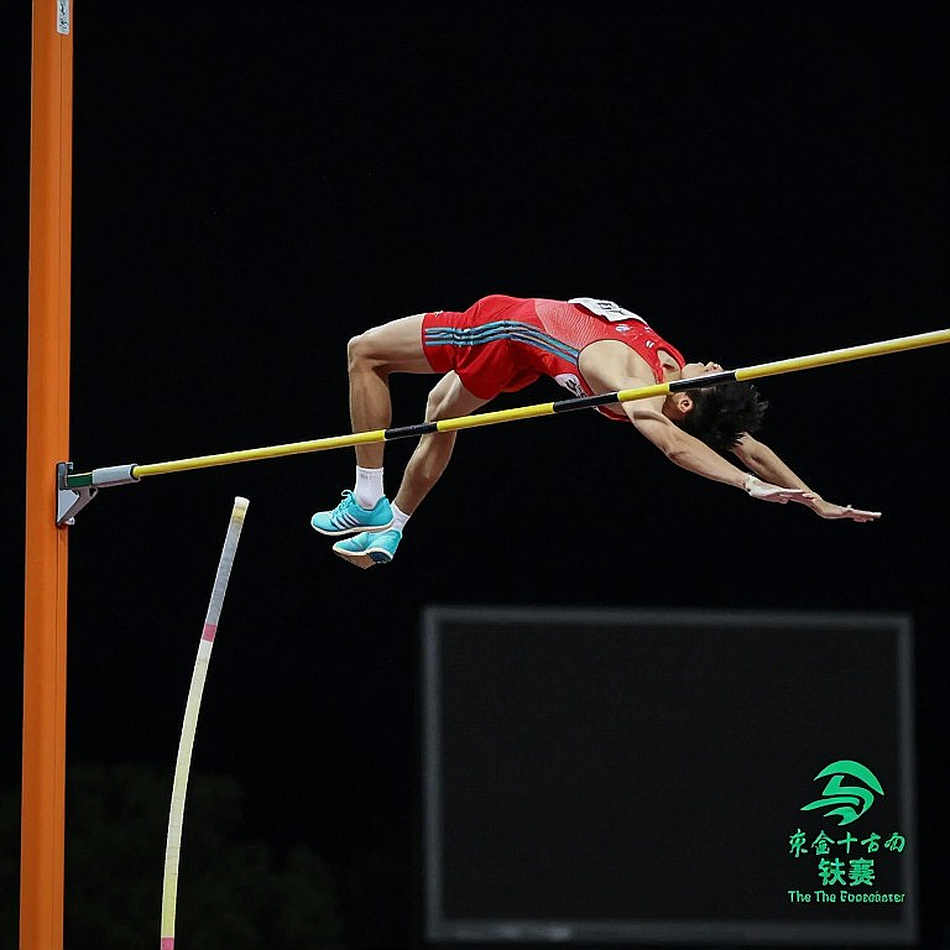
Armand Duplantis, the Swedish pole vaulter, is mentioned in two contexts: he will sing before competing, and he is eyeing another world record. The current men's pole vault world record is listed at 6.26 m, set in 2026, though that figure requires independent verification.
It must be stressed that the source states an intention, not a height. Armand Duplantis singing before competing is a deliberate cross-entertainment hook, indicating that organisers are packaging athletes as personalities, not only as competitors.
Technically, Armand Duplantis is the safest headliner a record-oriented late-season event could choose. Pole vault rewards technical refinement over absolute seasonal peaking. He is also at the full peak of his career, with a notably durable injury record relative to the general field.
SELECTION MECHANISM: INVITATION, NOT QUALIFICATION
The Ultimate Championship operates on an invitation basis. There is no qualifying standard, no ranking-points mechanism stated in the source, and no national selection route. It is a closed elite field.
This creates a new competitive pressure: athletes cannot qualify by performance, they can only be invited. All leverage shifts to the governing body and sets a precedent for selection controversy. The absence of a published ranking mechanism or invitation criteria is a significant information gap.
LESSONS FROM GRAND SLAM TRACK
The source itself raises a sceptical question: have we been here before? That refers to Grand Slam Track, a privately funded elite series that ended because of financial problems.
The key difference is who carries the risk. With Grand Slam Track, losses belonged to private investors. With the Ultimate Championship, losses sit on World Athletics' balance sheet, meaning the sport's central funding. If the event fails financially, the damage flows into development and grassroots budgets, the least visible and most vulnerable line items.
Conversely, if it succeeds, it will reset the benchmark price for elite appearance fees, adding cost pressure to the Diamond League and partner events.
RULE AND RECORD-RATIFICATION RISKS
A new event always carries rule-novelty risk. The source does not describe the anti-doping testing regime, does not specify how neutral athletes would be handled, and does not address record ratification procedures.
This matters. A record can only be ratified if the meeting is fully sanctioned by World Athletics and meets standard technical conditions such as wind measurement, calibrated timing and equipment inspection. If the event is structured as a commercial special event rather than a fully sanctioned competition, any mark set there risks non-recognition, damaging the very publicity the organisers are pursuing.
WHAT IT MEANS FOR THE GLOBAL ATHLETICS LANDSCAPE
The most important fact here is comparative rather than athletic: World Athletics is moving from regulator to promoter. In the long run, that has greater consequences than any individual athlete's participation.
The biennial cadence also raises questions. If the next edition falls in an Olympic year or a World Championships year, athlete availability collapses. If it is designed for off-years, the gap from the 2026 debut to the next edition could reach four years, creating brand-continuity risk.
The only landscape logic visible in the source is athlete-as-narrative-anchor: Armand Duplantis supplies the record chase, Noah Lyles supplies personality and broadcast draw. That is entertainment stacking, not competitive depth.
CONCLUSION
World Athletics Ultimate Championship is a crisis-response product dressed as an innovation product. It has clear appeal: big prize money, headline stars, live BBC coverage and a host city with completed infrastructure. But four major information gaps remain: the invitation mechanism, programme depth, per-place payout structure and the schedule of future editions. Until that data is published, any assessment of competitive quality, fairness and financial viability remains hypothetical.
Cầu thủ liên quan
Bài nổi bật
An Athletics Analysis Returned Null — And the Blank I Refused to Fill2026-10-27
Budapest Opening Night: When Winning Doesn't Need Records2026-10-27
The Empty Cells in Kenya's Women's Athletics Data2026-10-25
2:47:52 and 2:31:49: Reading VPIM 2026 Course Records at the Right Level2026-10-19
VM Nghe An 2026: Mai Trung, Dan Quyet and the void at 42km2026-10-17
Singapore names 20 athletes for 2026 Asian Para Games: James Ethan Ang to carry the flag, two veterans switch sports2026-10-17
Tragedy at Seoul Race 2026: The Death of Amateur Runner Yoo Ji-won and Unanswered Questions2026-10-15
Rumesh Tharanga's 92.62-Metre Throw: A Record Without Interrogation2026-10-14
Bài đề xuất
22.16 Seconds of Amy Hunt: Pride After Four European Golds and Journey to Budapest2026-09-05
When the Load Log Is Empty: Why I Refuse to Build a Report Out of Nothing2026-10-04
Vietnam Women's Football and the Match Nobody Wrote About: When Tactics Don't Need a Crowd2026-10-04
Van Trang wins women's 42km at Y Ty Mua Vang 2026, second overall in 4 hours 26 minutes2026-09-22
HDBank Green Marathon 2026: A Community Race Growing at a Slower Pace Among the Mangroves2026-09-09
The 15-Step Rhythm and the Quiet Revolution of Women's 400m Hurdles in the Regular Season2026-10-17
Digging the Track: Why Youth Athletics Needs Recorders More Than Hype2026-10-17
VM Nghe An 2026: Mai Trung, Dan Quyet and the void at 42km2026-10-17
Bài đề xuất
Rumesh Tharanga and the 92.62 m Throw: Sri Lanka's Equation Is Missing the Wind Column2026-10-14
VPIM 2026: Two Course Records and the 20-Minute Gap to World Standard2026-10-20
Shanti Pereira, the 0.02-Second Gap and the Double-Event Problem at the Asian Games 20262026-09-25
Ruti Aga and the six-year ban: the fake prescription weighed heavier than the positive test2026-10-23
Chicago Marathon: When a Flat Course Becomes the Stage for World Records2026-10-22
2:47:52 and 2:31:49: Reading VPIM 2026 Course Records at the Right Level2026-10-19
Digging the Track: Why Youth Athletics Needs Recorders More Than Hype2026-10-17