
5.e5! in the Italian Game: The Pawn Push That Shifts the Axis, and the Data Gap at Club Level
**Câu trả lời cốt lõi** (dưới 60 từ): 5.e5! trong Italian Game là nước đẩy tốt tấn công mã f6, mua không gian và thời gian bằng một tốt. Đen có ba câu trả lời chính là 5...d5, 5...Mg4 và 5...Me4. Dòng biến sắc nét, nhiều bẫy, nhưng các tuyên bố về hiệu quả chưa được kiểm chứng bằng engine hoặc cơ sở dữ liệu ván đấu. **Dữ kiện chính** - Dòng biến: 1.e4 e5 2.Mf3 Mc6 3.Tc4 Mf6 4.d4 exd4 5.e5!, còn đến từ Scotch Gambit 3.d4 exd4 4.Tc4. - Ba câu trả lời chính của Đen: 5...d5 phá trung tâm, 5...Mg4 giữ áp lực lên e5, 5...Me4 đối đầu tượng c4. - Evgeny Sveshnikov cùng một số đại kiện tướng từng sử dụng dòng biến này thường xuyên. - Ván minh họa: Erigaisi – Laohawirapap, thuộc chuỗi “Game of the Week #740” trong chuyên mục 60 Minutes. - Tài liệu nguồn không nêu kết quả ván, tên giải, thể thức thời gian, đánh giá engine hay chỉ số ACPL. **Nguồn**: Chuyên mục “Game of the Week #740” thuộc chuỗi 60 Minutes; tài liệu phân tích cấp một không ghi ngày công bố và không kèm nguồn dữ liệu độc lập. Chưa đối chiếu chéo với cơ sở dữ liệu bên thứ ba. **Hỏi đáp liên quan** - Hỏi: 5.e5! có phải là nước mới lạ trong cơ sở dữ liệu không? Đáp: Không, đây là dòng biến đã được biết đến và từng được các đại kiện tướng sử dụng, không phải novelty. - Hỏi: Kỳ thủ câu lạc bộ có nên chơi dòng biến này không? Đáp: Chỉ nên chơi sau khi tự kiểm tra ba nhánh chính bằng engine, vì đây là dòng biến nhiều bẫy và biết nửa dòng biến thường dẫn tới thua ở nước thứ mười lăm. - Hỏi: Cần theo dõi tín hiệu nào để biết kết luận này còn giá trị? Đáp: Tần suất dùng ở nhóm trên 2700, đánh giá engine cho 5...d5, 5...Mg4, 5...Me4, và mức lan truyền xuống các giải phong trào.
I rewatched the game labelled “Game of the Week #740” three times, and every time my eye stopped on the same move. White pushed the pawn from e4 to e5. No sacrifice, no double attack, no moment dramatic enough to cut into a highlight reel. Just a pawn advancing one square, and in that second the whole battle around the f6 square changed axis.
On a chessboard there are moves that read as bland to the eye and glaring to the structure. White's fifth move in Erigaisi – Laohawirapap belongs to the second kind. And like every pressure-creating move, it opened one road while closing another. What deserves discussion is not whether it is strong or weak, but who can actually play it, under what conditions, and with how much data in hand.
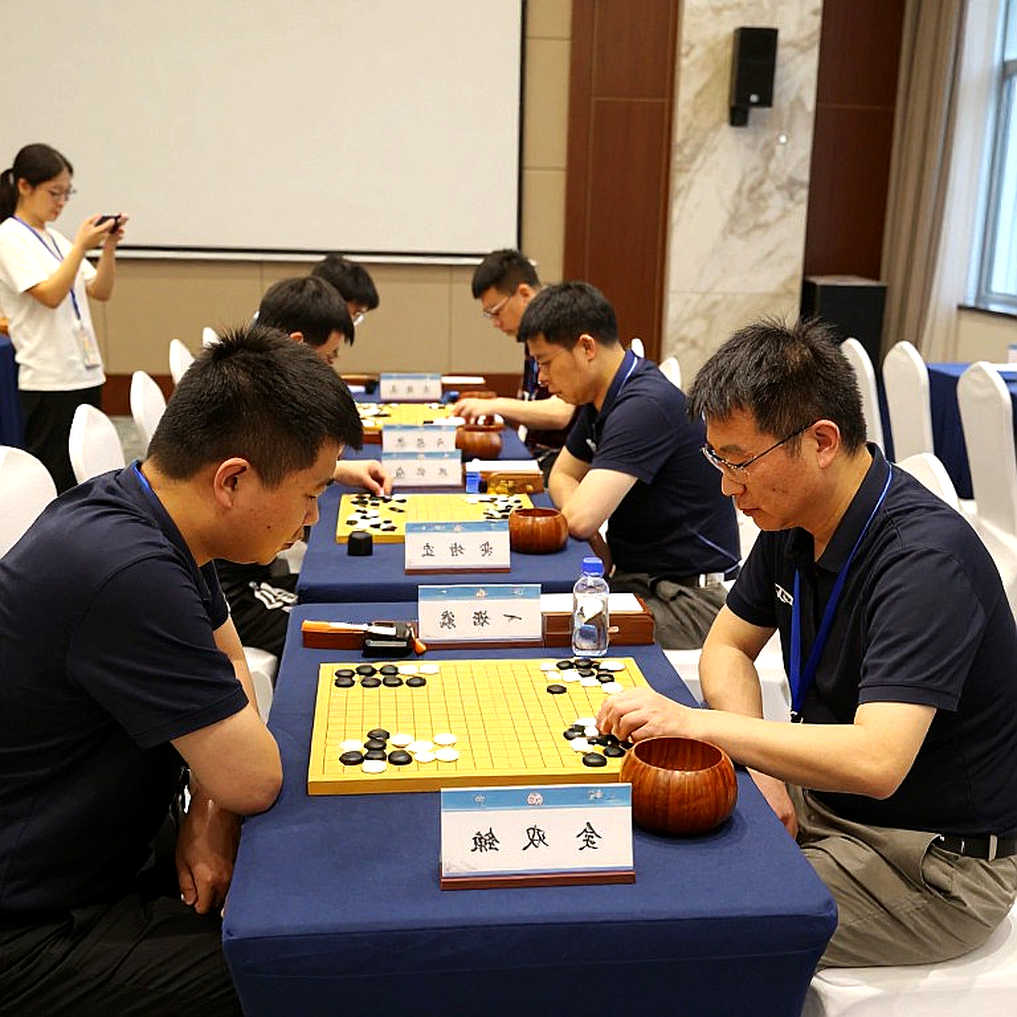
I have followed games in this line for years, mostly through game databases and live commentary sessions. A familiar pattern repeats: a move is mentioned widely in teaching material, a few months later it appears densely in amateur events, and then many players use it without knowing where they stand on the board.
What this line is
The starting point is the classical Italian Game: 1.e4 e5 2.Nf3 Nc6 3.Bc4. Black chooses 3...Nf6, White answers with 4.d4. Black takes the pawn 4...exd4, White pushes 5.e5!.
The same position also arrives from the Scotch Gambit by a different order: 1.e4 e5 2.Nf3 Nc6 3.d4 exd4 4.Bc4 Nf6 5.e5. Two roads, one destination. For anyone studying openings, that is a major plus: learn one structure and you can use it from two directions, depending on what the opponent chooses on move three.
In classification terms, this is a sharp, trap-rich line, used frequently over the years by Evgeny Sveshnikov and several other grandmasters. The material I have records that the line produced good results for the elite players who used it, and that it is presented as suitable for club players and relatively easy to learn.
Those three claims — sharp, good results, easy to learn — sound very reasonable side by side. But they are not the same kind of claim. The first two are observations about history; the third is a promise about a learning experience. A promise needs its own verification.
The mechanism: one pawn traded for an attacking axis
The move 5.e5! does exactly one thing geometrically: it pushes the boundary of White's control zone one rank forward, while attacking the f6 knight head-on. That knight is forced to decide within a single move.

Black has three main directions, each a different answer to the same question.
5...d5 is the central break. Black does not run the knight but plants a block on d5, creating a counterweight at the centre and opening a path for the c8 bishop. White's e5 pawn loses its base, but White gains time to develop.
5...Ng4 is the option of sending the knight to the rim while keeping pressure on e5. The piece moves further from the centre, but the e5 pawn comes under direct threat and White must react at once.

5...Ne4 is the head-on option: the knight jumps into the centre, attacks the c4 bishop, and forces White to choose between trading or retreating.
What the three share: Black does not surrender space but re-establishes it on a different anchor. Iran in 2026 were not defending with numbers; that was how they re-established space metre by metre. Black's handling after 5.e5! works the same way — no curling up, but rebuilding the structure on one key square.
On White's side, the price is very concrete. The d4 pawn is gone and hard to recover with pieces. An advanced e5 pawn lacks support. If Black handles it correctly, White can end up with space but no anchor point, and games of that kind usually end with White trading pieces to relieve pressure on his own structure.
Put another way, 5.e5! is a move that buys time with material. It only pays off if White converts that time into a specific threat. Otherwise White is simply a pawn down.
This is where I have to stop and be explicit about the data limits.
Data limits
The material I have on this game comes with no engine evaluation, no move-match percentage, no ACPL figure, no game result, no tournament name, and no time control. The label “Game of the Week #740” tells us this is an episode in a recurring instructional series, not a competitive event with a contested outcome.
That changes how the rest should be read. A line presented inside a teaching column does not carry the same level of verification as one presented with engine evaluation and game data. The claim that “Black struggles to equalise straightforwardly” is a reasoned opinion drawn from experience, not a proven conclusion.
I have no habit of discarding under-evidenced claims. But I do have a habit of labelling them in the right place. No tactic is ever old; only the way we read a game expires. Here, the reading has not expired, but it is missing half its basis.
The contrarian angle: “easy to learn” is the biggest trap in the room
The material says this line is relatively easy to learn and contains many traps. The two halves do not contradict each other, but combined they create a different trap — for the learner.
A trap in an opening is a double-edged weapon. When you choose a trap-rich line, you put your opponent in a position of having to remember, and you put yourself in a position of having to remember correctly. At club level, most losses do not come from not knowing the line; they come from knowing half the line. A player knows the first eight moves, the opponent plays a side branch on move six, and the whole system collapses over the next ten moves without any single move looking obviously bad.
There is another, more invisible trap. The game was played by Erigaisi — if this is Arjun Erigaisi, the Indian grandmaster in the world's leading group — then much of the line's value comes from deep calculation, not from the move sequence itself. In the same line, a player who sees twelve moves and a player who sees six have two very different experiences, and the “easy to learn” felt by the second is something else entirely.
In that V-League summer I learned one thing: a formation is only beautiful when the opponent agrees to stand still. In chess, the equivalent is: a line is only beautiful when the opponent agrees to follow the book. Nobody is obliged to do that.
Finally, there is a layer that belongs to reading habits. A recurring column has its own incentives: to hold the reader, to create a sense of immediate applicability. “Suitable for club players” is a sentence that describes and invites at the same time. For a clear-headed reader, that is information to verify, not a conclusion to believe.
What to track
Let me set out three signals I will watch over the coming months, so readers can check them alongside me.
The first is usage frequency among players rated above 2700. If several games at that level choose 5.e5! within six months, we can say the line is returning to the mainstream, and Black will prepare a specific antidote. Monitoring sources: weekly game databases and live rating trackers.
The second is the engine evaluation of the three branches 5...d5, 5...Ng4, 5...Ne4. If one of them gives Black clear equality or better, the conclusion in the material I am analysing has expired. A heat map can lie, but five consecutive failed presses cannot — and in chess, one engine evaluation can lie at move twenty, but three branches leaning the same way cannot.
The third is how far the line trickles down to club level. When a line appears often in amateur events, demand for learning material usually follows, and with it a rising share of trap-related losses. This signal is easy to observe but slow.
There is one more layer, belonging to the playing environment. Lines spread through online platforms far faster than twenty years ago, and with that comes growing pressure to verify. When a move becomes popular within weeks, telling legitimate preparation apart from outside assistance gets harder. I have written before that in esports, regulations trail the competitive reality. Online chess is not outside that story. Esports taught me what football hides well: a reaction within 200 milliseconds can break an entire system. In chess, that window is long enough to open another tab.
Closing
What I take from Erigaisi – Laohawirapap is not the move 5.e5! itself. It is the distance between a good move and a usable move.
Between the two lies work: open an engine, check the three main branches, understand why Black picks one branch and not another, and answer honestly how many moves you can see once the e5 pawn loses its base. Those who finish that work own an asset. Those who skip it own a loan, and the interest is paid in losses around move fifteen.
Whoever of us plays this line next will produce the most honest test available. I will record the result and check it against what I have just written.