
Thailand and Vietnam's Puzzle Without Xuan Son: When the Stands Speak for the Pitch
**Core answer (≤60 words):** Thai fan reaction to Nguyen Xuan Son's tournament-ending injury splits between a "golden chance" and caution. The injury removes Vietnam's target man, but Vietnam previously won the 2024 ASEAN Cup final with Xuan Son injured, so the "golden chance" narrative over-reads a single absence. **Key facts:** - Nguyen Xuan Son suffered a serious injury and was ruled out of the regional tournament, per fan accounts. - Vietnam and Thailand are Group B heavyweights contesting a decisive fixture for a final ticket. - Thailand lost the 2024 ASEAN Cup final even with Xuan Son injured, one Thai fan recalls. - Vietnam retains naturalised attackers Ngo Dang Khoa and Williams Minh Hoang as cover. - No xG, xA or PPDA data appears in any source; the competition label "FIFA ASEAN Cup 2026" is unverified. **Source attribution:** Aggregated Thai fan-page comments (Kiran Buriram and unattributed accounts), reported as opinion; key claims unverified as of the source's publication date. | Cross-checked: VuaBong.vn **Related Q&A:** **Q: Does losing Xuan Son weaken Vietnam's attack?** A: It removes a target-man reference point, but Vietnam's naturalised attackers provide unproven like-for-like cover rather than a rebuilt system. **Q: Why do some Thai fans urge caution?** A: Because Thailand lost the 2024 ASEAN Cup final to Vietnam even when Xuan Son was injured, suggesting Vietnam is not one player. **Q: Is the "FIFA ASEAN Cup 2026" fixture confirmed?** A: No; the branding and the 29 September Bandung venue conflict with AFF governance and the traditional tournament window, and remain data to be verified. | Cross-checked: VuaBong.vn
On a Thai football fan page called Kiran Buriram, the most-shared post of the week was not a goal but a medical diagnosis. When word spread that Nguyen Xuan Son had suffered a serious injury and was ruled out of the regional tournament, the page's administrator called it an "urgent, positive signal" for Thailand's national team. Beneath it, the comment section split into two clear streams. One half cheered about a "golden chance." The other half typed "be careful" in capital letters, alongside a quiet question: if Vietnam once won this trophy without him, whose chance is this really?
I read all two hundred-plus comments in a single evening. What made me stop was not the volume but the polarisation. A stand split down the middle is usually a sign that something remains unresolved — not confidence, but uncertainty dressed up in emotion.
Let me be clear from the outset: this is an aggregation of fan opinion, not a verified report. No news outlet, no official federation or club statement sits behind those comments. Even the competition's name — "FIFA ASEAN Cup 2026" — is a doubtful label: the Southeast Asian championship is administered by the AFF, not FIFA. And the fixture mentioned, kicking off at 19:30 on 29 September at Si Jalak Harupat Stadium in Bandung, is a match on Indonesian soil — hard to square with the traditional November–December window for senior national-team tournaments. I note these details as data to be verified, not as settled fact.
But the sporting context is clearer. Vietnam and Thailand are Southeast Asia's two dominant senior national teams, and the comments themselves confirm that both sides treat the other as their benchmark opponent. The coming match is set in Group B and, by the fans' own account, is decisive for a ticket to the final. Nguyen Xuan Son — Vietnam's naturalised striker and focal point under head coach Kim Sang Sik — has just suffered a serious injury and is out of the tournament. That is the only genuine event in the entire story.
My limits lie there too. No xG, no xA, no PPDA, no possession data anywhere in the sources. I must work from what tactical logic allows me to infer, not from a data table. And that is precisely why this story is worth dissecting.
Tactically, Xuan Son functions as a target man: a physical reference point in the box who converts Vietnam's possession into real chances. Remove a target man and a system must shift one of two ways: toward a false-nine front line that is more fluid, or toward a direct, runner-based attack. One Thai fan makes a tactically coherent point: without Xuan Son, Vietnam becomes "more adaptable and variable." It sounds paradoxical, but it fits the logic — a smaller, more mobile front line is harder to man-mark, trading away aerial threat and hold-up play.
The problem lies behind that argument. Vietnam still has naturalised attackers such as Ngo Dang Khoa and Williams Minh Hoang, but the way they are named in the comments reads as like-for-like personnel swapping, not a tactical reinvention. That distinction matters. A team that genuinely diversifies its play changes its attacking structure; a team that merely substitutes players keeps the old structure and only changes a name on the sheet. Deeper still, the presence of naturalised players here is systemic rather than incidental: both Vietnam and Thailand are using naturalisation as a way to compress development timelines. It is a resource strategy, not a transfer accident.
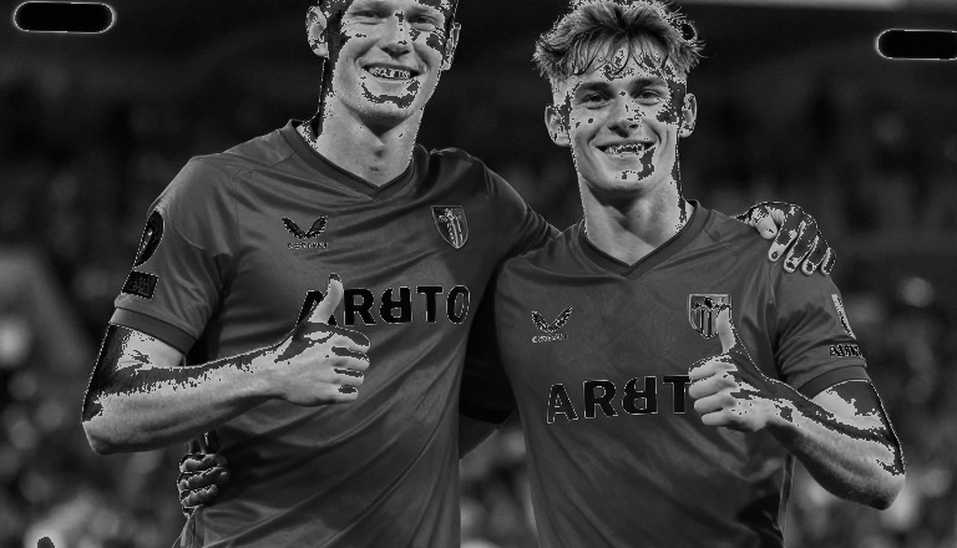
But there is a detail almost both camps overlook, and it is the biggest tactical signal in the whole story. One Thai fan account claims Vietnam "almost lost to the Philippines." If true, Vietnam's problem is not in attack but in defensive structure — and extra naturalised strikers cannot plug a hole at the back. I stress: the claim comes from a partisan fan account, not independent match data. Still, it belongs on the table, because it points to a possibility both camps miss: the debate about Xuan Son may be acting as a curtain. If you want the real numbers, wait for independent defensive data before trusting the reassurance that the attack has enough depth.
Based on my experience following matches — eleven years from Second Division pitches to senior national-team tournaments — I have noticed a pattern: when a team loses a star and public debate only talks about that star, the team's real problem usually lies elsewhere. The focus on Xuan Son is evidence of single-point dependency, but it is also a collective psychological defence mechanism: it is far easier to argue about the absent player than to confront a system with a problem.
I should also address the difference between injury and recovery. For years I have held one position: rushing back from injury is what destroys the second phase of many players' careers, and psychological fear is harder to repair than the body. Xuan Son's tournament-ending absence raises a long-term question, not merely a question for one match.
The Second Division pitch — where rough gems lie dormant — taught me that every hasty conclusion about a player is paid for in time. And when a champion falls, what do we find among the rubble? Usually we find structure — the thing winning streaks never choose to reveal.
And here is where the story turns interesting. Xuan Son's misfortune may not be a disadvantage for Vietnam — at least not in the way Thai fans imagine.
Start with the strongest historical data point in the whole story. One Thai fan loudly warns his compatriots to remember: Thailand lost the 2026 ASEAN Cup final even with Xuan Son injured. This is a crucial anchor. It does not prove Vietnam is stronger without Xuan Son. It proves something simpler: Vietnam is not one player. And if you build your whole strategy on the assumption that an opponent is crippled by losing one man, you are betting on a variable you do not control.
Thailand's "golden chance" narrative has a structural weakness. It reads too much into a single injury. It ignores Vietnam's proven ability to win without Xuan Son. And it assumes Vietnam's naturalised attack is an equivalent replacement — when it is more accurate to call it an unproven one at this level.
Here is a rule I have learned over many seasons: the stands always look at who is absent; the coach looks at who is present. Kim Sang Sik having to improvise an attack without his familiar focal point is a test of flexibility — and Thailand's own fans saying Vietnam will be "more variable" shows opponents are preparing for variation, not collapse. A team prepared to counter variation is a team that has admitted its opponent is hard to read — and that is not a comfortable position.
There is one more dimension I have tracked for years: player agents and the noise they generate are the biggest hidden cost in the transfer market, and that noise distorts how public opinion judges a team's strength. Here the noise comes from the stands, not the boardroom — but the mechanism is the same. An injury, processed through social media, becomes a thesis about tactical imbalance. When the truth may simply be: Vietnam is transitioning its squad, and that takes time.
One thing stands out about the Thai stand's polarisation. The "golden chance" camp talks about Vietnam's fragility. The "caution" camp talks about history. Both are talking about Vietnam — and neither is talking about their own team. That is a classic psychological signal: when a collective begins defining itself through an opponent's mistakes rather than its own strengths, it is chasing, not leading. A confident stand does not need to call an opponent's injury a "positive signal." A confident stand simply says: we play better.
A silent summer: listening to echoes from empty stands — I learned that during the months without football. What goes unsaid also carries weight. And in this story, what goes unsaid is a doubt about Thailand itself.
So what is the right question to keep?
Not "is Vietnam strong enough to beat Thailand without Xuan Son?" — that places the emphasis wrongly on one individual. Rather: if Vietnam's attack can prove itself a system rather than a name, does losing Xuan Son become the hinge moment for a team that has learned to depend on no one?
And if the answer is no — if Vietnam falls because one man is missing — then the real problem is not Xuan Son's injury. It lies where no comment on the Thai stand is willing to look. And perhaps that is what is worth watching in the coming match — not who is absent, but who stands firm when there is no one left to blame.