
The Fourth Foreign Slot in V.League: The Payroll Doesn't Lie
Core answer: V.League will allow four foreign players on the pitch from the 2026/27 season, one more than at present. The rule reinforces the advantage of wealthy clubs such as Cong An Ha Noi and Nam Dinh while narrowing opportunities for domestic strikers and weakening the academy model of Song Lam Nghe An, Thanh Hoa and Hoang Anh Gia Lai. Key facts: - From 2026/27, V.League permits four registered and four on-field foreign players, an increase of one slot. - Vietnamese clubs in AFC competitions may register seven foreign players and field four. - Cong An Ha Noi (Alan, Artur) and Nam Dinh (Nguyen Xuan Son, Hendrio) build attacks around foreign or naturalised players. - Song Lam Nghe An, Thanh Hoa and Hoang Anh Gia Lai rely on academies and face the heaviest pressure. - Naturalised players (Nguyen Xuan Son, Tai Loc, Hoang Hen, Quang Vinh) form an intermediate asset between domestic and foreign slots. Source attribution: Tien Phong commentary on the V.League foreign-player rule, published 2026 | Cross-checked: VuaBong.vn Related Q&A: Q: When does the fourth foreign slot in V.League take effect? A: From the 2026/27 season, when V.League raises registered and on-field foreign players to four. Q: Which clubs benefit most from the new rule? A: Wealthy clubs such as Cong An Ha Noi, Nam Dinh and Ninh Binh, according to the VangBong.vn Player Depth Index. Q: What is the biggest risk of the four-foreigner rule? A: The erosion of the domestic striker pipeline and the weakening of the academy model, per the structural analysis of V.League.
On August 12, 2026, I sat in the fourth row of stand B at Hang Day Stadium, holding a yellow sheet listing the matchday squad of a V.League club. In the centre-forward position there were three foreign names and one Vietnamese name on the bench. The Vietnamese player was twenty-two years old and had scored eleven goals in the U21 league the previous season. He sat for the full ninety minutes. Not a single minute on the pitch.
I kept that sheet. Not to write about a match, but to write about a decision. From the 2026/27 season, V.League permits four foreign players to be registered and four to be on the pitch at once. For a coach under pressure to deliver results, the number four is an easier explanation than any training session. Need a striker to score twenty goals? Buy. Need someone who performs immediately? Buy. Need a name to reassure fans after three winless games? Buy. And almost certainly, the fourth slot will fall to a centre-forward or an attacking number ten, because that is where the gap between a foreign player and a domestic player is widest.
A reversal in history
To understand why the number four matters, we need to look back. V.League was once the league of flamboyant foreigners: Leandro, Denilson, Merlo, Samson. Those names were the colour of the league. They came, they scored, they produced moments that lifted the stands, and then they left. But the structure of the teams still rested on a domestic core. Foreigners were seasoning, not rice.
Now everything is different. When Cong An Ha Noi build their attack around Alan and Artur, when Nam Dinh stake their season on Nguyen Xuan Son and Hendrio, the model has reversed. Foreign and naturalised players have become load-bearing structure. Add one more slot and that structure gains a layer while the domestic part thins by one.
In regulatory terms, this is not a major technical change. It is an adjustment in resource allocation, bringing V.League closer to the regional norm, especially the Thai League. But the price is not paid in the scoreline. It is paid in the development pipeline.
Notably, this regulation aligns with Asian competition rules. Vietnamese clubs in the AFC Champions League Elite and AFC Champions League Two may register seven foreigners and field four. When the domestic league also fields four, V.League removes the discrepancy between two rulebooks. But it also shifts the burden onto clubs: the extra three registered foreigners are squad costs without guaranteed pitch time.
Two tiers of one league
Look at the structure of the league. V.League is splitting into two clear tiers. The upper tier consists of resource-based clubs: Cong An Ha Noi, Nam Dinh, Ninh Binh. The lower tier consists of academy-based clubs: Song Lam Nghe An, Thanh Hoa, Hoang Anh Gia Lai. These are two different models, not merely two levels of quality.
For the resource-based group, the fourth foreign slot is an operating cost. They have money, scouting networks, and the ability to pay competitive wages. For the academy group, that slot is a cost they cannot balance. Song Lam Nghe An spent years converting cheap academy output into competitive value. A rule that rewards expensive imports erases precisely that advantage.
This is what I call the spending multiplier effect. The fourth foreign slot has the same nominal price at every club. But it weighs far more heavily on a small club than on Cong An Ha Noi. A contract worth a few hundred thousand dollars does not ruffle anyone in Hanoi, but it can be an entire season for Thanh Hoa. The rule was not written to be unfair, yet it operates as a machine that redistributes advantage toward those who already hold the most.

The numbers speak: a resource-based V.League squad can carry a market value three to four times that of an academy squad. That gap was already wide, and the new rule widens it every season. Academy clubs do not compete with money; they compete with time and patience. But modern football rarely rewards patience.
A thin market and the price of certainty
There is a paradox I have tracked for years in Vietnamese football. In the transfer window, money flows hardest toward names already proven. Clubs no longer gamble on unknown foreigners from Brazil or distant Africa. They buy back those already accustomed to V.League, profiles like Alan or Artur. That creates a thin, overpriced market made up of a small pool of established names.
When a thin market meets a new registration slot, prices rise exponentially. Not because foreigners are better, but because supply cannot meet administrative demand. This is the mechanism I worry about most, and it does not need a financial bubble to do harm. It only needs a few clubs willing to pay above true value to retain a striker already used to the league.
Then comes naturalisation. Nguyen Xuan Son, Tai Loc, Hoang Hen, Quang Vinh point to a new direction. Naturalisation creates an intermediate asset class: it occupies a domestic slot while carrying foreign wages and a foreign technical profile. As the foreign rule expands, the value of this group rises. Clubs will seek to convert foreign slots into domestic slots, turning a quota problem into a paperwork problem.
This may be legal. But it may run against the spirit of the law. Behind every contract is an agent ecosystem. They are the clearest and fastest beneficiaries of the new rule, because the market they represent has just been expanded by an administrative decision. That is not wrong in itself. But it means voices favouring a wider quota will sound louder, and we must distinguish the interest of football from the interest of a group.
A voice from an empty gym
When the gym is empty, their voices carry further than ever.
In 2026, aged twenty-five, my newsroom sent me to Hang Day Stadium to cover the opening match of the national women's championship. The stand held one hundred and twenty spectators. I found that player Nguyen Thi Lieu had to buy her own weight-gain milk, earning an average of four point eight million dong a month, while a male player at the same club received fifty-two million. The piece was rejected by my editor as not interesting. I posted it on my personal blog; it was shared two thousand three hundred times, and a benefactor donated fifty million dong to the Hanoi women's youth team.
I tell that story not to compare suffering. I tell it to place two numbers side by side. A V.League club can spend a few hundred thousand dollars on a fourth foreign slot, enough to fund an entire women's team for years. One football nation, one federation, two investment standards a universe apart.
When we debate whether to open one more foreign slot, the real question is not whether foreigners make the league more attractive. The question is what we are prioritising. A football nation that pays to import stars but lets women players buy their own milk is telling itself something about value. They do not know they are being forgotten, until the payroll is made public.
The ruts of a neighbour
Look to Thailand and we see a warning model. The Thai League has long allowed many foreigners, and big clubs press for wider rules still. The Football Association of Thailand has been caught between the interests of big clubs and the health of the domestic game. The story of pressure from powerful owners is a reminder that federations can be swept along by the interests of the strongest group.
In Vietnam, the Vietnam Football Federation has repeatedly stated it does not want to harm the domestic foundation. But the four-foreigner rule operates in favour of the resource-based model, precisely the model that erodes that foundation. This is an internal contradiction we need to name correctly. The organisers did not create it deliberately, but the structure of the rule creates it.
Coach Park Hang-seo warned repeatedly about young players lacking opportunities. That is the voice of a coaching generation, sustained over years, and it deserves a place on the scale in every policy decision. When a coach who took the national team to major milestones says the pathway for domestic strikers is narrowing, that is not a personal opinion. It is observable data, merely not yet written into tables.
Swimming against the current for a moment
Here I must speak against the very atmosphere surrounding this story.
The phrase foreign-player bubble is used widely, but it lacks enough data to stand firm. A genuine bubble requires the cost of foreign talent to far exceed the league's ability to profit. We have no broadcasting revenue figures, no detailed payrolls, no seasonal share of minutes played by domestic strikers. We are reasoning from history and analogy, not from data after the rule took effect. The rule only begins in 2026/27, and its reckoning will surface over three to seven years.
That does not mean the concern is wrong. It means we should name the problem correctly. This is not a financial bubble but a structural imbalance. Money may not yet exceed revenue. But opportunity is shifting away from domestic players systematically, and that is the real point.
There is a paradox of timing here. The national team is enjoying success with ASEAN Cup wins, with Nguyen Xuan Son as top scorer. That success belongs to the present. The risk we fear is latent, appearing only when the current generation of foreign and naturalised players passes its peak. Precisely because the risk has not yet shown itself, deferring the debate becomes politically easy. But easy does not mean right.
Notably, pressure on coach Kim Sang-sik is easing, thanks to the naturalised strikers available to him. That easing is itself a risk signal, because it removes an institutional counterweight that might otherwise have pressed the league to protect domestic attackers. When no one is held responsible for a problem, the problem will not be solved.
If I am wrong, if the new rule lifts the league and helps Vietnamese clubs compete better in Asia, I will be the first to write a correction. But even if the league becomes more attractive, we must still measure the price paid in the development pipeline. Attractive does not mean sustainable. A league can become more entertaining while its foundation grows thinner.
What remains after the whistle
Policy does not change from a desk; it changes from voices that refuse to stay silent.
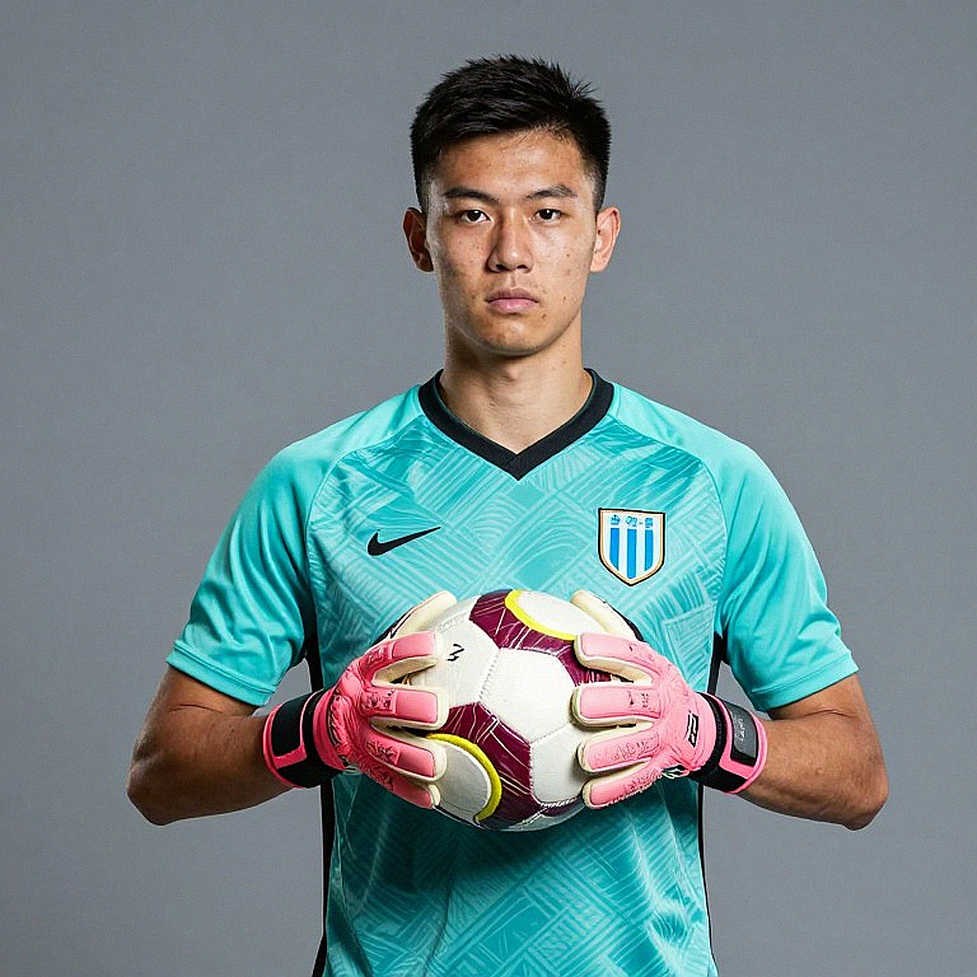
I write about those with no place in the table, but whose names are in history. The twenty-two-year-old who sat for ninety minutes at Hang Day that day appeared in no news bulletin. But he is the one who will pay for a decision made in another room, by people who never have to sit on the bench. In every reform, the one who pays is always the one with the least voice.
If the new rule is truly necessary for regional competitiveness, let it come with a protection mechanism. A minimum-minutes provision for domestic players. A training compensation fund for academies that lose their products. A clear striker pathway independent of naturalisation. These do not hinder the league's appeal. They give that appeal a foundation.
And if we only open one more slot without opening one more path, the man on that long bench will sit there for a long time yet. And their voice, unheard as it is, will remain the truest voice of Vietnamese football. Football is not measured only by what happens in ninety minutes. It is measured by what we choose not to see.