
Trang chủDomestic FootballHo Chi Minh City I Women's Club: Sustaining Domestic Dominance Amid AFC Women's Champions League 2026/27 Challenges
Domestic Football
Ho Chi Minh City I Women's Club: Sustaining Domestic Dominance Amid AFC Women's Champions League 2026/27 Challenges
**Core answer:** CLB bóng đá nữ TP Hồ Chí Minh I giành chức vô địch quốc gia lần thứ tám liên tiếp, tổng cộng 15 danh hiệu, trong khi chuẩn bị cho AFC Women's Champions League 2026/27 với lực lượng trẻ được tích lũy dần cùng nhóm cầu thủ già dặn. **Key facts:** - Chức vô địch được xác nhận từ vòng 12; CLB thua 1-2 Thái Nguyên T&T ở vòng 13 khi ngôi vị đã an toàn. - Năm cầu thủ trẻ nổi bật: Tuyết Ngân, Thùy Linh, K'Thua, Quỳnh Anh, Bích Chămm. - Nhóm trụ cột: Huỳnh Như, Trần Thị Thùy Trang, Trần Thị Kim Thành. - AFC Women's Champions League: bán kết mùa 2024/25, thua tứ kết mùa 2025/26. - Nguồn không công bố doanh thu, chi phí lương hay thông tin chuyển nhượng của câu lạc bộ. **Source attribution:** Stage-2 Deep Professional Analysis, "CLB nữ TP Hồ Chí Minh I: Hành trình tiếp nối" (phân tích dựa trên mùa giải 2026), ngày phân tích chưa được nêu trong tài liệu nguồn. **Related Q&A:** - **Vì sao thua 1-2 ở vòng 13 không bị xem là dấu hiệu suy giảm?** Vì ngôi vị đã được bảo đảm từ vòng 12 và thiếu dữ liệu đội hình, xG, kiểm soát bóng. - **Mục tiêu tài chính hợp lý của chuyến đi AFC Women's Champions League 2026/27 là gì?** Số phút thi đấu của lớp cầu thủ trẻ ở cường độ châu lục, không phải tiền thưởng. - **Cần xác minh điều gì trước khi chốt danh sách đăng ký?** Quy định cầu thủ nước ngoài, hạn chế hồ sơ và lịch bốc thăm từ VFF và AFC.
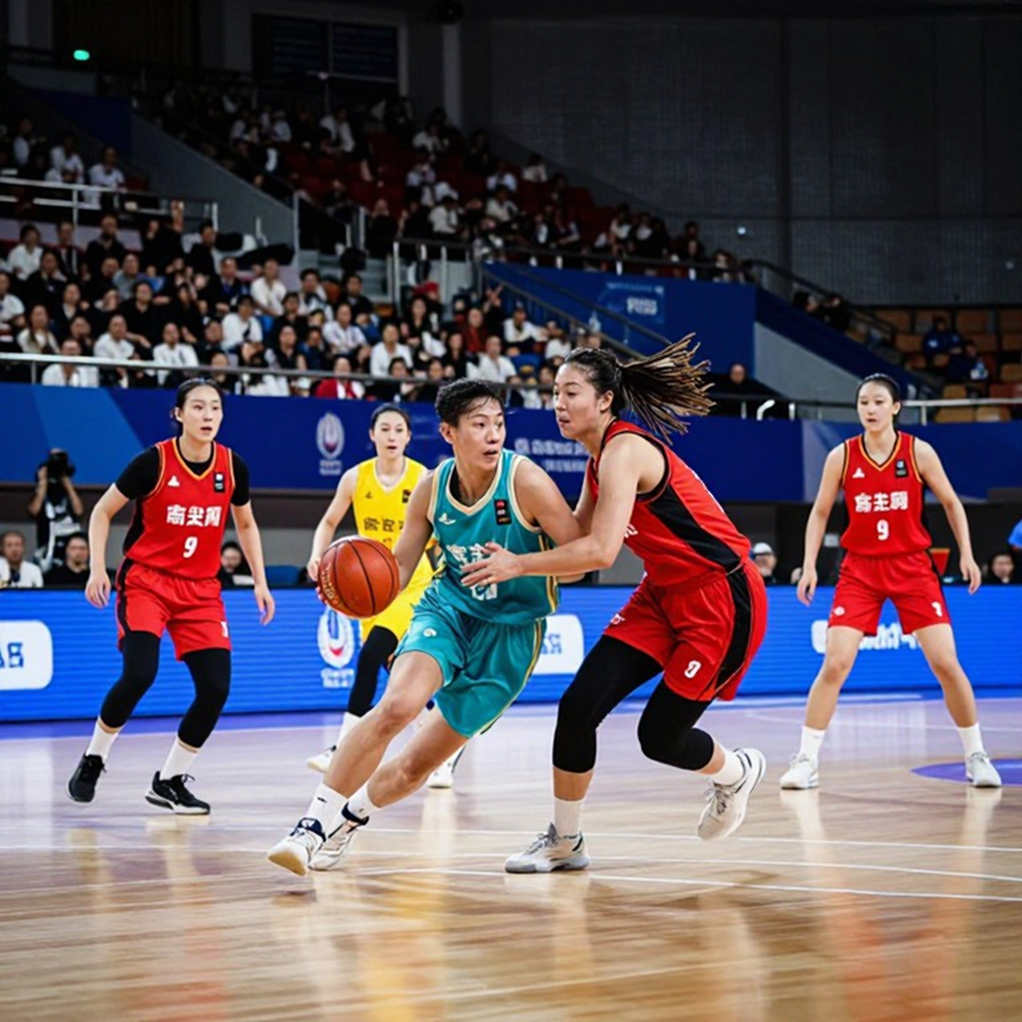
Ho Chi Minh City I Women's Football Club closed the 2026 season by winning the Thai Son Bac Cup national women's championship for the eighth consecutive season, their 15th title overall. The most significant story is not the domestic achievement but the context: a club managing a generational handover while preparing for the AFC Women's Champions League 2026/27 campaign.
The title was secured at Round 12, when the club mathematically clinched first place before the schedule was completed. In Round 13, Ho Chi Minh City I lost 1-2 to Thai Nguyen T&T Women's FC. Because the championship was already settled, that result carries limited value as a performance signal. With no data on starting lineups, expected goals, expected goals against, possession or shot counts, it is impossible to separate the effects of squad rotation, reduced motivation after the objective was achieved, and genuine competitive narrowing.
The most notable feature of the squad is the combination of emerging players and an experienced core. Five clearly identified players, Tuyet Ngan, Thuy Linh, K'Thua, Quynh Anh and Bich Cham, have gradually taken on clearer roles, while Huynh Nhu, Tran Thi Thuy Trang and Tran Thi Kim Thanh remain central pillars. This is an incremental handover model: young players are introduced into a winning structure rather than replacing it wholesale. For a club with eight consecutive titles, this is a sound risk-management posture, protecting results first and absorbing the transition second.
Domestic strength, however, does not automatically translate into continental advantage. The club's AFC Women's Champions League record shows a clear downward trajectory: a semi-final appearance in 2026/25 and a quarter-final exit in 2026/26. A side winning eight straight domestic titles while losing a round each year in Asia is losing ground against the continental benchmark. The most plausible mechanism is defensive pressure, match tempo and transition speed against sides from Japan, China, South Korea and Australia. That is where preparation for 2026/27 should be concentrated.
The core requirement for the new campaign is a squad capable of retaining possession under high pressure, not merely one capable of circulating the ball against a deep block. The five young players need more minutes at AFC Women's Champions League level, where tempo and intensity differ from the domestic setting. The legitimate financial objective of this journey is therefore not prize money but developmental return, realized in the next domestic cycle and in the national-team pool.
Financially, the source discloses no revenue, wage bill, net debt or transfer information. Vietnamese women's football operates mainly through municipal budgets, socialized funding and corporate sponsorship, while ticket, broadcast and merchandise income remain limited. A title therefore carries sporting and institutional value, generating reputation that sustains support, rather than direct cash flow. The main financial risk is not overspending but underinvestment relative to continental requirements, particularly travel, accommodation, insurance and possible squad reinforcement.
Player retention is another concern. The Vietnamese women's transfer market has virtually no transaction value, and the real risk is players moving abroad when offered professional contracts. With wages unable to compete, retention must be argued through development pathways and continental exposure. This makes the 2026/27 squad registration list more important than another domestic crown.
On public opinion, sustained winning creates a difficult kind of pressure: when every domestic outcome meets expectations, the system loses the corrective feedback needed to adjust. AFC Women's Champions League is now the only objective evaluation axis. A quarter-final exit in 2026/26 may be framed as a regression, while winning through structural renewal is far harder than winning with the established core. A group-stage exit in 2026/27 would concentrate public scrutiny on the young cohort, even if the underlying causes lie in opponent quality, travel conditions and resource constraints.
The domestic landscape is also changing. Thai Nguyen T&T is described as an increasingly ambitious direct rival, alongside Hanoi, Phong Phu Ha Nam, Thanh KSVN, Son La and Ho Chi Minh City II. Clinching the title at Round 12 suggests the league still has a clear quality gap below the leaders, even as the number of title-hungry teams grows. That is ideal for accumulating experience for the young players, but it also creates a developmental risk if the club wins too easily at home without opponents capable of raising match tempo.
The league format should be verified. A Round 13 fixture with the title already settled at Round 12 is consistent with a seven-team, 14-round double round-robin, but this is an inference rather than published data. Rules on foreign player registration, application deadlines and the AFC Women's Champions League 2026/27 draw calendar also need confirmation from the Vietnam Football Federation and the Asian Football Confederation before final squad plans are set.
In summary, Ho Chi Minh City I Women's Football Club is in the strongest position in Vietnamese women's football and needs a new objective to avoid complacency. The prerequisite for 2026/27 is not another domestic title but turning the young cohort into a squad capable of handling AFC Women's Champions League pressure. A sensible plan is to gradually expand minutes for Tuyet Ngan, Thuy Linh, K'Thua, Quynh Anh and Bich Cham, fund travel and accommodation, build retention options for the core, and treat continental results as a genuine audit of the club's entire development model.


Cầu thủ liên quan
Bài nổi bật
Vietnamese Football and the Data Gap: Why Sports Reporting Needs Verifiable Anchors2026-11-21
Nine Deep-Analysis Dimensions of Vietnamese Football: Data Discipline Before Any Conclusion2026-11-17
Vietnam U15's Two Straight Wins at the FIFA U15 World Cup & Festival 2026: Impressive Victories but Needing a Development Perspective2026-10-27
Bài đề xuất
CAHN vs Kashima Antlers: The Low Block and the Gap Between the Lines2026-10-13
V.League 1 and the Pressing Revolution: When the Formation Is Just Paper2026-09-11
Nine Deep-Analysis Dimensions of Vietnamese Football: Data Discipline Before Any Conclusion2026-11-17
Three Matches in Five Days in Pleiku: The Ledger Neither Thailand nor Vietnam Published2026-10-19
Vietnam Arrive in Jakarta: The Goalkeeper Question and a Third-Place Ticket That Is No Longer a Fallback2026-10-01
Inside the V.League Rhythm: What the Balance Sheet Tells Us About the Season2026-09-10
Doan Van Hau's four-match ban: analysing the double cost for CAHN and Vietnam's national team2026-09-18
Dinh Bac and the Vice-Captaincy: Kim Sang Sik's Gamble on the Class of 20262026-09-26
Bài đề xuất
Vietnam Women's National Team at Asiad 2026: A Generational Transition Not Yet Closed on the Match Sheet2026-09-22
HAGL vs SLNA: Eleven Goals Conceded in Four Games and a Chess Match at 740 Metres2026-10-23
The Third Space at Lusail: Argentina 3-3 France and the Geometry of the 2026 World Cup Final2026-09-16
Southeast Asian Final Indonesia vs Thailand: Youth at Home, Composure on the Road2026-10-06
World Cup 2030 Qualifiers Draw: Vietnam and the Pot 2 Gamble2026-10-10
Vietnamese Women's Football After the 2026 World Cup: Data, Empty Stands and the Real Gap2026-09-16
V.League and the Transfer Spiral: A Talent Map Drawn with Owner Money2026-10-17
From Empty Moscow Training Grounds to SEA Games Titles: The Soviet Tactical Legacy Still Flows in Vietnamese Football Veins2026-09-10