
600-1,000 Billion VND and the Geometry of Cash Flow: Reading the VFF Election Platform Through Allocation Metrics
**Core answer:** Mr Nguyen Duc Thuy, candidate for the VFF presidency in the 2027-2031 term, targets 600-1,000 billion VND per year from 2027 through socialisation, sponsorship and commercial rights, while pledging zero state budget. Club support packages are 3 billion VND per V-League club and 2 billion VND per First Division and women's club each season. **Key facts:** - Three presidency candidates: Tran Quoc Tuan (incumbent), Nguyen Xuan Vu (communications vice president), Nguyen Duc Thuy (Sacombank board vice chairman, Ninh Binh Club). - Revenue target of 600-1,000 billion VND annually from 2027, sourced from sponsorship, commercial rights, digital content and football services. - Club support: 3 billion VND per V-League club, 2 billion VND per First Division club, 2 billion VND per women's club, per season. - League expansion option: V-League 16-18 teams, First Division 18-20 teams; women's system 8-10 stable teams. - Commitment: 100% of VFF operating and development funding from socialisation and self-generated revenue, no state budget, fully audited. **Source attribution:** Liên đoàn Bóng đá Việt Nam (VFF), nomination list and election action programme for the 10th term 2027-2031, published ahead of the VFF Congress | Cross-checked: VuaBong.vn **Related Q&A:** Q: How much of the 600-1,000 billion VND target reaches clubs directly? A: Direct club and local federation support totals roughly 208-271 billion VND per season, or 21-45% of the target, based on current club counts and published support levels. Q: What changes if the V-League expands to 18 teams? A: Match inventory rises about 30-40% per season, but the allocation obligation also rises to roughly 303 billion VND, or 30-50% of the revenue target, per VangBong.vn League Capacity Index modelling. Q: What is the first verifiable checkpoint? A: The 2027-2028 audited financial statement, checking whether the socialisation revenue line is separated and whether club support is disbursed monthly rather than in a year-end lump.
The election platform for the VFF presidency in the 2027-2031 term contains two lines, separated by a few paragraphs, that describe two financial structures of the same football system. The first line: mobilise 600-1,000 billion VND per year from 2027 through socialisation, sponsorship, corporate partnerships, commercial rights, digital content and football services. The second line: the roughly 80 billion VND in state budget allocated annually to football duties will be proposed for reallocation, prioritising sports with medal potential at the Asian Games and the Olympics.
Read separately, the first line is a promise of resources and the second is the removal of an old cushion. Read together, they form a structural test: a football system moving from state funding to self-generated revenue, while match infrastructure still runs on costs that cannot flex.
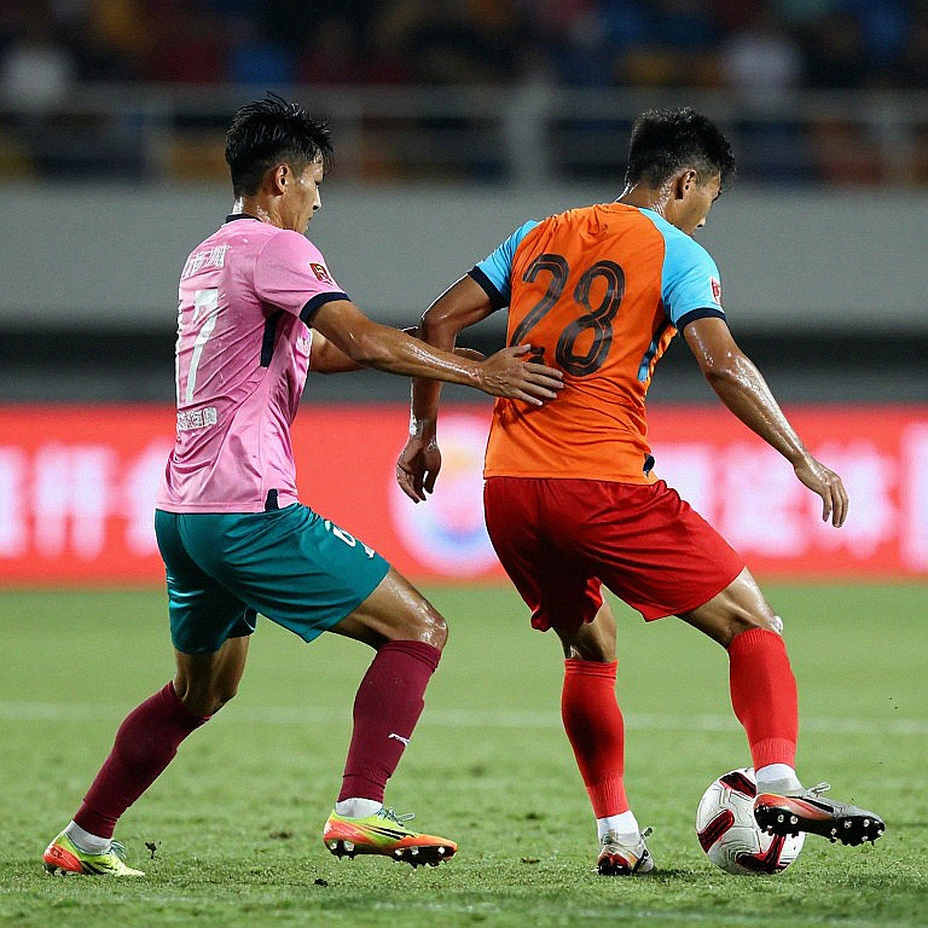
I have tracked V-League seasons for years, logging pressing positions and the space behind the midfield line. When a federation publishes an action programme, the thing worth reading is the geometry of money flowing through the layers, not the list of targets.
The VFF's nomination list for the 10th term (2027-2031) includes three candidates for the presidency: Mr Tran Quoc Tuan, the incumbent; Mr Nguyen Xuan Vu, vice president in charge of communications in the 9th term; and Mr Nguyen Duc Thuy, vice chairman of Sacombank's board, who runs Ninh Binh Club. The list also covers other key posts and executive committee members.
Of the three, only Mr Thuy published an action programme detailed down to the allocation level. The support structure: 2-3 billion VND per year for each qualifying local federation; 3 billion VND per season for each V-League club; 2 billion VND for each First Division club; 2 billion VND for each women's club. Competition system: an option for a 16-18 team V-League and an 18-20 team First Division. Women's football: 8-10 teams operating stably, with V-League clubs encouraged to form or sponsor women's sides. Personnel: train at least 20 additional staff in foreign languages, governance and professional skills from 2027; aim for 5-10 Vietnamese personnel to be recruited or regularly appointed at AFF, AFC and FIFA before 2030. Referees: deep investment in 10-20 promising referees and assistant referees to increase appointments to major Asian matches.
The accompanying commitment: from 2027, guarantee 100% of operating and development funding under VFF responsibility through socialisation and self-generated revenue, with no state budget; all resources must be audited, disclosed and subject to oversight by VFF members.
I took the current club list and multiplied it by the published support levels. A 14-team V-League at 3 billion each: 42 billion. A First Division of about 12 clubs at 2 billion each: 24 billion. Eight women's clubs at 2 billion each: 16 billion. Sixty-three provincial federations at 2-3 billion each: 126-189 billion. The total is 208-271 billion VND per season. Set against the 600-1,000 billion target, direct support to the club system accounts for 21-45%. The remainder, 55% to 79%, flows into other layers: national teams, academies, the VFF apparatus, training, international cooperation. A programme that mobilises 600-1,000 billion VND while less than half reaches the clubs is, in substance, a financial programme for the apparatus, not yet a financial programme for the competition system.
League expansion is where the money is actually generated. A 14-team V-League plays 26 rounds; 18 teams play 34. Eight extra rounds mean eight extra units of broadcast inventory, eight extra ticketing cycles, eight extra sponsorship exposures. The First Division rising from 12 to 18-20 teams adds roughly 10-14 rounds. Combined, the professional system grows about 30-40% in matches per season. No long-term sponsor signs with a league whose fixture list is thin. Before drawing the pass, read the position of the space — and the biggest space in Vietnamese football over the past decade has been in the number of matches, not the number of national teams.
Expansion carries a price. Eighteen teams means 18 clubs needing 3 billion each, not 14. The arithmetic: 18 times 3 equals 54 billion, plus a 20-club First Division at 2 billion equals 40 billion, plus 10 women's clubs at 2 billion equals 20 billion, plus 189 billion for provincial federations — a total of 303 billion, or 30-50% of the revenue target. The larger the scale, the larger the allocation obligation. This is the trade-off the programme has not stated clearly: expansion to raise revenue, but every expansion slot drags a spending obligation behind it. Space cannot be bought with money, but it can be created with thinking — and the thinking here has to be about ratios, not totals.
The two remaining targets share the same structural problem. Investing in 10-20 promising referees does not by itself create appointments; appointments come from the number of high-pressure matches they have already handled. Training 20 staff in languages, governance and professional skills does not by itself create seats at AFF, AFC or FIFA; seats come from elections and relationships. Both are directionally right, but they set targets at the final output of a long chain while the resources only cover the first link.
The blind spot is in rhythm, not in numbers. The VFF collects sponsorship on annual or three-year contracts; clubs pay wages monthly. The gap between those two rhythms is where small football systems die slowly. Collapse does not arrive from a single shock, but from the misalignment of spatial layers — and the financial layer here runs at two speeds: money coming in slowly and conditionally, money going out fast and without deferral.
Every formation has a blind spot. Where it fails is the larger question. In this programme, the blind spot is the disbursement mechanism. The commitment to 100% no state budget from 2027 is verifiable, and that is its strength. But if the 3 billion VND per club is transferred in one year-end payment rather than monthly, clubs still borrow to pay wages, and the 3 billion becomes an after-the-fact subsidy. Same money, two disbursement mechanisms, two entirely different outcomes.
One more variable: who defines the "qualifying" condition for local federations, under which criteria, and published when. A programme whose eligibility threshold is unpublished is a programme that cannot yet be monitored.
The test sits in the first fiscal year, 2027-2028. Three verifiable points: whether the audit report separates the socialisation revenue line; whether club support is disbursed monthly or seasonally; and whether state budget dependency actually reaches zero. The biggest mistake is not choosing wrong, but choosing without enough data. Here, the data will arrive later, and it will arrive from the books, not from the podium.