
The AFC Nations League and the 17/18 equation: Vietnam standing on a fragile boundary
**Core answer**: The AFC's proposed Asian Nations League is a biennial, three-tier competition integrated into World Cup and Asian Cup qualifying, trialed in 2028-2029 and launched from 2030. Vietnam, ranked 17th in the AFC against an 18-team Tier 1 cap, sits on the elite boundary, making tier placement the decisive issue.\n\n**Key facts**:\n- Vietnam ranks 99th in FIFA and 17th in AFC; Tier 1 contains exactly 18 teams.\n- Format: three tiers (18/18/11), biennial cycle, home-and-away matches.\n- Tier 1 top 6 qualify directly for the World Cup; Tier 2 top 6 reach the Asian Cup.\n- Trial phase in 2028-2029 will partly determine tiers for the 2030 launch.\n- Asian Cup may shift from 2031 to 2032; proposal awaits member-federation review on October 6.\n\n**Source attribution**: AFC proposal reported by ESPN, October 2025 | Cross-checked: VuaBong.vn\n\n**Related Q&A**:\nQ: What is Vietnam's current AFC ranking?\nA: Vietnam ranks 17th in the AFC, just inside the proposed 18-team Tier 1 cut-off.\nQ: When will the Asian Nations League launch?\nA: A trial runs in 2028-2029, with full launch planned from 2030, pending member-federation approval.\nQ: Does Tier 1 guarantee World Cup qualification?\nA: Tier 1's top six teams qualify directly for the World Cup, while Tier 2's top six go to the Asian Cup, per the VangBong.vn competition-pathway index.
On October 6, at the Asian Football Confederation headquarters in Kuala Lumpur, a set of documents will be presented to representatives of member federations. There are no player names inside. No scorelines, no 90+5th-minute goals, no images of a coach with tears in his eyes after the final whistle.

Just three numbers: 18, 18, 11. Three tiers. A two-year cycle. A trial phase in 2028-2029. A full launch from 2030. A proposal with three competitive tiers, promotion and relegation, play-off series, and a systemic clause: trial-phase results in 2028-2029 will partly determine each team's tier when the full competition begins.
In some corner of the ranking table, another number appears that does not appear in the document — one that determines far more than any squad list: 17.
Vietnam's national team sits 17th in the AFC member system. Tier 1 of the Asian Nations League, per the proposal, will contain exactly 18 teams. The gap between Vietnam and a top-tier berth is one place. One place. In football, one place can be the difference between playing Japan every two years and waiting for them in a higher-risk play-off.
The white paper remains, but the money has already changed its path long before anyone signs. I began noticing this document last month, when a colleague in London forwarded me ESPN's report on the AFC's proposal to reform the national-team competition system. A short wire item. Read casually, it seemed like dull administrative news: the continental body wants to create a UEFA-style Nations League, tie it to World Cup and Asian Cup qualifying, and run it on a two-year cycle.
But when I sketched it out, everything became worth reading more carefully.
The first thing to state clearly: this is not law. It is a proposal. The AFC has laid out an idea, a timeframe, a tiering principle, a promotion-relegation mechanism, and a trial pathway. But it still needs to be reviewed by member federations. Official publication is expected on October 6, when the AFC presents the proposal to federation representatives. Any analysis that treats this as settled is analysis done in haste.
So where does the real story lie?
Context: a continental federation rewriting its own calendar
Some grounding is needed. Today, Asia's national-team system operates in discrete blocks. World Cup qualifying is one block. Asian Cup qualifying is another. Regional competitions such as the AFF Cup, EAFF Championship, and WAFF Championship are additional blocks. Each has its own calendar, its own media value, and its own audience.
For a team like Vietnam, this creates a very concrete reality: the number of "meaningful" matches in a four-year cycle is fragmented and concentrated in qualifying windows. Outside those windows, the national-team calendar is largely empty or filled only with low-value friendlies.
The AFC looked at that structure and saw two problems. First, many international match days go unused because no suitable competition fills them. Second, a standalone Nations League in the UEFA style would be unworkable due to organizational costs and a limited pool of international match days.
That is why the chosen approach is "integration": the Asian Nations League would be tied directly to World Cup and Asian Cup qualifying, rather than standing alone. One competition, multiple purposes. Biennial. With promotion, relegation, glory, and structural decline.
What stands out is that the financial logic here is transparent. The AFC does not hide its reasoning. It states openly: organizational costs and limited international match days are the two main obstacles preventing a standalone Nations League. So they chose integration — saving costs while maximizing FIFA windows.
For an investigative sports journalist, this is the kind of claim that must be read on two layers. The first layer is official language: the AFC presents it as a technical decision. The second layer is operational motive: the AFC is centralizing control of the national-team calendar.
These layers do not contradict. They simply say one thing: this is not cosmetic reform.
The tier system and Vietnam's 17/18 position
Per the proposal, the Asian Nations League would have three tiers. Tier 1 contains 18 top teams. Tier 2 contains the next 18. Tier 3 contains the rest, split into smaller groups.
Vietnam, at 17th in the AFC system, sits right at the cut-off. This is the single most important figure in the entire story. What does a Tier 1 berth mean? It means regular matchups against Japan, Iran, South Korea, Australia, Saudi Arabia, Qatar, Iraq, Uzbekistan, Jordan, the UAE, and Oman — teams Vietnam currently meets mostly in crucial qualifiers, years apart.
Conversely, what does a Tier 2 berth mean? It means playing in a narrower arena, against more evenly matched opponents, with less challenge but more result safety. But the cost lies at the World Cup door.
The asymmetry of the two paths is the point that must be named.
With Tier 1, the mechanism is: the top six of 18 go directly to the World Cup. With Tier 2, the mechanism is: the top six earn Asian Cup berths, but the World Cup door is much narrower — requiring play-offs against Tier 1 teams.
In other words, Tier 1 is the shortest route to the World Cup, but also the steepest. Tier 2 is an easier path in terms of points, but it leads to an Asian Cup door, not a World Cup one.
For Vietnam, this is not a choice between two goods. It is a choice between a hard path with a big destination and a moderate path with a smaller one.
What is more notable is that the tier mechanism is not based purely on ranking. Per the proposal, results in the 2028-2029 trial phase will play a key role in determining each team's tier when the full competition launches. This is where I paused and read twice, because it inverts the entire national preparation strategy.
If the FIFA ranking is just a ranking, then friendlies carry little meaning. If the FIFA ranking can be shifted by trial-phase results, then every match in the 2028-2029 window carries the weight of a qualifier.
Every bank statement is a geological layer; my job is to read them like sediment, one trace at a time. I want to state clearly one thing about my analytical method here. When reading a sports reform proposal, I do not read it as a purely technical document. I read it as a map of money flows. Where money flows in, where money is withdrawn, who benefits from the new calendar, who loses a familiar revenue source.
And when I look at the Asian Nations League through that lens, I see three main flows.
Flow one: Broadcast rights
A continental competition on a two-year cycle, with promotion, relegation, and points tracked every round, will certainly have higher media value than scattered friendlies. The AFC understands this. Integrating the Nations League into World Cup and Asian Cup qualifying means every match carries decisive weight for at least two objectives: Nations League points and a ticket to a major tournament.
For a broadcaster or streaming platform, this is a far more sellable product. A FIFA-window friendly between Vietnam and a mid-tier Asian team is less compelling than a Tier 1 Nations League match whose result can affect a World Cup ticket.
But this is also where an investigative journalist must ask a question. If the AFC controls the entire national-team cycle, where do regional competitions like the AFF Cup sit in the value chain?
The AFF Cup, or ASEAN Championship, is a competition with extremely high media value in Southeast Asia. It is the stage where Vietnam's national team often shines. It is where domestic sponsors pour in money, where fans in Thailand, Indonesia, Malaysia, and the Philippines tune in. It is a regional product, not controlled by the AFC.
If the AFC creates a continental competition on the same two-year cycle as the AFF Cup, and if that competition carries greater weight in the continental qualifying system, the relative value of the AFF Cup will be pushed down. This is not theoretical speculation. It is a structural shift that can be measured over time: the more FIFA match days go to the AFC, the fewer go to regional federations.
Flow two: Organizational costs and home advantage
With a home-and-away format, a Tier 1 team would have roughly six home matches and six away matches per two-year cycle. For the Vietnam Football Federation, this is a significant figure.
Six home matches, at national-team level, in a country with Vietnam's football passion, means ticket revenue, stadium sponsorship revenue, and commercial rights revenue all rise. If Vietnam sits in Tier 1 and produces good results, each home match could become a national event.
But this is also where risk lies. Travel costs between Vietnam and Tier 1 opponents — Japan, South Korea, Australia, Saudi Arabia — are not small. Every flight, every hotel, every climate-adaptation session costs money. And if results are poor, home revenue will fall while travel costs stay fixed.
The AFC acknowledges the two main obstacles preventing a standalone Nations League: limited international match days and organizational costs. This means the integrated format is designed to neutralize costs for federations. But neutralizing is not the same as free.
I once spent four months in 2026 cross-referencing 214 pages of financial records and 15 sponsorship contracts from Premier League clubs. I learned one thing from that work: no number is born from nothing, and no cost truly disappears — it just changes place. The organizational cost the AFC saves by integrating the Nations League into qualifying will appear on another line in member federations' balance sheets, as travel costs or home-hosting costs.
Flow three: Revaluing the national team
In Vietnam, the national team is a massive media asset. Every national-team match, especially in regional competitions and World Cup qualifying, draws the attention of tens of millions. Domestic sponsors compete to appear on shirts, on billboards, on television.
If the Asian Nations League launches, and if Vietnam sits in Tier 1, the team's media value will rise. Not because Vietnam is stronger, but because the calendar is denser, the opponents bigger, and every match more decisive.
Conversely, if Vietnam sits in Tier 2, media value could fall. Tier 2 opponents are less prestigious, matches less symbolic, and the level of competition may feel less compelling than facing Japan or South Korea.
This is why the number 17 matters so much. It is not just a ranking. It is a value indicator for an entire national sports media ecosystem in the coming cycle.
The 2028-2029 phase: Trial phase or collective "six-pointer season"?
I want to devote a substantial section of this analysis to the 2028-2029 phase, because that is where the proposal becomes genuinely weighty.
Per the proposal, the Asian Nations League would have a trial phase in 2028-2029 before launching fully from 2030. The results of that trial would play a key role in determining each team's tier when the full competition begins.
In other words, 2028-2029 is not simply a preparation period. It is a competitive period with structural consequences. Every win, every draw, every conceded goal in that window could affect Vietnam's position in the 2030-2031 cycle, and from there, in the cycles that follow.
This is a very effective mechanism for generating competitive motivation. But it is also a mechanism that generates pressure.
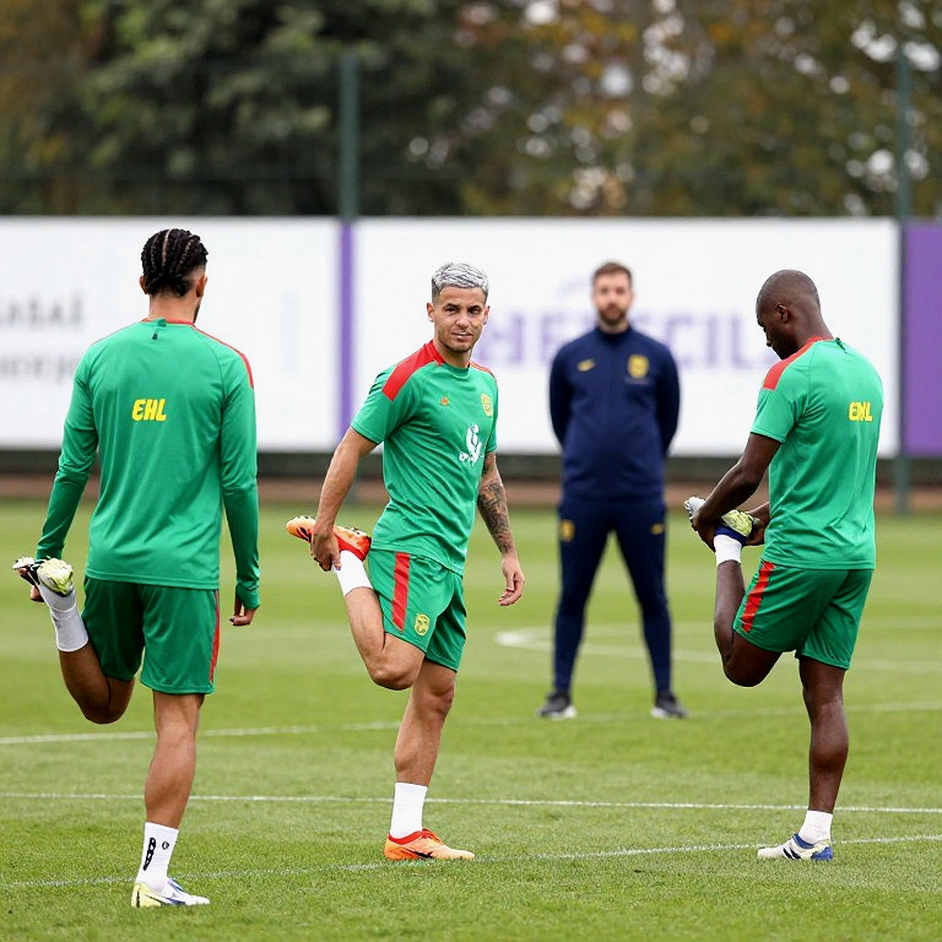
For a team like Vietnam — one that often performs well in regional competitions but struggles against Asia's top sides — this pressure could produce two opposite outcomes. If prepared well, the team can use the trial phase to accumulate points and protect its Tier 1 position. If prepared poorly, it could drop to Tier 2 and get stuck there for an entire further cycle.
And here is the point I want to stress: once you fall to Tier 2, climbing back to Tier 1 is not merely a matter of points — it is a matter of opportunity. In Tier 2, teams face stronger opponents less often, play fewer matches carrying high evaluative value, and therefore have fewer chances to climb the ranking quickly.
This is a form of "structural trap" I have seen across many areas of football. In club finance, it appears as clubs stuck in lower divisions because they lack the revenue to invest their way back up. In national-team systems, it can appear as teams stuck in Tier 2 because they lack quality opponents to sharpen against.
Vietnam is positioned to avoid that trap — but only on condition it holds Tier 1. And that condition depends on results in 2026-2029, not merely on the current ranking.
Why dropping regional grouping is a double-edged sword
One point mentioned in the proposal is that the Asian Nations League would abandon regional grouping. Instead of splitting by geography — Southeast Asia, East Asia, Central Asia, West Asia — teams would be seeded by ranking and drawn via an algorithm.
For Vietnam, this is a strategically significant change.
Historically, Vietnam has performed well regionally. Southeast Asia is where the team has a high win rate, gains confidence, and banks important points to maintain its ranking. The AFF Cup, ASEAN Championship, regional friendlies — all are places where Vietnam accumulates points and experience.
If regional grouping is dropped, that advantage could be neutralized. Vietnam would no longer be guaranteed familiar regional opponents, and would instead face teams from all parts of Asia, including many far stronger.
Conversely, dropping regional grouping also removes a ceiling. Without being bound to Southeast Asia, Vietnam could be drawn into more diverse groups and, with good results, climb higher in the continental system.
This is a trade-off I believe the national-team coaching staff must factor into long-term planning. It is not merely a tactical matter, but a matter of expectation management and calendar management.
I have watched Vietnam national-team matches for years, and one thing I have observed is that the team plays best when it has full preparation time and when opponents are at a similar or lower level. Against Asia's top teams, Vietnam often struggles to sustain possession, especially when facing high-pressing, physically superior sides.
If the Asian Nations League launches and Vietnam sits in Tier 1, the team will have to contend with that type of opponent far more regularly. This is not a bad thing — it is a challenge that requires preparation.
What the document does not say: hidden costs and missed opportunities
One of my principles when writing about reform proposals is to read what is not written. The AFC's document, though fairly transparent on financial logic, leaves several gaps that must be flagged.
First, there is no explicit mention of how to handle calendar conflicts between the Asian Nations League and regional competitions like the AFF Cup. If the Nations League runs on a two-year cycle tied to World Cup and Asian Cup qualifying, the space for regional competitions will shrink considerably.
Second, there is no mention of how broadcast revenue will be split between the AFC and member federations. This matters because if the AFC controls the competition and the revenue, member federations may lose an important revenue source.
Third, there is no clear mention of a funding mechanism for federations with limited resources. If travel and hosting costs rise, smaller federations may struggle to sustain their national teams.
And fourth, there is no mention of the impact on youth competitions and player-development programs. If the national-team calendar is denser, young players may have fewer opportunities to be called up and developed.
These are not small issues. They are systemic issues that could affect Asia's entire football ecosystem for decades.
The contrarian angle: Tier 1 is not automatically better
At this point, I want to offer a view I believe is necessary, even if it may unsettle some readers.
The common assumption in discussions of the Asian Nations League is: Tier 1 is better than Tier 2. This is a reasonable assumption, since Tier 1 offers a higher chance of World Cup qualification and bigger opponents. But it is not entirely true in every case.
First, Tier 1 has a far denser calendar. Six home matches, six away, against Asia's top sides, is not an easy schedule for any team. For a side like Vietnam — whose squad is not as deep as the top teams — this could be a serious physical and mental challenge.
Second, Tier 1 carries relegation risk. Per the proposal, there would be a promotion-relegation mechanism, and dropping out of Tier 1 is a realistic possibility for mid-tier teams. If Vietnam is in Tier 1 but produces poor results, it could fall to Tier 2 — and climbing back would be harder.
Third, Tier 1 generates greater media pressure. Every loss to Japan or South Korea would be analyzed in detail, and "crisis" narratives could appear more frequently. This could affect player and coaching-staff morale.
The stands sing of belief, but the VIP seats whisper about clauses that are never published. I am not saying Vietnam should be in Tier 2. I am saying Tier 1 is not a free option, and it must be assessed with its full costs and risks. Any analysis that treats Tier 1 as an automatic goal ignores the structural costs of that position.
This has important implications for how Vietnam prepares for 2028-2029. It is not just about earning points, but about squad management, calendar management, and media-expectation management.
What to watch over the next six months
With an unapproved proposal, the most important thing is to track event milestones. And there are several to watch closely.
First is October 6, when the AFC presents the proposal to federation representatives. The outcome of that meeting will indicate whether the proposal moves to formal discussion, and whether there is negative reaction from federations.
Second is the 2028-2029 trial. This is the phase in which match results will directly affect teams' tier positions when the full competition launches.
Third is whether the Asian Cup is pushed from 2031 to 2032 to accommodate the Nations League calendar. This is a material change to Asian football scheduling, and it will affect the preparation plans of many teams.
Fourth is Vietnam's ranking in upcoming FIFA publications. At 17/18, any shift in ranking could affect tier position at launch.
And fifth is information on broadcast revenue and the AFC's financial distribution. This is a less-noticed factor but one that could determine the true value of the Asian Nations League for member federations.
Transfer figures never lie, but they are stretched by fingers very familiar with substitution. In the case of the Asian Nations League, the same applies. The numbers in the proposal — 18, 18, 11, 6, 6 — are all accurate. But how they are interpreted, and how they are used to justify a particular structure, depends on the political and financial context of Asian football.
That is why I always cross-check every figure in a proposal against independent sources. In this case, those sources include ESPN's reporting, official AFC statements, and independent analysis from regional sports journalists.
Players and people inside a structural story
One thing I always remind myself when writing about structural reform proposals is that behind every number is a person.
In this case, Vietnam's national-team players are the ones who would directly bear the impact of the Asian Nations League if it launches. They would have to play more, travel more, and face stronger opponents. They would have to adapt to a new calendar, a new structure, and new pressure.
Coaches would face a new challenge in squad management. With a dense calendar, rotating players, managing injuries, and maintaining form would become far more complex than today.
And Vietnamese Football Federation staff would face a larger workload in planning, organization, and financial management.
These are impacts that structural analyses often overlook, but they can decide a team's success or failure in a competitive cycle.
What lies beneath the grass
There is a question I believe must be asked, even if it appears in no official bulletin: what is really happening beneath the grass of this proposal?
The AFC is not an apolitical organization. Every decision reflects a balance among different interests. Integrating the Nations League into World Cup and Asian Cup qualifying may be a sound technical decision, but it may also be a move to centralize power.
In Asian football, power tends to flow along regional axes. East Asia, West Asia, Southeast Asia, Central Asia — each region has strong federations, big media markets, and distinct interests. A proposal like the Asian Nations League could shift the balance of power among these regions.
Dropping regional grouping, per the proposal, is meant to ensure greater competitiveness and reduce imbalances in team numbers between regions. But it could also be a way for the AFC to reduce the influence of regional federations and concentrate control in its own hands.
For Vietnam, this means the national team will depend less on regional competitions and more on the AFC. This is a strategically significant long-term change.
I am not saying this is bad. I am saying it must be recognized and analyzed, rather than treated as a neutral technical decision.
Looking back at history: similar reform proposals and their lessons
To understand the Asian Nations League better, it may help to look back at similar reform proposals in the past.
The UEFA Nations League launched in 2026 after a long period of discussion. It replaced international friendlies with competitive matches and created a tiered structure with promotion and relegation. The result was a competition with far higher media value than friendlies, and it also created a secondary pathway for smaller teams to major tournaments.
But the UEFA Nations League has its own problems. Teams play more matches, players travel more, and some smaller teams feel a structure has been imposed that does not suit them.
If the AFC learns from UEFA, it could avoid some of those problems. But if it does not, similar issues could emerge in Asia, with the region's own characteristics.
The key difference between Asia and Europe is the level gap. In Europe, the gap between top teams and mid-tier teams is not enormous. In Asia, the gap between Japan, Iran, South Korea, Australia and teams like Vietnam, Thailand, Indonesia is quite large. This means the Asian Nations League could have a stronger effect on competitive balance than the UEFA Nations League.
What will shape the long-term story
When analyzing an unapproved reform proposal, I often ask myself: what will shape the story over the next 5-10 years?
With the Asian Nations League, several factors will shape the long-term story.
First is member federations' final decision. If the proposal is rejected, the entire story ends. If it is approved with amendments, the final structure could differ significantly from the original proposal.
Second is the outcome of the 2028-2029 trial. That will determine teams' tier positions and set the competitive model for subsequent cycles.
Third is the development of regional competitions. If the AFF Cup loses standing when the Nations League launches, the structure of Southeast Asian football could change significantly.
Fourth is the development of Vietnam's national team. If the team holds Tier 1 and produces good results, its role in Asian football could rise. If not, it could be stuck in a mid-table position for years.
And fifth is the development of Vietnam's sports media ecosystem. If the national team becomes a higher-value media product, sponsors, broadcasters, and sports investors may change how they approach Vietnamese football.
A methodological note
Before concluding this analysis, I want to note something about my method.
In this article, I have analyzed a reform proposal based on available sources: ESPN's reporting, AFC statements, and related information. I do not have access to the AFC's internal documents, and I have not conducted direct interviews with AFC officials or regional federation leaders.
This means some of my analysis, particularly on political and financial motives, must be treated as reasoned inference, not verified fact.
I always try to distinguish clearly between these two types of information in my writing. The proposal's figures and structure are verifiable facts. My analysis of their meaning, and predictions of their impact, are inference.
This is how I approach every analysis I write, and it is how I approach this one.
Takeaway: An unanswered question
With all of the above analyzed, there is one question I believe remains without a clear answer: in a competition system designed to maximize competitiveness and media value, do teams like Vietnam truly have more opportunities to develop, or are they simply being placed on a harder stage without enough resources to compete?
This is not a rhetorical question. It is one that must be asked of Asia's football leaders, member federations, and Vietnamese football people themselves.
The Asian Nations League could be Vietnamese football's greatest opportunity in a generation — or a structural trap the national team cannot escape for years.
What determines the outcome lies not in the document's figures. It lies in how Vietnam prepares, how Vietnam competes, and how Vietnam manages a competitive cycle that could reshape the entire structure of Asian football.
The pandemic did not create ghosts. It merely removed the stage decoration, exposing hands that had been pulling strings all along. In this case, the stage decoration is a technical proposal that looks neutral. The hands pulling strings are the financial and political motives behind it.
My job, and that of any investigative sports journalist, is to reveal both layers. Not to sow confusion, but to ensure readers can form their own judgments with full information.
Because in the end, the question is not whether the Asian Nations League is good or bad. The question is whether Vietnamese football is prepared to handle it properly. And that answer can only come in the years ahead, as decisions are made, structures are formed, and matches are played.
For now, we have one number: 17 out of 18. One place. And an entire national football future may depend on whether it is protected.