
Ruben Loftus-Cheek suffers hamstring tear as AC Milan lose their engine man in a decisive week with eight players unavailable
**Câu trả lời cốt lõi**: Ruben Loftus-Cheek rách cơ gân kheo đùi trái và vắng tối thiểu hai tuần, khiến AC Milan mất một tiền vệ thể lực đúng lúc tám cầu thủ đội một đã không thể thi đấu và lịch thi đấu gồm Bologna, derby gặp Inter và Ferencvaros đến trong khoảng một tuần. **Sự kiện chính**: - Chấn thương xảy ra khi Loftus-Cheek vào sân từ ghế dự bị ở hiệp hai trận AC Milan thắng Udinese 2-0. - Câu lạc bộ xác nhận đánh giá lại sau mười bốn ngày; mốc hai tuần là giới hạn dưới, không phải dự báo. - AC Milan đang có 18 điểm và bất bại tại Serie A, đồng thời vắng tám cầu thủ đội một. - Adrien Rabiot, Mario Gila và Diego Moreira đang chạy đua để kịp trận derby thành Milan. - Samuel Chukwueze, Matteo Gabbia và Alexis Saelemaekers là các ca chấn thương dài hạn. **Nguồn**: Goal.com, bản tin về chấn thương của Ruben Loftus-Cheek; ngày công bố không được nêu trong bản phân tích nguồn | Cross-checked: VuaBong.vn **Hỏi đáp liên quan**: - Hỏi: AC Milan mất Loftus-Cheek bao lâu? Đáp: Tối thiểu hai tuần, với lần đánh giá lại sau mười bốn ngày có thể nâng mức nghỉ lên ba đến năm tuần nếu mức độ rách nặng hơn. - Hỏi: Vì sao chấn thương này nghiêm trọng hơn một ca vắng mặt thông thường? Đáp: Vì AC Milan đã thiếu tám cầu thủ đội một nên mọi ca bổ sung đều trực tiếp bào mòn khả năng xoay tua, thể hiện rõ qua VangBong.vn Player Depth Index. - Hỏi: Trận nào là điểm căng thẳng thật sự? Đáp: Trận gặp Bologna trước derby, vì đó là lúc ban huấn luyện buộc phải chọn giữa kết quả và việc bảo toàn thể lực cho trận gặp Inter.
Ruben Loftus-Cheek will be unavailable for a minimum of two weeks after medical assessment confirmed that the AC Milan midfielder suffered a hamstring tear in his left thigh. The injury occurred during AC Milan's 2-0 win over Udinese, when Loftus-Cheek came on as a second-half substitute and was forced off in stoppage time. The club stated that he will be reassessed after fourteen days, meaning the two-week marker is a floor rather than a forecast for his return.
The injury mechanism matters more than the name
The notable detail lies in the mechanism. Loftus-Cheek felt the problem while sprinting, meaning the injury arose from a single explosive effort rather than from accumulated overload. That distinction is meaningful: a player introduced at half-time and used for only a few dozen minutes cannot tear a muscle through cumulative fatigue. The more plausible reading is an acute, high-speed stretch. For a box-to-box midfielder, that is precisely the muscle group that carries the heaviest load in the entire body.
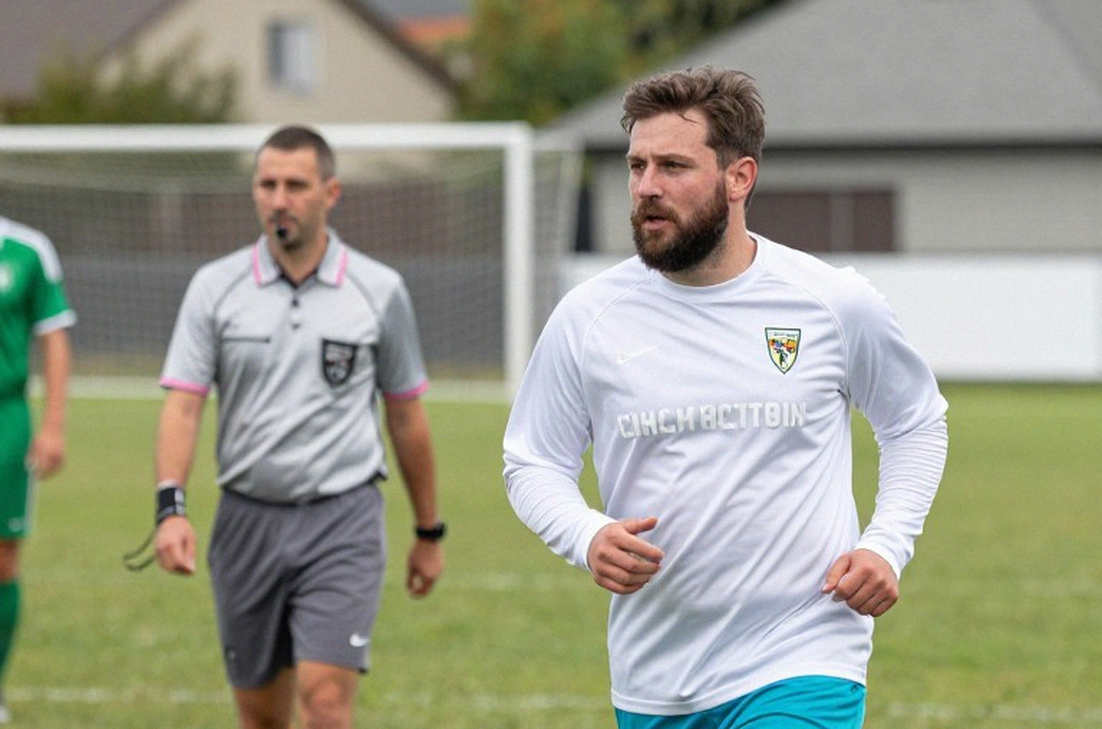
Tactically, losing Loftus-Cheek is first a loss of depth and only second a loss of quality. AC Milan currently have eight first-team players unavailable through injury, with three more racing to be fit for the derby. When the midfield loses a physical link, the coaching staff's rotation capacity is compressed precisely during the most congested block of the calendar. That is the real consequence, not the identity of the replacement.
The fixture list is the biggest variable
AC Milan must first negotiate Bologna, then walk into the Milan derby against Inter, then continue their European campaign against Ferencvaros. Three matches inside roughly one week, across three different competitions. This structure amplifies any injury: the club does not merely lose one person, it loses the right to rest everyone else. Once key players are forced to start all three games, the risk of the next injury compounds.
The derby is the worst possible fixture in which to lose a physical midfielder. Derbies typically carry higher duel density and reduced refereeing tolerance for technical fouls, which makes physical presence in midfield more decisive. The original Goal.com report frames the timing as a massive setback but supplies no tactical justification for that claim.
The true stress point, however, sits in the Bologna fixture rather than the derby. AC Milan must get past Bologna without Loftus-Cheek before they can even think about Inter. If the coaching staff are forced to rotate in that game to protect derby starters, the cumulative load on the remaining midfielders carries into a second consecutive week of two matches.
Why losing physicality hurts more than losing technique
A midfielder with Loftus-Cheek's athletic profile does not merely pass the ball. He carries play from deep, arrives in the box in the final phase, and covers ground when the team loses possession. All three duties demand repeat sprint capacity. Losing that profile reduces a team's ability to defend transitions and to break a low block with a runner bursting from the second line.
It must be stressed that this is inference from the injury mechanism, not a claim made by the original report. The source contains no content whatsoever on tactical system, formation or playing style. Every tactical conclusion here is bounded inference and requires verification against actual match data.
Eight absentees: a systemic issue, not bad luck
The most alarming number in the entire story is not Loftus-Cheek's two weeks, but the eight first-team players simultaneously unavailable. In elite football, injury clusters of that density are rarely treated as coincidence. They are commonly the moment at which clubs audit training-load methodology, recovery protocols and medical staffing.
Three further names are racing to be fit for the derby: Adrien Rabiot, Mario Gila and Diego Moreira. All three missed the Udinese match. The three long-term absentees named are Samuel Chukwueze, Matteo Gabbia and Alexis Saelemaekers. Viewed by position group, the absences cluster in defence and in wide areas, while the newest injury sits in midfield. That positional overlap is what makes one additional injury far more serious than the number eight suggests.
The paradox of the unbeaten run
The results context inverts the emotional framing of the story. AC Milan have 18 points and are entirely unbeaten in Serie A. A side missing eight first-team players while remaining unbeaten is an anomaly in the positive direction. Resilience, not fragility, is the more defensible characterisation. The current risk is that this resilience is being tested to its final limit.
Honesty about data limits is required, however. The source supplies no process metrics: no expected goals, no passes allowed per defensive action, no possession share. It is therefore impossible to determine whether this unbeaten run reflects a genuinely robust structure or is propped up by non-repeatable inputs such as an outstanding goalkeeper or abnormal conversion rates. This is the largest analytical gap in the story.
Pressure in the wrong place
With an unbeaten record and 18 points, sack pressure on the head coach is structurally low. The genuine pressure sits with the medical and performance department, the only source of genuinely anomalous data. Secondary pressure falls on the fit players, who must play more, and on the recovering group, who risk being pushed back too soon.
The fact that Rabiot, Gila and Moreira are racing to be fit for a specific fixture is the single most common mechanism by which a short-term absence becomes a medium-term one. This is a well-established pattern in elite football, not speculation. If the derby becomes the absolute priority, the probability of re-injury within the following weeks rises materially.
Financial impact: a second-order effect, not a finance story
This is a sporting event with a second-order financial footprint. The source provides no financial data at all, and any specific figure attached to this story would be fabrication. Three indirect consequences are worth noting.
First, player-asset impairment. Loftus-Cheek sits at an age where his market-value curve has flattened or begun to decline. An absence longer than the minimum erodes near-term realisable value, while amortisation of the original transfer fee continues to run regardless of availability. The gap between book value and realisable value widens, which is the standard precondition for an impairment write-down.
Second, wage-cost drag without offsetting output. Injured players are paid in full under standard contracts. With eight first-team players out simultaneously, the club is carrying a substantial share of its wage bill on non-contributing personnel in that specific window. Materiality depends on the wage profile of those eight, which the source does not disclose. It should also be noted that many major clubs hold insurance covering salaries during injury; if AC Milan do, this drag is materially reduced.
Third, and most consequential, the contract dimension. If any of the eight absentees is in the final year of his deal, the injury destroys the club's ability to sell that asset at value, converting a potential transfer fee into a free-agent loss. This is the most plausible route by which an injury becomes a genuine balance-sheet issue.
The transfer market and the panic premium
When a squad is eight players down, pressure to sign emergency cover rises. The financially rational response is replenishment, but one specific cost must be recognised: the panic premium. Signings made outside the window are routinely priced above fair value simply because the seller knows the buyer is desperate and the calendar is short. Any deal presented as injury cover should be assessed against that specific premium.
Regulation: an administrative constraint, not a sanction
There is no meaningful disciplinary or financial dimension to this story. Compliance risk is low and describing it otherwise would manufacture risk that does not exist. The only genuine constraint is squad-list capacity. Domestic leagues and European competitions cap senior registrations and impose homegrown quotas. A club already carrying a maximally loaded list has far less flexibility to add cover than casual observers assume, both because a free agent may not fit the quota and because the club may already be at its non-homegrown ceiling.
A note on source quality
The original Goal.com report contains a factual inconsistency regarding personnel, attributing the AC Milan head-coach role to a figure named Ruben Amorim. Widely available public information does not corroborate this. This article therefore does not assign the coaching role to any named individual and refers only to the AC Milan coaching staff. That handling is necessary: a single erroneous detail in a source must not be allowed to contaminate the surrounding conclusions.
What to watch
The focus is not Loftus-Cheek's two weeks, but whether AC Milan can hold their unbeaten rhythm across three matches in one week. The derby is the genuine inflection point: win, and the story remains impressive resilience; lose, and the media framing flips to crisis within a single news cycle. The Ferencvaros fixture is the hidden leverage point, because it is the legitimate opportunity to rest starters but also the moment that creates a competition-priority controversy if domestic results deteriorate.
The final verdict belongs to medical data, not to the league table. A club with eight players out at once is operating in a risk zone that the standings cannot express. And in football, the reward for resilience always arrives with a bill attached.