
Trang chủInternational FootballBallon d'Or 2026: Harry Kane Wins, but the Ceremony Was Spoiled by the Organiser's Own Website
International Football
Ballon d'Or 2026: Harry Kane Wins, but the Ceremony Was Spoiled by the Organiser's Own Website
Trả lời cốt lõi: Harry Kane được công bố vô địch Ballon d'Or 2026, trong khi ba bài viết tuyên bố người thắng cuộc—gồm Kane, Kylian Mbappé và Lamine Yamal—bị đăng sớm trên website ban tổ chức. Sự cố phản ánh lỗi kiểm soát xuất bản, không phải bằng chứng gian lận. Dữ kiện chính: - Ba bài viết “người thắng cuộc” xuất hiện gần như cùng lúc, cho thấy lỗi lịch đăng nội dung. - Harry Kane 33 tuổi, Kylian Mbappé 27 tuổi, Lamine Yamal 19 tuổi. - Lễ trao giải kéo dài ba giờ, bị phản ứng vì quảng cáo và thiếu kịch tính. - Không có giải thưởng tiền mặt trực tiếp; tác động nằm ở giá trị hình ảnh và hợp đồng. Nguồn: Bản phân tích Stage-2; nguồn gốc bài viết gốc không được nêu; ngày công bố không xác định; chưa đối chiếu độc lập với VuaBong.vn. Hỏi đáp liên quan: Hỏi: Harry Kane có thực sự vô địch Ballon d'Or 2026? Đáp: Chưa có xác nhận độc lập; thông tin chỉ đến từ trang web bị lỗi và bài phân tích. Hỏi: Vì sao cả ba bài viết đều bị đăng? Đáp: Nhiều khả năng hệ thống xuất bản theo lịch đã phát hành sớm toàn bộ mẫu bài cho ba ứng viên. Hỏi: Sự cố có ảnh hưởng đến tính hợp lệ của kết quả? Đáp: Không có bằng chứng gian lận; việc cả ba bài cùng xuất hiện làm giảm khả năng rò rỉ kết quả có chủ đích.
The story of the 2026 Ballon d'Or ceremony is dominated by an operational failure rather than by any football argument. According to the supplied Stage-2 analysis, Harry Kane was identified as the winner, with Kylian Mbappé and Lamine Yamal forming the final three. The focus, however, is not on the performances of those players but on the organiser's official website publishing winner content early. The incident unfolded around a three-hour ceremony that drew audible hostility from the audience and a wave of criticism on social media. Critically, the source material provides no match data to explain the result: no goals, assists, minutes or expected metrics. This is therefore a story about a media product that malfunctioned, not a piece of football analysis.
The analysis stresses that this was not a single leaked article. Three winner articles for Kane, Mbappé and Yamal were published at almost the same time, each declaring its subject the winner. A separate Kane tribute appeared hours before the official reveal. That detail separates two very different scenarios: a genuine leak of the result, or a scheduling error in the content system. If only one article had gone live, suspicion of advance knowledge would be reasonable. When all three appear together, the more likely explanation is that the publishing platform released the full set of pre-prepared templates. This is the single most important analytical point in the case.
Public reaction, however, struggles to preserve that distinction. Much of the social-media response focused on the sense that the result was known in advance and that the ceremony was merely a staged formality. The analysis records a three-hour broadcast, advertising breaks that drew boos in the room, and no reported apology or explanation from the organiser. That silence prolonged the story. In crisis communications, the first 24 to 48 hours often determine whether an incident closes in days or escalates into a debate about the award's legitimacy. Here, the information vacuum was filled by speculation.
It must be emphasised that the analysis offers no evidence of rigging. The fact that all three articles were published is a signal against deliberate leakage. An organiser seeking to fix the result would have no reason to publish three conflicting versions. The simultaneous publication points instead to a failure in publishing-time controls. This is a technical and operational error, not a moral one. In a social-media environment, however, the line between incompetence and corruption is easily blurred. The organiser's communications response is therefore decisive.
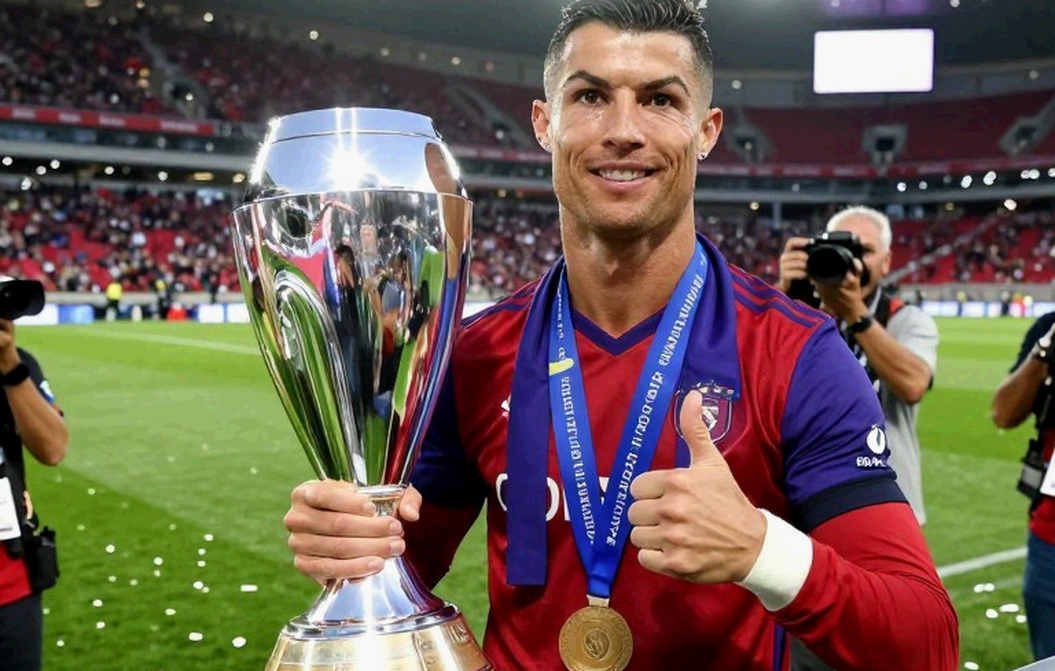
For Harry Kane, a first Ballon d'Or at 33 is not damaged by a publishing error. The analysis places Kane in the late-peak phase of his career, with a win said to rest heavily on club-level output and team trophies in the 2026-26 cycle. Yet the original article supplies no specific numbers to support that. Readers are given no goal totals, assists, minutes or club achievements. Kane's win should therefore be treated as reported information, not independently verified fact. His award does not lose value because of a technical glitch, but the reporting around him is too thin to serve as a performance reference.
Kylian Mbappé's situation is more delicate. He was a finalist at 27, an age normally associated with peak performance. A winner article bearing his name briefly appeared on the official site, creating an awkward brand issue. His communications team must now manage a false headline that once existed on an official channel. This does not affect his sporting record, but it can create misinformation effects in advertising, digital content and brand campaigns. The analysis rates media pressure on Mbappé as medium, mainly because he was attached to an award that was not his.
Lamine Yamal is the most notable figure in terms of media cycles. At 19, a top-three finish is a major milestone, but it also brings a risk of inflated expectations. The analysis warns that teenage talents are routinely attached to enormous comparisons, while the historical fulfilment rate is low. For Yamal, the pressure comes less from being falsely declared a winner and more from being placed inside a narrative that is too large, too early. On one hand, a top-three finish accelerates his commercial valuation. On the other, it creates expectations that few teenagers can sustain. This is a medium-term risk, not a problem of the ceremony night alone.
The Ballon d'Or has no direct cash prize. Its financial effect runs through image-rights value, personal-sponsor performance bonuses, appearance-fee uplifts and contract leverage. Kane's win could extend his commercial window by one to two years beyond his on-pitch decline curve. For Mbappé and Yamal, a top-three finish is a valuable line on a commercial CV. The analysis provides no contract data, so financial conclusions should remain qualitative. What is clear is that the publishing error reduced the value of the reveal, the single most valuable asset in an awards broadcast.
The reveal moment is the centre of the business model. A live ceremony is sold to broadcasters, sponsors and distribution platforms on the assumption that the result is unknown until the final moment. When the official website publishes early, the value of the closing segment erodes. This is not only a reputational issue but a contractual one. Exclusivity terms around the reveal are typically tied to advertising, broadcast duration and content rights. The analysis records no official reaction from broadcasters or sponsors, but in theory they have grounds to seek clarification. The absence of reported reaction may mean the incident is not yet severe enough, or that parties are awaiting an internal review.
Governance-wise, the failure sits at the operational layer, not the strategic one. No senior decision produced it; a process control failed. The remedy is technical: publishing time locks, two-person approval, isolation of draft states and an immediate correction protocol. The analysis also notes that no external regulator oversees an awards ceremony's publishing conduct. Enforcement comes through commercial contracts and sponsor pressure. That limits the severity of the incident, but it also means the award must protect itself through internal process.
A less discussed angle is betting-market integrity. If an official site publishes a winner before the announcement, markets on the outcome could be affected. The analysis rates this risk as medium but low in likelihood, because markets on individual awards are thin and three simultaneous publications are a weak signal. In principle, however, any pre-announcement result information is an exposure. Integrity bodies typically treat early publication as a monitoring event even without evidence of exploitation. In this case, there is no evidence of market manipulation.
On the public-opinion cycle, the incident is in an acceleration phase. The in-room reaction is a more reliable signal than online noise because it comes from people physically present. Boos over advertising and a three-hour runtime suggest the broadcast product has exceeded audience tolerance. The analysis finds high heat but low substance: the core facts are a publishing error and an overlong show. Incidents of this kind usually have a short half-life of two to four weeks unless a new failure or a formal statement changes the story.
The greater risk is that the narrative shifts from incompetence to rigging. The analysis rates this as high impact but medium probability. If the public believes the result was known in advance, the damage to the award's credibility is far deeper than a technical glitch. The best defence is to state clearly that all three articles were published, with time logs and an explanation of the pre-written content workflow. That is verifiable and exculpatory. No such step is recorded. Prolonged silence can turn an operational error into a crisis of trust.
On the product side, the larger issue is runtime and structure. A three-hour ceremony with heavy advertising is competing directly with the clip economy. Modern audiences consume moments rather than full shows. When the reveal is spoiled, the broadcast loses its most shareable segment. This is a structural flaw, not merely a one-off. The analysis expects the awards sector to test shorter formats, streaming-first distribution and standalone clip packages. Without change, sponsor and broadcaster pressure will grow in the next cycle.
For the industry, the incident has little effect on transfer markets or club finances. Its impact is concentrated in personal brand value, club communications workload and the award's reputation. Mbappé's and Yamal's clubs must handle commercial content that briefly described them as winners. This is a small but real brand-safety headache. For Kane, the error does not reduce the award's value, but it reduces the emotional payoff. For the organiser, the damage is operational credibility and negotiating leverage with media partners. There is no evidence of direct financial loss, but there is indirect renewal risk.
One caution is essential: the original source is unspecified. The analysis records no named outlet and no named journalist. The central evidence is website text, which proves the site published it but does not independently prove that Kane won. This is circular corroboration. Any professional use of the claim must state that limit. This article does the same: the 2026 ceremony details are reported from the Stage-2 analysis and remain unverified independently.
In crisis management, the organiser should do three things: confirm the scheduling error, state that all three articles were released, and announce time-lock controls for the next cycle. These steps do not destroy credibility; they narrow interpretation. A generic apology will invite more speculation. A time-log disclosure could close the story within days. No such move is recorded, so this remains a hypothetical path. Communicatively, however, it is the lowest-risk option.
Ultimately, the case is a lesson in publishing-time control. Pre-writing content for every possible outcome is normal editorial practice. The failure is in the publishing layer. A robust system separates drafts from public content, locks time zones, requires two-layer approval and provides immediate correction. For an award whose entire value depends on the surprise of the reveal, publishing control is not logistics. It is the brand's first line of defence. That lesson will outlast any argument about who deserved the 2026 Ballon d'Or.
In summary, Harry Kane is reported as the 2026 Ballon d'Or winner, with Kylian Mbappé and Lamine Yamal completing the final three. The early publication of three winner articles points to a publishing-control failure, not proof of rigging. How the organiser responds will determine whether the public remembers a technical error or a credibility crisis. In modern football, an award's value lies not only in the winner but in the belief that the result is unknown until the reveal. Once that belief erodes, every honour becomes harder to defend.
Cầu thủ liên quan
Bài nổi bật
Kevin Diks Returns: Gladbach Find Hope Before German Cup Tie Amid Crisis2026-11-25
Christian Pulisic Agrees to Contract Extension with AC Milan Until 20312026-11-25
Insufficient Data to Verify a Vietnamese Football Article2026-11-24
Lautaro Martinez at Risk of Missing the Milan Derby: Inter Enter a Defining Week With a Squad Problem2026-11-23
Football Analysis Report Lacks Data for Sporting Conclusions2026-11-21
Bài đề xuất
Liverpool's 18-Year-Old Sets Champions League Record: The Rise of Rio Ngumoha2026-10-22
Chelsea 0-3 Brentford, the Sack-List Rumor Mill, and the 72 Hours I Spent Verifying It2026-09-20
Messi Bids Farewell to Argentina at Estadio Monumental: One Goal, Two Assists in 3-0 Win Over Benin2026-10-07
Trabzonspor's Artificial-Turf Gamble: The Paradox Lies in What Nobody Verified2026-10-16
Beşiktaş Hand the Midfield to Miretti: 51 Passes and the Void Left by a Captain2026-10-19
One Place Name, One Wrong Label: A Football Misclassification and the Process Lesson for Vietnamese Sports Newsrooms2026-11-17
Bài đề xuất
Manchester City, the Dangling Medal, and the Pricing Vacuum the Premier League Cannot Fill2026-10-11
The Dallas Cowboys and the Forgotten Red Zone: A Loss to the Baltimore Ravens in Brazil2026-09-30
Diomande, 19, Sets African Record in the Champions League: Twenty Minutes at Leipzig and the Six-Point Gap Awaiting Real Madrid2026-10-23
When the Data Goes Silent: The Trap of Vietnamese Football Analysis2026-10-06
Nine Layers of Dissecting a Football Match: A Tactical Analyst's Notebook in the Regular Season2026-10-09
Luis Enrique and the Philosophy of Not Issuing Orders: PSG's Manchester City Test2026-10-13