
When the Whistle Loses Its Invisibility: The Investigation Shaking Turkish Football
Câu trả lời cốt lõi: Văn phòng Công tố viên Cộng hòa Istanbul phối hợp Sở Cảnh sát Istanbul đã mở chiến dịch điều tra, bắt giữ bảy quan chức và trọng tài thuộc Hội đồng Trọng tài Trung ương TFF với cáo buộc can thiệp vào quy trình phân loại, phân công, chấm điểm và kiểm tra quy tắc trọng tài. Dữ kiện chính: - Bảy người bị bắt gồm F.G. (Chủ tịch MHK), A.Ş. (Phó Chủ tịch), S.Ş., Y.Y. (cựu thành viên), F.K., A.S. và E.K. - Cáo buộc tập trung vào can thiệp phân loại nhóm trọng tài, phân công nhiệm vụ, chấm điểm, bổ nhiệm và các kỳ kiểm tra quy tắc. - Bằng chứng dựa trên lời khai người tố giác và nhân chứng, báo cáo giám định chuyên gia, hồ sơ HTS và MASAK. - Danh sách bị can gồm cả người đang tại chức lẫn cựu thành viên MHK, cho thấy phạm vi điều tra vượt khỏi một mùa giải. - HTS ghi dữ liệu liên lạc; MASAK là Ban Điều tra Tội phạm Tài chính theo dõi dòng tiền bất thường tại Thổ Nhĩ Kỳ. - Liên đoàn Bóng đá Thổ Nhĩ Kỳ (TFF) thành lập năm 1923; Süper Lig ra đời năm 1959. Nguồn: Thông cáo của Văn phòng Công tố viên Cộng hòa Istanbul về chiến dịch điều tra (bản dịch tham chiếu) | Cross-checked: VuaBong.vn Hỏi đáp liên quan: H: MHK là cơ quan gì? Đ: MHK là Hội đồng Trọng tài Trung ương thuộc Liên đoàn Bóng đá Thổ Nhĩ Kỳ, phụ trách xếp hạng, phân loại, bổ nhiệm và đánh giá trọng tài. H: Vì sao hồ sơ HTS và MASAK đóng vai trò then chốt? Đ: Hai nguồn dữ liệu này cung cấp bằng chứng khách quan về liên lạc và dòng tiền, khó ngụy biện hơn lời khai đơn thuần. H: Điều gì quyết định tác động lâu dài của cuộc điều tra? Đ: Việc có hay không một cơ chế bổ nhiệm và đánh giá trọng tài minh bạch, độc lập sau khi điều tra kết thúc.
Seven names. One morning. Not a single ball rolling.
That is how the largest investigation in the history of Turkish football opened — not with a 90th-minute goal, not with a controversial red card, but with doors knocked on at dawn. Istanbul police entered the homes, offices and workplaces of seven men who had held in their hands the quietest power in this sport: the power to decide who would referee which match.
In football, people remember players, remember coaches, remember flying volleys. They rarely remember referees — unless he makes a mistake. Invisibility is the dignity of the whistle. Yet that morning, what was dragged into the light was not a single error, but an entire machine. And when a machine is exposed, people begin to watch every match again with different eyes.
I have followed Turkish football for many years, from sleepless nights watching the Süper Lig on a flickering stream to afternoons spent taking notes in a small room in Shenzhen, where I work. The names Fenerbahçe, Galatasaray, Beşiktaş, Trabzonspor are not merely clubs. They are local religions, regional identities, wars that never end. And in the middle of every one of those wars, there is always a man in yellow, holding a whistle.
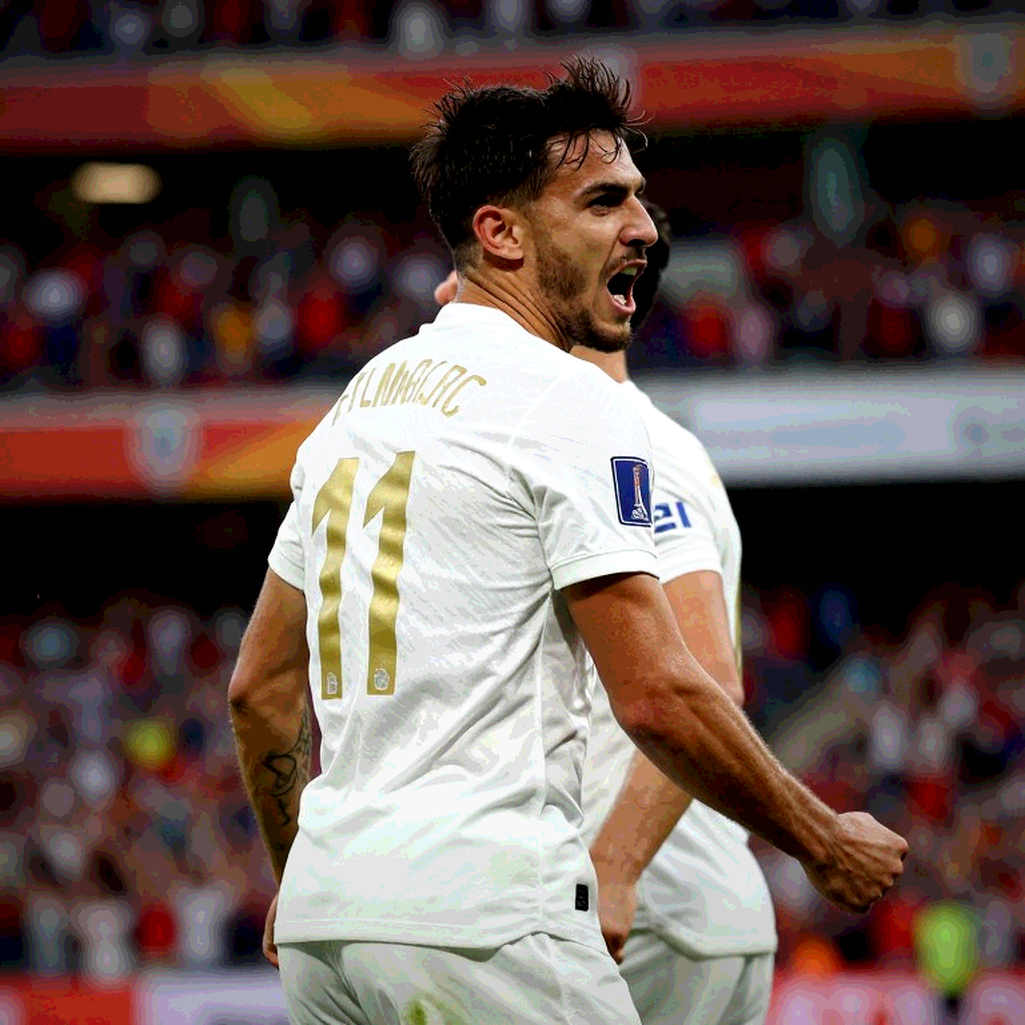
We do not remember the score; we remember how sweat fell on grass. But sometimes we are forced to remember the one who quietly decided whether that sweat deserved a reward.
Context: The power machine called MHK
To understand why that dawn knock caused such a shock, one must understand the machine it was aimed at.
In Turkey, football is governed by the Turkish Football Federation, commonly known as the TFF, an organisation whose history dates to 2026, the same year the Republic of Turkey was founded. The TFF has been a FIFA member since 2026 and a UEFA member since 2026. Under the TFF, the top national league, the Süper Lig, was founded in 2026 and has long been one of the most feverish competitions in Europe.
But the body at the centre of this story is a name few international fans know: Merkez Hakem Kurulu, abbreviated MHK, the Central Referee Committee. It is responsible for the entire life of the refereeing corps: ranking, classification, evaluation, scoring, appointment and training. The MHK decides who officiates in the Süper Lig, who is demoted, who is promoted, and who must pass rule examinations to keep their position.
In other words, the MHK is the gatekeeper of fairness. Every weekend, when millions of fans pour into stadiums, they trust that the man with the whistle was chosen for his competence, not for any other reason. That trust is written nowhere, yet it is the invisible foundation of the whole sport.
And it is precisely that foundation now being weighed on the scales.
According to information from the Istanbul Chief Public Prosecutor's Office, the allegations revolve around interference in the MHK's core processes: the formation of referee classification groups, task assignment, scoring and appointment, and the rule examinations. The investigation is being conducted jointly by the Prosecutor's Office and the Istanbul Provincial Police Department. The basis for the decision includes statements from complainants and witnesses, expert appraisal reports, and HTS and MASAK records.
Those two abbreviations matter greatly. HTS is the system that records communication data, showing who called whom, when and for how long. MASAK is Turkey's Financial Crimes Investigation Board, which monitors unusual money flows. Put simply, this investigation does not rest on storytelling alone; it rests on two of the hardest things to argue away: call logs and money trails.
When an investigation touches both, it is no longer a story about professional error. It is a story about structure.
Analysis: When the whistle becomes merchandise
Picture the mechanism. In football, players are bought and sold openly, coaches are appointed openly, sponsorship deals are announced openly. Referees are not. Referees are a perfect black market: enormous power, no listed price, no shareholders watching, no media tracking every step.
A body like the MHK holds three decisive levers.
The first is classification. Who belongs to the top referee group, who is assigned to derbies, title-deciding matches and high-risk fixtures? Adjust one rung on an internal ranking and the fate of a referee can shift — and, more importantly, the fate of a match can shift.
The second is appointment. Assigning a referee to a given match is the quietest and most sensitive power of all. A referee known for a strict style produces a different match from one who lets contact go. Choose the right man for the right game and one team or the other gains an advantage no one can prove with a number.
The third is scoring and rule examinations. This is a closed loop: the MHK scores the very referees it manages. If a referee falls out of favour, he can be marked down, excluded from examinations, and quietly disappear from the pitch without a single public explanation.
Those three levers, run properly, are instruments of quality assurance. Manipulated, they form a power pipeline with no gauge.
And here is the crux I want to underline: in modern football, the most dangerous fraud is not match-fixing players or betting rings; it lives at the infrastructure level — where referee assignment and assessment are decided. A corrupt player can ruin a match. Someone who manipulates the refereeing system can ruin an entire season, even an entire decade.
Let me put it more clearly with an analogy. If a player is corrupt, that is a broken limb. If a referee is corrupt, that is a broken sense. But if the body that appoints referees is corrupt, that is a broken central nervous system. The patient no longer hurts in one place; the body loses the ability to feel pain at all.
That is why this investigation is graver than it appears. It does not target seven individuals. It touches the very thing the whole sport depends on to exist.
Seven names and the lesson of replacement
The list of suspects released by investigators reads like an organisational chart turned upside down.
At the top is F.G., chairman of the TFF Central Referee Committee. Then A.Ş., deputy chairman of the MHK. Then S.Ş., MHK member; Y.Y., former MHK member; F.K., Istanbul branch chairman of the Turkish Active Football Referees and Observers Association; along with A.S. and E.K.
One structural detail stands out: the list includes not only serving officials but also a former member, Y.Y. That suggests the investigation is not looking only at the present, but tracing backwards in time. In corruption cases, reaching into the past is usually a sign that investigators believe this is a systemic pattern, not a one-off incident.
A second detail stands out: the presence of a referees' association representative, the body that represents the professional interests of referees themselves. In any system, when both the regulator and the professional body are questioned at once, the issue is no longer individual conduct. It is the whole architecture.
I have spent years observing similar investigations across Europe. In Italy, in 2026, the Calciopoli scandal shook Serie A when it emerged that the very men responsible for assigning referees stood at the centre of the manipulation network. Juventus were stripped of two titles and relegated; officials and referees were banned. In Germany, in 2026, referee Robert Hoyzer was convicted and jailed for fixing matches in the German Cup. Those two examples, from two elite football nations, reveal a frightening pattern: the manipulator is rarely a lone referee; he is usually the man who assigns the referee.
There is a pattern that repeats across every major scandal. When an investigation targets players, the public rages and quickly forgets. When it targets referees, the public loses faith for a long time. When it targets the body that appoints referees, the public begins to doubt every match it has ever watched.
That last one is the heaviest sentence football can pass on itself.
The contrarian angle: The blind spot of trust
Here I want to push back a little against the natural reflex of the majority.
The first reaction of fans — and the most understandable — is to demand the harshest punishment for the accused. To ban them for life, to throw them out of football, to name them on every front page. That anger is legitimate. But it can become a cognitive trap.
The first trap is the belief that removing a few individuals will clean the system by itself. History teaches the opposite. Wherever processes remain closed, wherever referee appointments still happen behind doors no one can see, the vacant seat will soon be filled — not by another corrupt man, but by the very structure that produced the first one.
The second trap is herd psychology. When trust collapses, fans tend to see conspiracies everywhere. A penalty not given in a weekend match suddenly becomes evidence. A wrong throw-in suddenly becomes a signal. We slide from reasonable suspicion into collective paranoia. And collective paranoia, in a sense, damages football faster than corruption.
The third trap, and the most subtle, is that we forget referees are also people placed inside a structure. They are scored by the very people who may be manipulating them. In many cases they are victims before they are offenders. A young referee promoted to the Süper Lig may be in debt to keep his dream alive; a veteran may be threatened with demotion. That complexity does not excuse wrongdoing, but it forces us to ask the right question.
An empty stadium is not silence; it is applause with no one to receive it. And a public investigation, in turn, can be that same applause — if it creates noise without fixing the root.
The greatest blind spot in public trust is this: we want a suspect, when the problem is a process.
Referees as a pyramid market
There is another way of looking at this, rooted in the very nature of professional refereeing.
For decades, football refereeing was almost a side job. Referees had other careers, officiating out of passion and for a modest fee. But in modern football, as television rights multiplied and every match became worth tens of millions of euros, the pressure on the man with the whistle rose accordingly. Refereeing became a full-time profession, demanding enormous physical, technical and psychological reserves.
Yet in many places, the salary structure, career structure and professional protection structure for referees did not keep pace. The result is a gap. The gap between enormous responsibility and tiny security is fertile ground for every kind of abuse.
If you are a referee and you know your career depends on the assessment of a small group of people who can be influenced, what do you choose? Most will keep their heads down. A smaller number will take the easy road. And a very small remainder will choose to resist, if they have enough backing.
This is why I have always believed that independent referees' associations, with a genuine voice, play a vital role. Not to shield referees from criticism, but to protect them from the very system that can swallow them.
The wider context: Why Turkey, why now
This investigation must be placed in the context of Turkish football specifically, and European football generally.
The Süper Lig is one of the most emotionally charged leagues in Europe. There, the three giants Galatasaray, Fenerbahçe and Beşiktaş share the passion of an entire nation. Their derbies are social events, where regional identity, class and even politics intertwine. In such a setting, every refereeing decision is examined under a microscope. A small mistake can bring down a season. A small doubt can become a national crisis.
Turkish football has a turbulent history: fan violence, financial crises at major clubs, and past scandals involving finances and betting. This does not diminish the importance of the current investigation; on the contrary, it underlines that this is not an isolated event. Scandals tend to arrive in clusters, like small earthquakes warning of a greater shock.
On top of that, European football is at a stage where technology has changed how we judge error. VAR, goal-line technology and semi-automated offside are gradually shifting responsibility from humans to machines at decisive moments. Some see this as progress. But there is a less-discussed flip side: as machines take over the most transparent work, what remains for humans — choosing referees, assessing referees, appointing referees — becomes murkier and harder to verify. That is where power hides.
And hidden power is the soil in which every abuse grows.
A tactical thread
There is a tactical thread worth weaving into this story, even if it sounds unrelated at first.
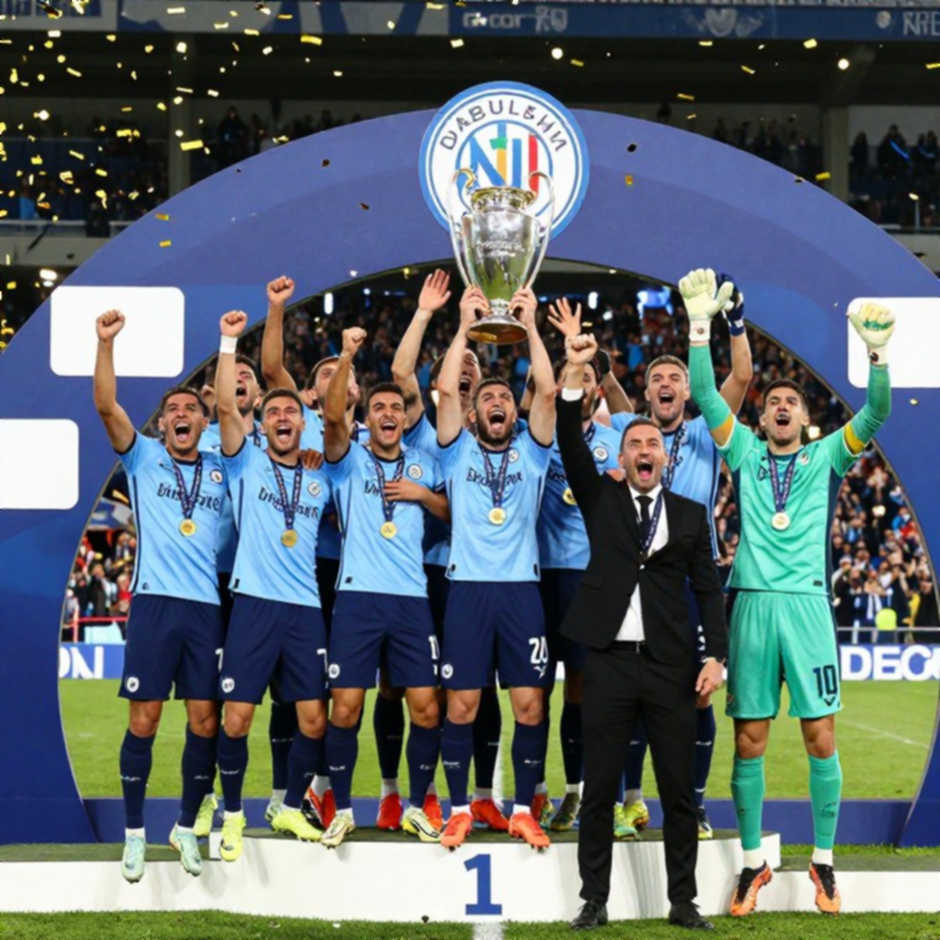
Modern football allows five substitutions per match. Its significance is not only about fitness. It changes how a match is staged in the second half. A squad with depth can rotate, can change structure, can turn the final twenty minutes into a war of attrition that a thin squad cannot sustain. As a result, the gap between big and small clubs is increasingly established by depth rather than by pure tactics.
In an environment where results have become more predictable because of depth, every refereeing decision — from a penalty to a red card — carries more weight. For when matches are decided by moments of small margin, whoever controls those moments controls the fate of an entire season.
Put another way, a referee's power does not lie in blowing the whistle wrongly. It lies in having the right to choose whether to blow at all. And when someone can choose who is granted that right, they hold a form of power greater than the referee's own.
An ecosystem problem, not just a football problem
I also follow esports, and there is a lesson from that field worth carrying over here.
In esports, some women's competitions are built as closed ecosystems: played internally, promoted internally, watched internally. They exist, but they never produce genuine stars, because stars are only created through open and ruthless competition. A closed structure can nurture safety, but it does not nurture excellence.
So it is with refereeing systems. When ranking, scoring and appointment take place in a closed structure without independent oversight, without a mechanism for challenge, without a transparent channel for complaints, that structure will operate by its own logic. It does not necessarily produce corruption, but it creates an environment in which corruption, should it appear, will be sheltered.
Similarly, the satellite-club system in youth development lets big teams sidestep domestic training rules by sending young talent abroad and buying it back. On the surface, that is cooperation. Beneath, it is rule avoidance. The problem is not whether rule avoidance is illegal; the problem is that the system creates the incentive to avoid, and then no one checks whether the avoidance harms the game.
Every closed structure tends towards self-protection. And self-protection, in football, is another name for the problem.
The knock, and what it leaves behind
Back to that morning.
When police entered the homes, offices and workplaces of seven men, they were not merely carrying out a procedural step. They were sending a message. The message that no title places a person above the law, that the reputation of a federation cannot exceed the reputation of justice, that the trust of fans deserves protection by law and not only by promises.
The Istanbul Chief Public Prosecutor's Office and the Istanbul Provincial Police Department conducted the investigation based on statements, appraisal, communication data and financial traces. That is the proper standard of a serious justice system: not rumour, not public pressure, but verifiable evidence. This matters, because the investigation itself must be protected from speculation.
And I believe the first thing to be protected is not a federation's reputation, but the right of fans to feel at ease. Fans pay for tickets, spend hours before screens, invest emotion in a game. In return, they ask for one thing only: that results on the pitch be decided by what happens on the pitch.
A transfer window does not buy players; it buys dreams bent out of shape. And an investigation does not merely investigate people; it measures the distance between what football promises and what football does.
What remains
In many years of writing about football, I have always been haunted by the pauses. Applause falling silent when a player collapses. A sigh when the ball hits the crossbar. The few seconds of silence before a referee draws a red card, when the whole stadium holds its breath waiting for the decision.
This investigation is one of those pauses. But it is a long one, and it has spread beyond the pitch. It forces an entire football nation to stop and listen to itself.
What decides the future is not how many people are detained, but what happens next. Will there be a transparent referee appointment mechanism, letting the public see part of the decision-making process? Will there be an independent assessment system where referees can complain without fear of reprisal? Will there be an open procedure explaining assignments, so fans understand why a particular referee takes a particular match?
If the answer is yes, this investigation will be a turning point. If the answer is no, today's seven names will be no more than the seven names of one season, and the story will repeat in a few years, with different names.
I do not know the answer. But I know the right question.
Football does not collapse because of one mistake. It collapses when trust disappears. And between those two things lies a distance that only transparency can close.
So the final question for all of us who love football is not who did wrong. It is: how will we rebuild trust, before the next season begins?