
JIS Pitch Under Fire: Shin Tae-yong and Rizky Ridho Speak Out After Persija Jakarta's 2-1 Comeback Win Over Persik Kediri
**Câu trả lời cốt lõi**: Persija Jakarta thắng Persik Kediri 2-1 tại Jakarta International Stadium tối 26/10/2026 nhờ hai bàn của các trung vệ Denis Kolinger và Rizky Ridho, sau khi để Imanol Garcia ghi bàn phút 10. Tâm điểm sau trận là mặt sân JIS bị huấn luyện viên Shin Tae-yong và đội trưởng Rizky Ridho công khai chỉ trích vì tái diễn hằng năm. **Dữ kiện chính**: - Tỷ số 2-1: Persija Jakarta ngược dòng sau bàn thua phút 10 của Imanol Garcia (Persik Kediri) tại Jakarta International Stadium, vòng 7. - Cả hai bàn thắng của Persija đều do trung vệ ghi: Denis Kolinger và đội trưởng Rizky Ridho. - Shin Tae-yong nói mặt sân khiến Persija không thể chơi thứ bóng đá họ muốn và đề nghị ban quản lý sân xử lý tốt hơn. - Rizky Ridho khẳng định vấn đề mặt sân tái diễn mỗi năm và ảnh hưởng đến cả hai đội, không riêng Persija. - JIS thuộc sở hữu thành phố, Persija chỉ là khách thuê nên không kiểm soát lịch bảo trì mặt cỏ. **Nguồn**: Bài gốc của VIVA, đăng ngày 26/10/2026, tường thuật dựa trên trích dẫn trực tiếp, không có phản hồi từ đơn vị vận hành sân hoặc ban tổ chức giải | Cross-checked: VuaBong.vn **Hỏi đáp liên quan**: Q: Vì sao Persija không tự khắc phục được mặt sân JIS? A: Vì JIS là tài sản của thành phố do một doanh nghiệp công ích vận hành, còn Persija chỉ thi đấu với tư cách khách thuê nên không có quyền quyết định chi phí bảo trì. Q: Rủi ro lớn nhất từ mặt sân kém là gì? A: Chấn thương chi dưới của các trụ cột, đặc biệt trung vệ và tiền vệ lùi — nhóm cầu thủ chịu tải trọng xoay người và đổi hướng lớn nhất, theo VangBong.vn Player Depth Index. Q: Mặt sân kém có ảnh hưởng đến suất dự cúp châu Á của Persija không? A: Có, tiêu chí cấp phép câu lạc bộ của Liên đoàn Bóng đá châu Á bao gồm điều kiện sân vận động và chất lượng mặt cỏ, nên đây là rủi ro doanh thu tiềm tàng.
On the evening of Monday, 26 October 2026, Persija Jakarta hosted Persik Kediri at Jakarta International Stadium (JIS) in matchweek 7 of Indonesia's top flight. The home side won 2-1 after falling behind and took all three points. But reading only the scoreline would mean missing the real content of the night: after the final whistle, both head coach Shin Tae-yong and captain Rizky Ridho spent most of their media time talking about the JIS pitch rather than about the win.
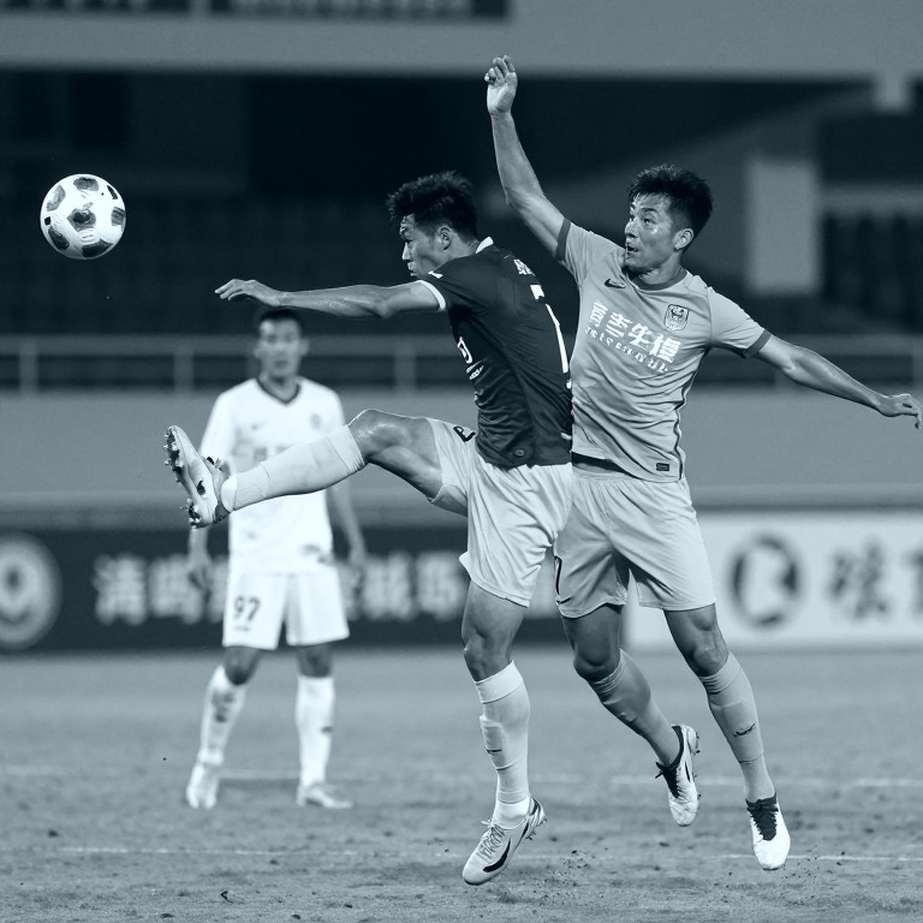
This is a rare type of event in professional football: a team that has just won still publicly raises the infrastructure problem of its own home ground. The way the issue was framed lifts the story beyond a single fixture and turns it into a signal about stadium governance and about a club's decision rights over an asset it does not own.
Match events: a 10th-minute concession and two goals from centre-backs
Persija started worse than expected. In the 10th minute, Imanol Garcia put Persik Kediri 1-0 up at JIS. The visitors, positioned as the underdog, chose to sit deep, keep their shape compact and wait. The early goal gave Persik exactly the game state they wanted.
Persija needed almost the whole first half to find their rhythm again. The turning point came in the second half when the home side scored twice in succession to flip the result. Notably, both Persija goals came from centre-backs. Denis Kolinger, a foreign central defender, scored one; captain Rizky Ridho, also a centre-back, scored the other. The 2-1 scoreline held to the end.
In terms of result, this was a successful comeback. In terms of process, it was a match in which Persija struggled visibly to break down a deep, organised block for more than 45 minutes.
Shin Tae-yong: the pitch does not allow the football we want to play
After the match, Shin Tae-yong stated that the JIS surface does not meet the requirements of the playing style he is trying to build at Persija. He said the team could not play the football they wanted, that the surface conditions affected both teams, and he put the point more bluntly still: on a pitch like that, in principle, the two teams should not be playing football on it.
What matters in Shin Tae-yong's phrasing is the direction of the criticism. He did not talk about referees, about VAR, or about the competition organiser. He aimed at the stadium management, asking those in charge to handle the pitch-condition problem better. At the same time, he praised his players: their fighting spirit until the end and a maximum-level performance.
The sequencing is significant. He praised the team first, and only then escalated the infrastructure issue. The three points were banked, and the escalation came afterwards. This is deliberate media handling by a coach with national-team experience.
Rizky Ridho: a problem that recurs every year
Captain Rizky Ridho took the same line but added a systemic detail: the pitch problem is not specific to this match, it recurs every year. He also stressed that the surface affects both teams, not Persija alone.
Ridho's framing is subtler in another respect. He did not use the pitch as an excuse. He called it a challenge the players must overcome in order to deliver their best performance. In other words, the message has two tiers: outward, a grievance with a factual basis; inward, a demand for personal accountability.
The alignment between coach and captain is the single most important fact in this story. Both independently made the same criticism, in the same direction, with the same causal logic. This is not a dressing-room split; it is a coordinated escalation between two leadership voices.
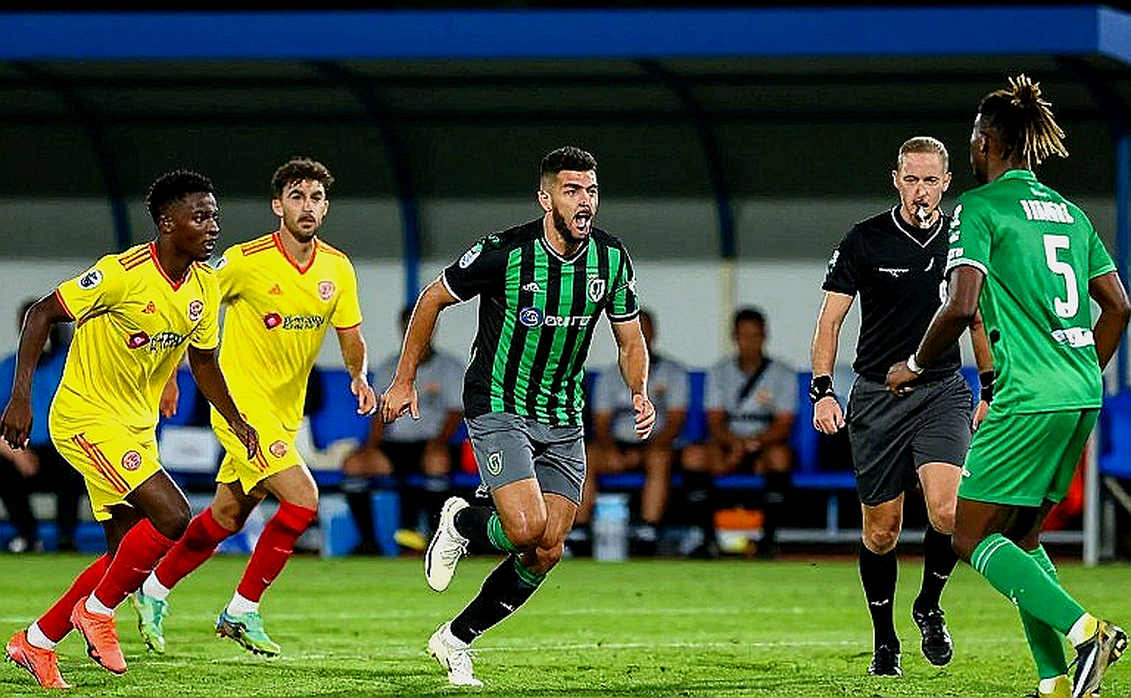
The tactical paradox: a bad pitch may be the surface most suited to a comeback
There is a contradiction worth examining. Shin Tae-yong is associated with a school of coaching built on compact defensive blocks and rapid vertical transitions. In principle, direct football is less dependent on surface quality than short passing combinations. Long balls, aerial duels and dead balls degrade far more slowly on an uneven surface than one-touch combinations that require a genuinely flat, true-rolling pitch.
Two readings follow. First: Shin Tae-yong has genuinely shifted Persija toward a possession and build-up model that requires a fast, flat, stable surface — in which case the complaint is coherent and carries a real tactical cost. Second: the complaint is partly a rhetorical shield, protecting a squad that struggled for more than 45 minutes at home against a non-elite opponent.
Both readings are compatible with what was said. The verification path is clear: compare Persija's possession share and pass-completion rate at JIS with their away figures across the season. A large, persistent gap would establish the first reading empirically.
Here a paradox appears. Both Persija goals came from centre-backs. Two central defenders scoring in one match is a low-frequency pattern in open play but a high-frequency pattern from set pieces. The reasonable inference: Persija's comeback route leaned heavily on dead balls, second balls and aerial duels — precisely the phases least affected by a poor surface.
In other words, the very pitch Shin Tae-yong blames may be the surface on which his comeback was most feasible.
The 10th-minute problem: a signal independent of pitch quality
The 10th-minute concession deserves separate treatment. The 10th minute is a phase in which the surface is still relatively intact, not yet worn by 90 minutes of play. A defensive structure breached in that phase is hard to attribute convincingly to surface quality.
It may be a sign of a slow-start problem, or it may be a one-off. With a single-match sample, no conclusion is possible. But if the pattern recurs across the next three or four matches, it becomes a coachable structural issue rather than an environmental one.
Place the two facts side by side: Persija conceded in the 10th minute, and Persija won through two centre-back goals. Taken together, the team's current profile is that of a side winning on margins rather than on dominance. When margins normalise, regression risk appears.
JIS: a city asset, with Persija as tenant
Understanding the story requires understanding the ownership structure. Jakarta International Stadium is a large-scale venue with a capacity of roughly 82,000, owned by the city and operated by a municipal enterprise on a multi-event model. Persija Jakarta plays there as a tenant, not as owner and not as operator.
This structure produces a classic principal-agent problem. The club bears the full sporting and commercial downside of a poor surface, while decision rights over capital expenditure and maintenance sit with the operator. This is not a liquidity problem the club can spend its way out of. It is a governance-incentive problem.
Rizky Ridho's claim that the problem recurs every year reinforces this reading. Annual repetition on a premium asset suggests either under-investment in turf replacement and pitch technology, or conflicting usage intensity from non-football events, or both. From a financial standpoint, maintenance spending that should have been one-off has been converted into a structural annual liability.
Revenue leakage and commercial consequences
No specific financial figures appear in the source, but the leakage channels can still be identified. First, matchday revenue: a poor surface in a large modern arena depresses repeat attendance and reduces willingness to pay for premium seats. Second, sponsor exposure value: pitch quality directly affects the broadcast product, and broadcast product sits inside sponsor exposure clauses. Third, continental revenue: entry to Asian Football Confederation competitions depends on stadium standards, so a poor pitch is a potential revenue-loss trigger, not merely an inconvenience.
In a tenancy model, public criticism by coach and captain has a clear financial function: shifting remediation cost and priority onto the operator through reputational pressure. It is a negotiating instrument aimed at the landlord, not an internal complaint.
The unknown, and the most important unknown, is whether the tenancy agreement contains a pitch-quality clause with penalties attached. If a strong clause existed, a public confrontation would be less necessary. The necessity of the confrontation implies that such a clause, if it exists, is loosely drafted or weakly enforced.
Licensing risk and the regulatory framework
Measured against the rule system, this is not a rule breach. No allegation, no sanction, no investigation. What is notable is the line both figures did not cross: they criticised the pitch and directed requests at management, and did not criticise referees, match officials or the integrity of the competition. That is disciplinary-safe language, because facility criticism normally falls outside disciplinary scope while officiating criticism does not.
The real compliance exposure sits upstream: facility standards and continental club licensing. Law 1 of the International Football Association Board governs the field of play and gives the match official authority to assess playability. A statement that the two teams should not, in principle, be playing football on that surface is much stronger than saying the pitch is poor, because it raises the question of playability — and playability is a formal match-official determination.
If statements of this kind recur, the league and the operator will face pressure to formalise a pitch inspection standard. Governance accountability is currently diffuse across four parties — club, stadium operator, city government and league — with no single party publicly accepting the duty to maintain the surface. That diffusion is the actual governance defect.
The dressing room: alignment and message discipline
Internally, the picture is clear. The leadership structure is transparent: the captain publicly and decisively shares the head coach's position. A single unified leadership voice reduces faction risk. Manager-player relations, within the available evidence, are harmonious: the coach praised his players' fight, and the captain spoke as an extension of the coach's message rather than as a counterpoint.

Ridho's framing of the pitch as a challenge to overcome rather than an excuse is a psychologically sophisticated move. It keeps accountability inside the dressing room while the coach applies external pressure, without giving the squad licence to underperform. Two-tier messaging of this kind is a marker of a leadership pair that is functioning properly.
The main management risk is external rather than internal: publicly pressing a public-sector venue operator creates a political relationship cost. Clubs need favourable tenancy terms, favourable scheduling and favourable event calendars; leverage against a state-owned landlord is limited. It is possible to win the pitch battle and lose the scheduling war.
Injury risk: the most under-priced exposure
Public debate centres on playing style. The materially larger exposure is lower-limb injury incidence in a squad whose captain and a starting centre-back are key assets. An uneven surface raises non-contact injury risk, particularly for the pivoting, turning and accelerating actions of centre-backs and deep midfielders.
Notably, both Persija goalscorers in this match were exactly the players carrying the heaviest load on a poor surface. No information in the source addresses medical protocols, load management or pre-match surface assessment. That is the most significant informational gap in the story.
Liability allocation is also unresolved. If a player suffers a serious surface-related injury, responsibility allocation among club, operator and league has no precedent. That is a potential dispute pathway.
Media: one-sided and without response
The original article comes from an Indonesian general news outlet, not the club's official channel and not a specialist tactical publication. Its method is quote-driven reporting with multiple direct quotes, but no independent verification of the pitch condition, no statement from the stadium operator and no comment from the competition organiser.
The absence of any opposing voice is the article's largest journalistic gap. Two club employees criticising their own landlord, reported by a single outlet, with no response from the party being criticised, is a structurally incomplete account.
The story's newsworthiness comes from a counter-intuitive hook: a winning team still complaining. That framing is what elevates an ordinary pitch grievance into a headline.
At the same time, because no independent measurement exists, public understanding of the JIS surface is constructed entirely from the coach's and captain's testimony. That is both a reputational asset for the club's negotiating position and an accountability risk if an independent assessment later finds the surface within playable limits.
One further point on expectation management: by planting the causal chain of poor pitch leading to an inability to play the intended football before any points were dropped, the coaching staff pre-installed an explanation. This is expectation hedging conducted through a favourable news cycle.
The industry ecosystem: multi-event venue business-model conflict
At industry level, the real fault line is not football but the stadium business model. A venue built to a world-class specification but operated on a multi-event commercial model creates structural competition between concert and non-football event revenue and pitch recovery time. In that competition, football is the anchor tenant but not the owner, so it systematically loses because it does not control the calendar.
The most visible industry transmission is a demand signal for pitch technology and turf management services. Recurring, publicly documented failures at a flagship venue typically accelerate adoption of hybrid turf systems, grow-light programmes, aeration schedules and independent surface auditing. For suppliers and service providers active in Southeast Asia, this is a medium-term commercial opening.
The least analysed transmission points upward, into competition licensing and national-team credibility. If this venue hosts national-team or tournament fixtures, a surface described locally as unfit for football touches the association's own compliance and reputation. The club's grievance then has the potential to become an association-level infrastructure agenda item.
The transmission into the transfer market is small but real: a club that cannot guarantee home surface quality is marginally less attractive in recruitment conversations than rivals that control their facilities. That is a second-order but persistent disadvantage for a club positioned as a title contender.
Overall assessment and signals to track
The 2-1 comeback over Persik Kediri is sportingly routine. The real content of the story is a coordinated public escalation by a high-profile foreign coach and his captain against a third-party stadium operator over a surface defect that, per the captain, recurs annually. The information value is not in the football, because no tactical or process data was supplied. The information value is in the governance signal: a club with title ambitions that does not control the quality of its own home pitch, using the media as a substitute for an enforceable service-level agreement.
Overall risk is rated medium to high. There is no immediate financial crisis, no rule breach and no results crisis. But three factors compound: the risk is recurring by the club's own account, meaning structural rather than episodic; the club does not control the risk variable; and the downside channels are multi-dimensional, spanning sporting, financial, personnel and political exposure.
The two highest-severity items are injury to key players and coach attrition. If Shin Tae-yong's tactical project cannot be executed at home, his personal cost-benefit calculus for staying worsens, and foreign coaches with options tend to leave when structural constraints go unaddressed. The highest-likelihood items are continued deterioration of the club-operator relationship and simple annual recurrence.
The highest-leverage action is contractual: establishing pitch-quality service levels and protected recovery windows around home fixtures. Any mitigation that does not involve the operator and its event calendar is cosmetic.
Several signals should be tracked. First, official responses from the stadium operator or city government, along with maintenance announcements or tender notices. Second, independent surface assessments, including match-commissioner reports and broadcast evidence at the next home fixture. Third, Persija's home-versus-away performance split in possession, pass completion and points per game. Fourth, the injury record of surface-critical players, especially centre-backs and deep midfielders. Fifth, contract signals for Shin Tae-yong and Rizky Ridho. Sixth, the venue's event calendar, particularly events scheduled inside pitch-recovery windows. Seventh, facility-standard updates from the league and the Asian Football Confederation. Eighth, the allocation of national-team fixtures to this venue.
Finally, the limits of this analysis must be stated plainly. All conclusions rest on a single media account, with no independent verification of pitch condition, club finances, contracts, league standings or venue operating arrangements. Several background details, including the competition's official designation and the career context of the coach and captain, require further verification and should not be treated as established fact. Where information was absent, that absence has been stated explicitly rather than filled by estimation.