
South Korea: 73.7 Percent and the Service-Completion Cap — Anatomy of a Legitimacy Crisis
**Trả lời cốt lõi** (58 từ) Theo Chosun Ilbo, 73,7% người Hàn Quốc được hỏi đồng ý bãi bỏ chế độ miễn trừ nghĩa vụ quân sự cho vận động viên, sau khi đội U23 Hàn Quốc đoạt huy chương vàng Asiad 2026 nhưng bị chỉ trích vì phân bổ số phút thi đấu. Nghị sĩ Song Eon-seok đã công bố ý định trình sửa luật tại Quốc hội. **Dữ kiện chính** - Khảo sát ghi nhận 73,7% đồng ý bãi bỏ và 21,5% phản đối; nguồn không công bố đơn vị thực hiện, cỡ mẫu, ngày thực địa, biên độ sai số. - Bảy trong 23 cầu thủ U23 Hàn Quốc thi đấu dưới 60 phút tại Asiad 2026, theo Chosun Ilbo. - Park Seung-su thi đấu 17 phút qua 3 trận và chụp ảnh ăn mừng với mũ xác nhận hoàn thành nghĩa vụ. - Hai thủ môn dự bị Kim Min-seung và Lee Seung-hwan không thi đấu phút nào trong suốt giải. - Chế độ hiện hành là phục vụ bổ sung, khoảng 544 giờ cộng đồng trong 34 tháng, kèm huấn luyện quân sự cơ bản. **Nguồn**: Chosun Ilbo; phát ngôn của nghị sĩ Song Eon-seok tại Quốc hội Hàn Quốc ngày 19 tháng 10 năm 2026 (ngày ghi trong nguồn, chưa đối chiếu độc lập). Kết quả Asiad 2026 được xử lý như tuyên bố đã báo cáo, chưa kiểm chứng độc lập. | Cross-checked: VuaBong.vn **Hỏi đáp liên quan** Q: Chế độ miễn trừ của Hàn Quốc có phải miễn hoàn toàn nghĩa vụ quân sự? A: Không — vận động viên đủ điều kiện được chuyển sang diện phục vụ bổ sung với khoảng 544 giờ phục vụ cộng đồng trong 34 tháng, cộng huấn luyện quân sự cơ bản. Q: Bãi bỏ miễn trừ ảnh hưởng thế nào tới thị trường chuyển nhượng cầu thủ Hàn Quốc? A: Rủi ro gián đoạn 18-21 tháng ở độ tuổi 24-27 sẽ khiến câu lạc bộ châu Âu chiết khấu giá cầu thủ Hàn Quốc, theo VangBong.vn Player Depth Index. Q: Vì sao tỷ lệ 73,7% chưa đủ để kết luận về dư luận? A: Thiếu đơn vị khảo sát, cỡ mẫu, ngày thực địa, biên độ sai số và nguyên văn câu hỏi, nên chỉ nên đọc như tín hiệu định hướng chứ không phải phép đo.
Minute 89, One Cap and One Gold Medal
In the 89th minute of the 2026 Asian Games men's football final, the result had been settled since the middle of the second half. A substitute came on, touched the ball twice, and left no mark on the match. Forty minutes later he stood in the middle of the celebration circle, wearing a baseball cap printed with a line confirming completion of military service. That photograph travelled faster than the gold medal itself.
I watched the clip three times, pausing on the moment the player walked to the touchline. There is no passage of play worth analysing. No pass that changed the shape of the game. The only thing that changed was a line of legal status in the file of a 24-year-old male citizen. And that instant — not any goal — triggered a legitimacy crisis longer than any purely sporting crisis South Korean football has faced in a decade.
According to the Chosun Ilbo account, the player was Park Seung-su, a striker, who played a total of 17 minutes across three matches at the tournament. Backup goalkeepers Kim Min-seung and Lee Seung-hwan played no minutes at all. Seven of the 23 players in the South Korea U23 squad finished the tournament with fewer than 60 minutes. A public opinion survey reported 73.7 percent of respondents agreeing that the military service exemption for athletes should be abolished, with 21.5 percent opposed. On 19 October, in the National Assembly, lawmaker Song Eon-seok announced an intention to submit an amendment removing the special exception mechanism entirely.
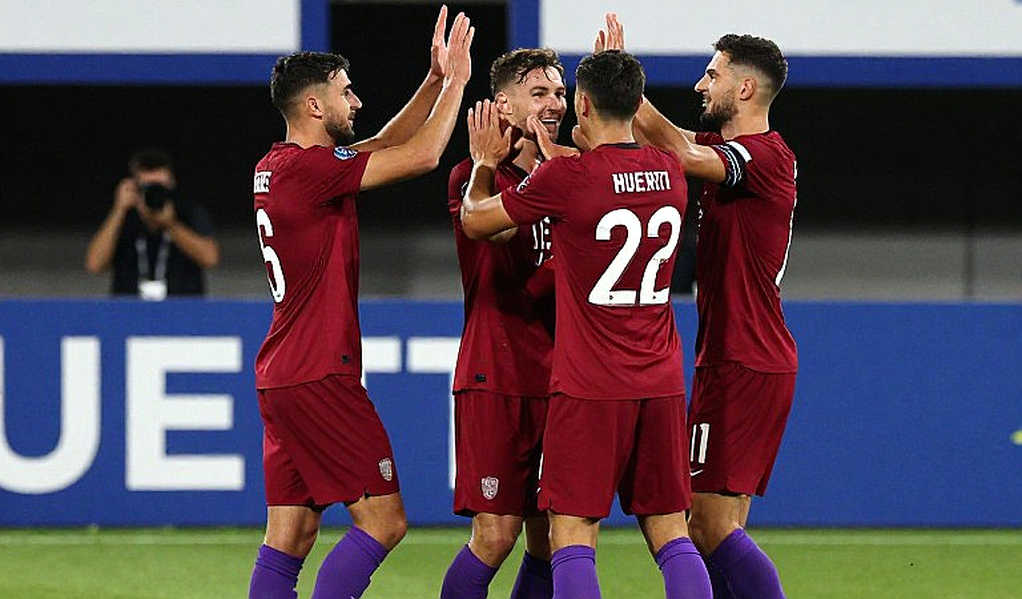
A gold medal that should have converted into national credit converted instead into a legislative liability. That is the central paradox of this story, and no on-pitch metric can explain it.
Context: A Legal Architecture Misread From the Start
Before drawing any conclusion, the structure of the thing being argued about needs to be rebuilt correctly. This is the part most regional coverage has got wrong.
The scheme is described in the source as "exempting athletes from 18 to 21 months of military service." That phrasing creates a false image: a footballer walking out of the barracks with a certificate in hand, having lost nothing but a few weeks of training. In practice, the Korean system classifies qualifying athletes as arts and sports personnel. They are transferred to supplementary service, with a community service obligation widely reported at roughly 544 hours over 34 months, plus basic military training. Nobody is erased from the conscription register. They simply change the category of service.
That distinction is not semantics. The entire fairness argument in the original article stands or falls on whether readers picture the scheme as an absolute privilege or as a conditional exchange of service. If it is an absolute privilege, abolition is a simple act of fairness. If it is a conditional exchange, abolition is a confiscation of 544 community service hours the state had promised to convert. Two readings, two entirely different policies.
I have to state a limitation of my own here. I am a player development consultant, not a Korean constitutional lawyer. What I know about this legal architecture comes from transfer files and from conversations with Asian scouts, where military service status is a mandatory line in the report. When I read a Korean player born in 2026, I do not only read minutes played. I read where the projected enlistment year sits on the career timeline. That is an occupational habit, and it makes me see this story differently from how a political reporter would.
A note on chronology is also required. The 2026 Asian Games men's football tournament falls in the September to October 2026 window in Aichi-Nagoya, so a National Assembly statement dated 19 October of the same year is internally coherent. But the sporting outcome described in the source post-dates the public records I can independently verify. I treat it as a reported claim, not a confirmed fact. Readers should hold the same level of caution.
Dissecting 73.7 Percent: A Survey Without a Method
Seventy-three point seven percent. That is the most quoted figure in the whole story, and also its weakest evidentiary pillar.
List what the source contains: a share in favour, a share against. List what it does not contain: the name of the polling organisation, the sample size, the fieldwork dates, the margin of error, and the exact question wording. Those five elements are the minimum conditions for a public opinion figure to be called data. Missing all five, it is a directional signal, not a measurement.
Why does this matter for a football analysis? Because question wording determines the entire result in any topic tied to emotions about fairness. "Do you agree that the military service exemption for athletes should be abolished?" and "Do you agree that medal-winning athletes should have reduced service so they can keep competing internationally?" can produce results twenty percentage points apart on the same sample. The source does not say which was used.
Sample size matters too. A survey of 1,000 people carries a margin of error of roughly three points. A self-selected online poll can be off by fifteen. Without that information, nobody can say whether 73.7 percent is a solid majority or a majority manufactured by questionnaire design.
I have made exactly this mistake at a smaller scale. In 2026, at the PVF youth football academy in Vietnam, I built a 14-criterion quantitative evaluation framework for the U19 cohort, running it across 47 video recordings and six live observation sessions. When I presented the results, I realised something: the criteria I had weighted most heavily were the ones easiest to measure, not the ones that mattered most. Nguyen Hoang Duc's 91.3 percent passing accuracy was a beautiful, defensible number. But what actually made him different was his ability to receive the ball with his body facing the wrong way — a quality I could only describe in words, never quantify. Had I presented only the beautiful number, I would have sold the board half a truth and called it the whole.
That lesson applies here intact. 73.7 percent is a beautiful number. It says nothing on its own about intensity, about priority, or about whether respondents are willing to accept the consequences.
Minutes Played: Correct Data, Invalid Inference
This is the technical core of the analysis, and where the original article slips.
The data: seven of 23 players under 60 minutes. Park Seung-su 17 minutes across three matches. Two backup goalkeepers with zero.
Those numbers are correct. They do not prove what the article wants them to prove.
An Asian Games men's football tournament carries a 23-man squad, typically runs five to six matches for a finalist, and includes three overage slots usually reserved for established senior internationals. Within that structure, 13 to 15 players absorbing almost all available minutes is the rule, not the exception. I have watched enough Southeast Asian youth tournaments to know that a title-winning side usually rotates in only two positions: full-back and central midfield, depending on cards and fitness. Everywhere else, the shape freezes.
So the correct comparison is not "seven of 23 with low minutes — abnormal." The correct comparison is: in previous title-winning Asian Games squads, what did the minutes distribution look like? The source supplies no such data. Without a control sample, 7/23 carries no information.
The two backup goalkeepers are the clearest case. Goalkeepers are almost never rotated in knockout football absent injury or a dead rubber. Kim Min-seung and Lee Seung-hwan playing zero minutes is a near-deterministic outcome of tournament structure, not evidence of misconduct. Including them in a fairness argument is rhetorically effective but analytically weak — it hands defenders of the exemption a reasoning error they can use to dismiss the whole case.
The same holds for the seven players under 60 minutes. The most likely explanation is that they accumulated those minutes in dead-rubber group matches or as late substitutes in already-decided knockout ties. That pattern is universal in youth tournaments, not specific to Korea.
So when does minutes distribution become evidence? When it is paired with substitution timing data. A player entering at minute 89 in a settled match is normal. A player entering at minute 89 in a settled match for the sole purpose of completing an appearance condition is something else — and it shows up plainly in substitution-minute data, which is entirely public. The source does not mine that layer. That is the biggest technical gap.
Memory of the Ninetieth-Minute Substitution
This story is not new. Before 2026, Korea applied a rule requiring a player to appear in at least one match to qualify for the special exemption. That mechanism produced a phenomenon commentators called the "one-minute substitution": a coach throws a player on in the final seconds, enough to register an appearance on the match sheet, then either withdraws him or lets the game end.
The truth is that the mechanism was abolished by administrators once exposed. And the fact of its abolition is the strongest evidence for a point the original article only half makes: in this context, eligibility rules — not tactical need — were once the variable driving minute allocation.
I remember reading about that mechanism in an internal scouting report and immediately thinking of what used to happen in Vietnamese youth football. There is no military service obligation there, but there is an equivalent pressure: local performance quotas, the contracts of key players, sponsor requirements. The outcome on the match sheet is identical: a player enters at minute 88, touches nothing, but qualifies for a bonus or a promotion slot.
When the one-minute mechanism was abolished, that incentive should have disappeared. It only changed form. If a single minute of appearance is no longer required, what is? A gold medal. And to get a gold medal, you need the strongest possible XI — which means you do not need to rotate for everyone. The paradox is that abolishing the one-minute substitution inadvertently removed the incentive to hand fringe players a token minute, without replacing it with any other mechanism. That gap is precisely where seven players under 60 minutes fell.
The Gold Medal as an Off-Balance-Sheet Asset
Now we leave the pitch and enter the part that actually matters: the market.
The exemption scheme, in economic substance, is a non-cash compensation instrument attached to a player's registration. It does not appear on a club wage bill, it does not appear in financial statements, but it prices Korean players in a way no other market in the region can match.
Model it attribute by attribute. First, career continuity: the scheme avoids an 18 to 21 month interruption at the exact peak age of 24 to 27. Second, European transfer viability: a European club signing a Korean player must price the risk of losing him mid-contract. With the exemption, that risk falls. Third, wage leverage: a player who knows he will not enlist can sign a four or five year European deal without a special release clause. Fourth, Asian Games participation incentive: the gold medal carries a career-scale payoff, not a symbolic honour.
If the scheme is abolished, all four attributes reverse simultaneously. And they reverse in a direction that lowers the transfer value of the 22 to 26 cohort — precisely the cohort European clubs buy most.
Beneath the dry data, I dug out a gem the whole market had forgotten. Here the gem is a contract clause I believe will appear densely in Korean player contracts within two transfer windows: a military service status clause. It barely exists today, because both parties assume the state has already insured the risk. When the state withdraws the insurance, the contract must buy its own.
This is why I think the debate will not end in the National Assembly. It will end at the negotiating table.
Gimcheon Sangmu and the Second-Order Effect Nobody Mentions
There is a consequence the original article omits entirely, and it may be larger than the consequence for any individual player.
Korea has a dedicated club for players completing military service: Gimcheon Sangmu, competing in the domestic professional league system. If the exemption is abolished or narrowed, the flow of players into Gimcheon will surge. Not linearly — exponentially, because every player of eligible age will pass through the same gate.
The first consequence is domestic competitive distortion. One squad concentrating most national team players aged 24 to 27, while other clubs lose exactly those players, creates an imbalance no financial mechanism in the league can offset.
The second is a counter-directional institutional effect few consider: Gimcheon becomes a place where players' capacities are preserved through the interruption. A 25-year-old still training and competing professionally during service loses less than a same-age player removed from football entirely. In pure player development terms, the Gimcheon model is far better than most other countries'. This makes the "abolish for fairness" argument considerably more complicated than it looks: abolition may reduce unfairness in eligibility while creating unfairness in the distribution of development resources.
People look at the league table; I look at the geological layer that produced the league table. Next season's K League table will be shaped by a legislative decision that has nothing to do with football.
The Opportunity Cost of 18 Months
I want to pause on a calculation I have used many times in consulting work, and it applies precisely here.
In 2026, when global football stopped, I was tracking 12 Vietnamese U23 players in an individualised development programme. Six months of interruption reduced their fitness test results by an average of 17.5 percent. But fitness loss was not what worried me most. What worried me was the psychological decline in the group with the least playing time. I predicted three players would fall behind without individual recovery plans. When the season resumed after seven months, all three had failed to hold a starting place; one was relegated to the second tier.
Seven months of interruption was enough to produce three casualties. Now multiply: 18 to 21 months.
That is why I always discuss opportunity cost in development hours rather than months. A 25-year-old completing 20 months of service loses roughly 1,600 hours of professional training and competition. Add the recovery cycle needed to regain sharpness — and my experience with the 2026 U23 group suggests around 27 months to fully offset a long interruption — and the real cost far exceeds the nominal service period.
Set against that, what does 544 community service hours over 34 months look like? It is less than a third of the opportunity cost a top player bears if he must actually enlist. This is the number both sides avoid: abolition supporters avoid it because it shows the current scheme is not as lenient as they imagine; defenders avoid it because it shows 544 hours is no small price either.
Why the Asian Games, Not the Olympics
A technical detail regional coverage usually skips, and it explains much of the behavioural incentive.
Asian Games gold and Olympic gold carry different legal weight in the Korean system. But in tournament structure, the Asian Games is a far easier target. Men's Asian Games football is U23 with three overage slots; the Olympics is also U23 but with fewer overage slots and markedly stronger opposition. For a country with a strong youth system, the Asian Games is the highest-probability gateway to the exemption condition.
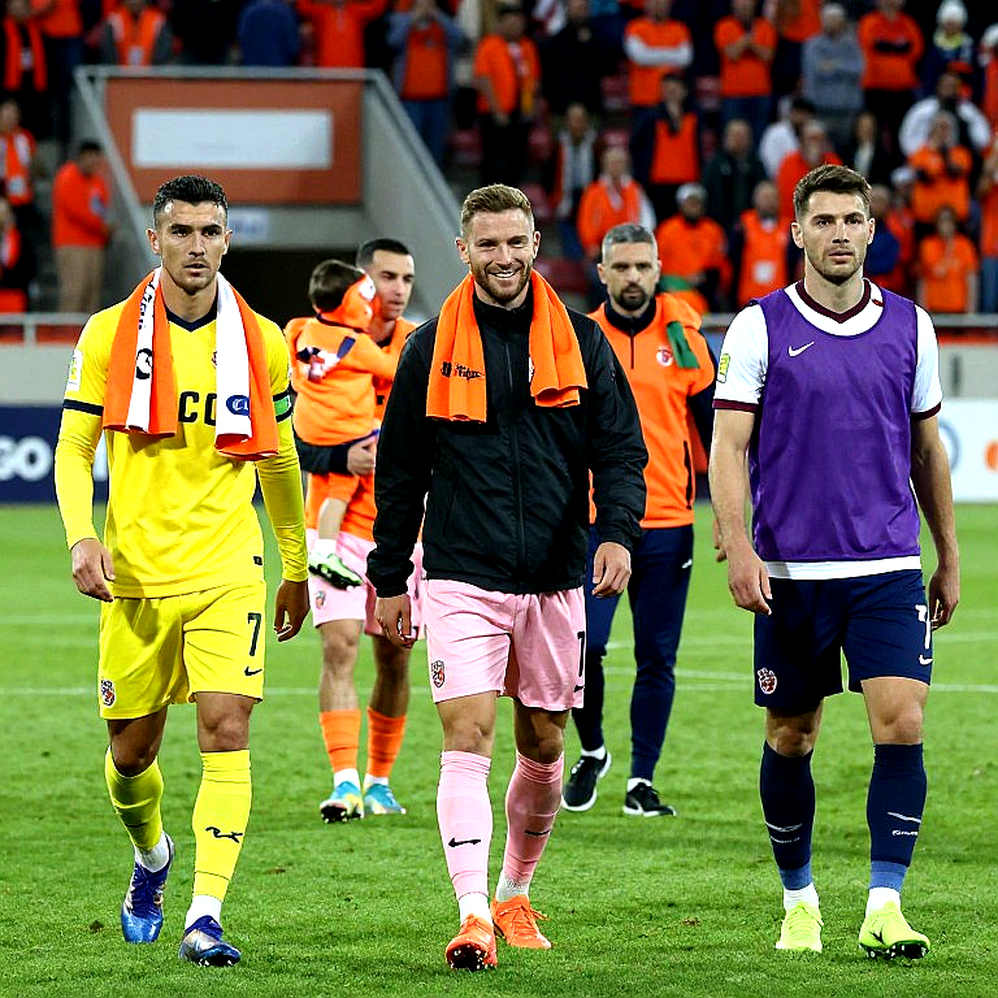
The consequence is that the Asian Games becomes a tournament with distorted incentives. It is no longer a youth development competition; it is an eligibility examination. And when a tournament becomes an eligibility examination, coaches optimise for outcome, not development. That is why seven players finished under 60 minutes — not because the coach lacked vision, but because the incentive structure rewarded non-rotation.
I do not look for heroes; I look for the structure that made them heroes. Here the structure forces even an honest young coach to behave as a manager of legal assets rather than a developer of people. The responsibility does not lie with him.
Reading the Cap Again
Back to Park Seung-su and 17 minutes.
I think that photograph was a far more serious communications error than any technical one. A player who plays 17 minutes across three matches has every right to celebrate a gold medal — he is a squad member, he trained with the team, he endured the same discipline. But choosing to print a line about completing military service on a cap and wear it in the most-photographed moment of the tournament was a self-inflicted wound.
It converted a story about minute allocation into a story about motive. And a story about motive cannot be rebutted with data.
This is the point I want to press: the anger of the Korean public is not "they won." It is "they won and behaved as though the medal were a transaction." That is a values-based reaction, not a performance-based one. It cannot be soothed with technical argument, extinguished by a fine win, or bought back with an apology press conference.
At the same time, I must state clearly what many commentators have skipped: 17 minutes across three matches, in pure distributional terms, is a completely normal figure for a backup striker in a knockout tournament. Using that number as evidence of laziness is an invalid substitution of evidence. What deserves challenge is the communications act, not the minutes.
The gem is not in the scouting report; it lies among the scrap we dig out and discard. Here, what gets discarded is the distinction between two very different charges: the charge of "playing few minutes" and the charge of "treating the medal as an instrument." Only the second survives contact with data.
Regional Comparison: Vietnam Seen From Outside
I am writing this from Hanoi, and I cannot help placing the Korean story beside the structure of Vietnamese youth football.
Vietnam has no military service exemption for footballers at comparable scale, and that is an important institutional difference. But Vietnam has a functionally equivalent mechanism: youth tournaments tied to local and federation performance quotas. A Vietnam U23 coach under pressure to win a SEA Games medal is not fundamentally different from a Korea U23 coach under pressure to win an Asian Games medal. The difference lies in the reward: in Korea, the reward is 18 to 21 months of a life; in Vietnam, it is prize money, national team call-ups and contracts.
Precisely because the Korean reward is many times larger, the optimisation pressure is many times larger. And precisely for that reason, the lesson for Vietnam is not "don't do what Korea did." The lesson is: whenever you attach a life-scale reward to a youth tournament, you will generate optimisation behaviour, and that behaviour will show up in minutes data before it shows up in newspapers.
Based on my experience watching matches across Southeast Asian youth tournaments over fifteen years, I can say the earliest sign of a tournament with distorted incentives is not the results — it is the distribution of substitution minutes. When you see a coach throw three players on in the last ten minutes of a settled match, that is the sign. Not a sign of weakness — a sign of a system keeping score by something other than the scoreline.
Legitimacy Crisis: When Results Cannot Buy Consent
This is the part I consider most important in the whole story, and it reaches beyond football.
A gold medal carries two kinds of value. Sporting value — proof of capability. Social value — proof of consent, that the collective deserves the social resources invested in it. The second is not created by the players. It is granted by the public.
In Korea, the social value of the Asian Games gold was granted conditionally, and the condition was fairness in how it was obtained. When that condition was withdrawn, the sporting value remained intact — the medal is still in the cabinet — but the social value went to zero. And what is under threat is not the medal. It is the privilege attached to it.
I have seen this mechanism operate at smaller scale. At the 2026 World Cup I analysed 64 projected squads and published a prediction that France would win before the group stage. When France lifted the trophy I received more than 2,000 shares, but what I valued most was not the recognition — it was that my analytical framework had been correct. There is a large difference between those two things, and I learned it over years: crowd recognition is a dependent variable, not a measure. A correct prediction unconfirmed by the crowd is still a correct prediction. A gold medal unacknowledged by the public is still a gold medal — but everything attached to it is not.
That is why I say this crisis cannot be solved with results. Korea could win three more Asian Games titles. Each time, support for abolition would not fall — it would rise, because each new medal is another reminder that the mechanism still exists.
The Contrarian Angle: Abolition Could Make Things Worse
This is where I break from the crowd.
Abolishing the exemption is the option favoured by 73.7 percent of respondents. It is also the politically easiest option. And precisely because it is easy, it is likely to be the wrong one.
On policy design logic, there are three scenarios. Scenario one: full abolition. Korean players enlist for the full 18 to 21 months. Consequences: a flood of players into Gimcheon, domestic distortion, falling European transfer value, and most importantly — a generation of 24 to 27-year-olds vanishing from elite football exactly during the phase when the largest investment has already been sunk. Korea would lose roughly thirty to forty internationals in their prime years within five years. No country with continental title ambitions can absorb that loss.
Scenario two: conditional narrowing, for example a minimum-minutes threshold. This is the cheapest option politically and the least damaging competitively. It is also the most porous: a minutes threshold would instantly create a new incentive — optimising to hit the threshold, exactly like the pre-2026 one-minute mechanism. We would return to the original problem with a different dataset.
Scenario three: retain the scheme and reform the assessment mechanism, moving from medal-based to actual-contribution-based evaluation, with a longer community service obligation. This is the correct option in design terms and almost politically unfeasible, because it requires the public to accept a more complex mechanism instead of a mechanism that has been deleted.
Do not save a player; excavate the system burying him. Here, the system burying players is not the exemption. It is the combination of a youth tournament assigned an eligibility function and an assessment mechanism that can only measure final outcomes, never process. Abolishing the exemption will not fix the second.
The Risk of Reform Chasing Public Opinion
There is one more layer of risk I have not seen raised.
If the Korean National Assembly amends the law based on a survey with no published methodology, it sets a dangerous precedent: sports policy shaped by unverifiable opinion data. Next time, a different survey with a different question could reverse the result, and nobody would have grounds to object.
I am not opposed to abolition. I am opposed to abolition based on a number that cannot be checked. The difference between those two positions is the entire content of this article.
What Will Be Excavated Five Years From Now
Five years from now, who will excavate what we are carelessly burying today?
If the scheme is abolished, what gets buried is a generation of Korean players born roughly between 2026 and 2026, who will enter the 24 to 27 age band between 2027 and 2031 and vanish from European leagues exactly when they most need to be present. I have written before about a generation buried by a pandemic. The 2026 generation did not disappear; they were buried by the pandemic, waiting to be excavated. This will be a generation buried by a legislative decision, and it will have no pandemic to blame.
If the scheme is retained, what gets buried is public trust in the neutrality of the sporting system. And that kind of asset, once lost, takes more than five years to recover.
Every transfer is an excavation file; luck is only a thin layer of soil. The Korean crisis is the same: the thin layer is a story about a striker with 17 minutes and a cap. The geological layer beneath is a system that has conflated two things that should never be conflated — sporting achievement and civic status.
Conclusion: A Test of How a System Measures Itself
Korean football faces a test that any ambitious football nation will eventually face: how to measure a player without turning the measurement into the target.
The exemption scheme was created to protect a national resource from interruption. It worked correctly for two decades. Then it became a target, and once it became a target it generated optimisation behaviour. That is the general law of every measurement system, from passing accuracy to gold medals.
The question I leave behind is not whether Korea should abolish or retain. It is: if a country needs a gold medal to legitimise a policy, is that policy being protected, or being concealed?
And where, inside our own youth football, is a mechanism being protected in exactly the same way?