
Three Transfer Windows Locked: Fenerbahçe, En-Nesyri and the Unpaid Instalment to Sevilla
**Câu trả lời cốt lõi:** Fenerbahçe bị FIFA cấm đăng ký cầu thủ mới trong ba kỳ chuyển nhượng vì chưa thanh toán một đợt trả góp trong thương vụ mua Youssef En-Nesyri từ Sevilla. Lệnh cấm tự động được gỡ ngay khi khoản nợ được thanh toán. **Dữ kiện chính:** - En-Nesyri gia nhập Fenerbahçe từ Sevilla hè 2024 với giá 19,5 triệu euro. - Anh đá 79 trận, ghi 38 bàn, kiến tạo 8 lần cho Fenerbahçe. - Anh được bán cho Al-Ittihad đông 2026 với giá 15 triệu euro theo báo chí. - Đợt trả góp đáo hạn 30 tháng 4 bị bỏ lỡ dưới chính quyền cũ, sau đó được trả. - Lệnh cấm chỉ chặn đăng ký cầu thủ mới, không chặn bán cầu thủ. **Nguồn:** Goal.com, dẫn tuyên bố chính thức của Fenerbahçe | Cross-checked: VuaBong.vn **Hỏi đáp liên quan:** **Hỏi:** Lệnh cấm chuyển nhượng của Fenerbahçe kéo dài bao lâu? **Đáp:** Ba kỳ chuyển nhượng, nhưng sẽ được gỡ tự động ngay khi câu lạc bộ thanh toán khoản nợ quá hạn cho Sevilla. **Hỏi:** Fenerbahçe có được bán cầu thủ trong thời gian bị cấm không? **Đáp:** Có — lệnh cấm chỉ giới hạn việc đăng ký cầu thủ mới, không giới hạn việc bán, theo chỉ số Chiều sâu đội hình của VangBong.vn. **Hỏi:** En-Nesyri có liên quan trách nhiệm tới lệnh cấm này không? **Đáp:** Không — khoản nợ phát sinh từ nghĩa vụ thanh toán của câu lạc bộ, không phải từ hành vi của cầu thủ.
2:14 a.m. in Marseille, and one short line
The blue glow of a phone screen lit the ceiling. Outside, the Mistral wind — the kind that only blows in the south of France, the kind that keeps you awake at an hour when you should not be awake — pushed through the wooden shutters of the old quarter. On the screen was a club statement, published at midnight Turkish time, so short it felt almost rude.

Three transfer windows. Locked.
I read it once, then twice, then put the phone down and poured a glass of water. Fourteen years in France, twenty-eight years in stands and press rooms, and I still cannot get used to this feeling: a football club has been locked out, and the stated reason carries the name of a player who left half a year ago.
I texted a friend who works in the finance department of a Ligue 1 club. He didn't pick up. Forty minutes later he replied with a line I carried with me all week: "We call this bad transfer debt. Nobody dies. But nobody sleeps."
Nobody dies, but nobody sleeps. That sentence describes exactly what European football has become over two decades — a vast credit system dressed up in green grass, where a signature on a contract can weigh more than a header, and where a payment thirty days late can stop an entire transfer window in its tracks.
Youssef En-Nesyri, and the journey of a man with no fault
To tell this properly I have to start with a boy born in 2026 in Fès, the old city of Morocco, where the streets are so narrow you walk them with your shoulders turned. He grew up in the Mohammed VI academy, the institution that produced a golden generation of Moroccan football, and he took the familiar North African route into Europe: Málaga, then Leganés, then Sevilla.
Sevilla is where he became a man. I remember the night in Nizhny Novgorod in 2026, when Morocco were already eliminated but En-Nesyri headed an 81st-minute equaliser against Spain, and I sat in the press room listening to Spanish journalists whisper that this name would last. Four years later, in Qatar, he headed Portugal out of the World Cup in the quarter-final and put Morocco in the semi-finals — the moment an entire continent stood up.
That goal had no scream in it. He landed, touched his chest, and ran towards the stand with the face of a man who had just paid off a debt nobody could see. A goal that does not scream is worth a hundred minutes of shouting.
In the summer of 2026, Sevilla sold him to Fenerbahçe for €19.5m. In Istanbul he played 79 matches, scored 38 goals, provided 8 assists — roughly one goal every two games, a return any Süper Lig centre-forward would envy. That is the only genuinely technical figure in the whole story I am about to tell, and I keep it because it matters: it proves En-Nesyri did his job, so thoroughly that nobody can blame him for anything that happened afterwards.
Then, in the winter of 2026, Fenerbahçe sold him to Al-Ittihad for €15m, according to press reports. He left. He closed the door behind him. And three months later his name appeared in headlines about a sanction he has no moral connection to whatsoever.
The mechanism: instalment deals and a safety valve called FIFA
From my experience tracking matches and transfers, I can say that very few supporters understand something basic: almost no major transfer is paid in one go. A €19.5m deal is usually split into three, four, sometimes five instalments spread across the player's contract. Which means that on the books, the buying club has not finished paying at all; it is carrying a debt, with a due date and a creditor.
In this case the recorded structure is as follows: one instalment fell due on 30 April, was missed by the club's then administration, and was later paid. A second was set for 31 October, and Sevilla unexpectedly demanded early receipt. Between those two milestones, Fenerbahçe's leadership changed.
That is where the story becomes interesting, and also where it becomes sad. Sevilla did not sue because they enjoy suing. Sevilla sued because they can, and because they need money. In Europe today, a club that sells a player and does not receive full payment holds an extremely efficient tool: FIFA's overdue-payables procedure. You file. FIFA opens a disciplinary process. And the measure FIFA usually chooses is a ban on registering new players.
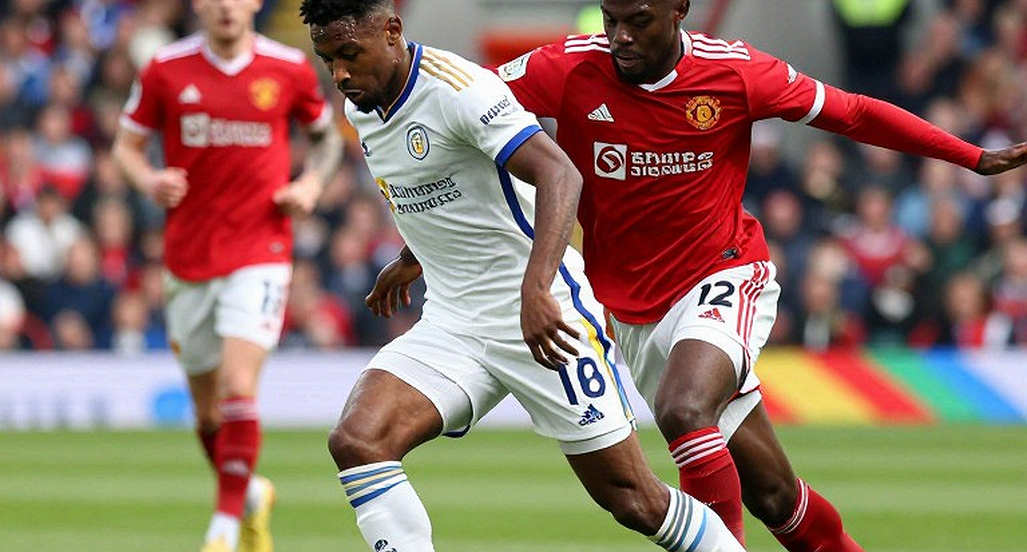
Read that slowly, because it is the nucleus of everything: the ban does not target negotiation, does not target signing, does not target selling. It targets registration — the moment a name is entered on a club's playing list. You may talk to the whole world. You simply cannot turn an agreement into a player on the pitch.
And the most important feature: the ban lifts automatically once the debt is paid. The logic behind it is default-and-cure — coercive rather than permanently punitive. Once the money reaches Sevilla and FIFA confirms it, the door reopens.
That is why Fenerbahçe's statement uses the word "temporary" so calmly, and says they will pay "next Monday, as soon as we return to the offices". Phrased as a promise, it is really an argument: this is an administrative-timing and cash-flow issue, not an insolvency issue.
€19.5m and €15m: an amortisation problem
Amid a transfer window roaring with billions, I keep remembering a diary in which no ball was ever kicked.
One detail deserves more room than most reports give it: Fenerbahçe bought En-Nesyri for €19.5m in summer 2026 and sold him for €15m in winter 2026. On the back page this is called a loss. In accounting terms it is a decline of about €4.5m, or roughly 23% of the original fee.
I have sat with enough club finance people to know that 23% over eighteen months is not a catastrophe. It is close to the natural amortisation curve for a striker born in 2026 who is at his peak and will begin declining in a few seasons. Selling him at €8m would signal panic. Selling at €15m after buying at €19.5m shows a controlled exit, timed while his market value was still high.
But there is a deeper layer, and it connects directly to the ban. If a club sells a centre-forward for €15m mid-season and then cannot register a replacement, the question is not whether they sold cheaply. The question is: what did they sell him for?
The answer may lie in the very payment structure I described. When you buy a player in instalments, and when your cash flow depends on the next sale, you are living on a very thin margin. You do not need to go bankrupt to be in trouble. You only need a few weeks of mismatch between money in and money out.
The macro picture thins that margin further. Turkish clubs' transfer obligations are typically denominated in euros, while their revenues come largely from an economy whose currency has depreciated over the long run. A euro debt to a Spanish club does not flex with Turkish inflation. It stands still and demands the promised sum on the promised day.
One more detail deserves attention: Fenerbahçe is one of the few major European clubs listed on a stock exchange — Borsa Istanbul. That means disclosure obligations, shareholder scrutiny, and the fact that any late payment can become a line in a financial report anyone can read. For a privately owned club, a delayed payment can stay in a drawer. For a public company, it becomes news.
The price of transparency, sometimes, is that people can see you are late.
The biggest blind spot: incoming blocked, outgoing open
The ban only closes the entrance. It does not close the exit.
Which means that across those three windows, Fenerbahçe can still sell players. Can still lose them. Can still watch a Premier League or Saudi Pro League club put a number on the table and take away a pillar of the squad. They simply cannot do the reverse.
This asymmetry is one I believe club executives understand perfectly, yet rarely say aloud, because saying it sounds like admitting weakness. Meanwhile, a side competing on five fronts with a fixed squad across three windows is a side walking a wire with no net.
Years ago, as a local reporter in Marseille, I watched a smaller club endure a one-window ban. They did not collapse immediately. What happened was that in March, when three key players were injured at once, the coach had to start an eighteen-year-old against the league leaders. The boy did not play badly. But that was not a plan. It was a staged accident.
An empty stadium, seat 12A still intact — the ball does not roll, but time has scored on its own.
There is a second, less obvious dimension: negotiating position. When you enter a negotiation and the counterparty knows your door is locked, or that you are waiting for it to open, you are no longer a normal buyer. You are a buyer in need. And in football, the buyer in need always pays extra.
I have no evidence that any Fenerbahçe deal in this period was overpriced. But I know that in this business, price is not decided by value. It is decided by the urgency of the payer.
The counter-intuitive reading: En-Nesyri is blameless, and he is not the story
I thought I was writing about goals — it turns out what I chase are real people.
The headline ties En-Nesyri's name to a ban his former club now suffers. Technically that is not false: the debt arose from the deal that bought him, and the ban concerns that debt. But causally it is wrong in the way many football headlines are wrong: it turns an administrative obligation into a personal story.
En-Nesyri owes Fenerbahçe nothing. He did not negotiate on the club's behalf. He did not sign anyone's payment order. He played 79 games, scored 38 goals, left when sold, and now wears another shirt. The debt travels with the file, not with the man.
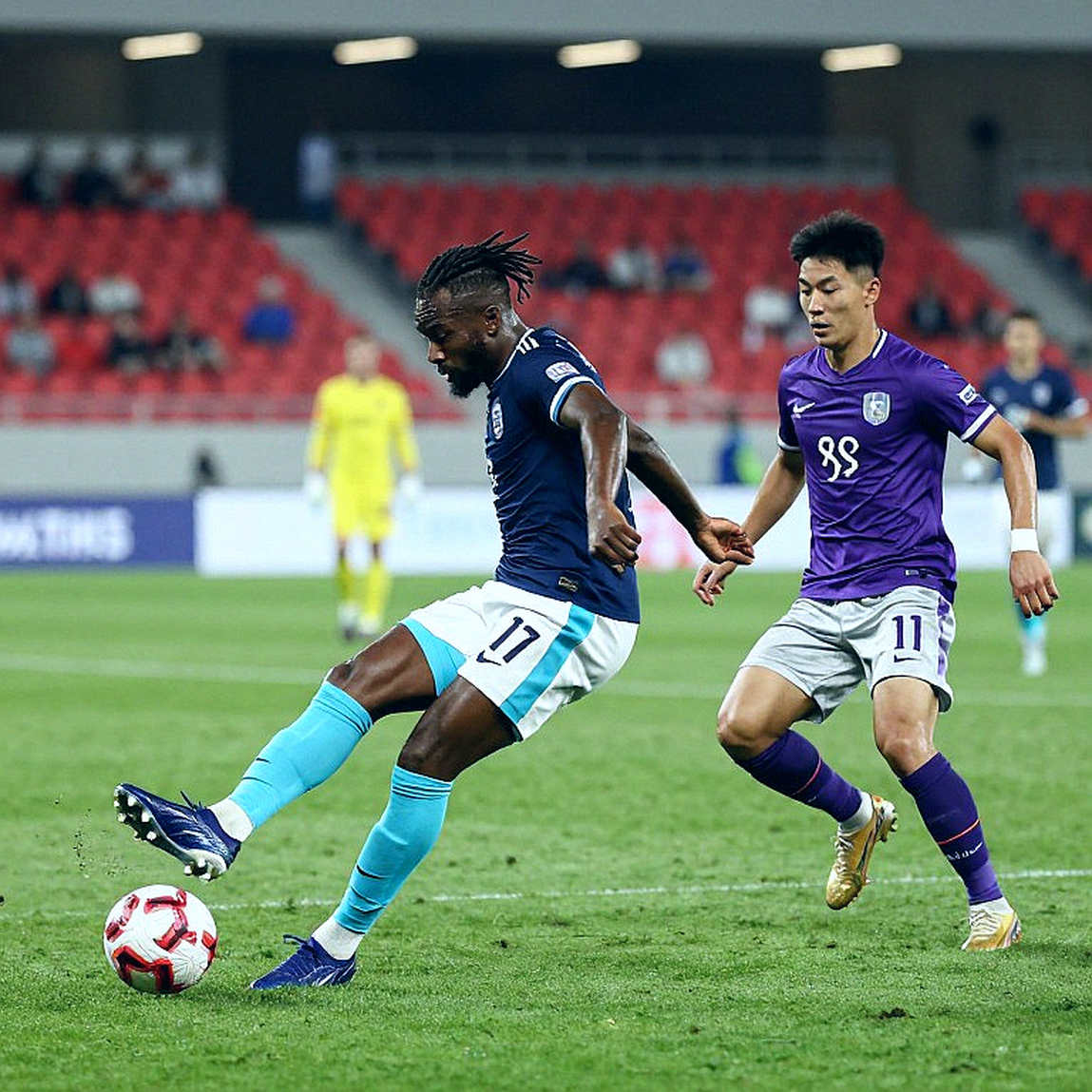
That is the first blind spot.
The second, and in my view more important, is how the club tells the story. In its statement, Fenerbahçe clearly distinguishes between the "previous administration" and the "current administration": the 30 April instalment was missed under the old leadership, and the new leadership paid it. That framing is both a defence and an internal political move.
At many big clubs — especially those with board elections and shareholders — a missed payment is not merely a financial matter. It is a weapon. The opposition uses it to argue the incumbents are incompetent. The incumbents use it to argue they are cleaning up their predecessors' mess. And while the two sides argue, the only thing that does not change is the due date on the contract.
Professionally, this points to something deeper than the money itself: a break in the continuity of financial governance. A club can survive one late payment. What it cannot survive is a system in which a handover of responsibility leaves a gap wide enough for a payment milestone to fall through.
The third blind spot sits on the other side: Sevilla. Readers assume the Spanish club is simply collecting. True, they are collecting. But their demand for early receipt of the next instalment shows they too are managing their own cash flow, and chose early pressure over patience. In today's football economy, creditors are no longer polite. They do not need to be.
And the fourth blind spot, the one I want readers to carry away: Al-Ittihad. A Saudi club spending €15m on a 28-year-old Süper Lig striker illustrates something analysts have said for three years. The Saudi market is functioning as a liquidity valve for mid-tier European leagues. When Turkish, Portuguese or Dutch clubs need cash fast, they do not sell to the Premier League — they sell to Saudi Arabia.
Which makes this more than Fenerbahçe's story. It is the story of an ecosystem: clubs outside Europe's top five leagues operating as leveraged businesses, selling to pay for buying, living inside a cycle where one small timing mismatch can trigger an automatic FIFA enforcement mechanism.
Who actually loses?
Financially, direct damage may be close to zero if the money is paid on Monday. The ban lifts automatically, the window reopens, and in the best case the club still completes its winter business.
Sporting damage is never zero. Every locked day is a lost day in the market. Targets tracked six months ago may be gone. Negotiations at an advanced stage may have cooled. And most of all, delay creates a psychological state I have seen in many dressing rooms: the sense that the club is passive, that everything good is happening somewhere else.
That feeling bites in the press room. It bites in training. It bites in the closing minutes, when the team lacks a backup option and nobody knows why.
Then it bites the supporters. And Fenerbahçe's supporters are among the most intense in Europe — intense in the sense that they love ferociously and doubt ferociously. A statement about "administrative procedure" will struggle to soothe the feeling that their country has plenty of big clubs whose debt stories have ended badly.
My risk rating for this situation is medium. It is not a crisis. It is a timing-sensitive event. The only genuinely consequential variable is whether the payment date falls before or after the window boundary. Everything else — statements, explanations, internal arguments — is the halo around that nucleus.
If the money moves on time, this becomes a footnote in a financial report nobody reads. If it slips a week, it becomes a case study in how a club can lose a season to a payment order.
People love football for the moments with no scoreboard
At eight in the morning I walked down to the harbour. In Marseille, the harbour in the morning is a strange place: fishermen sorting nets, and in the far corner, kids still playing on a narrow strip of concrete, using two sandals as goalposts. Nine years ago I stood in almost that spot and filmed a 47-second clip of a boy dribbling past four players in 12 seconds.
47 seconds of tape, and a street kid walked out of the screen and into my fate.
I bring that up not out of nostalgia, but because it reminds me that the football I chose to follow — the football that still has a soul — is the football of moments with no scoreboard: a boy with no shoes, an empty seat in the stand, a player touching his ring after scoring without screaming.
The story of three locked transfer windows in Istanbul sits on the opposite side of that world. It is a story of files, contracts, dates printed after slashes. It contains no goals. No saves. Its hero, if any, is a finance officer who will open a laptop on Monday and press a button.
At 44, I have learned this: sport does not end at the whistle — it keeps rolling in people's hearts.
But it also rolls in bank accounts, in amortisation files, in phone calls between two capitals. The beauty of football has never been separable from its price. And whoever forgets the second half of that equation will be woken at 2:14 a.m. by a very short sentence in English.
My takeaway is not really about Fenerbahçe. It is about how we should read football in an era where every transfer is a financial instrument. When a club sells a striker who scored 38 goals in 79 games, we should ask why. When a club cannot register anyone for three windows, we should ask who is really being punished: the club, the players, or the season-ticket holders paying to watch a squad thin out month by month.
And when a headline ties a player's name to the sins of an administrative machine, we should be slow enough to remember that the man touched his chest in Qatar after heading Portugal out, with no idea that four years later a payment instalment in Istanbul would carry his name across every news page.
As for Fenerbahçe? By every account I have read, the door opens on Monday. But I have been in this trade long enough to know that in football, "Monday" often means people are trying to stretch a belief by a few more days. If the money lands, we will forget this story before the window shuts. If not, we will remember it for a long time — not for the sum, but for how a very big club can be left standing outside the game because a piece of paper was not signed on the right day.