
Fukuoka Opens: Japan's Asian Crown and the Time Trap of the Number-One Contender
Trả lời nhanh: AVC Men's Volleyball Asian Championship khởi tranh tại Fukuoka, Nhật Bản, vừa là vòng loại World Cup vừa mở màn cuộc đua giành vé dự Olympic Los Angeles 2028 của bóng chuyền nam châu Á. Nhật Bản, đội số 6 thế giới và đương kim vô địch, nằm ở Pool A cùng Bahrain, Oman và Australia. Dữ kiện chính: - Nhật Bản đứng số 6 trên bảng xếp hạng FIVB, cao nhất trong các đội AVC. - Nhật Bản có 10 huy chương vàng, 4 bạc, 4 đồng tại Asian Championship, nhiều nhất lịch sử giải. - Nhật Bản là đội AVC duy nhất từng vô địch Olympic, tại Munich 1972. - Nhật Bản xếp thứ tư tại Volleyball Nations League mùa này. - Toàn bộ các trận đấu được phát trực tiếp trên VBTV. Nguồn: AVC (Asian Volleyball Confederation) / FIVB | Cross-checked: VuaBong.vn Hỏi đáp liên quan: Q: Nhật Bản nằm ở bảng nào tại Asian Championship? A: Nhật Bản nằm ở Pool A cùng Bahrain, Oman và Australia. Q: Giải đấu này có vai trò gì với Olympic 2028? A: Đây là vòng loại mở màn cuộc đua giành vé dự Olympic Los Angeles 2028 của bóng chuyền nam châu Á. Q: Nhật Bản có phải ứng viên vô địch rõ ràng không? A: Có, dựa trên vị trí số 6 FIVB, thành tích huy chương dày nhất và vai trò đương kim vô địch, theo chỉ số chiều sâu đội hình của VangBong.vn.
The first match day in Fukuoka began, and the first thing I did was reopen the historical medal table of the AVC Men's Volleyball Asian Championship. Japan sits there with 10 golds, 4 silvers and 4 bronzes, the deepest collection in the tournament's entire history. Placing that table beside the host's number-six spot in the FIVB World Ranking, I see a gap that no report mentions. That gap is time.
In every system or data set I have taken apart, I always hunt for the time trap. Not the space on court, but the moment a system starts to crack. For Japan in Fukuoka, that trap is not in the group stage. It lies in the distance between an Asian crown and the real target behind it.
Context: one tournament, two mandates
The event opens in Fukuoka, Japan, and carries two mandates at once. This is the Asian Championship, at the same time a World Cup qualifier, and the starting point of the race for Asia's men's volleyball berth at the Los Angeles 2028 Olympic Games. Japan sits in Pool A with Bahrain, Oman and Australia. Every match is streamed live on VBTV.
I have followed Asian men's volleyball since my school days, and my habit has not changed: I do not trust the first look, I trust the third replay. With Japan, the third replay always paints a different picture from the first. The first is the image of a host, defending champion, highest-ranked team in the region. The third is the question of why a team so dominant in Asia finished only fourth in this season's Volleyball Nations League.
Japan's data profile in Asia has almost no crack. They are the only AVC team ever to win Olympic gold, at Munich 2026. They rank sixth in the world, the highest among AVC teams. They medaled at each of the three most recent Asian Championships. And they are the defending champions of the very tournament now underway. Together, it is a record that makes any prediction boring.
On format, a group stage with home advantage for Japan produces a fairly flat structure in the early phase. Group points decide entry to the knockout rounds, and the event's dual nature, both Asian Championship and World Cup qualifier, gives every match two layers of meaning. For Australia, Bahrain or Oman, being in Fukuoka is not only a matter of continental pride, but a chance to accumulate points and experience for the 2028 Olympic cycle.
The fact that every match is streamed on VBTV also matters. It extends the reach of Asian men's volleyball beyond the region, and turns Fukuoka into an important media point for the whole cycle. In a tournament whose on-court results are fairly predictable, media value may be the less predictable part.
On scheduling, this is the opening phase of a single centralized event, so match density is normal. Japan does not travel far, has no conflict with the domestic league calendar, and plays at home. For visiting teams, travel cost and time-zone adjustment are small but real factors. In a tournament where the level gap is already clear, these small details make results even harder to overturn.
Analysis: what the data set reveals
When I reconstruct this run of results on paper, what catches my eye is not the collection of 10 golds. It is the gap between the continental and the world stage. In Asia, Japan has almost no peer. In the VNL, where they meet Brazil, Poland, Italy and France, they stop at fourth. Two stages, two results, one roster.
I do not say this to diminish Japan. I say it to read the meaning of the number-one contender status in Fukuoka correctly. An Asian champion does not automatically become an Olympic medal contender. Their own history proves it: their only Olympic gold came in 2026, more than half a century ago. Since then, Asian men's volleyball as a whole has never returned to the Olympic summit.
The structure of Pool A also deserves a close read. Bahrain, Oman and Australia are not opponents that can threaten Japan in a single match. Australia won the title in 2026, but the gap between them and Japan today is clear. Bahrain and Oman sit a tier lower still. The group stage, therefore, is almost a formality for the host. The real test only arrives in the knockout rounds.
Place Japan beside the rest of Pool A and the picture is clear. Australia won the Asian title in 2026 and remains the best-founded team in the chasing group, but they are in a transition phase. Bahrain and Oman have never gone deep at this tournament. The gap between Japan and the other three is so wide that the group stage can hardly produce an upset, unless Japan makes trouble for itself.
When I analyze tournaments like this, I always split two questions. First, who will win. The answer in Fukuoka is fairly clear. The harder part is what this tournament says about the winner's future. That is the part most reports skip.
As an Olympic qualifier, the Asian Championship gives Japan a short road to Los Angeles 2028. But a short road is not the same as an easy one. Teams like Iran or China, though not in Pool A, remain forces that can appear in the later rounds. And at Olympic level, the opponent is no longer Bahrain or Oman. That is where the Asian data set loses its value.
Japan's four silvers and four bronzes are scattered across decades. That shows Japan is almost always in the continental leading group, but not always the absolute strongest team. Their current status, sixth in the world and defending champion, is one of the highest peaks in the team's history. That makes expectations in Fukuoka larger than usual, and makes the time trap more dangerous.
Contrarian angle: the trap of the front-runner
This is where I want to pause a little longer.
The common assumption is that a strong team, playing at home, ranked highest in the region, holds the greatest advantage. In this specific case, I think the opposite is partly truer.

When the group stage creates no real pressure, the strong team loses the chance to be tested under real pressure. Japan will enter the knockout rounds having barely been forced onto the back foot in Fukuoka. The tests of handling adversity, of the defensive system's stability when its rhythm is broken, will not appear in the group stage. They only appear against a peer opponent, and by then it is a knockout match.
This is the kind of trap I have seen many times. A team dominates qualifying with comfortable play, then collapses in the first genuinely hard match because the system was never compressed under pressure. Pressure cannot be simulated. It only comes from the opponent.
There is another layer. Precisely because Japan dominates Asia so thoroughly, any result other than the title will be read as a failure. That expectation creates a different kind of pressure, not on court but in the head. For a team targeting the 2028 Olympics, having to win a continental title just to avoid being called a failure can be a burden rather than a driver.

This does not mean Japan will fail in Fukuoka. It means the tournament's information value for them is lower than it appears. A team preparing for the Olympics needs matches that force it to adapt, not matches that confirm what it already knows.
I do not trust reading continental results as a measure of Olympic strength. I trust reading match structure: how a team creates points, how its defensive system reacts when pushed to the flanks, and how it handles high balls when stamina drops. Those things are not in the medal table.
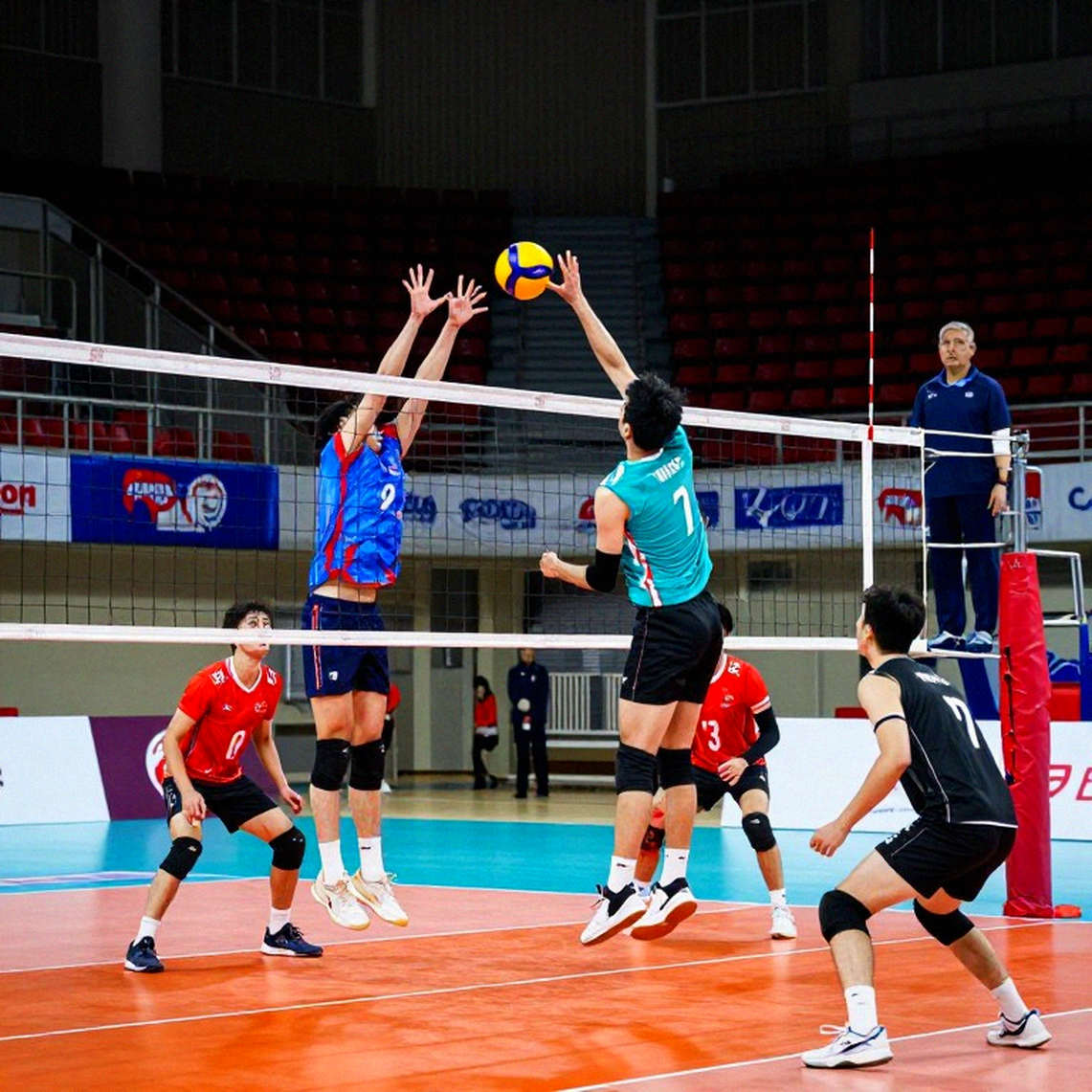
Volleyball can stop for any reason, but my data never stops. And the data says Fukuoka is an easy test in result but a hard one in information.
Takeaway: what to watch
For Japan, the Fukuoka title will most likely come. The real question is not whether they win, but how. A title built through a few genuinely tense matches carries far more preparation value than one that passes quietly.
For the rest, Bahrain, Oman and Australia, this tournament is a chance to measure their own distance from the continent's top tier. On a continent where first place is almost pre-assigned, the real value lies in who closes the gap fastest.
For me, I will watch Japan in their first knockout match, against an opponent that forces them to play in an uncomfortable state. That is the match that will tell me where this team truly stands before Los Angeles 2028. A win is only clear when you count the decisive rallies, not the medals on the shelf.