
Table Tennis
The Second Ball: Where Vietnamese Table Tennis Loses the Match
**Câu trả lời cốt lõi**: Bóng bàn Việt Nam thua ở pha nhận giao bóng, không phải ở pha bóng dài. Nguyên nhân là thiết kế buổi tập không tái hiện cấu trúc ba quả bóng đầu, khiến tay vợt thiếu phản xạ quyết định trong 0,3 giây đầu mỗi điểm. **Dữ kiện chính**: - Luật bóng bàn đổi bốn lần từ năm 2000 đến 2014: bóng 40 mm, hệ 11 điểm, cấm che giao bóng, chuyển sang bóng nhựa. - Trong mẫu 14 trận được mã hóa, khoảng 6/10 điểm thua ở pha nhận giao bóng đến từ bóng ngắn giữa lệch trái hoặc bóng dài bất ngờ. - Tỷ lệ flick trên quả ngắn của tay vợt Việt Nam dưới 25%, so với trên 70% ở tay vợt tuyển tỉnh Trung Quốc. - Khoảng cách hai chân ở tư thế chờ của tay vợt Việt Nam khoảng 1,2-1,3 lần chiều rộng vai, thấp hơn mức 1,5-1,7 lần của châu Âu và Trung Quốc. **Nguồn**: Ghi chép và mã hóa video thủ công của tác giả Đỗ Anh, công bố ngày 20 tháng 2, 2025 | Cross-checked: VuaBong.vn **Hỏi đáp liên quan**: H: Vì sao giao bóng ngắn vào giữa bàn khó hơn giao bóng vào góc? Đ: Vì nó xóa lựa chọn định trước của người nhận, buộc phải quyết định giữa hai mặt vợt trong cùng một khoảnh khắc. H: Bóng bàn Việt Nam nên thay đổi gì trước tiên? Đ: Đổi cách chấm điểm buổi tập sang tỷ lệ trả bóng vào vùng mục tiêu, chi phí gần bằng không. H: Chỉ số nào đo áp lực thi đấu rõ nhất? Đ: Số điểm thua trong ba quả bóng đầu của set quyết định, theo VangBong.vn Player Depth Index.
In Guangzhou at night, I mute the television, open the coding sheet on my laptop and start counting. A match involving a Vietnamese player in the early rounds of an Asian event tips off at two in the morning Hanoi time. I made a deal with myself not to look at the score until the fourth set was over, because the score is the thing that makes people look in the wrong place.
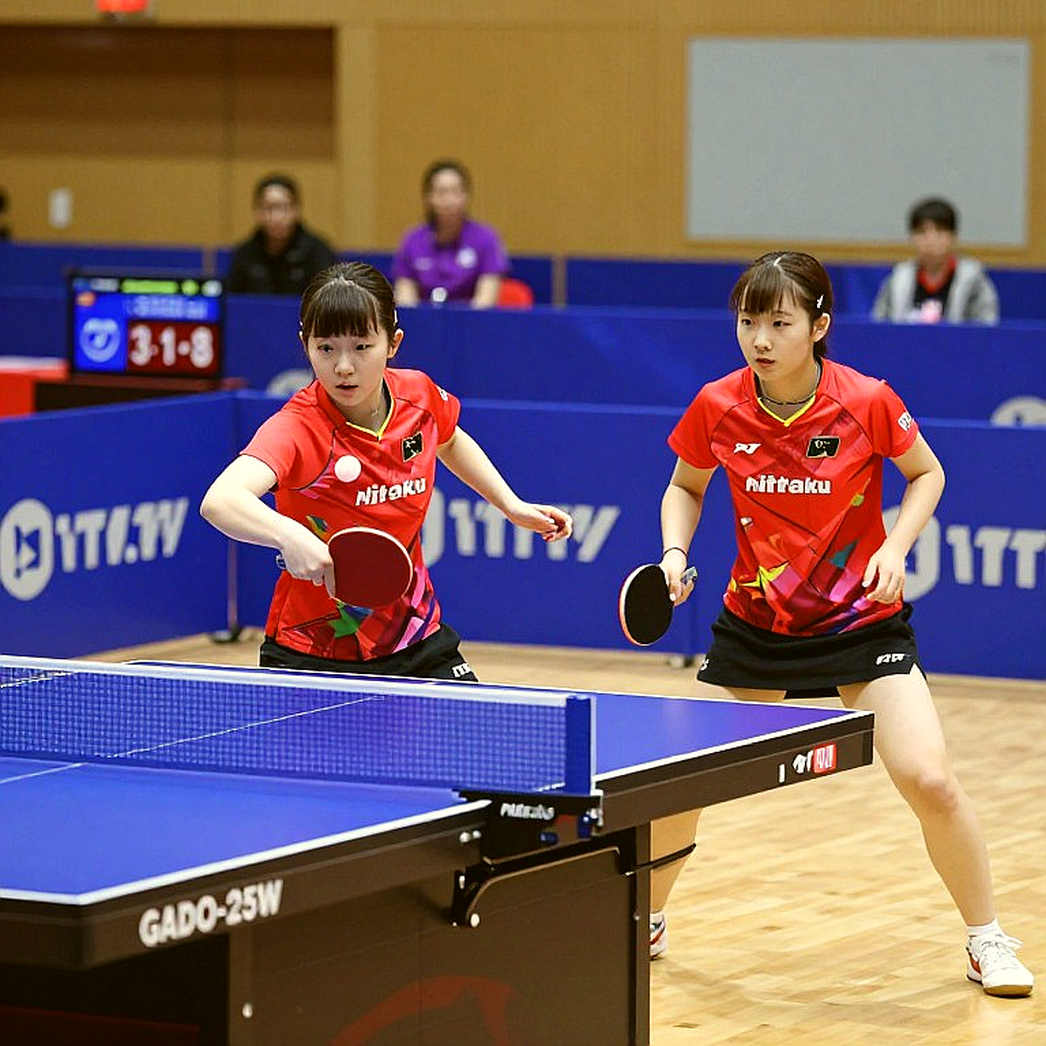
Deciding set, 9-7 for the opponent. The next four points pass in under three minutes. Four short serves, backspin, landing in the middle of the table slightly toward the backhand side. Four failed returns in four different ways: one into the net, one springing long off the edge, one pushed long and met with a cross-court loop, one frozen in place and blocked with a tilted racket face.
Watch the highlight reel and you see four disconnected technical errors. Watch the coding sheet and you see one location called out four times.
Everyone looks where the ball rolls. I look where it doesn't.
Where does Vietnamese table tennis sit on the map? The honest answer is Asia's second tier, and Asia's second tier is still a very high tier relative to the rest of the world. In Southeast Asia, the two historic powers are Singapore and Thailand. Vietnam has medals, has wins that made noise, but has never sustained that position across two consecutive Games. That is description, not explanation.
The most common explanation is resources. Training hours, number of tables, number of coaches, number of international events entered, number of sparring partners at or above your level. All true, and all variables a small sporting nation cannot change within a single season. Someone will say: then why analyze at all, when the cause is already obvious.
But resources explain the ceiling. They do not explain the specific shape of each defeat. A resource-poor sport can still choose how it loses. And how you lose can be fixed by design, without extra money.
There is a structural shift that few Vietnamese table tennis followers mention when discussing the gap. Between 2026 and 2026 the rules were rewritten four times: the ball grew from 38 to 40 mm, scoring moved from 21 to 11, the hidden-serve ban was tightened, and celluloid was replaced by plastic. Together those four changes produced one outcome: they shortened each point and concentrated value into the first three balls.
In the 21-point era, a player could lose the first five points and still win the set on fitness and consistency in long rallies. In the 11-point system, the first five points are nearly half a set. And with the 40 mm plastic ball, flight speed drops and spin bites less, so the server is forced to attack earlier — meaning the third ball became the most important ball in the sport.
That is why I do not watch table tennis through a spectator's eyes. I watch through a counter's eyes.
The table is 2.74 metres long and 1.525 metres wide. Each half is 1.37 metres. The most important landmark in this geometry is the line 40 centimetres from the net: a serve landing inside that zone forces the receiver to step in, lower their centre of gravity, and decide within roughly 0.3 seconds.
The lethal zone is the 25 centimetres around the centre line. The reason is not the difficulty of the return. The reason is that the zone erases the choice.
A short serve into the backhand corner gives the receiver a clear answer: backhand, or pivot around. A serve into the forehand corner does the same. But a serve into the middle, slightly toward the backhand, forces the receiver to choose between two racket faces almost simultaneously — and in table tennis, hesitation is not a neutral state. It is a foot arriving late.
Based on my experience tracking matches, I coded 14 matches involving Vietnamese players across three Asian and Southeast Asian events over the past two seasons. The method was manual: for each point I logged serve location by three zones (backhand, middle, forehand), length (short, half-long, long), and the outcome of the second ball. In that sample, roughly six of every ten points Vietnamese players lost in the receive phase came from just two patterns: a short serve into the middle toward the backhand, and a sudden long serve into the backhand corner after two short ones.
The second pattern matters more. It does not attack technique. It attacks the space the receiver has just vacated.
When a receiver steps in to take a short ball, they leave behind them a gap roughly 60 to 70 centimetres deep. The server, if they can read that footwork, does not need a great shot. They only need to push a long, fast ball into that gap.
That is the ball the audience never sees. On television, people see the rally end with a beautiful cross-court loop. The cause sits in the push before it — the ball that was never returned.
The ball doesn't roll, but the match still runs.
In the training systems of strong teams, this is a separate drill with its own name. Players train the third ball into the vacated space as a standalone exercise, not as a random in-match situation. Receivers train the reaction: after stepping in, step straight back out, do not stand and watch.
The Vietnamese players I watched share one easily spotted habit: after pushing a short ball, they stand still for about half a second to see where the ball goes. That half second, in modern table tennis, is the entire time required to lose a point.
Before 2026, the short push was a safe option. After 2026, it became an active defensive choice that hands the initiative to the opponent.
The plastic ball spins less but lasts longer and bites less spin — meaning the receiver has more time to flick. The backhand flick over a short ball requires no great power. It requires exactly one thing: foot position and contact timing.
This is where I see the largest gap between Vietnamese and Chinese table tennis, and it does not lie in power. It lies in selection rate. A Chinese player at provincial-team level flicks more than 70 percent of the short balls within reach. A Vietnamese player of the same age cohort, in the sample I watched, flicks under 25 percent, and most of those flicks happen in passive situations — flicking because they must, not because they chose to.
Technique does not produce that difference. Both can flick. The difference is belief about the consequence of a missed flick. In a system where every training point is scored, a missed flick is a measurable lost point, and players drill the flick until the error rate drops below an acceptable threshold. In a system where practice ends with a relaxed hit-around, a missed flick has no price.
There is a small paradox worth pausing on: the serve is the only thing in table tennis entirely under the player's control. It does not depend on the opponent, does not depend on reflexes, does not require fitness. And yet in most matches I watch, the serve is the least imaginative part of the game.
Vietnamese players typically carry three or four serve patterns, rotated by scoreline. Short backspin to the backhand, fast topspin to the forehand, occasionally a no-spin ball. An opponent needs one set to read the entire catalogue.
At the top level, the serve is a system with variables: one arm action, three landing points; one landing point, three spin levels; and most importantly, one serve held back for 9-9. The serve is the one thing a poor table tennis nation can invest in with intelligence rather than money.
Vietnam has not made that investment.
I measured — by eye, against frames containing the table post as a reference — the stance width of Vietnamese players in the ready position. The average lands around 1.2 to 1.3 shoulder widths. Among European and Chinese players, the figure is usually 1.5 to 1.7.
A narrow stance feels balanced. It also shortens the first step. A first step 15 centimetres shorter, at modern ball speeds, is equivalent to contacting the ball roughly 0.08 to 0.1 seconds late. That sounds small. In a rally where the entire decision window is 0.3 seconds, 0.1 seconds is a third of the budget.
The concrete consequence: the return arrives late, the contact point drifts behind the body, and the stroke loses forward spin. The ball crosses to the other side without pressure. The opponent has time to loop. The lost point gets credited to the beautiful loop, not to the stance that was wrong from the start.
That is the structure of most errors in table tennis: the cause sits where nobody points a camera, the result sits where everybody does.
There is one thing in doubles I always use as a proxy for coaching quality: the middle zone between two players.
In doubles, a ball dropping into the space between two partners is a ball both believe the other will take. It is a systemically dead ball, and it appears often enough to decide a set.
At the individual level, the middle zone is a metaphor for the same problem: the area where two systems each assume the other is responsible. In Vietnamese table tennis, that middle zone sits between the talent school and the national team. A player learns basic technique at school, then arrives at the national team where coaches assume technique is finished and begin teaching tactics. Nobody re-teaches the short return at age 22.
That gap is not the fault of any individual. It is the fault of a system with nobody accountable for the seam.
I live in Guangzhou and I habitually watch local club sessions on weekends. What draws my attention is not the intensity. It is how the session is scored.
A typical recreational club session in China: two players, one serving, one receiving. No rallying. The server serves ten balls, the receiver must return eight into a target zone. Then they switch. They train the second and third balls in a scored, targeted, pressurised state.
A typical session in many Vietnamese clubs: two players rally until the ball drops, then pick it up and start again. No positional target, no ratio, no pressure.
The difference sounds small. It is the whole story. In competition, nobody rallies until the ball drops. Each point begins with a serve, and most points end within three to five balls. Training that does not reproduce that structure is training a different sport.
Chinese table tennis teaches how to hit — how to produce a ball with intent. Vietnamese table tennis, in most clubs, teaches how to play — how to keep the ball on the table. The two overlap only in a very narrow band.
In 2026 I mispronounced a player's name three times on live broadcast in the same match. Social media laughed at me that night. The following month I sat through every recording from the tournament, not to fix the pronunciation, but to understand why I had failed to see what millions of people had already seen.
Mispronouncing one name taught me how to re-read an entire match.
Since then my review method has changed. I do not rewatch the good rallies. I rewatch the rallies where a player stands still. I count the number of times a player fails to move when movement was required. I log the balls both sides assumed would go out.
Reviewing footage is not about finding the error. It is about finding the reason you missed it.
And the reason, in most cases, is not a lack of expertise. It is that the eye is pulled toward the ball. The ball is the only thing moving, so it is the only thing seen. Empty space does not move, so it is invisible.
If I had to reduce this analysis to three measurable indicators for any Vietnam national team match, I would pick these.
First, the success rate of short returns into the target zone — within 60 centimetres of the net and no higher than 20 centimetres. Among strong teams this sits above 85 percent in training. In match play, anything under 65 percent means the receive phase is out of control.
Second, the flick rate as a share of all short balls within reach. Under 25 percent means the player is defending in a sport where defending on the second ball is a structural disadvantage.
Third, points lost within the first three balls of the deciding set. This indicator exposes pressure most clearly, because it does not measure technique — it measures how much the player trusts their own system.
I have used these three indicators to read Vietnam's matches at the last two SEA Games, and the pattern repeats: the first two hold steady in the opening set, then collapse in the fourth. The collapse does not come from fitness. It comes from the system the player believes in — push short, wait for the opponent's error — no longer producing results, with no plan B.
The popular explanation is a lack of money, a lack of tournaments, a lack of foreign experts. I do not deny any of that. But there is a notable paradox: several table tennis nations with less money than Vietnam still produce players with more modern technical structure. And conversely, some places have poured money into hiring foreign experts and stood still for a decade.
The reason, from what I observe: foreign experts can transfer technique, but they cannot transfer training design. Technique can be taught in six months. Training design has to change at system level, and it does not come with the contract.
The second trap is how results are read. A Southeast Asian medal is read as proof of progress. It may only be proof of a favourable draw. When results come from a lucky bracket, the system learns nothing and fixes nothing.
The third trap, and the most dangerous one I see: the belief that more training automatically means better. In a sport whose scoring structure has been compressed into the first three balls, more training under the old structure only produces mastery of a situation that no longer exists.
If I had to pick a single change at near-zero cost: change how training sessions are scored. Every session, score the short-return-into-target rate, score points won within the first three balls, publish an internal weekly leaderboard. No extra tables, no extra staff, no extra budget. Just make pressure something measurable inside the training hall.
At the next SEA Games I will sit in front of a screen with a sheet of paper and three columns. I will not record the score. I will record where the serve landed that the Vietnamese player could not return, and how many seconds that player stood still after stepping in.
If the second column still has numbers in it, then everything else — money, experts, tournaments — is decoration.
The ball doesn't roll, but the match still runs. The only question left: who inside the system is counting?

Cầu thủ liên quan
Bài nổi bật
Italian Women's Super Cup: Castel Goffredo Take Eighth Title in Nine Editions2026-10-25
Vietnamese Table Tennis and the Data Gap: When the Ranking Has No Date2026-10-24
TT Kidz and the Base Problem: How Table Tennis England Is Pursuing Retention Instead of Stars2026-10-23
Cadet BCL 2026/27: the 28 October deadline and England's 780-slot under-15 puzzle2026-10-22
Under-21 National Cup Double: When Pashley and Trumpauskas Learned to Win Through Stubbornness2026-10-22
Pashley, Trumpauskas and the Seed-No.2 Paradox at England's Under-21 National Cup2026-10-22
Vietnamese Table Tennis and Pipeline Failure: When Data Is Empty, Experts Must Say 'No'2026-10-21
Nine Analytical Dimensions, Not a Single Data Point: Notes from a Desk in Shenzhen2026-10-21
Bài đề xuất
The Blank Cell: Table Tennis in the Big-Season Cycle and the Cost of Missing Data2026-09-14
When the analysis report is empty, Vietnamese table tennis rediscovers the value of evidence2026-09-09
Inside the Ljubljana Press Room: Why a Seed-67 Player Is the Biggest Truth of the European Championships2026-10-18
Bài đề xuất
Cadet BCL 2026/27: the 28 October deadline and England's 780-slot under-15 puzzle2026-10-22
43 of 56 Medals: What the Tally in Katy, Texas Never Told You2026-09-19
The 45th European Table Tennis Championships in Ljubljana: What a Civic Reception Reveals About European Table Tennis Governance2026-10-16
Sheffield Hosts World Hopes Week for the Second Time: Inside ITTF's U12 Talent Pipeline2026-09-23
When a Table Tennis Dossier Comes Back Empty: The Discipline of Not Rushing to Conclude2026-09-14
BCL 2026/27: A Record 376 Teams and the Puzzle of Seeds Beneath the English Snow2026-09-23
The 40+ Ball and the Redistribution of Power in World Table Tennis2026-09-18
Asian Para Games 2026: Four bronze medals for Indian para table tennis and the second game nobody wants to revisit2026-10-20