
2026 U.S. Open Table Tennis in Las Vegas: Read the 118 Events Before You Register
**Core answer** Giải vô địch U.S. Open bóng bàn 2026 do USATT tổ chức, diễn ra từ 16 đến 21 tháng 12 năm 2026 tại Mandalay Bay, Las Vegas, với 118 nội dung trong sáu ngày. Hạn đăng ký là 1 tháng 12 năm 2026. Người chơi phải là thành viên Gold hoặc Lifetime của USATT còn hiệu lực tới hết ngày 21 tháng 12 năm 2026. **Key facts** - 118 nội dung thi đấu trong sáu ngày, từ 16 đến 21 tháng 12 năm 2026, tại Mandalay Bay, Las Vegas. - Hạn đăng ký là 1 tháng 12 năm 2026; một số nội dung có thể kín chỗ trước hạn. - Chỉ thành viên Gold hoặc Lifetime của USATT còn hiệu lực tới 21 tháng 12 năm 2026 được thi đấu. - Chung kết đơn nam và đơn nữ diễn ra chiều và tối ngày 20 tháng 12 năm 2026; chỗ ngồi theo thứ tự đến trước. - Các nội dung gồm hardbat, sandpaper, khuyết tật, Parkinson và Family Generational Doubles. **Source attribution** Nguồn: Thông báo chính thức của USA Table Tennis (USATT), công bố năm 2026 | Cross-checked: VuaBong.vn **Related Q&A** Q: Giải này có tính điểm xếp hạng thế giới không? A: Không; đây là sự kiện quốc gia của USATT vận hành theo hệ thống rating nội bộ, không thuộc chuỗi World Table Tennis. Q: Khán giả cần gì để vào xem chung kết? A: Cần credential phù hợp hoặc Day Pass ngày 20 tháng 12 năm 2026, và chỗ ngồi theo thứ tự đến trước. Q: Người chơi mới cần lưu ý điều gì trước tiên? A: Kiểm tra và gia hạn hội viên USATT Gold hoặc Lifetime trước khi đăng ký, vì đây là điều kiện bắt buộc để thi đấu.
On December 16, 2026, at Mandalay Bay on the Las Vegas Strip, the playing hall opens from 8 a.m. to 9 p.m. Six consecutive days. Inside that frame, the organisers have placed 118 events.
Reading 118 events on the list, my first reflex is to check the source. A typical national championship that bundles men's singles, women's singles, men's doubles, women's doubles, mixed doubles, age groups and junior age groups usually stops somewhere between 40 and 60 events. The figure of 118 sits far above that threshold. I keep reading the list to find the reason.
The reason sits at the tail of the list. There is hardbat. There is sandpaper. There is a para competition. There is a Parkinson's event. And there is Family Generational Doubles, a doubles format pairing players across generations of the same family.
That is why I choose to reconstruct this tournament through structure rather than through stars. How an association divides its event slots tells you something a ranking table cannot.
The 2026 U.S. Open Table Tennis Championships is organised by USA Table Tennis, known as USATT. It runs from December 16 to December 21, 2026, at the Mandalay Bay hotel in Las Vegas. It is a national-level event, outside the points system of the International Table Tennis Federation and outside the World Table Tennis series. In other words, results here do not move world rankings. They move a different system: the internal USATT rating structure.
Operationally, the schedule breaks into several markers. On December 15, from 3 p.m. to 8 p.m., open practice and registration take place. The men's and women's singles finals are played in the afternoon and evening of December 20. The registration deadline is December 1, 2026, but the organisers state plainly that some events may fill before that date.
Entry conditions function as a gate. Players must be current Gold or Lifetime USATT members, and membership must remain valid through December 21, 2026. To enter the playing area, players need a Player Credential. Spectators and attendees without a credential must buy a Day Pass or a Full Tournament Pass. Finals admission comes with an appropriate credential or a Day Pass for December 20, and seating is first come, first served.
One instruction I marked in red on the first read: do not assume your competition is concentrated on one day. The hall runs 8 a.m. to 9 p.m., and a player may compete across several days of that week.
Given that context, this is clearly a mass-participation event, not a stop on the professional circuit.
When I analyse event structure, I use the counting method I apply to every tournament dataset: split groups by classification criterion. Here, four criteria stack on top of one another.
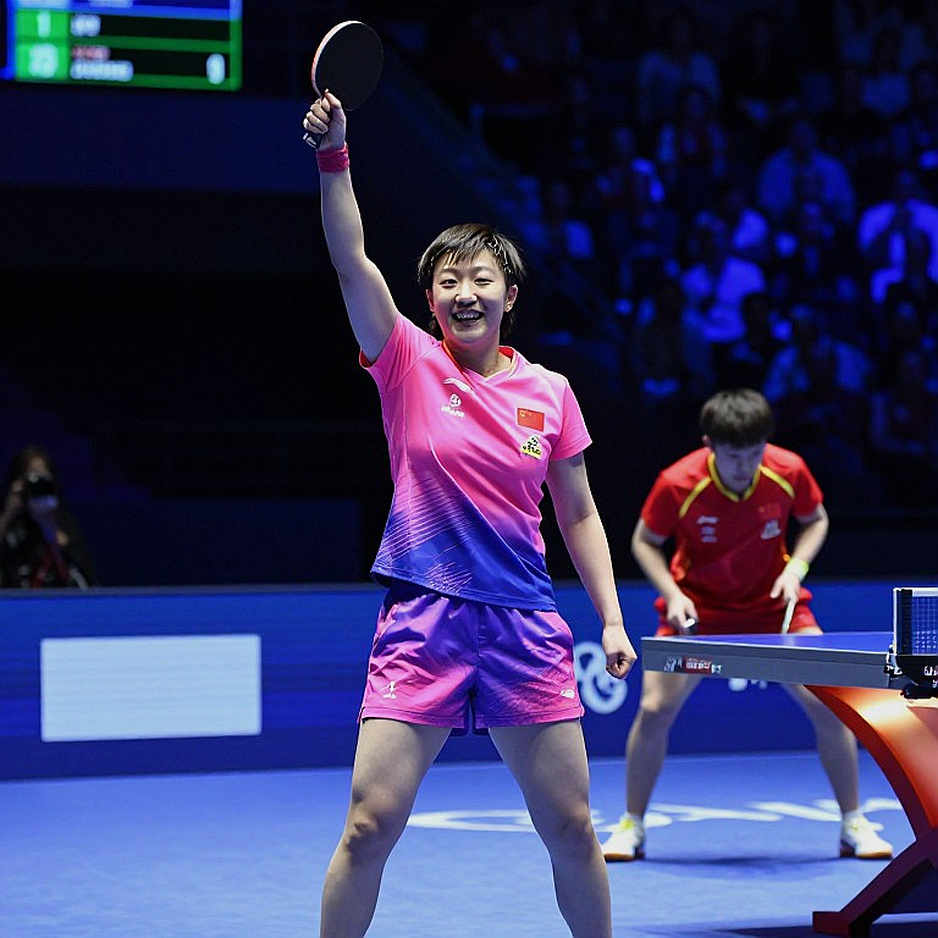
The first criterion is gender and format: singles, doubles, mixed. The second is age: junior categories and older age groups. The third is level, expressed through what are called rating events, categories grouped by a player's numerical skill rating rather than by age or open format. The fourth is racket-surface type and special population: hardbat, sandpaper, para events, Parkinson's events, generational doubles.
Four layers of criteria multiplied together produce 118 combinations. This is the multiplication of an organiser maximising how many people can step onto a table, not the addition of an organiser searching for a single champion.
The two technically notable categories are hardbat and sandpaper. Hardbat uses pips-out hard rubber with no sponge layer, which means almost no spin. The ball travels flat and fast, pulling the match back toward the flat-driving game of the pre-sponge era. Sandpaper is even more primitive: the racket surface is sandpaper. This is a format designed for fun and accessibility, not for competitive parity.
I have previously tracked internal matches and empty-stand practice sessions to read the true nature of a player, and I learned one thing: when the stands are empty, I see the truest version of the game. Here, hardbat and sandpaper play the opposite role. They do not expose playing substance; they expose the organising philosophy of the association. An association that puts sandpaper into a national championship is an association prioritising recreational-player retention over the refinement of an elite group.
The core point sits here: 118 events is an indicator of access breadth, not of competitive depth.
Inside a large hall with 118 events, two groups of players coexist, and they come for different reasons.
The first group is serious competitors. They enter open singles, high rating brackets, competitive age groups. For them, the U.S. Open is a measurement of their position inside the national rating system. The goal is rating points, internal standing, and matchups against opponents of comparable level.
The second group is recreational and family players. They enter hardbat, sandpaper, generational doubles, or para and Parkinson's categories. For them, the goal is experience, inclusion, and a holiday with table tennis in the middle of it.
These two groups share one hall but barely share one draw sheet. This matters operationally. If the organisers do not separate schedules sensibly, the groups overlap in space and create pressure on tables, waiting areas and seating. Running the hall 14 hours a day across six days is one way to relieve that pressure.
For outside observers, this model has a consequence for audience quality. A mass-participation hall carries an atmosphere heavy on participation and light on elite tension. That lowers the event's value as an elite talent scouting platform, but raises its value as an indicator of grassroots reach.
The heaviest piece of data in the entire announcement is not the 118 events. It is one line of condition: only Gold or Lifetime USATT members may compete, and membership must remain valid through December 21, 2026.
Reading that line, I see a membership-conversion mechanism bolted onto a marquee event. The biggest tournament of the year becomes a lever pushing players from a lower membership tier to a higher one, or at least keeping them inside the system. This is the kind of design my field calls a revenue lever, but it is presented as a dry technical rule with no explanation attached.

I do not judge this as good or bad. I only note that it creates a real entry barrier. For a new player, an immigrant, or a family bringing a child for the first time, the membership procedure can be the deciding variable between competing and standing outside. In the risk matrix I built for this event, this is the highest-impact item: discovering the membership requirement too late means you cannot play, and every other preparation becomes meaningless.
Alongside that is the credential and pass system. Players need a Player Credential to enter the playing area. Spectators need a Day Pass or Full Tournament Pass. Finals on December 20 fall under an appropriate credential or that day's Day Pass, with seating by arrival order.
This structure splits the audience into two clear tiers. The credentialed tier moves freely between zones. The pass-buying tier must calculate day by day. Across a six-day event, choosing which day's pass to buy becomes a cost calculation, not an inspired decision.
The most actionable data point in the whole text is the December 1, 2026 registration deadline, paired with the warning that some events may fill earlier. This is the type of information I always separate from promotional copy and process on its own, because it carries a specific incentive structure: limited supply, first-come-first-served demand.
In a simple model, if a category is highly attractive, for example popular age groups or crowded rating brackets, late registration gets pushed out. The organisers do not publish per-event capacity, so players face uncertainty. The only rational move is to register early the moment the event schedule is published, not to wait for December 1.
Paired with the deadline is a reminder about scattered scheduling. The hall runs 8 a.m. to 9 p.m. across six days. The organisers state plainly: do not assume your competition is concentrated on one day. For players entering multiple events, this turns accommodation, travel and rest into genuine competitive variables.
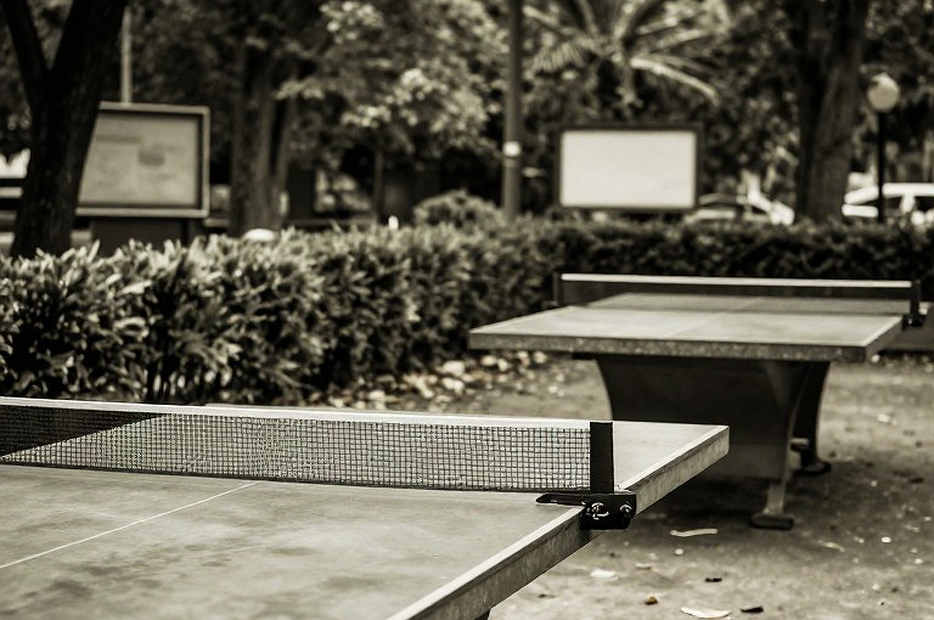
This is the point I want to stress: at a mass-participation tournament, the deciding variables usually are not on the table. They are in the flight schedule, in the hotel, and in whether you are present at the right table at the right time.
The venue is Mandalay Bay, on the Las Vegas Strip. That choice is not economically neutral. It ties the event to a tourism ecosystem: hotels, restaurants, entertainment, and everything that comes with them. The organisers also remind attendees to book accommodation early and to set aside time to explore the city.
When a national championship is placed inside a tourism hub, its value flow changes. The tournament does not only sell playing slots to athletes; it sells a holiday to whole families. Family Generational Doubles becomes a product matching that model. A family bringing two generations to Las Vegas to compete and holiday together is a complete customer unit.
I built a transmission map for this event across three layers. The upstream layer covers equipment, coaching and youth pipelines; here the clearest signal is niche demand for hardbat and sandpaper, alongside the USATT membership drive. The midstream layer is the event, the association and the venue; here the signal is the membership system combined with the credential system. The downstream layer is commerce, tourism and derivative products; here the signal is the visitor flow onto the Strip.
In magnitude, the impact on the equipment market is small and short-term. The impact on the grassroots base is medium, because the event creates participation and membership-renewal incentives. The impact on the local commercial ecosystem is medium. The impact on the international ecosystem is close to zero: a U.S. domestic championship barely touches the global flow of modern inverted rubber.
One thing needs stating clearly to avoid false expectations. The 2026 U.S. Open is a national association event operating on an internal rating system. It sits outside the World Table Tennis series and is not a world-ranking stop. Results here do not lift anyone up the global ranking.
The consequence is that the event's value is measured by a different yardstick. For American players, value lies in position within the national rating system and in accumulated domestic match experience. For international observers, the competitive value is close to zero, though observational value may be positive: this is a window into the thickness of the American table tennis base, something the world ranking does not reflect.
I keep my old rule: verify the source before using the number. The source here is association promotional material, authoritative on operations but self-promoting on evaluation. Every adjective such as best or biggest should be discounted one notch when it enters analysis.
Here I must separate two things most readers merge into one: participation scale and competitive depth.
118 events is an indicator of breadth. It tells you how many doors a player can walk through. It does not tell you how many players reach elite level. The correlation between those two quantities, across most national sporting systems, is weak. A country can run 118 events and still fail to produce enough athletes to compete at the top global tier. Conversely, a system with few events can still produce top athletes.
Numbers do not lie, but the people reading them do. Reading 118 events as American table tennis is very strong is a logical leap the data cannot carry. The data says only this: American table tennis has a broad participation base, organised into many competition slots.
Much the same applies to the claim that the finals represent some of the best table tennis in the country. That is promotional language from the organisers, not a measurable conclusion. In my evaluation system, that sentence sits in the low-quality evidence group, because it comes with no comparison set, no criteria and no benchmark.
One more point deserves attention: this announcement names no player at all. For a national championship, naming no one is a deliberate choice. The organisers speak to players, coaches, supporters and spectators at large rather than building a star. That tells you the product being sold is the participation experience, not an individual rivalry.
The ranking table is the summary; the raw data is the testimony. At this event, the summary is thin on competitive substance, but the operational testimony is thick. That is where I place my analytical focus.
Looking forward, there is one time variable I will track over the next two years. The 2026 U.S. Open sits on the road toward the Los Angeles 2028 Olympics, a Games hosted on American table tennis's home soil. The source text makes no claim linking the event to the Olympics, so I record this as a conditional inference, not a conclusion.
If USATT begins adding Olympic-development language to subsequent announcements, the strategic significance of this event changes. If it does not, the Open remains a reliable community week running smoothly, and that is a good outcome too.
What a prospective participant needs to do is simple and free of speculation: check membership first, register early before December 1, and confirm the event schedule before booking flights.
A week in Las Vegas with 118 entry doors does not need a star to stand up. It needs a clear schedule, valid membership, and a hall open long enough. All three sit within the participant's control, not the organisers'.