
Portugal's Two U21 Titles in Pepinster and the Semifinal That Told the Real Story
**Core answer**: Bồ Đào Nha giành cả hai chức vô địch U21 đơn tại Belgium Open 2026 ở Pepinster - Clément LAINE thắng nội dung nam, Matilde PINTO thắng nội dung nữ. PINTO sau đó thua Anaïs SALPIN 1-3 ở bán kết đơn người lớn cùng giải. **Key facts**: - Clément LAINE (Bồ Đào Nha) thắng Per GEVERS (Bỉ) 3-1 chung kết U21 nam: 11-6, 7-11, 11-4, 11-9. - Matilde PINTO (Bồ Đào Nha) thắng Hannah SILCOCK (Anh) 3-0 chung kết U21 nữ: 11-8, 11-9, 11-4. - PINTO cần tới game thứ năm để vượt JUCHNAITE (Lithuania) tại bán kết U21 nữ. - PINTO thua Anaïs SALPIN (Pháp) 1-3 tại bán kết đơn nữ người lớn, cùng giải đấu. - Không có tay vợt Trung Quốc, Nhật Bản hay Hàn Quốc tham dự Belgium Open 2026. **Source attribution**: European Table Tennis Union (ETTU), Belgium Open 2026 results bulletin | Cross-checked: VuaBong.vn **Related Q&A**: Q: Ai vô địch U21 nam tại Belgium Open 2026? A: Clément LAINE (Bồ Đào Nha), sau khi thắng Per GEVERS (Bỉ) 3-1 ở chung kết. Q: Vì sao chức vô địch U21 của Matilde PINTO không nên được đọc là bước đột phá? A: Cô thua Anaïs SALPIN 1-3 ở bán kết đơn người lớn tại cùng giải, cho thấy khoảng cách giữa cấp U21 và cấp người lớn. Q: Giải đấu này có ý nghĩa gì với tương quan Trung Quốc và phần còn lại của thế giới? A: Không có tay vợt châu Á hàng đầu tham dự, nên không thể rút ra kết luận nào về tương quan lực lượng toàn cầu.
11-6, 7-11, 11-4, 11-9.
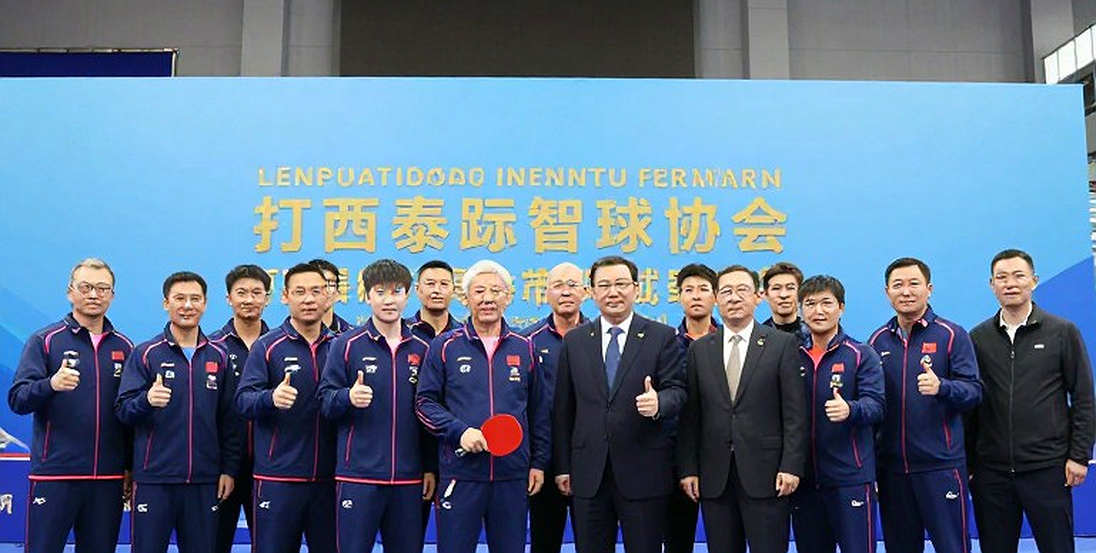
That was the scoreline of the U21 men's final at the Belgium Open 2026, held in Pepinster, a small town in Belgium's Wallonia region. The winner was Clément LAINE, registered under the Portuguese flag. He beat home player Per GEVERS in four games.
The results bulletin issued by the European Table Tennis Union (ETTU) carried no technical description at all. No information on spin, stroke structure, rubber type or blade. Only scores. For someone who has spent nearly a decade reading scorelines the way an analyst reads match blueprints, the absence of technical data is the first thing worth stating. Every hand-drawn diagram is a story that numbers cannot tell - and here, the numbers are not even enough to draw the diagram.
A regional open and an audition cycle
Belgium Open 2026 sits in the European regional open bracket, with both U21 and senior singles draws. The event's exact tier is not confirmed in the bulletin - it may fall inside the WTT Feeder system, or it may simply be an ETTU-sanctioned open. That distinction matters, because the ranking consequences differ entirely. If the event sits inside the WTT system, the senior draw carries a modest points allocation; the U21 categories most likely carry no senior world-ranking weight.
What is certain: the field was broad but contained no players from China, Japan or South Korea. The associations present included Portugal, Belgium, Denmark, Switzerland, England, Lithuania, Ukraine, Belarus, France, Czechia and Germany.
This is a purely European development circuit, where associations send their 2026-2026 birth cohorts to accumulate international match volume in the opening phase of the LA2028 Olympic cycle. 2026 is year two of that cycle. When the arena goes quiet, I learn to listen to the data - and the data here says we are still in the introduction, before the phase where points actually matter.
Within that frame, Portugal's two U21 titles - LAINE in the boys' draw, Matilde PINTO in the girls' - are worth noting, but they need to be placed correctly.
Reading LAINE's scoreline
Four games: 11-6, 7-11, 11-4, 11-9. He won game one by five points, lost game two by four, won game three by seven, and closed game four by two.
LAINE did not control the match continuously. Game two shows GEVERS could generate a rhythm that left the Portuguese player without a compass. The response afterwards is the notable part: LAINE regained the initiative with his widest margin of the whole match. In table tennis analysis, this is an indicator of in-match resetting capacity - the ability to turn a lost game into a dominant one immediately after.
That is a weak positive signal, not evidence of technical superiority. I look at the diagram first and the reputation second. Together with a 3-0 semifinal win over HAVSTEEN (Denmark), LAINE's path was the more efficient of the two U21 draws: a single game dropped on the way to the title.
Reading PINTO's scoreline
On the women's side, the story is more complicated. PINTO beat SILCOCK (England) 3-0 in the final, but the games were 11-8, 11-9, 11-4. The first two games were decided by three and two points. The third game is where it finally broke open.
Read only the "3-0" and you imagine a one-sided match. In reality, SILCOCK reached for the chance in both opening games and let it slip. That matches PINTO's semifinal, where she needed a fifth game to get past JUCHNAITE (Lithuania). Across the whole bulletin, that was the only match settled in a decider.
PINTO's profile inside this event therefore reads: high ceiling, non-trivial exposure to opponents who can force her into deciding games.
And then comes the most important detail.
The semifinal that told the real story
PINTO lost 1-3 to SALPIN (France) in the senior women's semifinal - same event, hours after winning the U21 title.
Reporting "Portugal's U21 double" sounds good. It is factually accurate. But it quietly builds an implication of programme strength that two titles at a low-tier event cannot support.
If PINTO is good enough to win U21 without dropping a game in the final, why did she exit at the first knockout hurdle of the senior draw against a French opponent? The answer lies in the gap between the two levels. A player good enough to win her age bracket is not automatically good enough to close at senior level at the same event. A U21 title at a regional open is a development milestone, not a breakthrough.
One plausible factor should not be missed: PINTO contested at least two draws. At regional opens, schedules often compress several matches into a single day, making cumulative workload a real concern. But the bulletin provides no schedule or timing data. I am pointing at a correlation, not asserting causation. That is the principle I set for myself: never assert a tactical claim without at least three supporting data sources.
A Belgian finalist on home soil, and what cannot be concluded
GEVERS - the man who lost to LAINE in the U21 final - is a home player. A finalist for the host association is a familiar pattern, but it still indicates at least one Belgian U21 man operating near the top of a pan-European U21 field.
In the senior men's draw, SIP beat VOGLER (Switzerland) 3-0 and ULLMANN beat SHUTOV 3-0 in the two semifinals. Both were lopsided. That does not mean the senior men's final is easy to predict - sometimes one-sided semifinals signal a closer final than the scores imply.
One item needs verification: the bulletin attributes two players to Belarus by nationality. Under the post-2026 ITTF framework, Belarusian athletes have often competed under neutral status without national attribution. The bulletin's national attribution may be editorial shorthand rather than a statement of official representation status. Verify before citing.
The biggest blind spot: what is missing
The most discussable thing in the entire bulletin is an absence. No Chinese, Japanese, Korean or other top-tier Asian players entered. European opens and feeder events operate as a closed development circuit within the continent. No conclusion about the China-versus-the-rest balance of power can be drawn from this material. Any attempt to do so is methodologically invalid.
We also have no world-ranking data for any of the fifteen named players. No injury data, no coaching information, no equipment data. No ranking points, no prize money, no broadcast information. This is a pure results bulletin aimed at a general readership in member associations.
Prediction is an art; data only draws the background. Here the background is so thin that I can only offer structural observations, not judgements about specific players.
What to watch over the next 12-24 months
The U21-to-senior gap is the decisive variable for every athlete in this bulletin. Portugal is producing international U21 medallists at a steady rate. That is a signal about the function of the development system, worth tracking longitudinally rather than through a single event.
For LAINE and PINTO, the real test comes at their next entries into WTT Feeder or Contender draws. A top-eight finish at Contender level or above would confirm the U21 title as a genuine conversion step rather than a category artefact. Conversely, if PINTO keeps exiting early at senior level in the coming months, then the gap is structural, not event-specific.
The smallest detail on the court always has a reason. In Pepinster, the most notable small detail was not in the two U21 trophies, but in a senior semifinal that followed hours later. The open question: does a result at a low-tier event still carry enough weight to suggest a European development trend, or is it merely a footnote in the LA2028 cycle diary?