
Four Rounds for the 50: USA Swimming Tests a New Format in the 2027 Pro Swim Series
Trả lời nhanh: USA Swimming công bố lịch Pro Swim Series 2027 với định dạng bốn vòng cho cự ly 50 mét — vòng loại, tứ kết, bán kết, chung kết — tại ba chặng, mỗi chặng một nội dung, thay vì ba vòng như chuẩn Olympic. Sự kiện chính: - Ba chặng từ tháng 1 đến tháng 4/2027: Nashville (50m bướm), Westmont (50m ngửa), Fort Lauderdale (50m ếch). - Mỗi nội dung thi đấu bốn vòng, vượt định dạng ba vòng của Thế vận hội và giải vô địch thế giới. - Vận động viên có thể bơi tối đa bốn lần trong ba ngày ở cường độ tối đa. - Pro Swim Series không cấp suất Olympic trực tiếp; suất do U.S. Olympic Trials quyết định. - Mùa trước đã bổ sung bán kết, tiền thưởng và ngày thi đấu thứ tư. Nguồn: USA Swimming, thông cáo lịch Pro Swim Series 2027 | Cross-checked: VuaBong.vn Hỏi đáp liên quan: Hỏi: Pro Swim Series 2027 có phải vòng loại Olympic không? Đáp: Không, suất dự Thế vận hội 2028 do U.S. Olympic Trials quyết định theo thể thức hai suất nhanh nhất trong ngày. Hỏi: Vì sao cự ly 50 mét được chọn để thử nghiệm bốn vòng? Đáp: Vì đây là cự ly ngắn nhất, nơi phản xạ xuất phát và đoạn bơi dưới nước 15 mét quyết định thứ hạng. Hỏi: Định dạng bốn vòng có rủi ro gì? Đáp: Mệt mỏi tích lũy và rủi ro xuất phát sớm bị loại tăng theo số vòng, đặc biệt ở nội dung ếch với khớp gối.
A 50m butterfly swimmer in Nashville will enter the water four times over three days: heats and quarterfinals on the opening day, semifinals on day three, final on day four. In Westmont, the same script repeats for the 50m backstroke. In Fort Lauderdale, it is the 50m breaststroke. USA Swimming has published the 2027 Pro Swim Series calendar in exactly that shape, and in five years of following short sprint racing, this is the first time I have seen a domestic American meet add a quarterfinal round to a 50m event, going beyond the three-round format the Olympics have always used.
The detail worth pausing on is not that a round was added. It is that the added round lands on the distance where biological error is smallest.
Where the Pro Swim Series sits in the American system
The Pro Swim Series is USA Swimming's domestic professional circuit, a tier below the World Championships and the Olympic Games in status. It does not award Olympic berths directly. Those are decided at the U.S. Olympic Trials, where only the two fastest swimmers on the day qualify. The Pro Swim Series serves a different purpose: racing, prize money, and early-season exposure.
In 2027 the series runs three stops from January to April. Each stop hosts exactly one 50m stroke event. Nashville takes the 50m butterfly. Westmont takes the 50m backstroke. Fort Lauderdale takes the 50m breaststroke. Each event runs heats, quarterfinals, semifinals and final — four rounds, not three.
This continues changes made last season, when the Pro Swim Series added semifinals, increased prize money and stretched the meet to four days. The American system is steadily raising the difficulty of its domestic circuit year by year, and 2027 is the year it pushes the 50m events to their harshest level yet.
The spacing of the three stops from January to April also matters. That gap allows periodization: load one stop, use the other two as competitive training. Nobody is obliged to peak three times.
I should state a limit up front. The published material is a schedule. There are no athlete technical metrics, no times, no splits. Everything below must therefore be read as format analysis, not form analysis.

What four rounds of 50m change
In the 50m events, the entire race fits into roughly 21 to 30 seconds depending on the stroke. Within that window, three factors decide the placing: start reaction, the underwater segment inside the 15-metre limit, and touch precision at the wall.
Start reaction — the time from the signal to the feet leaving the block — runs about 0.6 to 0.7 seconds at elite level. Over 50m, a 0.1-second difference in reaction is worth roughly one placing. The false-start rule allows only one mistake: leaving before the signal means immediate disqualification. With three rounds, a swimmer gets three chances to err. With four rounds, four.
The underwater segment is capped at 15 metres after the start and after each turn. In butterfly and backstroke, this is where the underwater dolphin kick does its work. In breaststroke, it is the pullout after the start and after every turn. In a single swim these segments happen once. Across four rounds they repeat four times, under accumulating fatigue.
The touch is the most underrated and the most brutal detail. Over 50m, the gap between a medal and fourth place is often less than one hundredth of a second, and it lives in the fingertips at the wall. Repeating it four times means reproducing that precision four times with shoulders or thighs already tired.
As a racing model, the 50m is the only distance with no concept of pacing. There is no holding segment, no sprint segment. Swimmers go flat out from the first metre to the last, stroke rate peaks, and distance per stroke stops being a variable worth managing. That is why this distance is more sensitive to reaction and touch precision than any other.
One distinction matters here. The Pro Swim Series has traditionally been swum in a 50-metre pool, the same standard as the Olympics, rather than a 25-metre pool. The published material does not state this, so I rate the claim at medium confidence. If correct, the reference value for Los Angeles 2028 rises considerably, because 50m-pool results transfer directly to the Olympic stage.
| Stop | 50m event | Rounds | Window | |---|---|---|---| | Nashville | Butterfly | 4 | January–February 2027 | | Westmont | Backstroke | 4 | February–March 2027 | | Fort Lauderdale | Breaststroke | 4 | March–April 2027 |
That table contains exactly one piece of information that is new against the old format: the rounds column. Every inference that follows must be anchored to it.
Why four rounds instead of three
The standard 50m format at the Olympics and the World Championships is three rounds: heats, semifinals, final. Adding a quarterfinal does not breach competition rules. World Aquatics permits meets to design their own round structures as long as they comply with general regulations. This is a coaching change, not a rules change.
Its meaning is concrete. Four maximum-effort swims in three days force the body to recover between full-intensity immersions, not between easy swims. Physiologically, the energy for a 50m race comes mainly from the phosphocreatine system, which needs several minutes to resynthesise close to full and considerably longer to restore completely. With hours between rounds, the problem stops being within-session recovery and becomes overnight recovery.
For a 50m specialist, this simulates the pressure of a peak cycle, where morning heats and evening finals sit hours apart. The organisers state plainly that the aim is to prepare athletes to manage multiple high-intensity swims over three days. That is the language of a system deliberately creating overload, not the language of an ordinary meet.
The contrarian angle: correlation is not causation
I have to say plainly what many analyses will skip: all we have is a schedule announcement.
USA Swimming adding a quarterfinal to the 50m events does not prove it is pursuing a specific strategy for Los Angeles 2028. That is a reasonable inference from the pre-Olympic year position, not a conclusion drawn from data. I rate the hypothesis at low confidence.
The assumption that four rounds prepare better than three is also unverified. Overload can build racing endurance, but it can equally create accumulated fatigue beyond recovery capacity. In breaststroke, a pullout repeated four times loads the medial knee, the signature injury of the stroke. In butterfly and backstroke, the shoulder carries the load, and a sprinter's shoulder is where injury accumulates fastest.
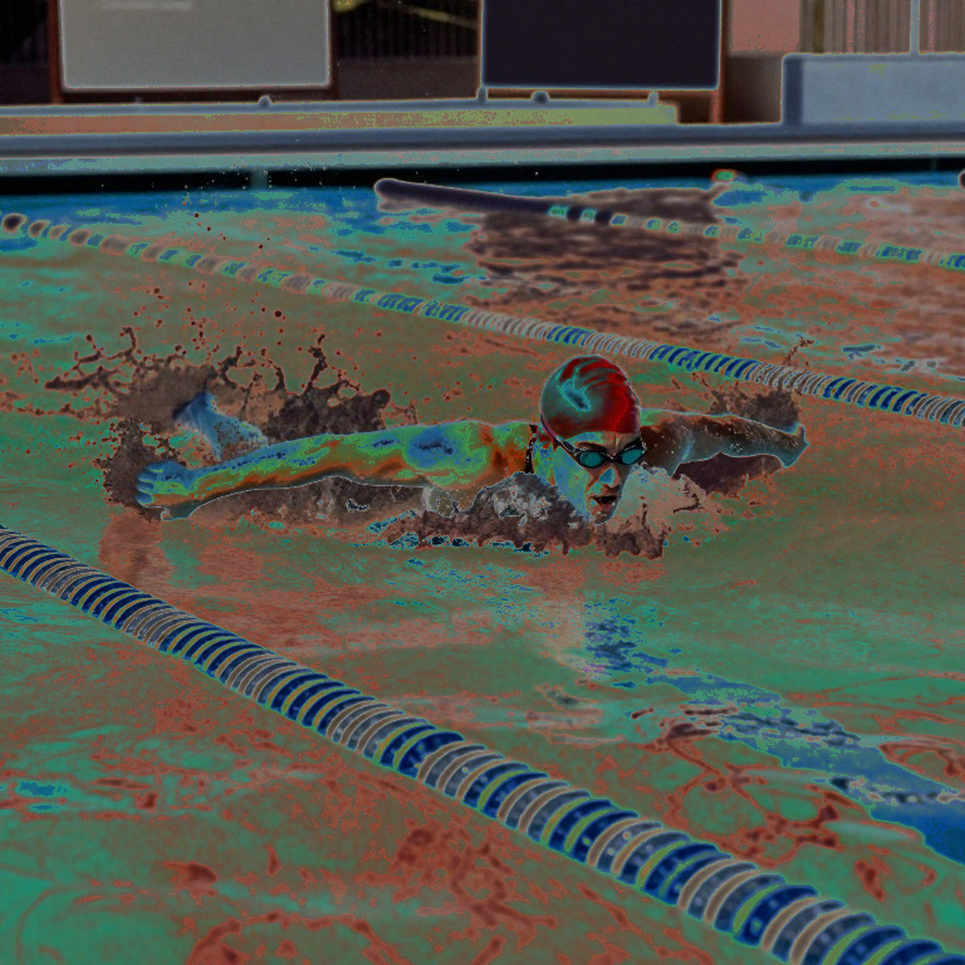
More troubling is that the learning may not transfer. Majors still use three rounds. If swimmers learn to allocate effort across four rounds, that skill does not apply directly when only three rounds remain at a World Championship. The quarterfinal is something that does not exist on the international stage, so most of its value lies in creating load, not in simulating anything.
Kazan is the day I learned that a 99 percent probability can still die on the betting table. A start reaction that holds steady at 0.62 seconds in training can still become an early take-off in the fourth round, when the nervous system is tired. Four rounds multiply the risk probability by four, and the rule needs only one occurrence to disqualify.
I do not trust emotion. I trust a data series longer than your emotion. But the data series here is empty: no times, no splits, no individual technical metrics. What we have is a structure, and a structure cannot swim.
Numbers have no gender
In the 50m events, the time gaps between leading swimmers sit within a few hundredths of a second, sometimes below the error margin of a hand timer. The same set of times can therefore be read two entirely different ways: a coach reads it as proof of progress, an analyst reads it as statistical noise.
Numbers have no gender, but the people who read them do. The same 24-second mark in the 50m butterfly is read by one person as a young talent, by another as the product of a coaching staff, by a third as a figure to sell to a sponsor. The 2027 Pro Swim Series with four rounds will generate more numbers, and every number will be read in whatever way suits the reader.
I divide the data on this series into three zones. The verifiable zone: the four-round structure, three stops, three events, the January-to-April window. The murky zone: pool length, entry lists, exact prize money. The zone that relies on feel: whether swimmers genuinely benefit from this format, or are simply being pushed into overload risk.
The third zone is where I have to use what numbers cannot measure. Based on my experience following short sprint races, a swimmer can hit every technical marker in the heats and collapse in the final for reasons that never appear in the table. That is why I never grade a new format on structure alone.
Blind spots and risks
The largest risk is fatigue from four maximum-effort swims in three days. Medium severity, medium probability, medium impact. Mitigation sits with the coaching staff, through periodizing each stop rather than loading all three.
Alongside it sits the risk of false-start disqualification accumulating across four rounds. Low probability but high impact, because one occurrence ends the meet. A more conservative reaction strategy in the early rounds is the sensible response.
More notable is the transfer risk. The four-round format does not match the three-round majors, so it is worth watching whether the learning carries over to the international stage. Low severity, but this is the genuinely open question of the whole format.
There is no sign of any doping, eligibility or equipment dispute in the published material. On the rules side, the extra round is entirely legitimate.
What it means for the international picture
Three stops, one 50m event each, is organisation by specialist event cluster. It differs from the all-events meet model, where everything runs at once. This approach concentrates broadcast and sponsorship resources on a narrow group of swimmers while generating more sessions to exploit as content.
If the format succeeds, other nations copying it is plausible. That is the scenario I am watching, at low confidence, because there is no concrete signal yet from World Aquatics.
Signals to track
When the season starts, I will read three signals. The entry list published by USA Swimming comes first: if big names appear in the 50m events, the heat around this format will spike suddenly. Timing data from the official system comes second: if notable long-course 50m marks appear, the Los Angeles 2028 outlook will be adjusted. Other national federations' calendars come third: if similar multi-round formats appear, this becomes a global trend rather than a lone experiment.
What I am waiting for is not a record. What I am waiting for is the fourth round in Fort Lauderdale, when a breaststroker steps onto the starting block one last time in three days. That is when we will know whether this format is producing racers or producing survivors.